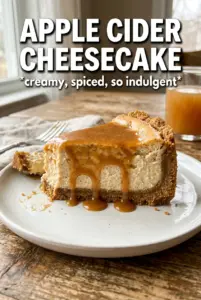
Apple cider cheesecake brings together everything I want in a fall dessert: a crisp graham cracker crust, a smooth cream cheese filling, and that bright, spiced cider flavor running through every bite. The cider keeps the cheesecake from tasting heavy or one-note, and the topping gives each slice a glossy finish that cuts cleanly through the rich filling.
The trick here is reducing the cider before it goes into the batter. That step concentrates the flavor without watering down the cheesecake, and it keeps the texture dense and silky instead of loose. The water bath matters too. It bakes the filling gently enough that you get a creamy center without the cracked top that happens when cheesecake bakes too fast.
Below, I’ve included the small details that make a difference, from how fine the crust should feel in the pan to the exact point where the cheesecake is set but still has a slight wobble in the center. The cider syrup topping is worth the extra minute on the stove, and it turns each slice into something that looks as good as it tastes.
The cider flavor came through beautifully, and the texture was spot on after chilling overnight. The topping thickened just enough to stay on the slice instead of running all over the plate.
Save this apple cider cheesecake for a silky cheesecake with a spiced cider drizzle and a crisp graham crust.
The Trick to Keeping the Filling Creamy, Not Cracked
Cheesecake cracks for a few predictable reasons: cold batter, overmixing, or heat that hits too hard and too fast. This version avoids all three by starting with softened cream cheese, mixing only until smooth, and baking the cake in a water bath so the heat around it stays gentle and even. The cider reduction helps too, because it adds concentrated flavor without dumping extra liquid into the batter.
The other piece that matters is the bake time. Cheesecake should not look fully firm in the center when it comes out. A little wobble in the middle is what you want, because it will finish setting as it cools. If it looks dry and puffed in the oven, it has gone too far and will likely sink or split as it cools.
What Each Ingredient Is Actually Doing in This Cheesecake
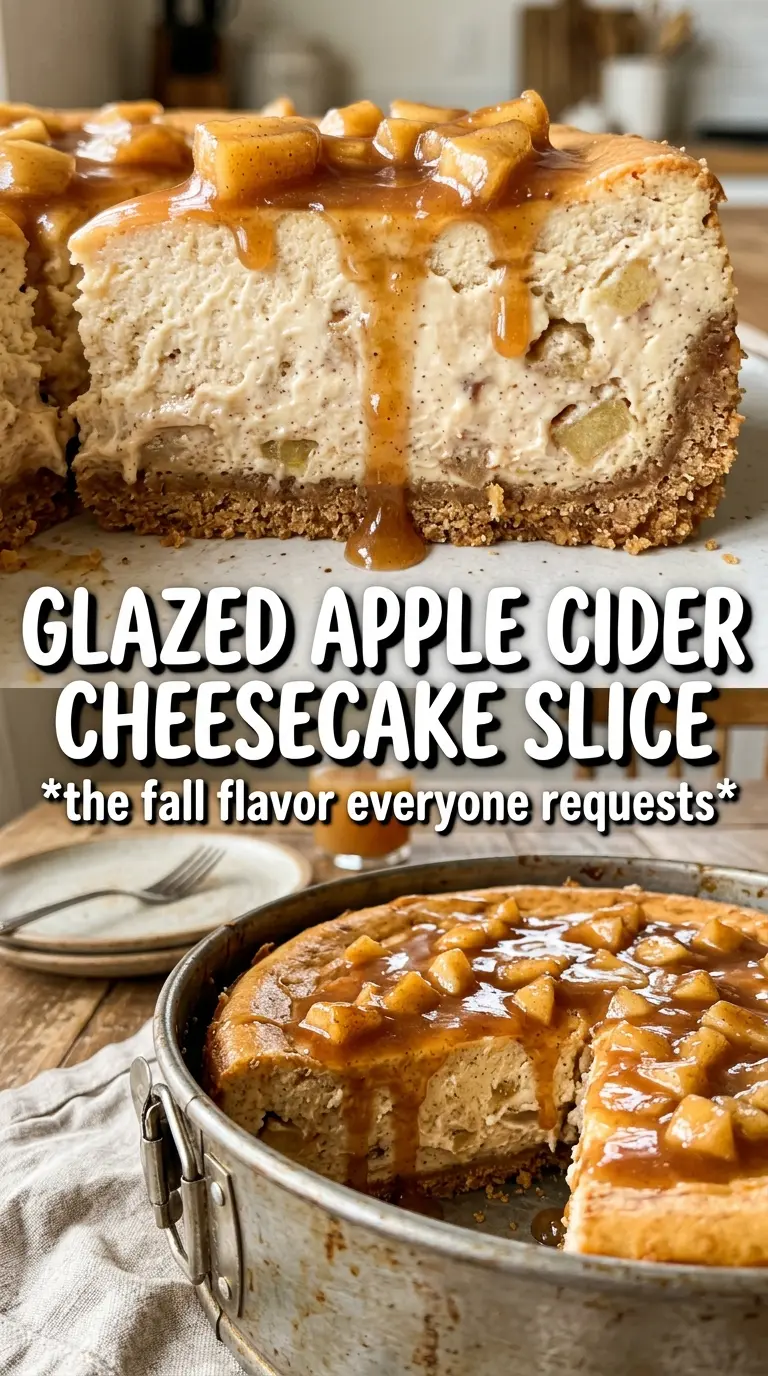
- Graham cracker crumbs — These give the crust its classic cheesecake texture and a little toasty sweetness. A finer crumb packs more cleanly into the pan, so crush them until they feel like damp sand after the butter goes in.
- Apple cider — This is the ingredient that makes the filling taste like apple cider instead of plain spiced cheesecake. Reduce it first or the batter will taste thin and the texture can turn loose.
- Cream cheese — Use full-fat blocks, not tub-style cream cheese. The block style bakes into a dense, smooth filling that slices cleanly.
- Sour cream — This adds tang and softens the richness of the cream cheese. Greek yogurt can work in a pinch, but it changes the flavor slightly and can make the filling a little less lush.
- Brown sugar — Brown sugar adds warmth that plain white sugar doesn’t give you here. It also plays well with the cider and cinnamon, giving the cheesecake a deeper, caramel-like note.
- Eggs — They set the filling. Add them one at a time and stop mixing as soon as each one disappears, or you’ll whip in too much air and risk cracks.
- Cinnamon and nutmeg — These should support the cider, not bury it. Nutmeg is especially easy to overdo, so stay with the small amount listed unless you want the spice to take over.
Building the Crust and Filling in the Right Order
Getting the Crust Ready First
Mix the graham cracker crumbs, sugar, cinnamon, and melted butter until every crumb looks evenly moistened. Press the mixture firmly into the bottom of a 9-inch springform pan, using the flat bottom of a measuring cup to pack it down in an even layer. Bake it for 10 minutes so it sets before the filling goes in; that step keeps the crust from turning soggy underneath the cheesecake. Let it cool while you work on the batter.
Reducing the Cider Until It Tastes Concentrated
Simmer the cider until it cooks down to a thick, syrupy amount. You want it reduced to about half for the topping and to a smaller concentrated amount for the filling, depending on the stage in the recipe. If you rush this over high heat, the cider can taste flat or cooked instead of bright and apple-forward. Cool the reduction before adding it to the cream cheese, or it can warm the batter and affect how the eggs set.
Mixing the Batter Without Whipping in Air
Beat the cream cheese and brown sugar until smooth before adding anything else. Once the cider reduction, eggs, sour cream, cinnamon, nutmeg, and vanilla go in, mix only until combined and scrape the bowl well so you don’t leave streaks of unmixed cream cheese behind. If the batter looks fluffy, it has too much air, and that usually means the cheesecake will rise, crack, and then collapse a little as it cools.
Baking, Cooling, and Finishing
Pour the filling over the crust and bake in a water bath until the edges are set and the center still has a slight jiggle. Let the cheesecake cool completely before it goes into the refrigerator for the full chill time, because cutting it early will give you a soft, messy slice. Simmer the cider topping until it reduces into a spoonable syrup, then drizzle it over each slice right before serving so the finish stays glossy and fresh.
How to Adapt This for Different Diets and Situations
Gluten-Free Crust Swap
Use gluten-free graham-style crumbs or crushed gluten-free cookies in the same amount. The texture stays close to the original, though some gluten-free crumbs are a little more delicate, so pack the crust firmly and don’t skip the pre-bake.
Dairy-Free Version
Swap in dairy-free cream cheese and a thick dairy-free sour cream alternative. The cheesecake will still set, but the texture tends to be a touch softer and the tang depends on the brand you use, so choose one that bakes well rather than one meant only for spreading.
Make It Ahead for a Dinner Party
Bake the cheesecake the day before and add the cider syrup topping just before serving. The flavor improves after a long chill, and the slices cut cleaner when the cake has had time to fully set overnight.
Extra-Spiced Version
Add a pinch of cloves or an extra little shake of cinnamon to the filling if you want the cider flavor to lean warmer and more aromatic. Don’t overdo it, though, or the spices will crowd out the apple note that makes this cheesecake distinctive.
Storage and Reheating
- Refrigerator: Store covered for up to 5 days. The crust softens slightly over time, but the flavor stays excellent.
- Freezer: Cheesecake freezes well. Wrap individual slices tightly and freeze for up to 2 months, then thaw overnight in the refrigerator.
- Reheating: Don’t reheat this cheesecake. Serve it cold or let it sit at room temperature for 20 to 30 minutes so the filling softens a bit and the cider topping tastes brighter.
Questions I Get Asked About This Recipe
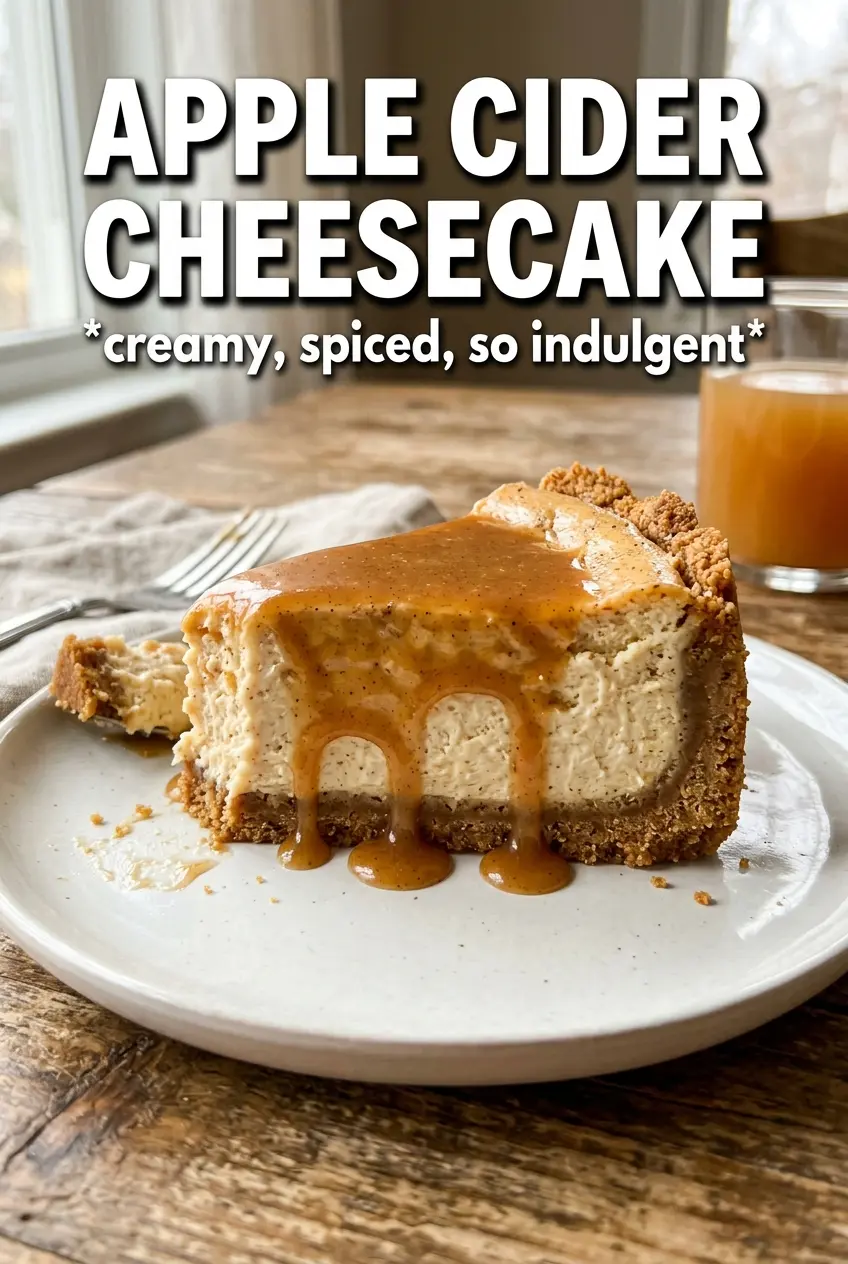
Apple Cider Cheesecake
Ingredients
Equipment
Method
- Reduce 1/2 cup apple cider until syrupy and measure out about 1/4 cup; cool completely to room temperature.
- Preheat the oven to 325F and set up a water bath on a sheet pan.
- Stir graham cracker crumbs, sugar, and cinnamon, then mix in melted butter until evenly sandy.
- Press the crust into a 9-inch springform pan and bake for 10 minutes at 325F.
- Cool the crust slightly while you prepare the filling.
- Beat the softened cream cheese and packed brown sugar until smooth.
- Add the cooled reduced cider, then mix in the eggs one at a time.
- Mix in sour cream, cinnamon, nutmeg, and vanilla until the batter looks cohesive and smooth.
- Pour the filling over the crust.
- Bake in a water bath for 55-60 minutes at 325F until the center is just set with a slight jiggle.
- Cool the cheesecake completely, then refrigerate for 6 hours to fully chill and set.
- Simmer 1 cup apple cider with brown sugar and cinnamon until reduced by about half into a syrupy drizzle consistency.
- Drizzle the spiced cider syrup over each slice to serve.