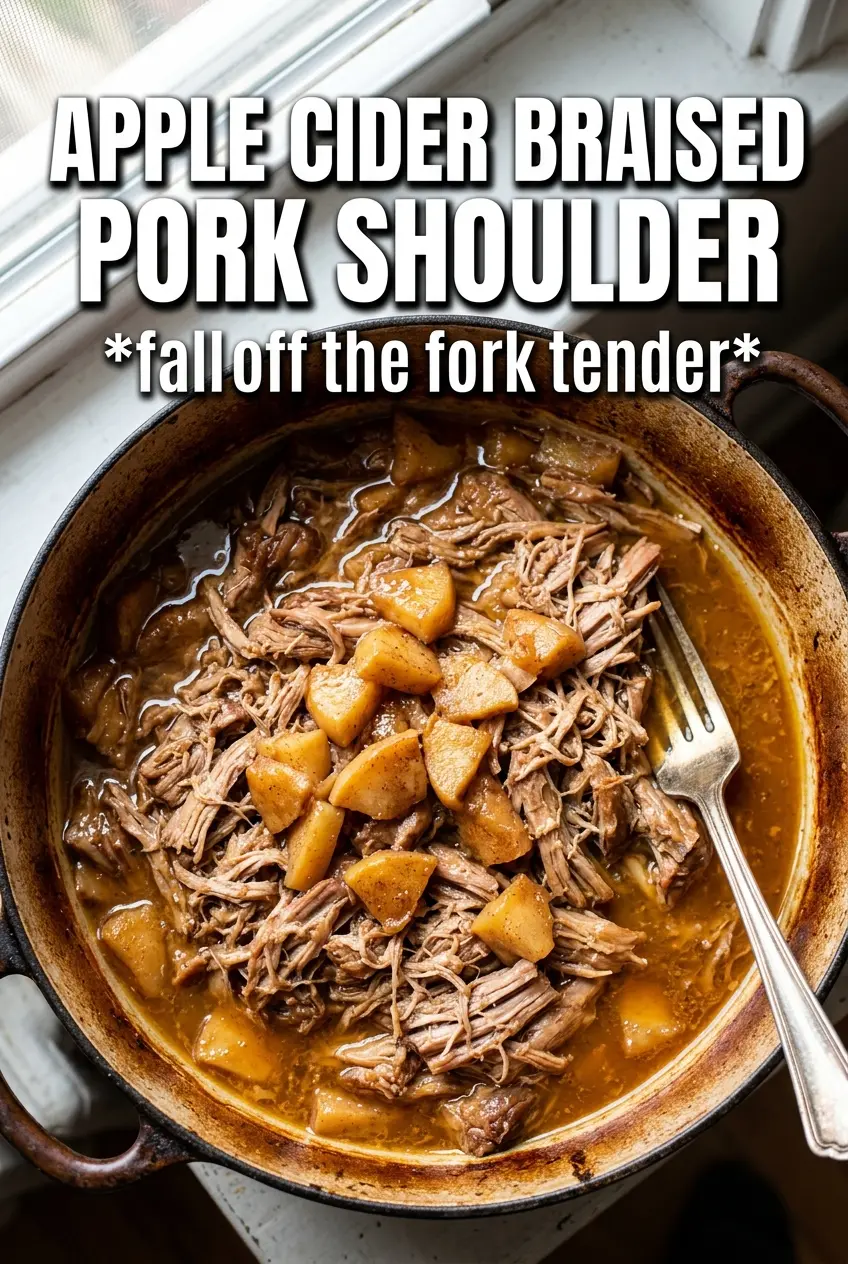
Apple cider braised pork shoulder turns into the kind of dinner that quietly steals the whole night. The pork comes out fork-tender and deeply savory, with just enough sweetness from the cider and apples to keep every bite balanced. Once it’s shredded into the pan juices, the sauce clings to the meat instead of sitting around it, and that makes all the difference when you spoon it over mashed potatoes.
The real trick is building flavor before the braise starts. A good sear gives the pork a dark crust that seasons the sauce, and the quick sauté of onion and garlic keeps the braising liquid from tasting flat. I like using a mix of cider, chicken broth, Dijon, brown sugar, and vinegar because it lands in that sweet-tart spot without turning the dish cloying. The apples soften into the sauce, but they still hold enough shape to give you a little texture in the finished pot.
Below, I’ll walk through the sear, the braising liquid, and the one texture cue that tells you the pork is ready to shred. I’ve also included a few smart swaps and storage notes for the days when you want to stretch this into leftovers.
The pork shredded perfectly after 4 hours and the cider sauce was just thick enough to coat the meat without getting watery. I served it over mashed potatoes and my husband went back for seconds immediately.
Save this apple cider braised pork shoulder for a fall-apart tender dinner with sweet-tart cider sauce and buttery mashed potatoes.
The Step That Keeps Braised Pork Tender Instead of Dry
The biggest mistake with pork shoulder is rushing the oven and judging it by time alone. This cut needs enough heat and enough patience for the connective tissue to melt, which is why 3 1/2 to 4 hours is a range, not a promise. The real test is texture: when the pork gives almost no resistance and pulls apart easily with a fork, it’s done.
Another thing worth getting right is the browning. If the pork goes into the pot pale, the braising liquid can taste one-note no matter how good the cider is. You want a deep brown crust on all sides before the onion and garlic go in, because that dark fond is what makes the sauce taste like it’s been cooked all day, even before the braise starts.
- Browned meat builds the base flavor. Pale pork means a weaker sauce.
- Low oven heat keeps the shoulder from tightening up before the collagen breaks down.
- Too much liquid can boil the pork instead of braising it. Keep the meat mostly submerged but not drowned.
- Fork-tender is the cue. If it still slices cleanly, it needs more time.
What the Cider, Mustard, and Apples Each Bring to the Pot

- Pork shoulder — This is the right cut because it has enough fat and connective tissue to braise into shreds instead of drying out. A leaner cut won’t give you the same silky texture.
- Apple cider — Fresh or hard cider both work. Fresh cider gives you a softer, more fruit-forward sauce; hard cider adds a little sharpness and complexity. Avoid anything labeled apple juice if you want the same depth.
- Dijon mustard — Dijon pulls the sauce into balance and keeps the cider from tasting sweet in a flat way. There isn’t a substitute that behaves exactly the same, but whole-grain mustard will still give you tang and structure.
- Apples — Use firm apples that hold their shape, like Honeycrisp, Braeburn, or Granny Smith. Soft apples can dissolve before the pork is done and muddy the sauce.
- Chicken broth — This stretches the cider and keeps the sauce savory. Water works in a pinch, but the sauce will taste thinner and less rounded.
Building the Braise So the Sauce Ends Up Glossy, Not Thin
Season and Sear Hard
Season the pork all over with salt and pepper, then sear it in the olive oil until every side is deeply browned. Don’t crowd the pot or the meat will steam instead of sear. You’re looking for a crust that lifts cleanly from the Dutch oven and leaves browned bits behind; those bits dissolve into the braising liquid and give the finished sauce its backbone.
Sweat the Aromatics Briefly
After the pork comes out, cook the sliced onion and smashed garlic for about 3 minutes, just until they soften and pick up some color from the pot. If the garlic goes dark, it turns bitter fast, so keep the heat moderate and stir often. This short sauté gives the sauce sweetness without making the onion disappear completely.
Pour in the Braising Liquid
Whisk the cider, broth, Dijon, brown sugar, and apple cider vinegar before it goes into the pot. That keeps the mustard from clumping and the sugar from sinking straight to the bottom. Once the liquid is in, scrape the pot well; the browned residue is part of the flavor, and it should melt into the sauce instead of staying stuck on the base.
Braise Until It Falls Apart
Return the pork to the pot, add the apples, thyme, and rosemary, then cover and cook until the meat shreds easily. Don’t open the lid repeatedly, because each peek drops the oven heat and slows the breakdown of the shoulder. When it’s ready, the pork should fall apart with almost no effort, and the apples should be soft but still recognizable in the sauce.
How to Adapt This Pork Shoulder for Different Kitchens and Leftover Plans
Make it with hard cider for a sharper finish
Hard cider gives the sauce a drier, slightly tangier edge than sweet cider. Use it if you want the apple flavor to read more grown-up and less dessert-like. The pork still turns out tender, but the sauce finishes with a little more bite.
Gluten-free by default, with one label check
This recipe is naturally gluten-free if your broth and Dijon mustard are certified gluten-free. That matters more than it sounds, because some store-bought condiments hide wheat-based thickeners. The texture and method don’t need any changes.
Make it a little richer with an extra apple
If you want a saucier pot, add one more apple and an extra splash of broth near the end. The extra fruit softens into the braising liquid and makes the sauce feel fuller, but it also pushes the flavor slightly sweeter, so keep the vinegar in place.
Storage and Reheating
- Refrigerator: Store in an airtight container for up to 4 days. The pork gets even better after a night in the sauce.
- Freezer: It freezes well for up to 3 months. Cool completely, portion with some sauce, and freeze flat for easier thawing.
- Reheating: Reheat gently on the stove over low heat or covered in a 300F oven until hot. High heat dries out the shredded pork and makes the sauce taste flat, so warm it slowly with a splash of broth if it looks tight.
Questions I Get Asked About This Recipe
Apple Cider Braised Pork Shoulder
Ingredients
Equipment
Method
- Preheat oven to 325F and season the pork generously with salt and pepper.
- Heat olive oil in a Dutch oven and sear the pork on all sides until deeply browned.
- Remove the pork, then sauté onion and garlic in the Dutch oven for 3 minutes.
- Whisk apple cider, chicken broth, Dijon mustard, brown sugar, and apple cider vinegar, then pour into the pot.
- Return pork to the pot, add apples, thyme, and rosemary, and cover with a lid.
- Braise in the oven at 325F for 3-1/2 to 4 hours, until the pork is fall-apart tender.
- Shred the pork in the juices so it soaks up the caramelized apple cider pan sauce.
- Serve the shredded pork and sauce over mashed potatoes.