American russet potato salad lands in that sweet spot between creamy and sturdy, with potatoes that hold enough shape to stay spoonable instead of turning mushy. The russets soak up the dressing in a way waxy potatoes never quite do, so every bite tastes seasoned all the way through instead of just coated on the outside. It’s the kind of side dish that disappears fast at a cookout because it tastes familiar in the best way.
The trick is treating the potatoes gently from the start. Russets need to be cooked just until tender, then cooled completely before the dressing goes on, or they’ll break apart and turn gluey when you mix them. The dressing here leans classic: mayonnaise for body, yellow mustard for tang, a little vinegar for lift, and sweet relish for that old-school picnic flavor that makes the salad taste finished.
Below, I’ve included the little details that matter most: when to stop stirring, how to keep the potatoes from turning pasty, and a few smart swaps if you need to work around what’s in your fridge.
The potatoes held their shape after chilling, and the dressing soaked in without getting watery. I liked that the relish and mustard gave it that classic deli-style taste my dad always talks about.
Keep this creamy russet potato salad handy for picnics, potlucks, and Sunday suppers.
The Part That Keeps Russet Potato Salad From Turning Mushy
Russet potatoes can be a little tricky because they break down faster than waxy potatoes once they’re cooked through. That’s exactly why they work here: they give the salad a soft, creamy bite without needing extra ingredients to fake that texture. The downside is that if you overboil them or toss them while they’re still hot, they fall apart and the salad turns pasty instead of chunky.
What saves this recipe is the cool-down. Drain the potatoes, spread them out if you can, and let them lose their heat before they meet the dressing. That pause keeps the cubes intact and gives the mayonnaise a chance to coat the potatoes instead of melting into them.
- Russet potatoes — These are the backbone of the salad. They soften beautifully and absorb dressing well, but they need careful handling because they’ll go from tender to crumbly quickly.
- Mayonnaise — This gives the salad its body and classic creamy texture. Full-fat mayo works best here; light mayo can taste thin and won’t cling to the potatoes as well.
- Yellow mustard — This brings the familiar picnic-style tang and helps cut through the richness. Dijon will work in a pinch, but it changes the flavor into something sharper and less traditional.
- Sweet pickle relish — This adds sweetness, crunch, and the kind of old-fashioned flavor that makes the salad taste complete. If you’re using chopped pickles instead, add a pinch more sugar to balance the sharper bite.
How to Keep the Dressing Creamy Instead of Heavy
The dressing is doing more than adding flavor. It needs enough acid to keep the salad from tasting flat, enough sweetness to round out the vinegar, and enough fat to coat every piece without weighing everything down. If it tastes too thick before it meets the potatoes, it’ll feel even denser once chilled, so aim for a dressing that pours easily but still looks emulsified.
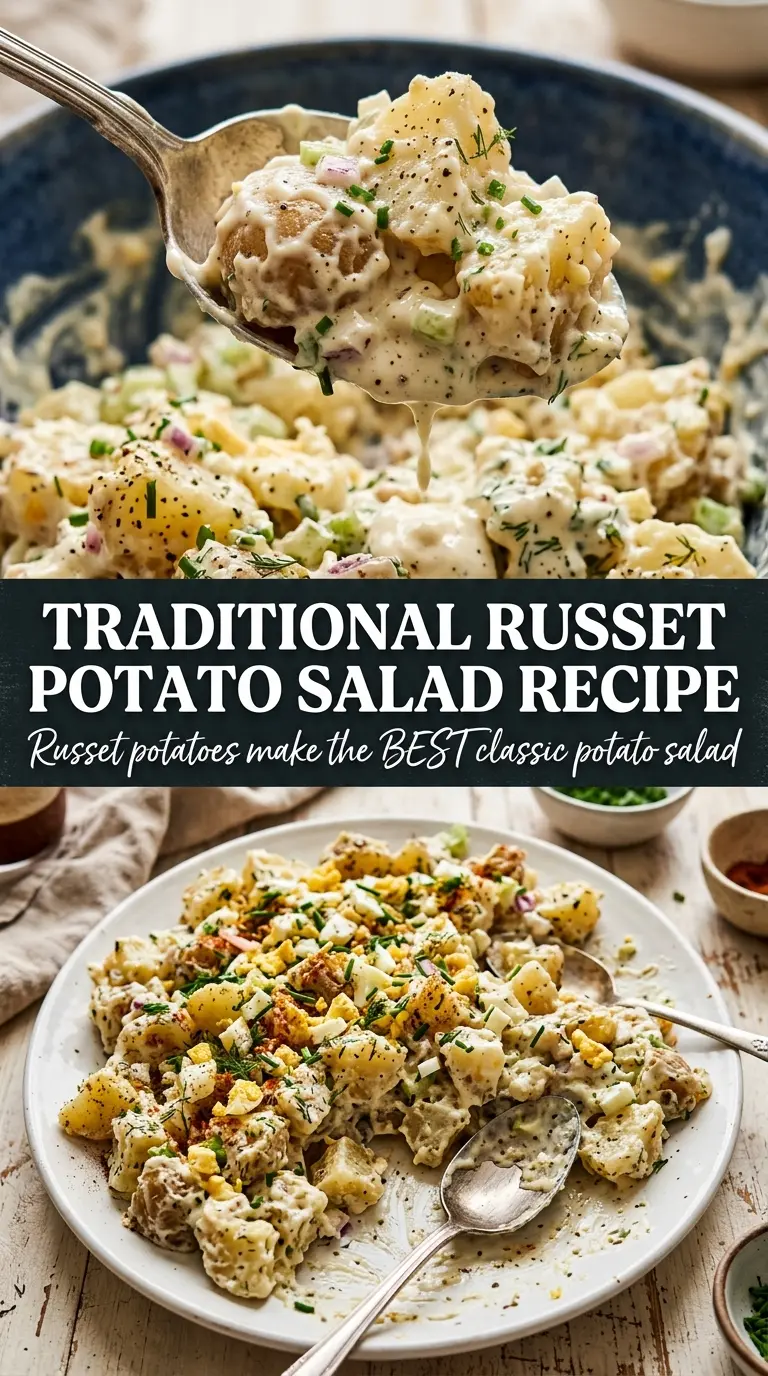
- Mayonnaise — This is the main binder, so use one you already like the taste of. If you want a slightly lighter result, replace up to a third with plain Greek yogurt, but expect a sharper, tangier salad.
- White vinegar — This wakes up the dressing and keeps the richness in check. Apple cider vinegar also works, though it adds a little more sweetness and less clean tang.
- Hard-boiled eggs — They make the salad taste more traditional and add a soft richness that blends into the dressing. Chop them after they’ve cooled completely so the yolks don’t smear into the potatoes.
- Celery and onion — These are there for crunch and bite. Dice them finely so they distribute evenly; big pieces can overpower a forkful and make the salad feel chopped rather than tossed.
Building the Salad So It Stays Cohesive After Chilling
Cooking the Potatoes Just to Tender
Start the potatoes in cold, salted water and bring them up together so the cubes cook evenly from edge to center. You want them tender enough for a fork to slide in with little resistance, but not so soft that the corners start to fray. If they’re falling apart in the pot, they’ve gone too far and the final salad will lean mashed instead of scoopable.
Cooling Before the Dressing Goes In
Drain the potatoes well, then let them cool completely before mixing. Warm potatoes absorb dressing aggressively and can break apart during stirring, which is how you end up with a gluey bowl instead of a clean, creamy salad. Room-temperature potatoes hold their shape and give you a better final texture after chilling.
Folding, Not Beating
Add the dressing and fold gently with a spoon or spatula until everything is coated. The goal is to keep some distinct pieces of potato, not mash them into submission. If the salad looks dry at first, wait a minute and stir again after the potatoes have had time to drink in some of the dressing.
The Chill That Makes It Taste Finished
Two hours in the fridge is the minimum here, and it matters more than it sounds like it should. The flavors settle, the vinegar rounds out, and the dressing thickens as it rests. If you serve it right away, it tastes flatter and the texture feels loose instead of cohesive.
How to Adapt This for Different Tables and Different Fridges
Dairy-Free Version That Still Tastes Classic
This recipe is already naturally dairy-free as written, which is part of why it works so well for cookouts and potlucks. Keep an eye on your mayonnaise, though, because some brands add unexpected dairy ingredients. If you need a backup, use a dairy-free mayo with enough body to coat the potatoes without turning runny.
No Sweet Relish? Use Chopped Pickles
Finely chopped dill or sweet pickles will do the job, but the salad changes personality a bit. Dill pickles make it sharper and less nostalgic, while sweet pickles land closer to the version most people expect at a family picnic. If you use dill, add a touch more sugar to keep the dressing balanced.
Lighter Potato Salad With More Tang
Swap part of the mayonnaise for plain Greek yogurt if you want a sharper, less rich salad. The texture will be a little less plush, and the tang will come forward more, which works well if you’re serving it next to smoky grilled food. Don’t replace all of the mayo or the dressing can turn too thin.
Storage and Reheating
- Refrigerator: Store covered for up to 4 days. The potatoes will soften a little more as they sit, and the dressing may thicken, so stir before serving.
- Freezer: Don’t freeze this salad. Mayonnaise turns grainy after thawing and the potatoes go watery, which ruins the texture.
- Reheating: Serve it cold or let it sit at room temperature for 15 to 20 minutes. Heating potato salad breaks the mayonnaise and makes the eggs rubbery, so this one stays in the chilled category.
Answers to the Questions Worth Asking

American Russet Potato Salad
Ingredients
Equipment
Method
- Bring a pot of water to a boil, then boil the peeled and cubed russet potatoes until tender, about 20 minutes. You should be able to pierce a cube easily with a fork.
- Drain the potatoes thoroughly, then cool completely before mixing. Make sure there is no lingering warmth so the salad stays creamy instead of watery.
- Combine cooled potatoes with the chopped hard-boiled eggs, diced celery, finely diced onion, and sweet pickle relish. Fold just until evenly distributed.
- Whisk mayonnaise, yellow mustard, white vinegar, sugar, salt, and pepper until smooth. Taste and adjust seasoning so the dressing is balanced.
- Pour the dressing over the potato mixture and fold gently until everything is coated. Stop folding as soon as the dressing disappears to avoid breaking up the potatoes.
- Refrigerate the salad for at least 2 hours. The texture should look cohesive and the flavors should taste better after chilling.
- Garnish with paprika right before serving. Add it lightly so the color pops on top of the creamy salad.