Tangy, creamy potato salad gets a lot more interesting when the dressing leans into pickle juice instead of trying to hide it. The potatoes stay tender but hold their shape, the pickles bring crunch in every bite, and the dill ties everything together with that sharp, fresh finish that keeps people going back for another spoonful.
This version works because the flavors are built in layers. The warm potatoes soak up seasoning better than cold ones, the pickle juice loosens the mayonnaise just enough to coat everything without turning heavy, and Dijon gives the dressing a little backbone so it tastes bright instead of flat. Red potatoes are the right pick here because they stay intact after boiling and chill well without turning mealy.
Below, I’ll walk through the one chilling step that makes the salad taste finished instead of just mixed, plus a few smart swaps if you want to adjust the texture or make it dairy-free-friendly without losing that pickle-forward bite.
The pickle juice dressing soaked in after chilling and the potatoes still held their shape. I served it with grilled chicken and my husband asked if there was enough left for lunch tomorrow.
Love the tangy crunch in this dill pickle potato salad? Save it to Pinterest for the cookout side that disappears fast.
The Part Most Potato Salads Get Wrong: Dressing Too Soon
The mistake that ruins a lot of potato salad is dumping cold potatoes straight into heavy dressing and calling it done. Warm potatoes absorb seasoning better, but they also need time to release steam first or the dressing turns loose and greasy. Let them cool until they’re just barely warm to the touch, then mix.
Pickle juice is doing a lot of work here, but it needs balance. Too much and the salad tastes sharp without depth; too little and you lose the reason this version stands out. Dijon helps anchor the acidity, and the mayonnaise smooths the edges so the salad tastes bright instead of briny.
- Red potatoes — Their waxy texture holds up after boiling and chilling, which keeps the salad chunky instead of collapsing into mash. Yukon golds work too, but russets are too soft for this style.
- Dill pickle juice — This gives the dressing its tang and carries the dill flavor through the whole bowl. Use the juice from a jar of pickles you actually like eating, because the brine flavor comes through clearly.
- Dijon mustard — It doesn’t make the salad taste mustardy; it adds depth and helps emulsify the dressing so it clings to the potatoes. Yellow mustard can work in a pinch, but the finish will be flatter.
- Fresh dill — Add it at the end so the flavor stays green and fragrant. Dried dill tastes muted here and won’t give the same lift.
What Each Ingredient Is Actually Doing in the Bowl
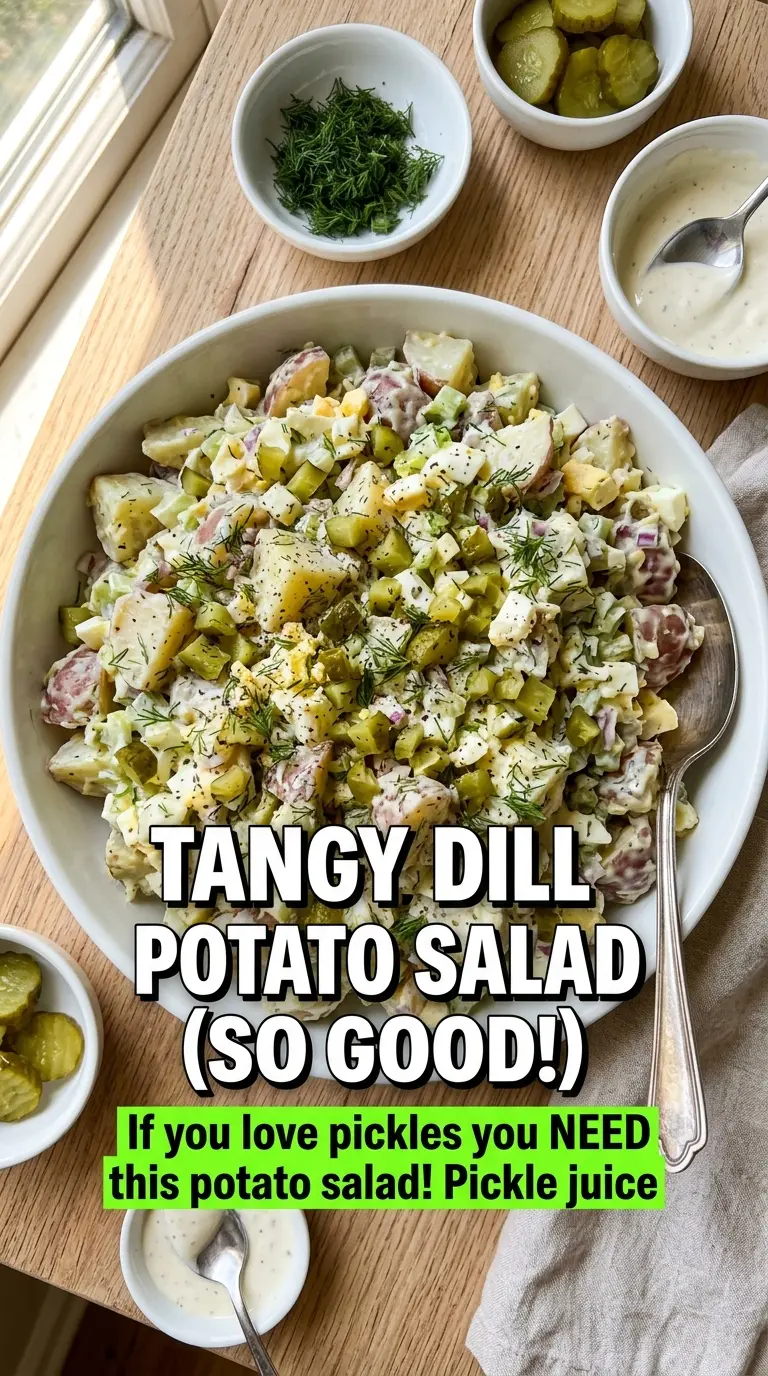
- Red potatoes — These stay firm enough to toss without falling apart. Cut them into even pieces so they cook at the same pace and chill evenly.
- Chopped dill pickles — They add crunch and little bursts of salty acid in every bite. Chop them small enough to spread through the salad, but not so fine that they disappear.
- Celery and red onion — Celery gives clean crunch, while red onion adds sharpness and color. If your onion is very strong, rinse the diced pieces in cold water and drain well before mixing.
- Mayonnaise — This is the base that carries the dressing. Use a mayo you like on its own, because its flavor stays front and center.
- Pickle juice — This thins the dressing just enough to coat every piece without making it runny. Add it gradually if your pickles are very salty.
- Fresh dill — It finishes the salad with an herbal note that keeps the tang from feeling one-dimensional. Stir it in after the dressing so it stays bright.
How to Keep the Potatoes Chunky and the Dressing Creamy
Boiling Until Just Tender
Start the potatoes in salted water and cook them until a fork slides in with only a little resistance. If they go too far, they’ll break apart when you toss the salad and the texture turns muddy. Drain them well, then spread them out briefly so the steam can escape instead of trapping extra water in the bowl.
Mixing While the Potatoes Are Still Slightly Warm
Combine the potatoes with the pickles, celery, and onion once they’ve cooled enough that they won’t wilt the vegetables. Warm potatoes absorb seasoning better than fully cold ones, which is why the salad tastes more complete after chilling. If they’re steaming hot, the dressing gets oily and the herbs lose their freshness.
Building the Dressing in a Separate Bowl
Whisk the mayonnaise, pickle juice, Dijon, salt, and pepper together before it touches the potatoes. That way the acid gets evenly distributed instead of landing in sharp pockets. The dressing should look loose and creamy; if it seems stiff, add a teaspoon more pickle juice until it spreads easily.
Chilling Until the Flavor Settles
Fold in the dill, cover the bowl, and refrigerate for at least 2 hours. That rest time matters because the potatoes absorb the seasoning and the pickle flavor mellows into the mayonnaise instead of sitting on top of it. Give it one more gentle toss before serving, since the dressing settles at the bottom as it chills.
How to Adapt This for Different Tables and Different Pantries
Dairy-Free and Naturally Creamy
This recipe is already dairy-free as written if your mayonnaise is dairy-free, which most standard brands are. The texture stays creamy without any milk or sour cream, so you don’t lose the richness people expect from potato salad.
Extra Crunch for Pickle Lovers
Add another half cup of chopped pickles or stir in a spoonful of pickle relish if you want a louder pickle bite. Relish makes the salad softer and sweeter, while chopped pickles keep the texture cleaner and more savory.
Lighter Dressing, Same Tang
Swap half the mayonnaise for plain Greek yogurt if you want a lighter bowl. The salad will taste a little sharper and less plush, so keep the pickle juice moderate and add a touch more mustard to balance it.
Storage and Reheating
- Refrigerator: Store covered for up to 4 days. The flavor gets a little stronger on day two, and the potatoes may absorb some dressing, so stir before serving.
- Freezer: Don’t freeze this one. Mayonnaise separates and the potatoes turn grainy after thawing.
- Reheating: Serve it cold or let it sit at room temperature for 15 to 20 minutes. Heat changes the dressing texture and can make the potatoes soft and oily.
Answers to the Questions Worth Asking

Dill Pickle Potato Salad
Ingredients
Equipment
Method
- Bring a pot of water to a boil over high heat and boil the cubed red potatoes until tender, about 8–12 minutes, until a fork slides in easily. Keep the boil steady so the cubes cook evenly.
- Drain the potatoes and let them cool to room temperature for 10–15 minutes, until no steam is rising from the surface.
- Add the cooled potatoes to a mixing bowl and combine with the chopped dill pickles, diced celery, and finely diced red onion.
- Whisk the mayonnaise, dill pickle juice, Dijon mustard, salt, and black pepper in a separate bowl until the dressing looks smooth and evenly colored.
- Pour the dressing over the potato mixture and toss well until every piece is coated, with no dry spots visible.
- Fold in the chopped fresh dill, then stir gently just until distributed and bright green flecks are visible throughout.
- Cover and refrigerate for 2 hours, until the salad is chilled through and the flavors taste well blended.