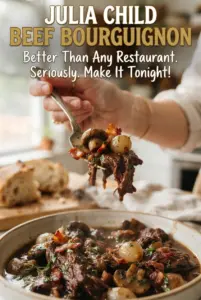
Beef Bourguignon earns its reputation the old-fashioned way: by turning a tough cut into spoon-tender beef, a glossy wine sauce, and a pot of deep, layered flavor that tastes like it took all day because it did. The sauce clings to the meat instead of pooling thinly at the bottom of the bowl, and the bacon, mushrooms, and pearl onions each keep their own character instead of dissolving into the stew.
What makes this version work is the sequence. The beef gets properly dried and browned in batches, the flour cooks onto the meat in the oven, and the wine goes in after the oven temp drops so the braise stays steady instead of harsh. The sauce is strained and reduced at the end, which gives you that classic velvet finish Julia was after instead of a muddy pot of overcooked vegetables.
Below, I’ll walk through the points that matter most: how to get real browning in a crowded pot, how to keep the sauce from tasting thin, and what changes when you need to make it ahead. It’s the kind of dish that rewards patience, but not guesswork.
The beef was fork-tender and the sauce thickened up beautifully after straining. I loved that the mushrooms and pearl onions still had their own texture instead of turning mushy.
Save this Beef Bourguignon for the kind of dinner that needs deep red wine, tender beef, and a sauce worth straining.
The Browning Is the Whole Foundation, Not Just a First Step
Beef Bourguignon falls apart when the meat steams instead of sears. A wet surface, a crowded pot, or heat that drops too fast gives you gray beef and a flat-tasting sauce. The goal is a dark crust on the beef and bacon before any liquid goes in, because that crust is where the finished stew gets its depth.
Working in batches matters here more than almost anywhere else in stew making. Once the pan cools down and the meat starts releasing moisture, you’re no longer browning; you’re boiling. That’s why the recipe builds the flavor in stages, then uses the oven to finish the flour-coated beef before the wine goes in.
- Dry beef — Patting the cubes dry is not optional. Moisture blocks browning, and brown food tastes different from pale food.
- Blanched bacon — The brief blanch removes some of the harsh salt and smoke so the lardons brown cleanly instead of turning brittle and aggressive.
- Flour — It lightly thickens the braising liquid, but more importantly it cooks onto the meat in the oven, which takes away the raw flour taste.
- Full-bodied red wine — Use one you’d actually drink. Thin, sharp wine can leave the finished sauce sour instead of round.
What the Wine, Stock, and Finished Garnishes Are Each Doing Here
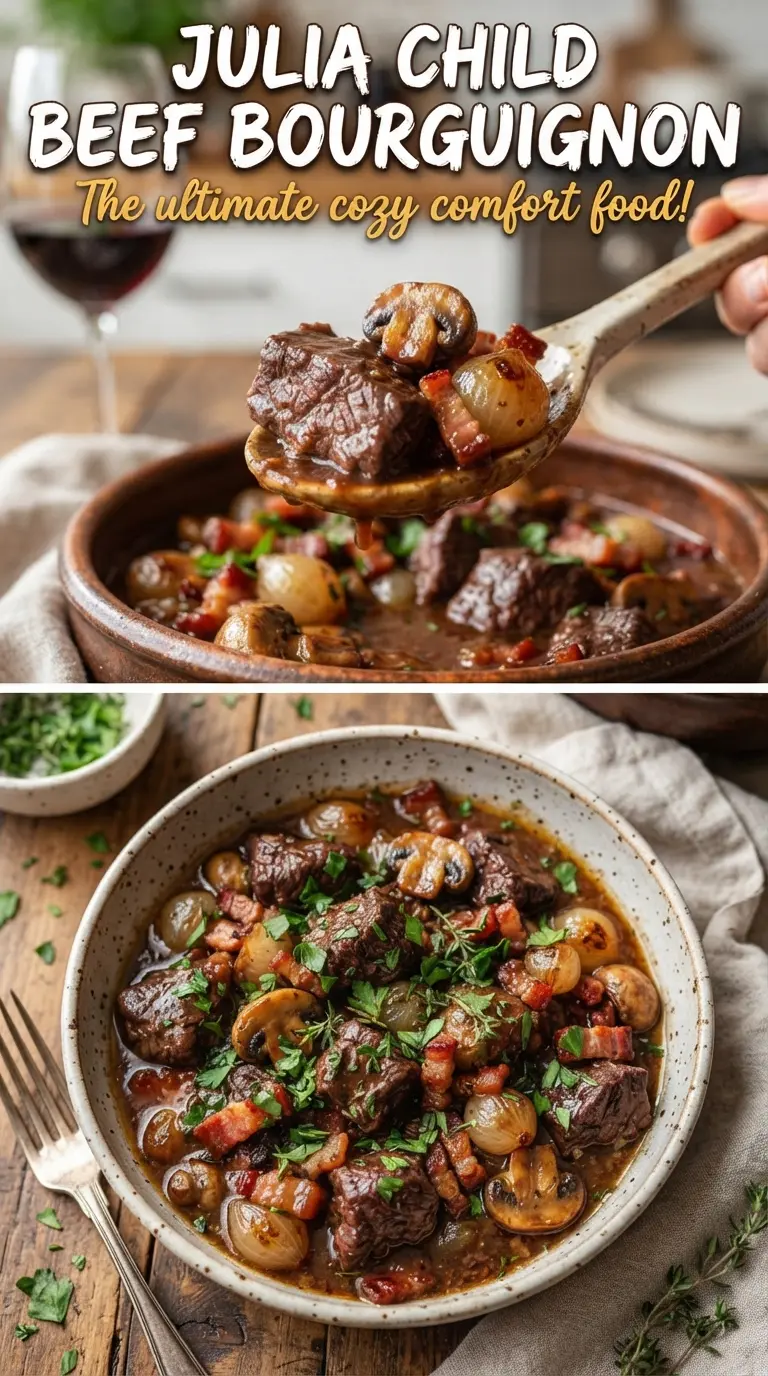
- Beef stock — The wine brings the backbone, but stock keeps the sauce savory and grounded. Add enough to barely cover the meat; flooding the pot makes the flavor thin.
- Tomato paste — Just a tablespoon deepens the color and adds quiet acidity. It shouldn’t read as tomato in the finished dish.
- Garlic, thyme, and bay leaf — These support the beef without taking over. Mash the garlic so it melts into the sauce instead of floating in chunks.
- Pearl onions and mushrooms — They go in at the end on purpose. If they braise the whole time, the onions lose their sweetness and the mushrooms collapse into the sauce.
How to Build the Braise So the Sauce Finishes Glossy, Not Muddy
Getting Color on the Beef and Bacon
Start with the oven fully hot for the first browning stage, and don’t crowd the pot. The bacon should render and brown, not just soften, before it comes out; then the beef goes in in small batches until each piece has a real crust. If the bottom of the pot looks pale, keep going. That browned film is the base of the sauce, and the carrots and onions should pick up some of that color before the flour goes in.
Cooking the Flour Before the Liquid
Once the beef and bacon are back in the pot, toss them with the flour and let the oven cook that coating for a few minutes before adding wine. This step keeps the sauce from tasting pasty. The flour should disappear into the fat and meat juices, not sit on the surface in dusty patches.
Finishing the Braise at Low Heat
When the wine, stock, and aromatics go in, drop the oven to 325°F and cover the pot. You want a lazy, steady braise with only the occasional bubble at the edge. If it boils hard, the beef tightens instead of softening. The meat is done when a fork slides into it with almost no resistance and the sauce smells rounded, not sharp.
Straining and Reducing for the Final Sauce
Strain the braising liquid before the final simmer, then skim the fat from the top. That move separates a heavy stew from a polished one. Simmer just until the sauce lightly coats a spoon, then fold in the pearl onions, mushrooms, and beef. If you rush this part, you’ll end up with a thin broth under the beef instead of the classic velvety finish.
Three Ways to Make the Pot Fit Your Kitchen and Your Table
Make-Ahead for Better Flavor
This dish tastes even better the next day. Cool it, refrigerate it overnight, and reheat it gently before serving so the sauce can loosen and the flavors can settle. The only thing to watch is the garnish: add fresh parsley right before serving so it stays bright.
Gluten-Free Version
Swap the all-purpose flour for a gluten-free flour blend that works for roux-style thickening. The sauce won’t be quite as silky if the blend is starch-heavy, so reduce it a little more at the end if needed. Keep the browning steps the same; that’s where most of the flavor comes from.
Bacon-Free Version
Skip the bacon and use an extra tablespoon of olive oil to brown the beef. You’ll lose some smokiness, so add a little more depth with a touch extra tomato paste and be especially careful to brown the meat well. The stew will still be rich, just a little cleaner in flavor.
Freezer Notes
Beef Bourguignon freezes well, but the mushrooms can soften a bit after thawing. Cool it completely, pack it in airtight containers, and freeze for up to 3 months. Thaw in the refrigerator overnight before reheating so the sauce warms evenly instead of breaking.
Answers to the Questions Worth Asking
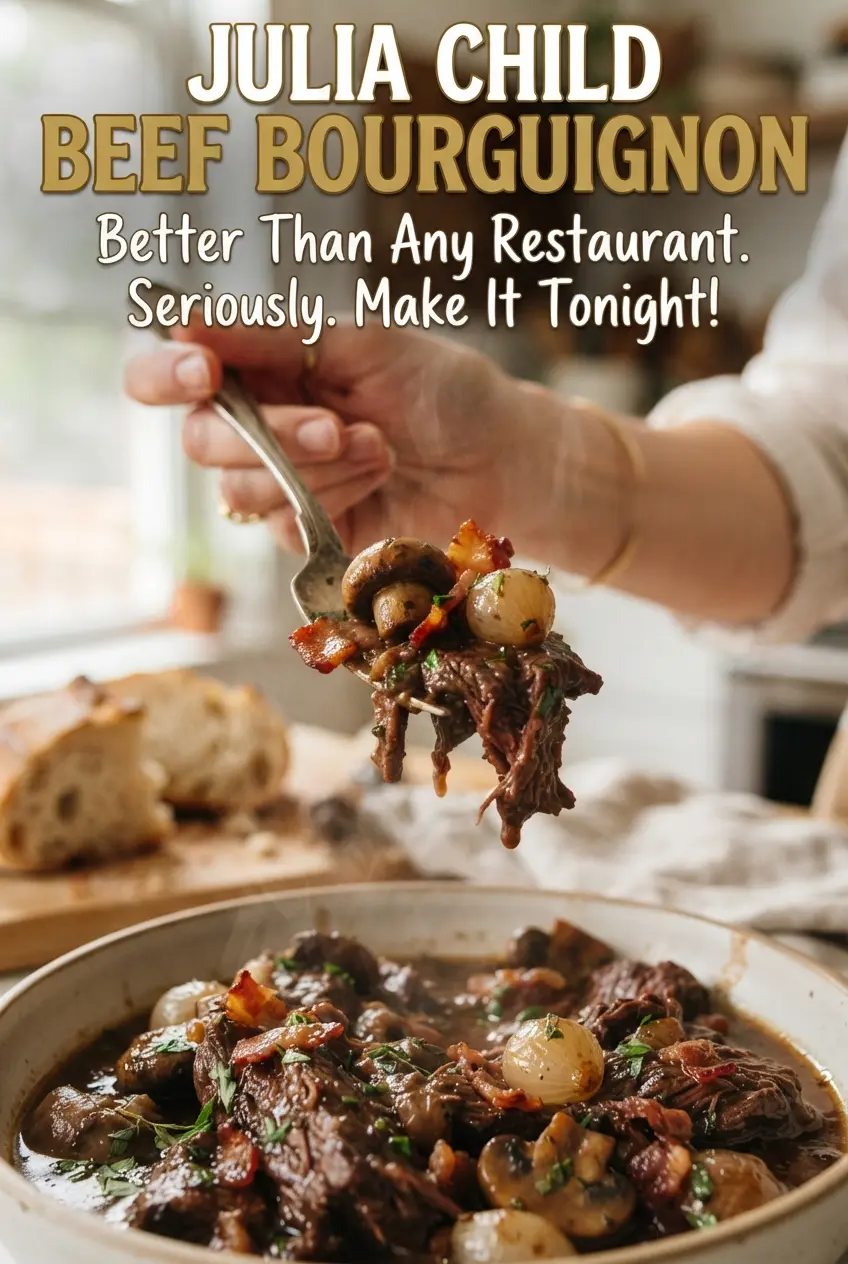
Julia Child Beef Bourguignon
Ingredients
Equipment
Method
- Preheat the oven to 450F, then brown the blanched bacon in olive oil in a casserole and remove it. Look for crisped, browned edges on the bacon.
- Sear the dry beef in the hot fat a few pieces at a time, then brown the carrot and onion. Keep batches spaced so the meat browns instead of steaming.
- Return the beef and bacon to the casserole, season with salt and black pepper, sprinkle with all-purpose flour, and toss. Coat the cubes so they look lightly dusted.
- Bake uncovered for 4 minutes, then toss and bake for 4 minutes more. The surfaces should look deeper brown and fragrant.
- Reduce the oven to 325F, then stir in the red wine and enough beef stock to barely cover, plus tomato paste, mashed garlic, dried thyme, and bay leaf. The liquid should come just to the top of the meat.
- Cover and braise for 2 1/2 to 3 hours until the beef is fork-tender. When pressed with a fork, the cubes should yield easily.
- Strain the sauce, skim the fat, and simmer until it thickens. Watch for a glossy coating that clings to a spoon.
- Pour the sauce back over the beef, then add the brown-braised pearl onions and sautéed mushrooms. Garnish with fresh parsley for a bright finish.