Fresh cranberry orange sauce wakes up a table in a way the canned version never can. The berries burst into a glossy, tart-sweet spoonful with just enough body to cling to turkey, spoon over biscuits, or cut through richer holiday dishes. When it’s made right, it tastes bright instead of candy-sweet, with little pops of whole fruit and a clean citrus finish.
The trick is starting with orange juice instead of water, then adding the zest after the pot comes off the heat. That keeps the citrus aroma fresh and keeps the sauce from tasting flat or bitter. Folding in orange segments at the end gives the sauce a juicy, fresh-fruit texture that makes every bite feel more alive than a standard simmered cranberry sauce.
Below, I’ve included the small timing details that keep the berries from turning mushy, plus a few smart swaps and storage notes if you want to make it ahead.
The cranberries burst at just the right point and the orange segments stayed bright, not mushy. I made it the night before and it thickened up beautifully in the fridge.
Save this fresh cranberry orange sauce for the table side that brings tart berries, citrus, and juicy orange segments together.
The Reason Most Cranberry Sauces Turn Flat Before They Ever Set
Cranberry sauce looks simple, but the difference between bright and bland usually comes down to two things: enough sugar to balance the berries, and enough heat to make the cranberries burst without cooking them to paste. If you boil them hard for too long, the sauce can get dull and jammy instead of glossy and fresh. If you stop too early, it stays thin and sharp. This version lands in the middle, with enough simmer time to release the natural pectin from the cranberries so it thickens as it cools.
The other mistake is adding the orange too early. Orange zest loses its lift fast in a long simmer, and the segments can fall apart if they cook too long. Stir the zest in off the heat, then fold in the segments once the sauce has cooled a bit. That keeps the citrus notes clean and the fruit intact.
What Each Ingredient Is Actually Doing In This Sauce
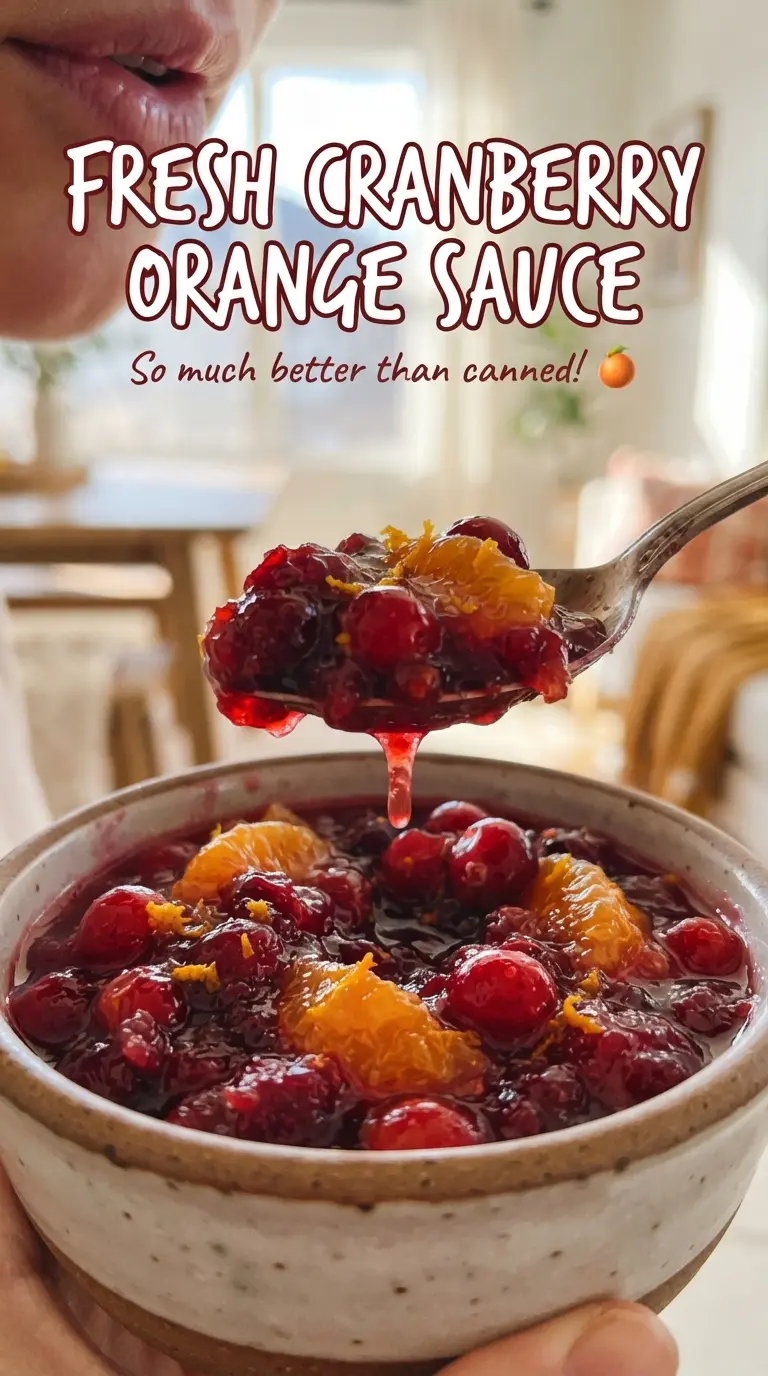
- Fresh cranberries — These are the backbone of the sauce. They bring the tart bite and the natural pectin that helps the sauce thicken as it cools. Frozen cranberries work too; use them straight from the freezer and add the same way, without thawing.
- Orange juice — This does more than add flavor. It gives the sauce sweetness, acidity, and enough liquid to dissolve the sugar before the cranberries go in. Bottled juice can work in a pinch, but fresh juice tastes cleaner and keeps the sauce from going heavy.
- Orange zest — Zest carries the most fragrant part of the orange. Add it off the heat so it stays bright instead of turning bitter or cooked-tasting.
- Orange segments — These add a fresh, juicy texture that makes the sauce feel layered instead of one-note. Cut away as much pith as you can before segmenting so the pieces stay sweet and tender.
- Sugar — The cranberries need it. Sugar rounds out the sharpness and helps the sauce set to a spoonable consistency. Reducing it too far can leave the sauce thin and aggressively tart.
Cooking the Berries Until They Burst, Not Until They Break Down
Building the Syrup Base
Start by bringing the sugar and orange juice to a full boil so the sugar dissolves completely before the cranberries go in. If the sugar is still gritty at this point, it can leave the finished sauce slightly sandy. Once it boils, the liquid should look clear and glossy, not cloudy. That’s the cue to add the fruit.
Letting the Cranberries Pop
Stir in the cranberries and a pinch of salt, then keep the mixture at a steady simmer. You’ll hear the berries start to split, and within about 10 minutes most of them should burst open. Don’t walk away and let it run hard once the berries break; that’s how you end up with a sauce that’s reduced too far and tastes cooked down instead of bright.
Finishing With Citrus
Take the pan off the heat before adding the zest. The hot syrup will pull the aroma out of the zest without boiling it into bitterness. Let the sauce cool slightly before folding in the orange segments so they stay plump and distinct. It will still look a little loose when warm, but it thickens as it chills.
How to Bend This Recipe Without Losing What Makes It Good
Maple-Sweetened Cranberry Orange Sauce
Swap part or all of the sugar for maple syrup if you want a deeper, woodsy sweetness. Reduce the orange juice slightly if the sauce looks too loose, since maple adds liquid. The finished sauce will taste warmer and less sharp than the original.
Less-Sweet Cranberry Orange Sauce
You can cut the sugar back a little if you like a tarter sauce, but don’t slash it by half. Cranberries need enough sweetness to balance their bite and help the sauce set. If you go lighter, expect a thinner, sharper finish that works best with rich savory dishes.
Dairy-Free, Gluten-Free, Naturally Vegetarian
This recipe already fits all three without any changes. That’s part of why it’s such an easy side to bring to a mixed table. Just check that any packaged orange juice you use is plain juice with no added dairy ingredients or thickeners.
Storage and Reheating
- Refrigerator: Store in an airtight container for up to 5 days. It will thicken a lot as it chills.
- Freezer: It freezes well for up to 2 months. Cool completely, then freeze in a sealed container with a little headspace for expansion.
- Reheating: Warm gently over low heat or serve it cold. If you reheat, don’t boil it hard or the orange segments can fall apart and the sauce can turn overly loose once it cools again.
Answers to the Questions Worth Asking
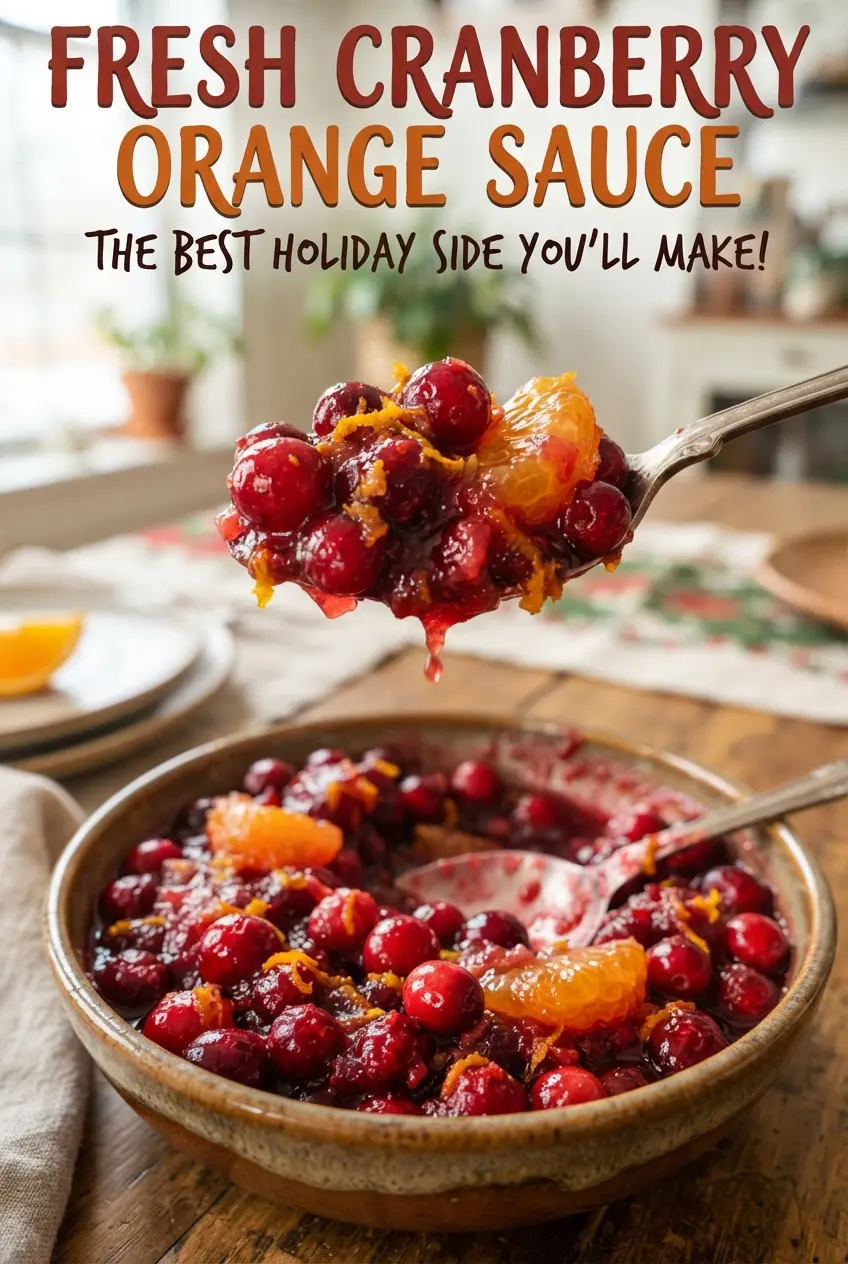
Fresh Cranberry Orange Sauce
Ingredients
Equipment
Method
- Bring sugar and fresh orange juice to a boil in a saucepan over medium-high heat, stirring until the sugar dissolves and the mixture looks clear and glossy. Once it boils, immediately keep it at a steady simmer for 1-2 minutes before adding cranberries.
- Add fresh cranberries and salt, then return to a simmer and cook for 10 minutes, stirring occasionally, until most berries burst and the sauce thickens slightly and becomes ruby red.
- Remove the saucepan from heat and stir in orange zest until it disperses and perfumes the sauce. Keep stirring for about 15 seconds so the zest doesn’t clump.
- Cool slightly for 5 minutes, then gently fold in the orange segments to keep them intact. Stop mixing as soon as the segments are evenly distributed.
- Chill the cranberry orange sauce until serving, covered, so flavors meld and the texture sets. Let it cool completely in the refrigerator for at least 30 minutes if you can.