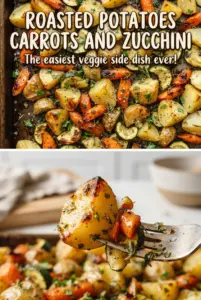
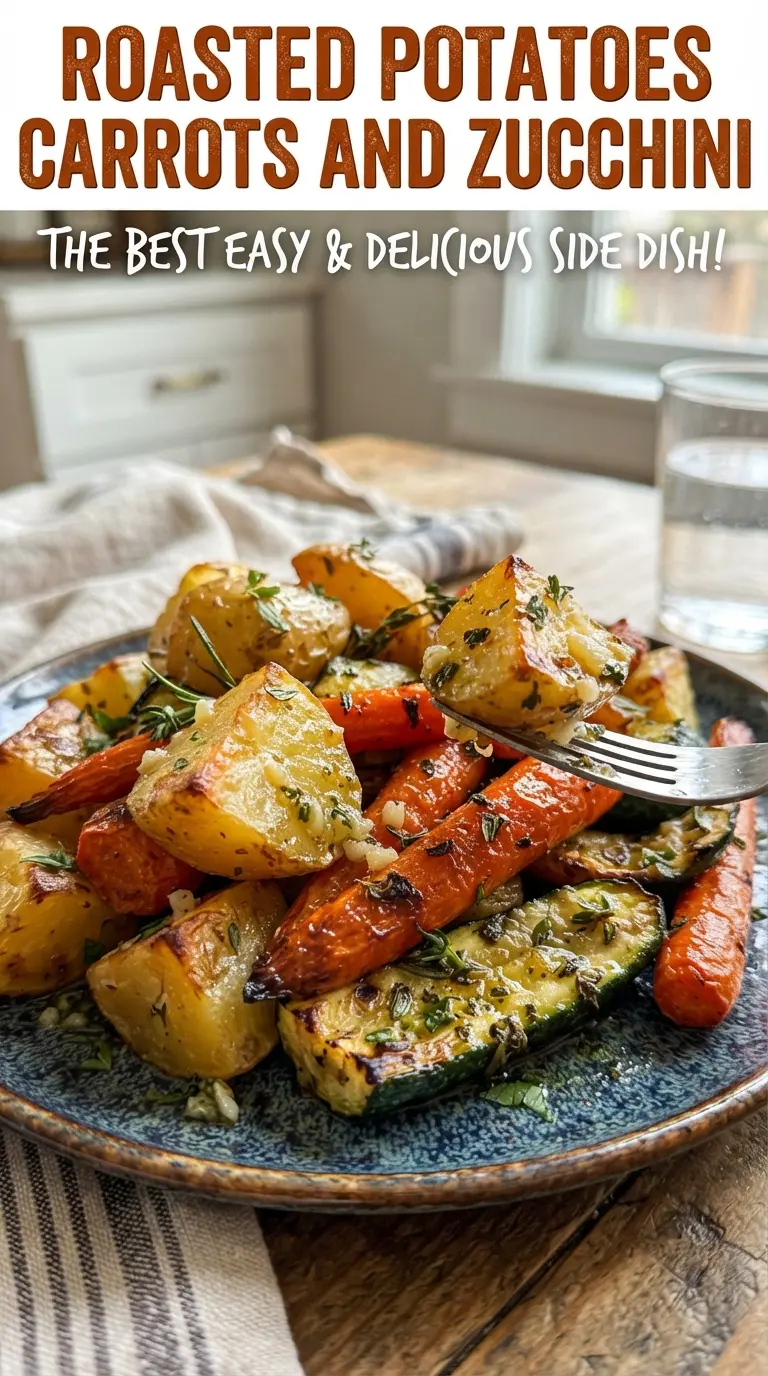
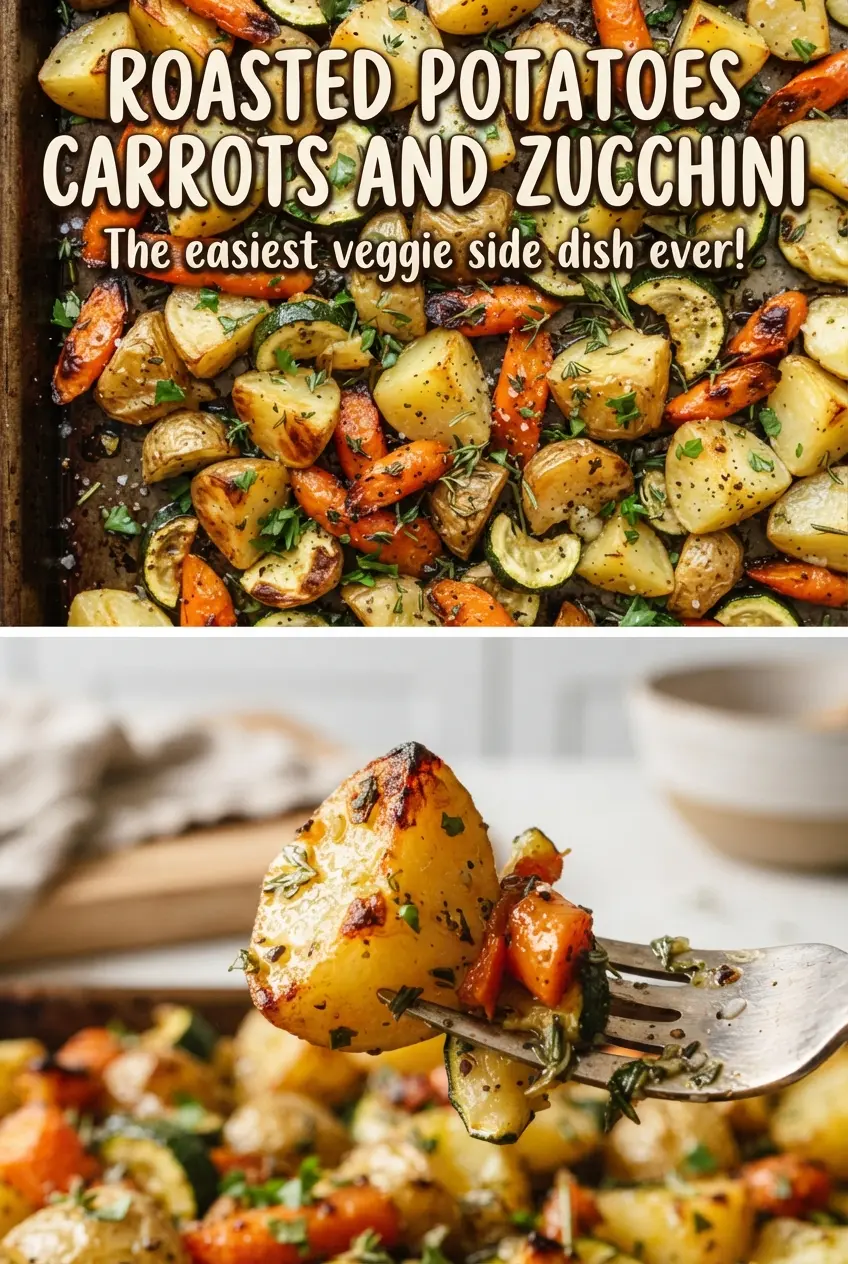
Roasted potatoes, carrots, and zucchini hit that sweet spot where the edges get deeply browned, the centers turn tender, and the whole pan tastes like more work than it actually took. The potatoes bring the crunch, the carrots caramelize into something almost sweet, and the zucchini softens just enough without collapsing into mush. Finished with Parmesan and parsley, it lands on the table looking simple but tasting finished.
The key is giving the potatoes and carrots a head start before the zucchini goes in. Zucchini carries a lot of water, and if it joins the pan too early, it steams everything around it instead of letting the vegetables roast. A hot oven and enough space on the pan matter here too. Crowding traps moisture, and moisture is the enemy of browning.
Below, I’ve included the small timing detail that keeps the zucchini from turning soggy, plus a few smart swaps if you need to work with what’s in the fridge. This is the kind of side dish that disappears fast, especially when the edges of the potatoes are the first thing people pick at.
The potatoes got crispy before the zucchini had a chance to turn watery, and the Parmesan at the end made the whole pan taste finished. I’ve made this twice already and it disappeared fast both times.
Save this roasted potatoes, carrots, and zucchini sheet pan side for the nights when you want crisp edges, caramelized vegetables, and almost no cleanup.
The Trick to Keeping Zucchini Roasted Instead of Soggy
Roasted zucchini is where this kind of sheet-pan side usually goes sideways. Potatoes and carrots can handle a long roast, but zucchini gives up moisture quickly and turns soft before the rest of the vegetables have a chance to brown. That’s why it goes in halfway through, after the denser vegetables have already started to develop color.
High heat matters just as much as timing. At 425°F, the potatoes blister at the edges and the carrots pick up some sweetness before the zucchini arrives. If the pan is crowded, the vegetables steam in their own moisture and you lose that roasted texture, so use two pans if needed rather than piling everything together.
What Each Ingredient Is Actually Doing in This Recipe
- Primary ingredient (the star) — Quality matters most. Choose the best you can find.
- Cooking medium (oil, butter, or broth) — This carries flavors and prevents dryness.
- Seasonings (salt, pepper, spices, herbs) — Layer flavors so nothing overpowers. Build depth gradually.
- Aromatics (garlic, onion, herbs) — Cook with fat to bloom flavors. Become the foundation.
- Supporting ingredients — Complement the main ingredient without overpowering it.
- Sauce or liquid (if applicable) — Brings flavors together. Balance richness with acid.
- Acid (lemon, vinegar, wine, or other) — Brightens and prevents flat-tasting results.
- Final finish (garnish, glaze, or sauce) — Prevents one-dimensional taste and adds visual appeal.
What Each Ingredient Is Actually Doing in This Pan
- Baby potatoes — These bring the crispest texture in the dish. Quartering them gives more cut sides to brown, which is where the best flavor happens. If you only have larger potatoes, cut them into similar-size chunks so they cook evenly.
- Carrots — Carrots hold their shape well and get sweet at high heat. The half-inch coins are important; thinner slices can dry out before the potatoes are done.
- Zucchini — This is the soft, savory contrast, but it needs the shortest roast time. Cut it into chunks, not thin rounds, so it stays intact and doesn’t disappear into the pan.
- Olive oil and Parmesan — The oil helps the vegetables brown instead of stick, and the Parmesan adds a salty, nutty finish right at the end. Use real grated Parmesan if you can; the finely grated shelf-stable kind won’t melt and cling the same way.
- Garlic and Italian seasoning — Garlic infuses the oil and seasons the whole pan, while the herbs keep the vegetables from tasting one-note. Fresh garlic can brown fast, so tossing it with the sturdier vegetables first keeps it from scorching before the zucchini goes in.
Building the Roast in Two Timed Waves
Getting the Potatoes and Carrots Started
Toss the potatoes and carrots with most of the oil, garlic, Italian seasoning, salt, and pepper right on the sheet pan so every cut surface gets coated. Spread them out in a single layer with some space around each piece. If they’re piled up, they’ll steam and go soft instead of developing those browned, crisp edges. Roast them for 20 minutes until the potatoes are starting to take on color and the carrots are beginning to soften at the edges.
Adding the Zucchini at the Right Moment
Stir the zucchini with the remaining oil, then add it to the hot pan and toss everything together. That little bit of separate oil helps the zucchini coat quickly without flooding the pan. Roast for another 15 minutes, but start checking near the end; you want the zucchini tender and the potatoes crisp, not dried out. If your vegetables are cut larger than described, give them a few extra minutes, but keep the pan in a single layer.
Finishing with Cheese and Herbs
Pull the pan from the oven while the vegetables are still hot and glossy, then scatter the Parmesan and parsley over the top. The heat from the pan softens the cheese just enough to cling without turning greasy. If you add the cheese too early, it can scorch and disappear into the oil. Serve right away while the potatoes still have their crispest edges.
How to Adapt This Sheet Pan Side Without Losing the Good Parts
Make It Dairy-Free
Skip the Parmesan and finish with extra parsley plus a pinch of flaky salt. You’ll lose the nutty, savory top note, but the vegetables still roast beautifully and the garlic-olive oil base carries the dish on its own.
Use What You Have Instead of Baby Potatoes
Yukon Gold or red potatoes work well here. Cut them into 1-inch pieces so they roast at the same pace as the carrots. Russets can work, but they’re drier and a little more fragile, so they won’t hold their shape as neatly.
Swap the Herbs for a Different Finish
Fresh dill, thyme, or chives all work if parsley isn’t what you have. Dill leans brighter, thyme tastes more savory, and chives give the finished pan a gentle onion note. Add delicate herbs at the end so they don’t blacken in the oven.
Storage and Reheating
- Refrigerator: Store leftovers in an airtight container for up to 4 days. The vegetables soften a bit as they sit, especially the zucchini.
- Freezer: Not a great freezer side. The zucchini breaks down after thawing and turns watery.
- Reheating: Rewarm on a sheet pan in a 400°F oven for 8 to 10 minutes so the potatoes can crisp back up. The microwave will heat them, but it also makes the roasted edges limp.
Answers to the Questions Worth Asking
Roasted Potatoes Carrots and Zucchini
Ingredients
Equipment
Method
- Preheat oven to 425F and position a rack in the middle so the sheet pan heats evenly.
- Toss baby potatoes and carrots with 3 tablespoons olive oil, garlic, dried Italian seasoning, salt, and black pepper on a sheet pan until coated.
- Roast for 20 minutes, then look for potatoes to be starting to brown at the edges.
- Toss zucchini with the remaining olive oil, add it to the pan, and stir so it spreads out in an even layer.
- Roast 15 minutes more until potatoes are crispy and zucchini is tender, watching for browned spots on the zucchini and deeper color on the potatoes.
- Sprinkle with grated Parmesan and fresh parsley, then serve immediately while the vegetables are hot and the potatoes stay crisp.