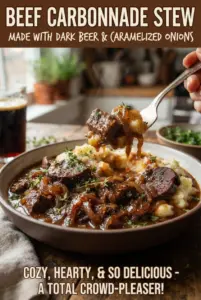
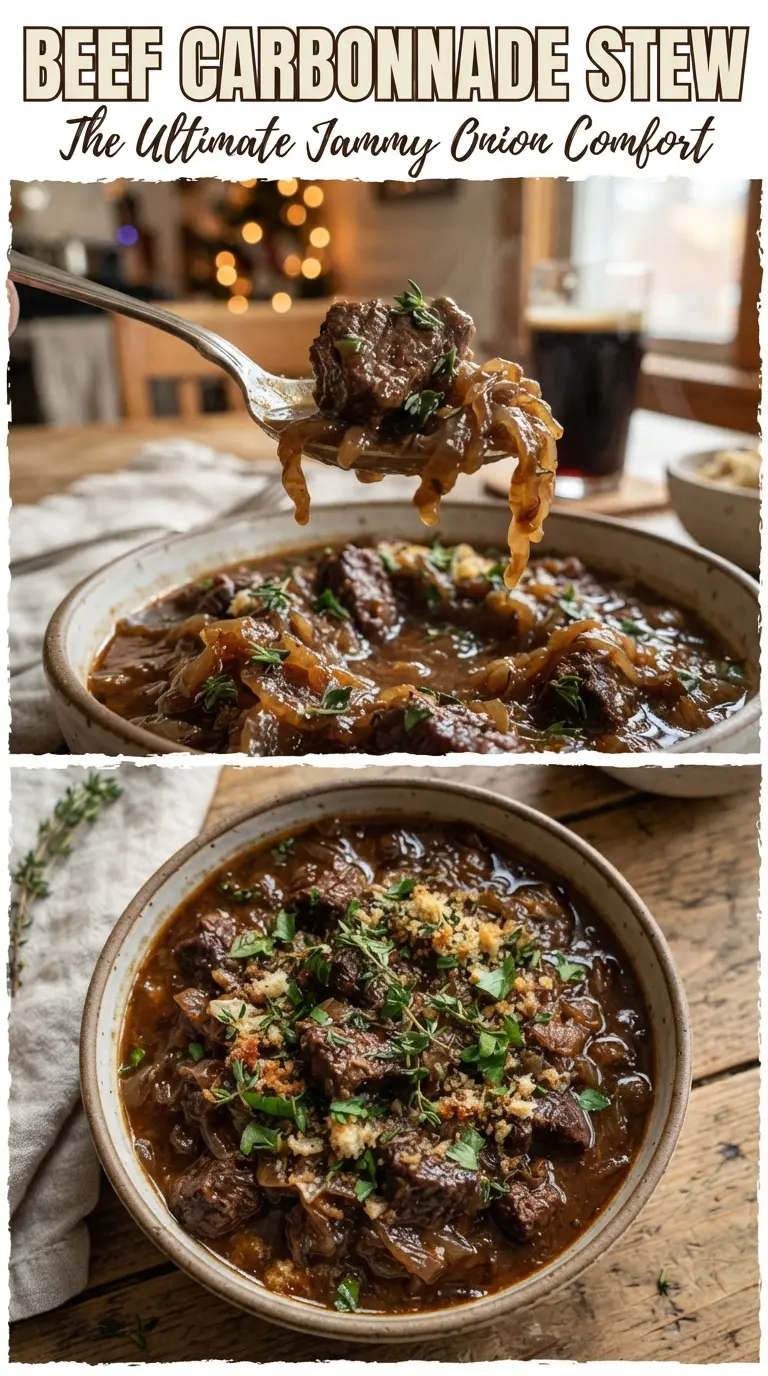
Beef carbonnade stew turns deep, glossy, and spoon-tender when the onions are cooked all the way down and the beer has time to mellow into the broth. The finished pot tastes layered and old-fashioned in the best way: rich beef, sweet onions, a little tang from vinegar, and that dark Belgian ale note that makes the sauce taste round instead of heavy.
The key is patience at two points. First, the onions need to go well beyond soft; they should turn a deep golden brown before the flour goes in. Second, the mustard-topped bread isn’t a gimmick. It melts into the stew and helps thicken the liquid while adding a sharp, savory edge that keeps the sauce from tasting flat. I’ve made versions that rushed either step, and they never had the same depth.
Below, I’m walking through the exact cues that tell you when the onions are ready, why the beer choice matters, and how to keep the beef tender instead of stringy. There’s also a good make-ahead note at the end, because this stew tastes even better after a night in the fridge.
The onions cooked down into this sweet, dark jammy layer and the beef was fork-tender right at the 2 1/2 hour mark. The mustard bread thickened the sauce better than I expected.
Save this Belgian beef carbonnade for the kind of night when you want deep onion flavor, beer-braised beef, and a thick, mustard-kissed sauce.
The Reason the Onions Need to Go Much Darker Than You Think
Carbonnade lives or dies on the onions. If they stay pale, the stew tastes one-note and the sauce can read as thin or sharp instead of mellow and rich. Cook them until they collapse, stick a little to the pan, and then go a shade deeper; that long browning does the same job a slow reduction would do later, only with more sweetness and better body.
The other common failure is adding flour before the onions have enough color. Flour needs fat and heat, but it also needs caramelized onion flavor underneath it. If the onions are only softened, the flour can taste pasty. Once they’re deep golden, the flour blends in and disappears into the sauce instead of announcing itself.
What the Beer, Mustard Bread, and Vinegar Are Each Fixing
- Belgian brown ale — This brings malty depth and a little bitterness that stands up to the beef. A brown ale or dubbel works well; avoid anything aggressively hoppy, because bitterness gets harsher after three hours in the oven.
- Dijon mustard on rustic bread — The bread breaks down and thickens the stew, while the mustard adds a sharp edge that keeps the sauce from tasting sugary. Use sturdy bread, not sandwich slices, or it can disappear before it has a chance to do its job.
- Apple cider vinegar — Just enough acid keeps the sauce from turning muddy. It won’t taste tangy once the stew is finished, but you’d miss it if it weren’t there.
- Beef chuck — Chuck has the collagen this dish needs. Leaner beef can go dry over a long braise and won’t give you that silky, spoon-coating texture.
Building the Braise So the Sauce Stays Rich, Not Flat
Browning the Beef in Real Batches
Brown the beef in two or three rounds, leaving space between the pieces. If the pan looks crowded, the meat steams and the crust never forms. You want a dark, sticky surface on the beef and browned bits left in the Dutch oven, because those bits become part of the stew once the liquid goes in.
Cooking the Onions Until They Turn Jammy
Once the beef is out, add the remaining butter and all the onions, then let them cook patiently. At first they’ll release water, then they’ll shrink, and eventually they’ll start to take on a deep caramel color and cling to the bottom of the pot. That’s the signal to stir in the brown sugar and flour. If the onions are still wet when the flour goes in, the mixture turns pasty instead of toasty.
Letting the Bread Melt into the Pot
After the beer, broth, vinegar, thyme, and bay leaves go in, lay the mustard bread on top, mustard side down. Don’t stir it in right away. It needs time to soften and dissolve into the braise so it can thicken gradually. When you stir once during baking and the bread is mostly gone, that’s exactly what you want to see.
Knowing When the Beef Is Done
After about 2 1/2 hours, the beef should pull apart with light pressure from a spoon or fork. If it still feels tight, it needs more time, not more heat. Keep the oven at 325°F and give the collagen time to melt; cranking up the temperature won’t tenderize it faster, it just tightens the meat.
Three Ways to Adapt Carbonnade Without Losing the Character of the Dish
Gluten-Free Carbonnade
Swap the flour for a gluten-free all-purpose blend that includes xanthan gum, and use gluten-free rustic bread or skip the bread thickener and reduce the braising liquid uncovered for the last 20 to 30 minutes. The stew will still be rich, but the sauce will lean a little more brothy than the classic version.
No Belgian Ale on Hand
Use a dark amber beer or a mild brown ale instead of a hoppy IPA. You want maltiness, not sharp bitterness. If you need to skip beer entirely, use more beef broth plus 1 to 2 teaspoons of balsamic vinegar, but the stew will lose some of the deep, rounded flavor that makes carbonnade distinct.
Dairy-Free Version
Replace the butter with a neutral oil or plant-based butter. The result will still braise well, but butter gives the onions a fuller taste, so if you use oil, give the onions a little extra time to develop color before moving on.
Make It a Day Ahead
This stew is one of those dishes that gets better overnight. The beef absorbs more of the sauce and the onion flavor settles down. If you can, cool it completely, chill it, and reheat it the next day for an even deeper, more cohesive pot.
Storage and Reheating
- Refrigerator: Keeps well for 4 days. The sauce thickens as it sits, which is normal.
- Freezer: Freezes well for up to 3 months. Cool completely, portion into airtight containers, and leave a little room for expansion.
- Reheating: Warm gently on the stove over low heat with a splash of broth or water if needed. Don’t boil it hard, or the beef can tighten and the sauce can separate slightly.
Questions I Get Asked About This Recipe
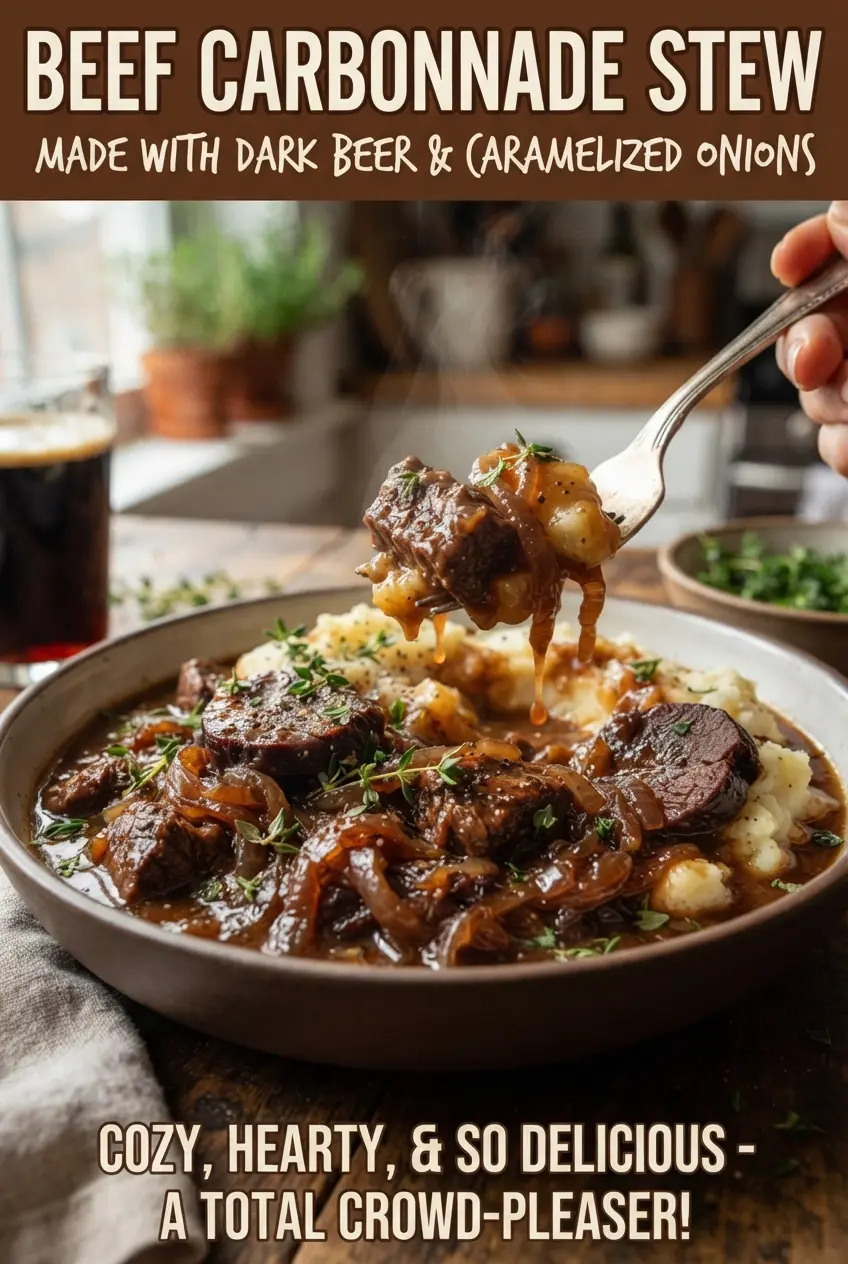
Beef Carbonnade Stew
Ingredients
Equipment
Method
- Preheat the oven to 325F. Season the beef with salt and black pepper, then brown it in batches in a Dutch oven using 2 tablespoons butter.
- Cook until the beef is well browned on the outside, then transfer to a plate while you brown the next batch. This builds flavor before the beer braise.
- Add the remaining 1 tablespoon butter and the sliced onions to the Dutch oven. Cook at a steady simmer for 20 minutes until deep golden, stirring as needed to prevent scorching.
- Stir in the brown sugar and all-purpose flour and cook until the mixture looks thick and slightly toasted. This helps the stew develop a glossy, thickened sauce later.
- Pour in the Belgian brown ale, beef broth, and apple cider vinegar, scraping the bottom to dissolve browned bits. Bring everything to a brief bubble so the sauce starts to combine.
- Add the thyme and bay leaves, then return the beef to the pot. Make sure the beef is mostly covered by the braising liquid.
- Lay the mustard-spread rustic bread on top with the mustard side down. Press it lightly so it contacts the liquid for thickening.
- Cover and bake at 325F for 2 1/2 hours, stirring once when the bread dissolves. Bake until the beef is very tender and the sauce turns dark and glossy.
- Remove the thyme sprigs and bay leaves. Taste the sauce and serve hot with fries or mashed potatoes.