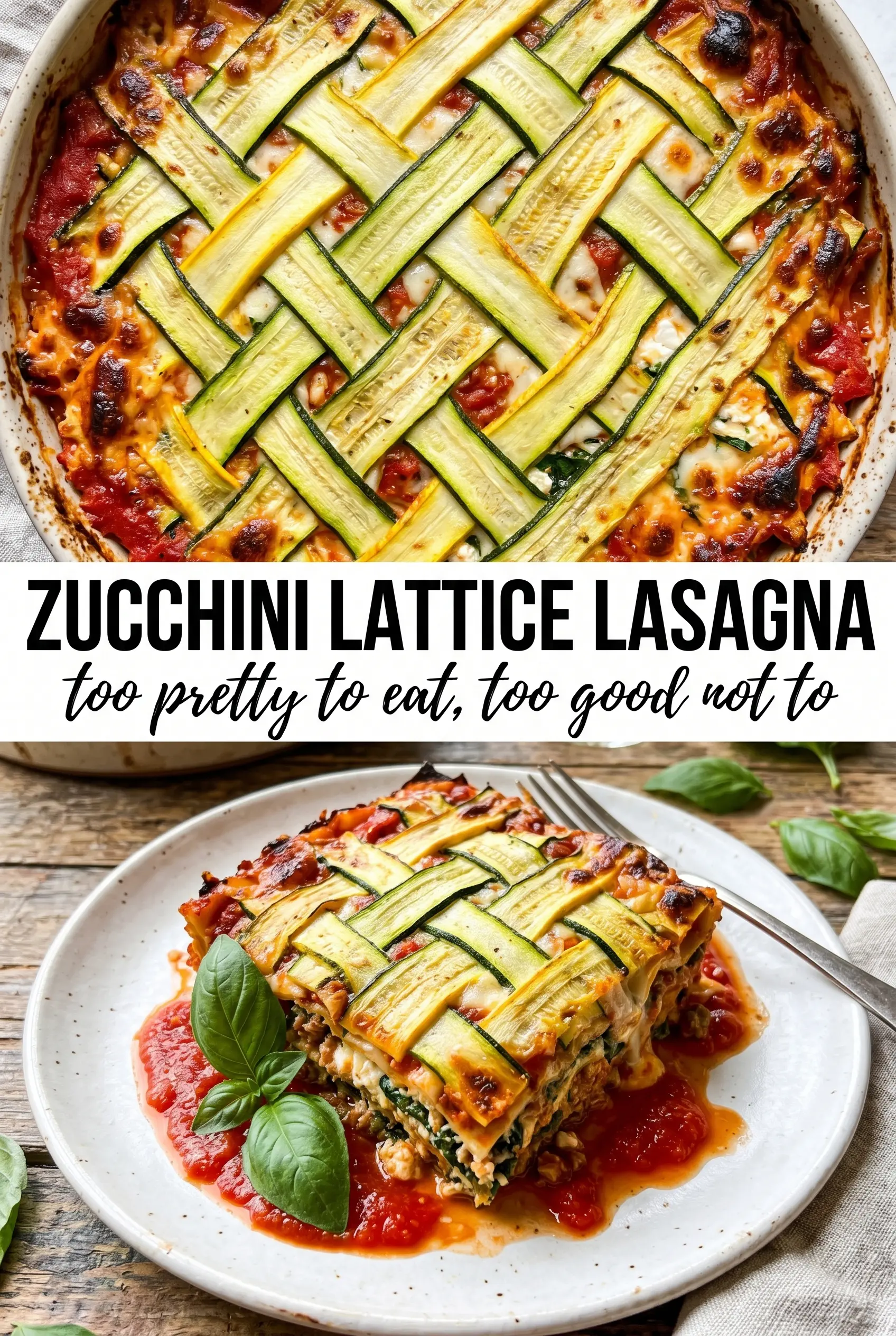
Zucchini lattice lasagna earns its place at the center of the table because it looks dramatic and slices up like a proper baked pasta dish, but the top stays light, savory, and crisp instead of sinking into a soggy blanket of vegetables. The woven zucchini and yellow squash do more than decorate the pan — they give you a golden, structured top that holds its shape long enough to serve clean squares with visible layers underneath.
The trick is treating the zucchini like a surface, not a filler. Thin planks lay better, brown more evenly, and weave into a tighter pattern if you keep them dry before assembly. The ricotta layer also matters here: it should be thick and seasoned well so the lasagna tastes balanced under all that vegetable topping instead of just tasting like sauce and cheese.
Below, I’ve included the one step that keeps the lattice from slipping apart, plus a few swaps that still give you that showstopper finish even if you don’t have both zucchini and yellow squash on hand.
The lattice came out golden and held together when I sliced it, and the zucchini never turned watery. My husband kept commenting on how good the top looked and asked if I could make it again next week.
Pin this zucchini lattice lasagna for the night you want a stunning baked dinner with a golden woven top and clean, photo-worthy slices.
The Reason the Zucchini Lattice Stays Neat Instead of Turning Soft
The lattice only works when the zucchini and squash are cut thin enough to bend, but not so thin that they fall apart the second they hit heat. Thick planks buckle and slide. Paper-thin strips tear when you try to weave them. The sweet spot is long, flexible slices that can overlap without shrinking into a tangled pile.
Moisture is the other thing that ruins the pattern. Zucchini carries a lot of water, and if the strips go in wet, they steam on top of the lasagna instead of drying and browning. A quick blot with paper towels after slicing gives the top a better chance to crisp at the edges and hold its shape when you cut into it.
The final rest matters more here than it does in a standard lasagna. Those 15 minutes let the filling settle so the lattice doesn’t slide off the first time you lift a square from the pan.
What Each Ingredient Is Actually Doing in This Dish
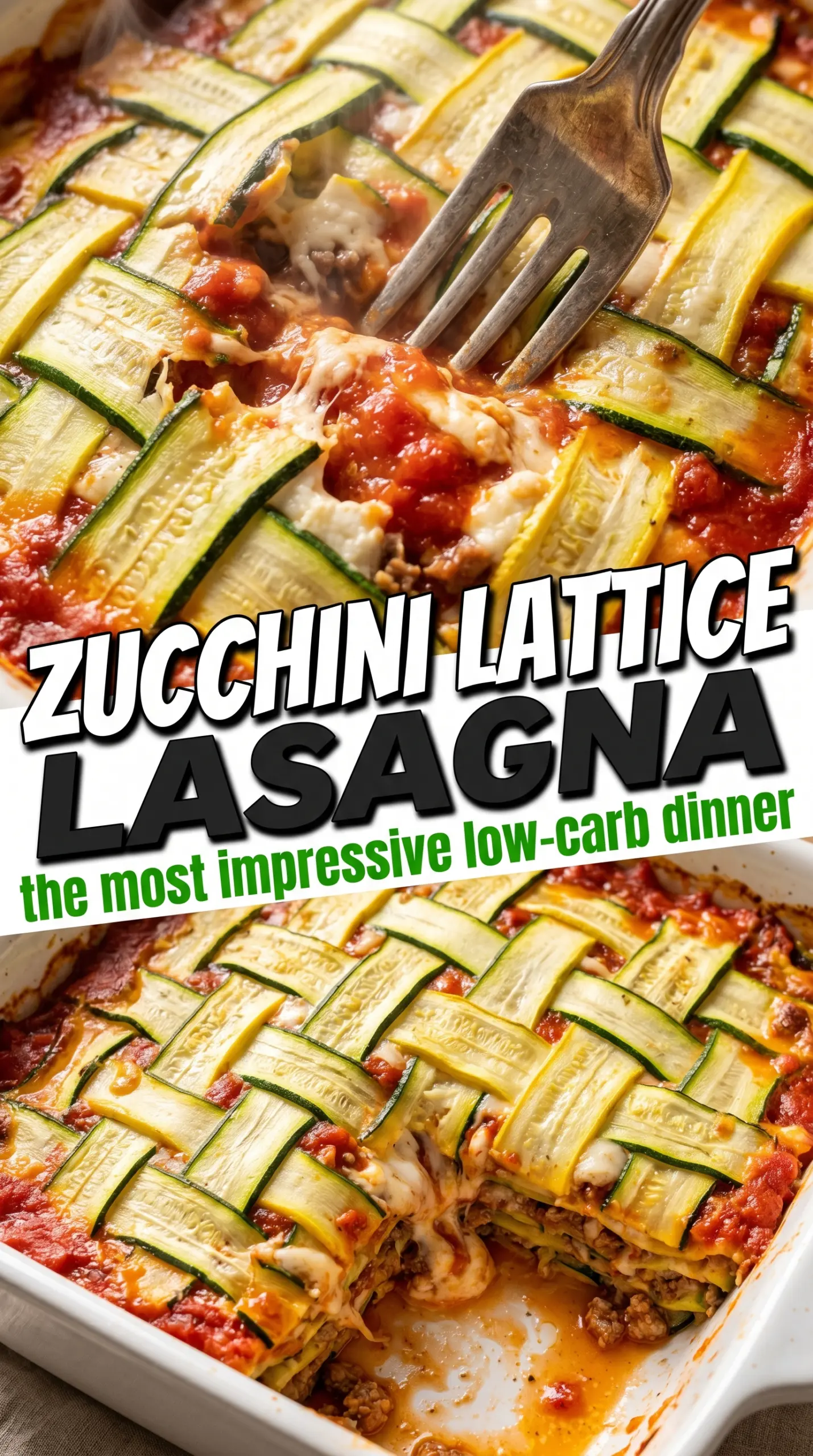
- Green zucchini and yellow squash — These are the whole point of the top layer. Use the straightest vegetables you can find so the planks are easier to weave, and slice them lengthwise into even ribbons. If the strips are curved or uneven, the lattice gets loose and gaps start to show.
- Ground beef or Italian sausage — This is what gives the lasagna enough backbone to stand up to the vegetables. Sausage brings more seasoning and a little richness; beef gives a cleaner, meatier base. Either one works, but if you use plain ground beef, the sauce needs the Italian seasoning to carry more weight.
- Marinara sauce — A good jarred sauce saves time here and keeps the filling from drying out in the oven. Choose one that tastes balanced on its own, since it’s doing a lot of the flavor work under the ricotta and vegetables. If your sauce is thin, simmer it a few extra minutes before assembling so the lasagna doesn’t turn loose.
- Ricotta, egg, and parmesan — This mixture holds the middle layers together and gives each slice that creamy, savory contrast. The egg helps the ricotta set instead of oozing out. Parmesan sharpens the flavor enough that the filling doesn’t taste flat once it’s baked under a layer of squash.
- Mozzarella — This is the melt factor. Shredded mozzarella gives you that stretchy top under the lattice and helps lock the layers together. A low-moisture mozzarella works best here because fresh mozzarella can add too much liquid.
Building the Layers So the Top Can Stay Beautiful
Cooking the Meat Until It’s Ready for the Sauce
Brown the meat with the onion until the onions soften and the meat loses its raw pink color. If there’s a lot of fat in the pan, drain it off before adding the garlic and marinara, because excess grease makes the lasagna slide when it bakes. Let the sauce simmer long enough to thicken slightly; if it still looks loose in the skillet, it’ll be even looser in the oven.
Mixing the Ricotta So It Slices Cleanly
Stir the ricotta with the egg, parmesan, parsley, salt, and pepper until it looks uniform and spreadable. The egg isn’t there for richness alone — it helps the layer set so you get defined squares instead of a creamy spill when you cut into the dish. If the ricotta is watery, drain it briefly in a fine mesh strainer before mixing.
Weaving the Zucchini Lattice on Top
Build the base layers first, then lay the zucchini strips over the top in alternating directions. Start with one set of green strips, weave yellow squash through them, and tighten the pattern as you go so the top looks snug rather than rustic. If a strip breaks, tuck the broken end underneath another plank and keep going; the oven will hide small mistakes once the lattice starts to brown.
Baking Until the Edges Bubble and the Top Turns Gold
Brush the lattice lightly with olive oil and finish with parmesan before the pan goes in the oven. The oil helps the strips color instead of drying out in patches. Bake until the top is golden and the sauce is bubbling around the edges, then give it the full rest before slicing. That resting time keeps the layers intact and helps the lattice stay in place on the serving spatula.
How to Adapt This for a Different Kitchen or a Different Crowd
Make It Vegetarian Without Losing Structure
Swap the meat for a thick layer of sautéed mushrooms, spinach, and finely chopped onions cooked down until the moisture cooks off. You’ll lose the savory heft of sausage or beef, so season the vegetables aggressively and let the marinara simmer until it tastes concentrated. The texture stays satisfying, and the lattice still gives it that special-occasion look.
Gluten-Free in Practice, Not Just on Paper
This version is naturally gluten-free as long as your marinara and sausage are checked for hidden wheat-based thickeners or fillers. Keep the layering the same and use extra zucchini planks in place of pasta if you want a fully grain-free version. The result is lighter, but it still cuts like a proper lasagna.
Use All Zucchini If That’s What You Have
If you can’t find yellow squash, build the lattice with zucchini only and keep the weaving tight so the top still reads as a pattern. The color contrast is gone, but the texture and dramatic finish stay intact. Choose smaller zucchini if possible; they tend to have less water and tighter flesh.
Storage and Reheating
- Refrigerator: Store covered for up to 4 days. The lattice softens a little, but the flavor stays good.
- Freezer: It freezes well if you want to freeze the lasagna before baking. Assemble it without baking, wrap tightly, and freeze for up to 2 months. Baked leftovers can be frozen, but the zucchini top will be softer after thawing.
- Reheating: Reheat covered in a 350°F oven until hot in the center, then uncover for the last few minutes so the top dries out again. The common mistake is microwaving it on high, which turns the lattice rubbery and makes the filling water out.
Answers to the Questions Worth Asking
Zucchini Lattice Lasagna
Ingredients
Equipment
Method
- Brown the ground beef with the diced onion in a Dutch oven over medium heat until the meat is cooked through. Drain excess fat so the sauce isn’t greasy.
- Add the minced garlic and stir for about 30 seconds until fragrant, then add marinara sauce and Italian seasoning. Simmer for 10 minutes, stirring occasionally, until slightly thickened.
- In a bowl, mix ricotta with the egg, grated parmesan, chopped fresh parsley, salt, and pepper until smooth and cohesive. Stop mixing once everything looks evenly combined.
- Preheat the oven to 375°F and grease a 9x13 baking dish. Keep the dish ready so the layers go in quickly.
- Assemble the lasagna base by spreading meat sauce over the bottom, then layering extra zucchini planks or pasta, followed by ricotta, more meat sauce, and shredded mozzarella. Press very lightly to help the layers settle.
- Create the lattice by laying alternating green zucchini and yellow squash strips over the top. Weave them under and over each other to form a tight geometric pattern.
- Brush the lattice with olive oil and sprinkle parmesan over the entire top. The surface should look glossy and evenly speckled.
- Bake at 375°F for 40–50 minutes, until the lattice is golden and the filling bubbles around the edges. If the top browns too quickly, loosely tent with foil during the last 10 minutes.
- Rest for 15 minutes before slicing to preserve the lattice pattern. This helps the filling set so the woven top stays intact.