Zucchini lasagna roll-ups hit that sweet spot between hearty and light: you get all the comfort of a baked pasta dish, but the zucchini keeps the whole thing crisp at the edges and tender in the middle instead of heavy. The best versions don’t turn watery, and that comes down to treating the zucchini and spinach like the vegetables they are — both need moisture pulled out before they ever hit the baking dish.
That extra step pays off. Salting and roasting the zucchini first gives you pliable planks that roll without splitting, and squeezing the spinach dry keeps the ricotta filling creamy instead of loose. A little nutmeg in the cheese mixture doesn’t make it taste sweet; it rounds out the dairy and spinach in a way that feels classic and balanced.
Below, I’ll walk through the small moves that keep these roll-ups neat, saucy, and sliceable. There’s also a note on the one part people usually rush, plus a few easy ways to adapt the filling if you want to change up the cheeses.
I’ve made zucchini roll-ups before, but these were the first ones that held together without turning watery. Roasting the planks first and squeezing the spinach dry made all the difference, and the cheese filling stayed creamy even after baking.
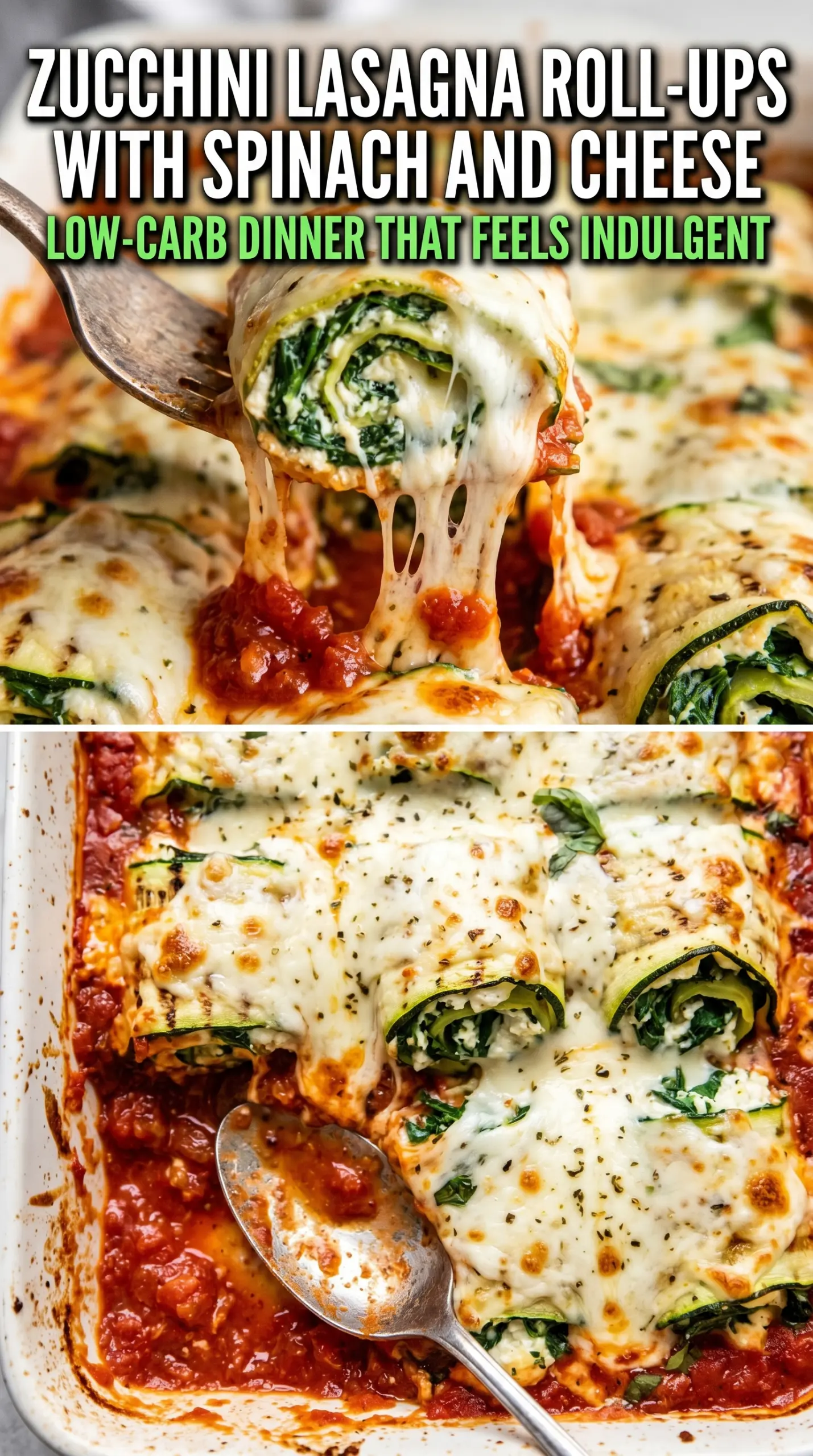
Save these zucchini lasagna roll-ups for a meatless dinner with crisp edges, creamy spinach filling, and bubbling mozzarella on top.
The Trick to Roll-Ups That Don’t Collapse in the Pan
The most common failure with zucchini roll-ups is too much moisture. Zucchini releases water fast once it heats up, and spinach does the same if it isn’t squeezed nearly dry. If either one goes into the dish wet, the filling loosens, the rolls slide apart, and the sauce thins out instead of staying glossy and thick.
Roasting the zucchini planks after salting them changes the texture just enough. They soften without turning floppy, and the surface dries a little so the filling sticks instead of skating around. That means you can roll them tightly and bake them seam-side down without chasing them around the pan later.
- Zucchini — Large zucchini give you wider planks, which makes rolling easier. If yours are smaller, you can still use them, but the rolls will be shorter and a little less tidy. Slice them evenly so they cook at the same pace, or the thin pieces will disappear before the thicker ones soften.
- Ricotta — This is the creamy backbone of the filling. Whole-milk ricotta gives the best texture, but part-skim works if that’s what you have. If your ricotta seems loose, drain it in a fine strainer for 10 to 15 minutes before mixing.
- Spinach — Frozen spinach is the practical choice here because it chops up evenly and blends cleanly into the filling. The squeeze matters more than the brand. Press it hard in a clean towel until almost no liquid comes out, or it will water down the cheese.
- Mozzarella and parmesan — Mozzarella brings stretch and parmesan adds salt and depth. Pre-shredded mozzarella works fine for the topping, but block mozzarella melts more smoothly in the filling. Parmesan should be finely grated so it disappears into the mixture instead of clumping.
- Nutmeg and garlic — These don’t make the dish taste strongly spiced; they make the ricotta taste fuller. Fresh garlic gives the filling more edge, while nutmeg softens the spinach’s earthiness. Don’t skip both unless you want the whole dish to taste flatter.
What Each Ingredient Is Actually Doing in This Zucchini Lasagna
- Zucchini slices (replacing pasta noodles) — Slice lengthwise or into strips. Pat dry so they don’t add excess moisture to the lasagna.
- Ricotta or cottage cheese (the creamy layer) — This provides creaminess and texture. Mix with egg to help it set.
- Mozzarella cheese (the melting layer) — Use a combination of ricotta and mozzarella for the best texture. Fresh mozzarella works but can make it watery.
- Parmesan cheese (the umami finish) — This adds depth and prevents the lasagna from tasting one-dimensional.
- Sauce (meat sauce, marinara, or cream) — This brings layers together. Use enough to keep it moist but not watery.
- Seasonings and herbs (salt, pepper, basil, oregano) — Layer flavors throughout. Fresh herbs add brightness.
- Eggs (optional binder for cheese layers) — These help the cheese mixture set so layers stay distinct when sliced.
- Baking time and temperature (375°F, 30-40 minutes) — This melts the cheese and sets the layers without drying the zucchini.
Building the Rolls So the Filling Stays Creamy
Salting and Softening the Zucchini
Lay the zucchini planks on a tray, salt them lightly, and let them sit for 15 minutes. You’ll see beads of moisture form on the surface, which is exactly what you want. Pat them dry before they go into the oven, then roast just until they bend without cracking. If they roast too long, they’ll turn fragile and won’t hold the filling cleanly.
Mixing the Filling Until It Holds Its Shape
Stir the ricotta, egg, spinach, mozzarella, parmesan, garlic, nutmeg, salt, and pepper together until the mixture looks thick and evenly speckled green. The filling should mound on a spoon instead of running off it. If it looks wet, the spinach wasn’t squeezed enough; add a little more parmesan to tighten it up rather than trying to fix it with more ricotta.
Rolling, Nesting, and Baking
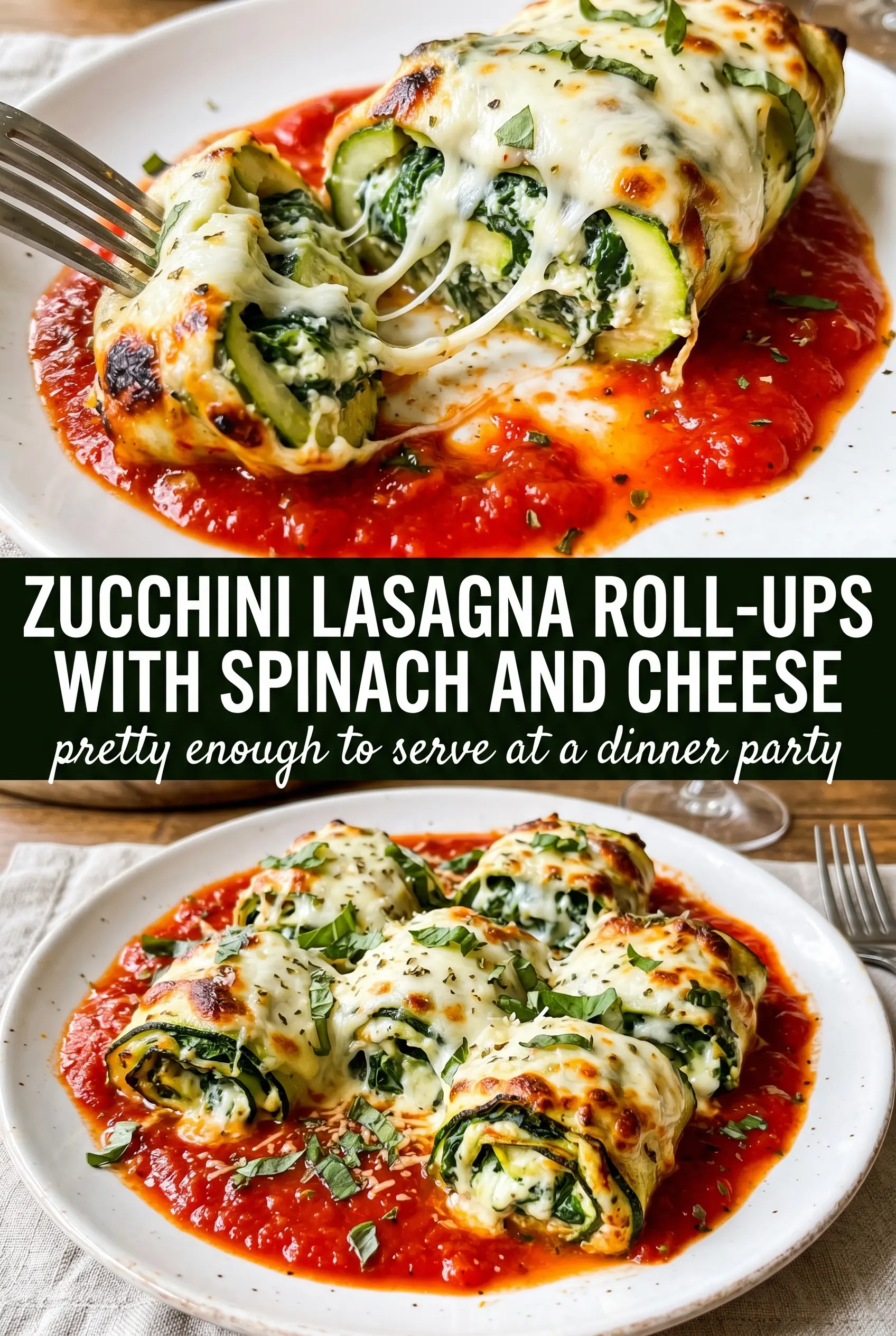
Spread marinara in the baking dish first so the bottoms don’t stick and the rolls pick up sauce from underneath. Spoon the filling onto one end of each zucchini plank and roll it up snugly, then set each one seam-side down so it can’t unwind. Bake until the sauce is bubbling around the edges and the mozzarella on top has browned in spots. Let the dish rest for 10 minutes before serving so the filling settles and the rolls cut cleanly.
Three Useful Ways to Adapt These Zucchini Roll-Ups
Make It Gluten-Free Without Changing the Texture
This recipe is naturally gluten-free as written, so there’s nothing special to swap. Just check the marinara label if you’re sensitive to hidden thickeners or added flour. The texture stays the same because the structure comes from the zucchini and cheese, not a pasta layer.
Use Part-Skim or Full-Fat Dairy Depending on What You Want
Whole-milk ricotta and mozzarella give you a richer, silkier filling and a more luscious melt on top. Part-skim versions still work, but they bake up a little firmer and drier. If you use lighter cheese, keep the spinach especially dry so the filling doesn’t turn loose in the oven.
Swap the Spinach for Another Green
Chopped cooked kale or Swiss chard can stand in for the spinach, but both need to be cooked and squeezed dry first. Kale brings a firmer bite and a slightly deeper flavor, while chard stays softer and more delicate. Either one changes the texture a little, but the roll-ups still bake up neatly if the greens are dry.
Add a Little Heat or More Herb Flavor
A pinch of red pepper flakes in the marinara gives the dish a gentle kick without changing the structure. Fresh basil stirred into the filling will taste brighter than dried basil, but add it right before assembling so it doesn’t lose its aroma. This is the easiest way to move the dish from classic to a little more lively.
Storage and Reheating
- Refrigerator: Store covered for up to 4 days. The zucchini softens a bit more as it sits, but the flavor holds up well.
- Freezer: These freeze, though the zucchini will be softer after thawing. Freeze baked portions in a tight container, then thaw in the fridge before reheating.
- Reheating: Warm covered in a 350°F oven until the center is hot and the cheese is melty again. Microwaving works in a pinch, but it can make the zucchini watery, so use short bursts and stop as soon as it’s heated through.
Questions I Get Asked About This Recipe
Zucchini Lasagna Roll-Ups with Spinach and Cheese
Ingredients
Equipment
Method
- Salt zucchini planks and let them rest 15 minutes to draw out moisture, then pat dry with a towel.
- Roast the dried zucchini on a sheet pan at 400°F for 8–10 minutes to soften and dry out slightly.
- Squeeze all moisture from the thawed frozen spinach until very dry.
- Mix ricotta, egg, squeezed spinach, 1 cup mozzarella, parmesan, garlic, nutmeg, salt, and pepper until combined.
- Preheat the oven to 375°F and spread 1 cup marinara in a 9x13 baking dish.
- Spread spinach cheese filling along one end of each zucchini plank and roll tightly, then place seam-side down in the dish.
- Spoon the remaining marinara over the rolls and top with 1 cup mozzarella.
- Bake for 28–35 minutes at 375°F until the cheese is golden and bubbling.
- Rest 10 minutes after baking so the rolls set, then garnish with parmesan and fresh basil.