Dark, glossy, and built for a deep spoonful, Witch’s Cauldron Beef Stew turns a familiar beef stew into something a little more dramatic without losing any of the comfort that makes stew worth making in the first place. The broth clings to the beef, the potatoes hold their shape, and the black beans give the whole pot a thicker, heartier finish that feels extra satisfying by the time it hits the table.
The key is layering flavor before the liquid goes in. Browning the beef in batches gives you the savory base, then the stout and tomato paste pick up every browned bit from the pot. Purple potatoes bring that striking color, but they also stay pleasantly firm if you add them late enough, which keeps the stew from turning muddy and overcooked.
Below, you’ll find the timing that keeps the beef tender, the point where the beans should go in so they stay intact, and a few smart swaps if you want to adjust the pot for what you have on hand.
The stout gave the broth this deep, rich flavor, and the purple potatoes held their shape instead of disappearing. I also loved that the stew thickened up after the flour-coated beef browned first.
Save this Witch’s Cauldron Beef Stew for a dark, hearty pot of stout-braised beef, purple potatoes, and puff pastry bats.
The Reason This Stew Stays Rich Instead of Watery
Good beef stew starts before the simmer. Tossing the beef with flour before it hits the pot does double duty: it helps the meat brown with a deeper crust, and it gives the broth a head start on thickening without needing a separate roux later. If you skip that step or crowd the pan, the beef steams and the stew tastes flat, no matter how long it cooks.
The stout matters here because it adds bitterness and malt depth that keep the broth from tasting one-note. Let it hit the hot pot and scrape up the browned bits; that’s where the flavor is. Then the long, covered simmer gives the chuck time to relax into tenderness instead of tightening up into something stringy.
What Each Ingredient Is Actually Doing In This Cauldron
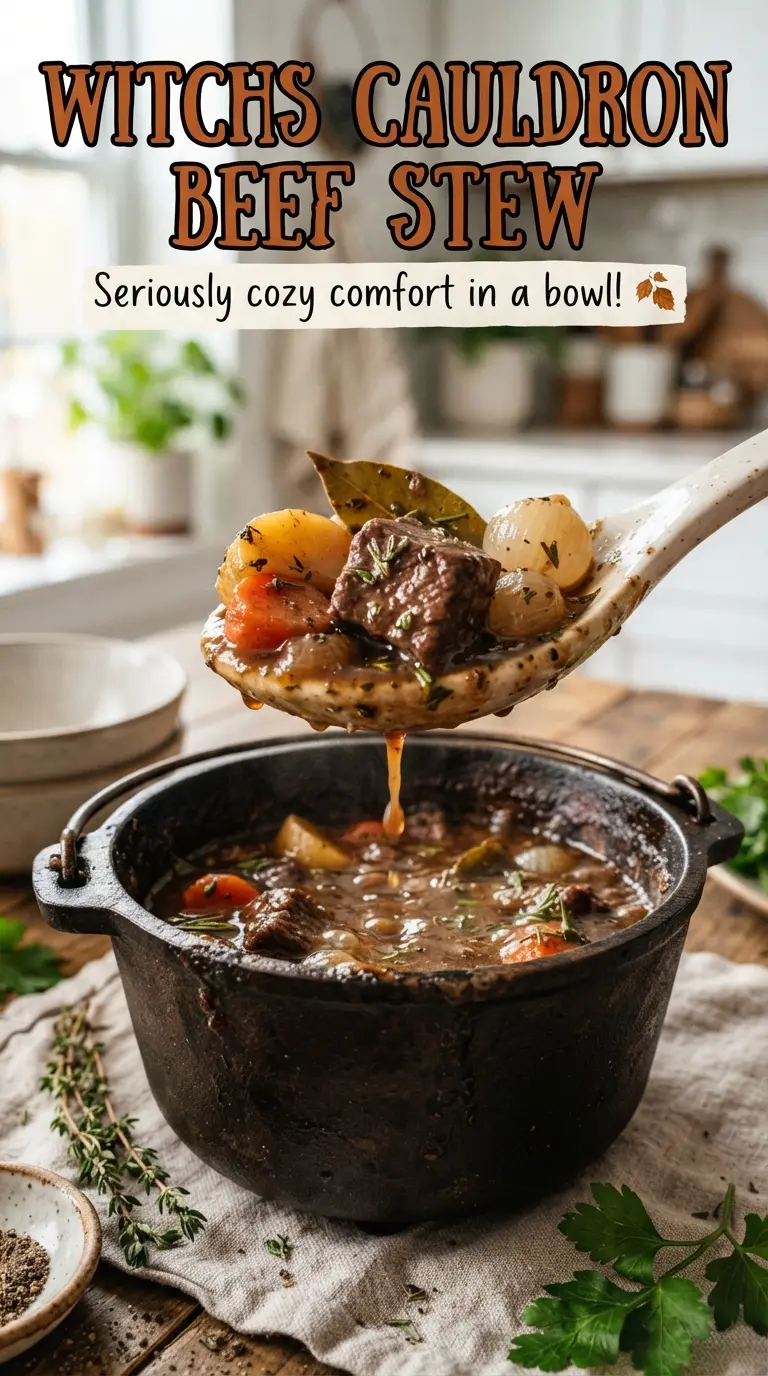
- Beef chuck — This is the right cut because it has enough connective tissue to turn tender over a long simmer. Lean stew meat dries out faster and gives you less body in the broth.
- Stout — Use a stout you actually like drinking. It doesn’t need to be expensive, but it should taste smooth and roasty rather than sharply bitter, because that flavor concentrates in the pot.
- Tomato paste — Cook it for a full minute with the onions and garlic so it loses its raw edge and takes on a sweeter, darker flavor. That tiny bit of caramelization makes the stew taste cooked, not just mixed.
- Purple potatoes — They hold their shape better than many waxy potatoes and give the stew its color contrast. Cut them into even cubes so they finish at the same time as the carrots.
- Black beans — These go in at the end so they warm through without breaking apart. Add them too early and they’ll turn the broth murky and lose their texture.
- Puff pastry bats — These are for the finish, not the simmer. Bake them separately so they stay crisp and flaky; if they go into the stew too soon, they’ll collapse into the broth.
Building The Stew So The Beef Turns Tender, Not Tough
Browning In Batches
Heat the oil until it shimmers, then add the flour-dusted beef in a single layer. Give each batch enough room to brown; if the pot is crowded, the juices pool and the meat turns gray instead of developing the deep crust you want. Those browned bits on the bottom are the backbone of the stew, so don’t rush this part.
Starting The Flavor Base
Cook the onion until it softens and turns translucent, then stir in the garlic and tomato paste for about a minute. You’re looking for the paste to darken slightly and lose its raw smell. If the garlic goes in too early or the heat is too high, it scorches and makes the whole pot taste sharp.
Deglazing With Stout
Pour in the stout while the pot is still hot and scrape the bottom with a wooden spoon. The liquid should sizzle and lift everything stuck to the pan in one pass. Add the broth, balsamic vinegar, smoked paprika, thyme, and beef after that, then bring it to a gentle simmer rather than a hard boil so the meat stays supple.
Slow Simmer, Late Vegetables, Final Finish
Cover the pot and let the beef simmer until it starts to yield when pierced. Only after that do the potatoes and carrots go in; they need less time than the meat, and adding them too soon leaves them soft and mealy. Stir in the black beans for the last 10 minutes, then ladle the stew into bowls and float a baked pastry bat on top right before serving.
How To Adapt This Stew For What You Have On Hand
Make It Gluten-Free
Skip the flour and brown the beef plain, then stir in a cornstarch slurry at the end if you want a thicker broth. You’ll lose a little of the built-in body from the flour coating, but the stew still comes out rich and spoonable.
Swap The Stout For More Broth
If you don’t want to cook with beer, use an extra cup of beef broth and add 1 to 2 teaspoons of Worcestershire sauce for depth. The stew will be slightly lighter and less roasty, but it still tastes full and savory.
Turn It Dairy-Free And Naturally Hearty
This recipe is already dairy-free as written, which makes it easy to serve a crowd with different needs. Keep the puff pastry garnish if your brand is dairy-free, or leave it off and serve the stew with crusty bread instead.
Make The Pot A Little Earthier
Add a handful of sliced mushrooms with the onions if you want a deeper, woodsy note. They’ll absorb the stout and beef broth beautifully, and they give the stew another layer of texture without changing the cooking method.
Storage and Reheating
- Refrigerator: Store in an airtight container for up to 4 days. The broth thickens as it chills, and the potatoes soften a bit more overnight.
- Freezer: Freeze for up to 3 months, but expect the potatoes to turn slightly softer after thawing. For the best texture, freeze the stew without the puff pastry garnish and add fresh pastry when serving.
- Reheating: Warm gently on the stove over medium-low heat with a splash of broth if needed. A hard boil can break the potatoes and make the beef stringy, so keep the heat low and stir occasionally until hot.
Questions I Get Asked About This Recipe
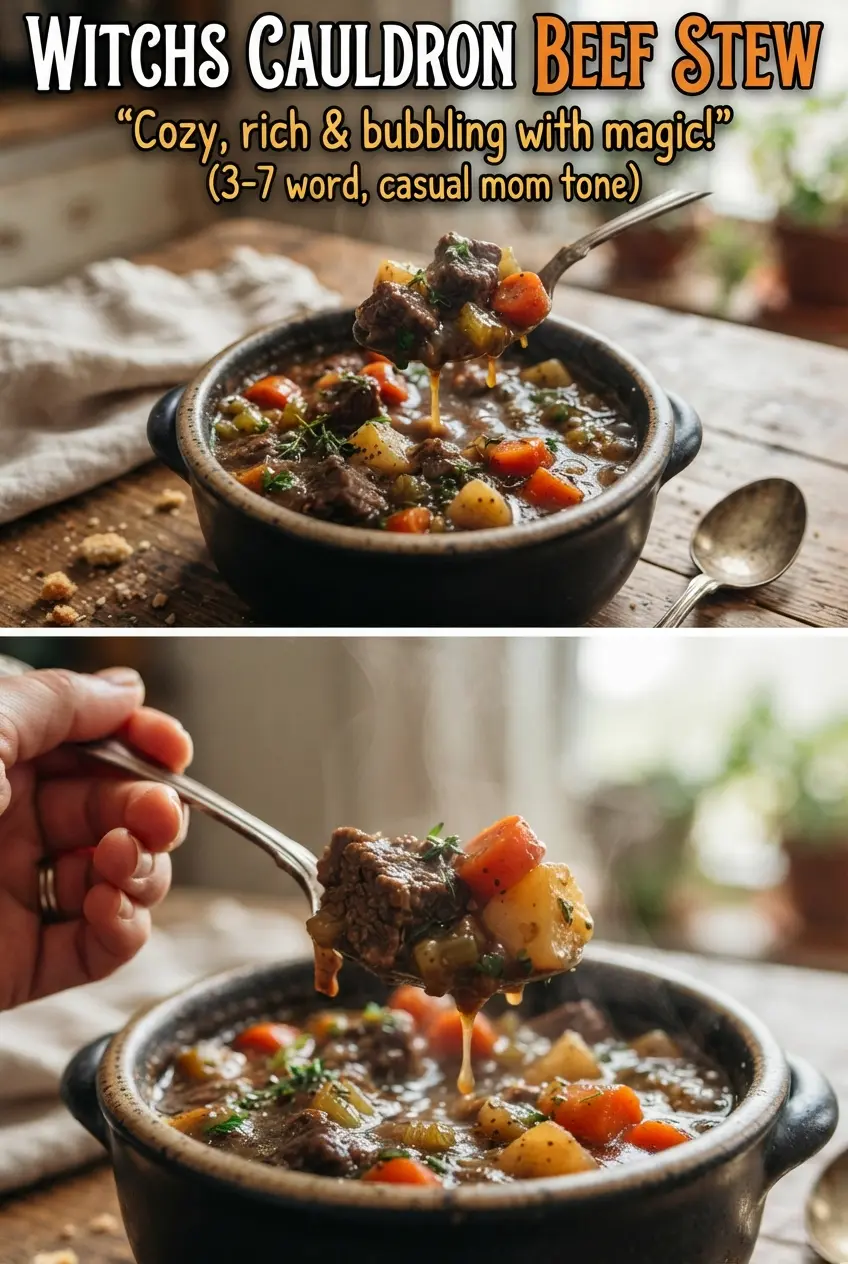
Witchs Cauldron Beef Stew
Ingredients
Equipment
Method
- Season the beef chuck with salt and black pepper, then toss with all-purpose flour until lightly coated. Heat the vegetable oil in a Dutch oven until hot, then brown the beef in batches so the pieces form color rather than steam.
- In the same Dutch oven, cook the chopped red onion for 5 minutes, until softened and fragrant. Add the minced garlic and tomato paste and cook for 1 minute, stirring until the tomato paste darkens slightly.
- Pour in the stout and scrape up the browned bits from the bottom of the pot. Add the beef broth, balsamic vinegar, smoked paprika, dried thyme, and the browned beef.
- Cover the Dutch oven and simmer at a gentle bubble for 2 hours, stirring once or twice if needed so nothing sticks. Keep the heat steady so the stew stays dark and bubbling, not boiling hard.
- Add the cubed purple potatoes and the carrot rounds, then simmer for 45 minutes until the potatoes are tender. Stir in the black beans and simmer for 10 minutes to warm through.
- Heat the oven to 400°F and bake the puff pastry bats (cut from the sheet) until golden. Ladle the stew into bowls and float 1 pastry bat on top of each serving.