Rich beef broth, tender chunks of stew meat, and a full load of vegetables make this soup a bowl worth coming back to. The meat stays hearty without turning dry, the potatoes break at the edges just enough to thicken the broth a little, and the tomatoes give the whole pot a deep, savory color that tastes like it simmered all afternoon.
The trick is starting with a real sear on the beef and building the base in the same pot. That browning gives the broth more body than simply boiling the meat, and cooking the tomato paste with the onions and celery before the liquid goes in pulls out a darker, sweeter flavor. The vegetables are added in stages for a reason, too. Potatoes need time, while green beans and corn only need long enough to warm through without going mushy.
Below, I’m walking through the timing that keeps the beef tender and the vegetables distinct, plus a few easy swaps if you need to use what’s in the pantry.
The broth had that deep beefy flavor I was hoping for, and the potatoes held their shape instead of turning to mush. My husband went back for a second bowl before I even sat down.
Save this vegetable beef soup for the nights when you want a deep, beefy broth and tender vegetables in one pot.
The Seared Beef Is What Keeps This Soup from Tasting Flat
If the beef goes straight into broth, you end up with a soup that tastes boiled instead of layered. Browning the meat in batches creates those dark bits on the bottom of the pot, and that fond is where a lot of the flavor lives. Don’t crowd the pan or the beef will steam and turn gray before it ever gets a chance to develop that crust.
Once the vegetables go in, the pot should look a little dry and sticky before the broth is added. That’s a good sign. The tomato paste needs a minute on the heat to darken and lose its raw edge, and the onions, carrots, and celery should soften enough to pick up color from the browned meat without turning soft and pale.
What Each Ingredient Is Actually Doing in the Pot
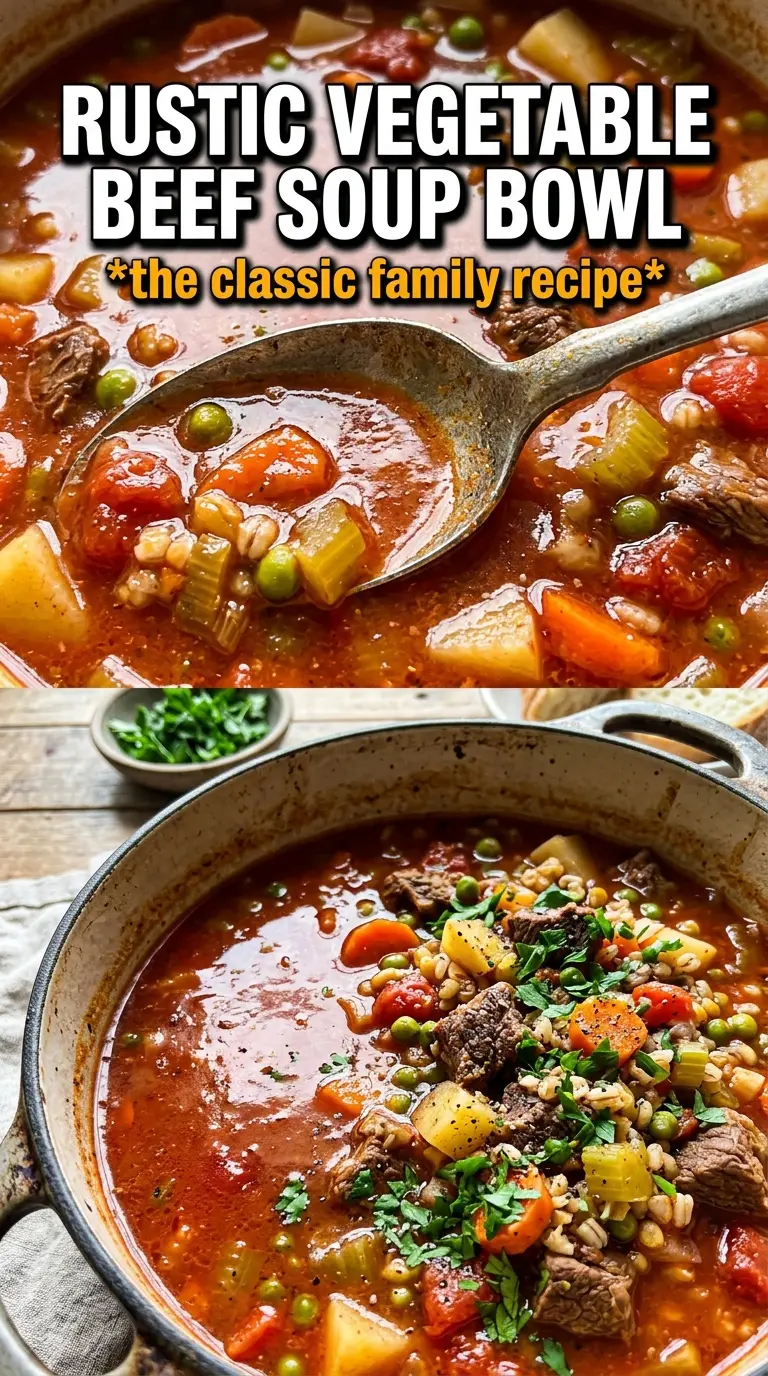
- Beef stew meat — This is the backbone of the soup. Chuck or stew meat has enough connective tissue to turn tender during the simmer, which gives you a richer bite than lean beef would. If you buy pre-cut stew meat, look for pieces with a little marbling; totally lean cubes dry out before the soup develops depth.
- Beef broth — This is where the soup gets its body. A good broth makes a noticeable difference here because it’s the main liquid, so use the best carton or homemade stock you’ve got. If you need to stretch it, adding a cup of water is fine, but the broth should still taste savory on its own before the vegetables go in.
- Tomato paste and diced tomatoes — The paste adds concentrated color and that slow-cooked, almost stew-like flavor, while the diced tomatoes keep the broth bright enough to balance the beef. Cooking the paste for a minute or two before adding liquid keeps the soup from tasting tinny.
- Potatoes — Yukon Gold or russet both work, but Yukon Gold holds together better. Cut them into even cubes so they finish at the same time; uneven pieces are the fastest way to get half-mashed potatoes and half-raw ones.
- Green beans and corn — These are added late because they only need a short simmer. Frozen corn is perfect here, and frozen green beans work too if that’s what you have. Add them at the end so they stay sweet and don’t fade into the background.
Building the Broth in the Right Order
Brown the Beef in Batches
Heat the oil until it shimmers, then add the beef in a single layer without packing the pot. Let each side sit long enough to turn deeply browned before moving it around. If the meat won’t release easily, it isn’t ready yet. Take it out once it has color on multiple sides; it doesn’t need to cook through at this stage, only build flavor.
Cook the Vegetables Until They Start to Sweeten
After the beef comes out, the onion, carrots, and celery go into the same pot. Stir them through the browned bits until the onion turns translucent and the carrots begin to lose their raw crunch. Garlic and tomato paste go in near the end so they don’t burn. If the paste sticks too aggressively, splash in a spoonful of broth and scrape the bottom clean.
Let the Simmer Do the Work
Once the broth, tomatoes, Worcestershire, thyme, and bay leaf are in, bring the pot up just to a boil, then drop it to a steady simmer. A hard boil makes the beef seize up and can leave the broth cloudy. You’re looking for small bubbles around the edges and the occasional lazy bubble in the center. That gentler heat is what turns the stew meat tender without shredding it.
Add the Potatoes Before the Quick-Cooking Vegetables
The potatoes need enough time to soften all the way through, but they shouldn’t cook so long that they fall apart. Stir them in after the beef has simmered for a while, then wait until a fork slides in with a little resistance before adding the green beans and corn. Those last vegetables only need a brief finish in the hot broth to warm through and keep some bite.
How to Adapt This for What You’ve Got on Hand
Use Round Steak Instead of Stew Meat
If stew meat is expensive or the store’s selection looks tough, round steak works as long as you cut it into cubes and simmer it gently. It won’t have quite the same richness as chuck, but it still gives you a hearty soup if you keep the heat low and give it enough time to tenderize.
Make It Gluten-Free Without Losing Body
This soup is naturally gluten-free as written as long as your broth and Worcestershire sauce are certified gluten-free. That matters more than people realize, since some bottled sauces sneak in wheat-based ingredients. The texture stays the same because the broth gets its body from the beef and vegetables, not from flour.
Swap in Frozen Mixed Vegetables
If you’re trying to clean out the freezer, frozen mixed vegetables can replace the green beans and corn. Add them near the end just like the recipe calls for, and keep in mind they’ll soften a little faster than fresh-cut carrots or beans. The broth stays the same, but the soup turns a little more like a classic pantry supper.
Storage and Reheating
- Refrigerator: Store in an airtight container for up to 4 days. The broth thickens as it chills and the potatoes soften a little more overnight.
- Freezer: This freezes well for up to 3 months, but the potatoes will be softer after thawing. For the best texture, cool completely before freezing and leave a little room at the top of the container.
- Reheating: Warm it slowly on the stove over medium-low heat, stirring often. A hard boil can break down the potatoes and make the beef tougher, so gentle heat is the better move.
Answers to the Questions Worth Asking
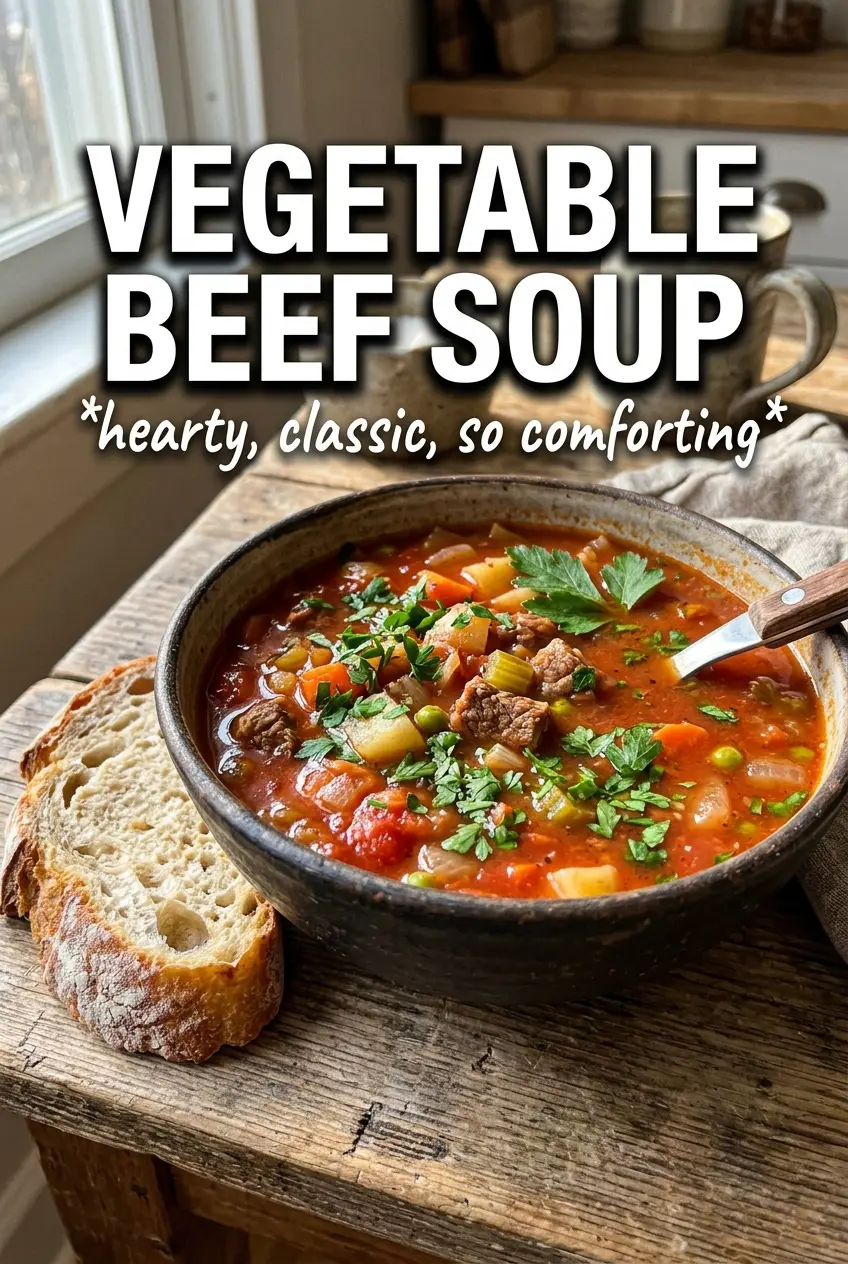
Vegetable Beef Soup
Ingredients
Equipment
Method
- Heat the olive oil in a large Dutch oven over medium-high heat, then sear the cubed beef in batches until browned on all sides.
- Remove the browned beef to a plate and repeat with any remaining pieces so all sides get color.
- Add the onion, carrots, and celery to the Dutch oven and sauté for 5 minutes, stirring until beginning to soften.
- Stir in the garlic and tomato paste and cook for 2 minutes, until fragrant and slightly darkened.
- Return the beef to the pot, then add the beef broth, diced tomatoes, Worcestershire sauce, dried thyme, and bay leaf.
- Bring to a boil, then reduce the heat to a steady simmer and cook for 30 minutes.
- Add the cubed potatoes and simmer for 15 minutes, until the potatoes are tender.
- Add the green beans and frozen corn and cook for the last 8 minutes, until the beans are crisp-tender.
- Remove the bay leaf, then season with salt and pepper to taste.