Pillowy cheese tortellini turn carbonara into a fast, deeply satisfying dinner: every bite comes coated in a silky parmesan-egg sauce, with crispy bacon or pancetta in the gaps and plenty of black pepper to cut through the richness. The tortellini bring their own cheese filling, so the dish lands creamy without feeling heavy or flat.
The key is temperature control. The pasta goes into the skillet off the heat, then the egg and parmesan mixture gets tossed in quickly with splashes of starchy pasta water until it loosens into a glossy sauce. If the pan is too hot, the eggs scramble. If the sauce looks tight or grainy, it usually needs a little more pasta water and a faster toss.
Below, you’ll find the small details that keep the sauce smooth, the best way to use bacon instead of pancetta, and the fix for the most common carbonara mistake before it happens.
The sauce turned out glossy instead of scrambled, and the tortellini held onto it beautifully. I used bacon and added the pasta water a little at a time like you said — perfect texture.
Love the silky tortellini carbonara and that glossy parmesan sauce? Save this one for the nights when you want a fast pasta dinner with real carbonara texture.
The Part Where Carbonara Usually Breaks
Most carbonara failures come from heat, not ingredients. Egg-based sauces don’t need high heat to thicken; they need residual warmth, constant tossing, and enough pasta water to turn the cheese and eggs into a smooth emulsion. Tortellini makes that balance a little trickier because the pasta is heavier and more delicate than spaghetti, so it needs to be handled fast once it hits the pan.
- The tortellini should be just al dente when it comes out of the pot. Overcooked tortellini soften too fast in the skillet and give you a heavy, gummy sauce instead of a silky one.
- The skillet must come off the burner before the eggs go in. If the pan is still actively heating, the eggs will seize into fine curds instead of coating the pasta.
- Pasta water is not optional here. The starch in it helps the parmesan melt into the eggs and gives the sauce enough body to cling to the tortellini.
- Use freshly grated parmesan if you can. Pre-shredded cheese often contains anti-caking agents, and those keep the sauce from turning smooth.
What the Pancetta, Eggs, and Cheese Are Each Doing
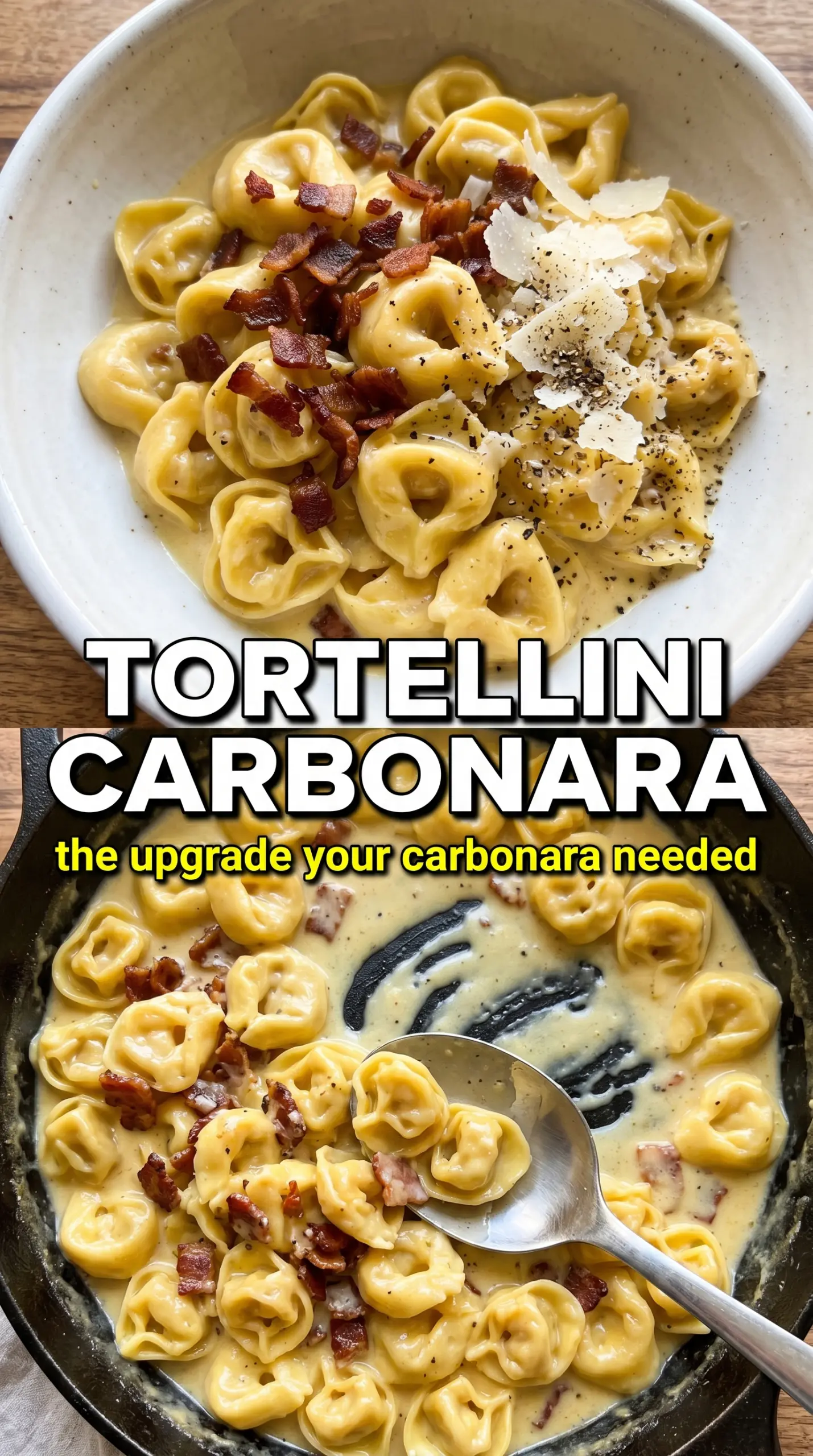
- Cheese tortellini — This is the shortcut that makes the dish feel extra rich and substantial. Refrigerated tortellini holds up best here because it cooks quickly and keeps its shape in the sauce.
- Pancetta or thick-cut bacon — This gives you the salty, crisp backbone of the dish. Pancetta tastes a little more classic and clean, while bacon adds smokier edges. Either works, but don’t skip rendering it until it’s crisp so the fat carries flavor into the sauce.
- Eggs and one yolk — The whole eggs provide the creamy base, and the extra yolk adds richness and helps the sauce stay glossy. That extra yolk matters; it gives the sauce more body without making it heavy.
- Parmesan — Parmesan melts into the eggs and helps the sauce thicken. Grate it finely so it disperses evenly and doesn’t leave you with little clumps.
- Black pepper — Carbonara needs a lot more pepper than most pasta dishes. It wakes up the cheese and cuts through the richness, so don’t treat it like a garnish.
How to Keep the Sauce Silky from the First Toss to the Last Bite
Cook the Tortellini Just to Tender
Boil the tortellini in well-salted water until it reaches just al dente, then reserve a full cup of pasta water before draining. You want the pasta tender but still structured, because it will finish cooking in the skillet. If it goes fully soft in the pot, it won’t hold the sauce as well and can break apart when tossed.
Render the Bacon and Keep the Fat
Cook the pancetta or bacon over medium heat until the pieces are crisp and the fat has rendered into the pan. Pull the bacon out with a slotted spoon, but leave the fat behind. That’s what carries the garlic and gives the sauce its savory base; if you pour most of it off, the finished dish tastes flatter.
Build the Egg Mixture Before the Pasta Hits the Pan
Whisk the eggs, yolk, parmesan, and a generous amount of black pepper in a bowl until it looks thick and loose, almost like a paste. This is the moment that protects the sauce later. If the cheese sits in clumps or the eggs aren’t combined well, you end up with uneven sauce instead of a smooth coating.
Toss Off the Heat and Loosen with Pasta Water
Add the hot tortellini to the skillet after the pan has been removed from the burner, then pour in the egg mixture and toss constantly. Add pasta water a splash at a time until the sauce turns glossy and clings to each tortellini. If it looks dry, keep tossing before adding more water; if it looks soupy, it just needs another few seconds of movement and residual heat to tighten up.
Make It Lighter with Prosciutto and Less Cheese
Swap the bacon for thinly sliced prosciutto cut into ribbons and crisp it briefly in the pan. The result is saltier and a little leaner, with less rendered fat, so you’ll rely more on the pasta water for a smooth sauce. It works well if you want a cleaner finish without losing the savory carbonara feel.
Dairy-Free Version with a Savory Coating
Use a dairy-free cheese-style shreds that melts well and add a spoonful of nutritional yeast for depth, then lean harder on the bacon fat and pepper. The sauce won’t taste exactly like classic carbonara, but the texture can still be creamy if you keep the heat low and use enough pasta water.
Gluten-Free with the Same Technique
Use gluten-free cheese tortellini if you can find it and cook it just until tender, since gluten-free pasta can get fragile fast. The sauce technique stays the same, but you may need a little extra pasta water because gluten-free pasta releases starch differently and can tighten up faster once it leaves the pot.
Storage and Reheating
- Refrigerator: Store leftovers in an airtight container for up to 3 days. The sauce will thicken and the pasta will soak up some of it, so expect a tighter texture the next day.
- Freezer: I don’t recommend freezing this one. Egg-and-cheese sauces separate after thawing, and tortellini turns soft.
- Reheating: Warm it gently in a skillet over low heat with a splash of water or milk, stirring often until the sauce loosens again. High heat is the mistake here; it turns the eggs grainy before the sauce can come back together.
Answers to the Questions Worth Asking
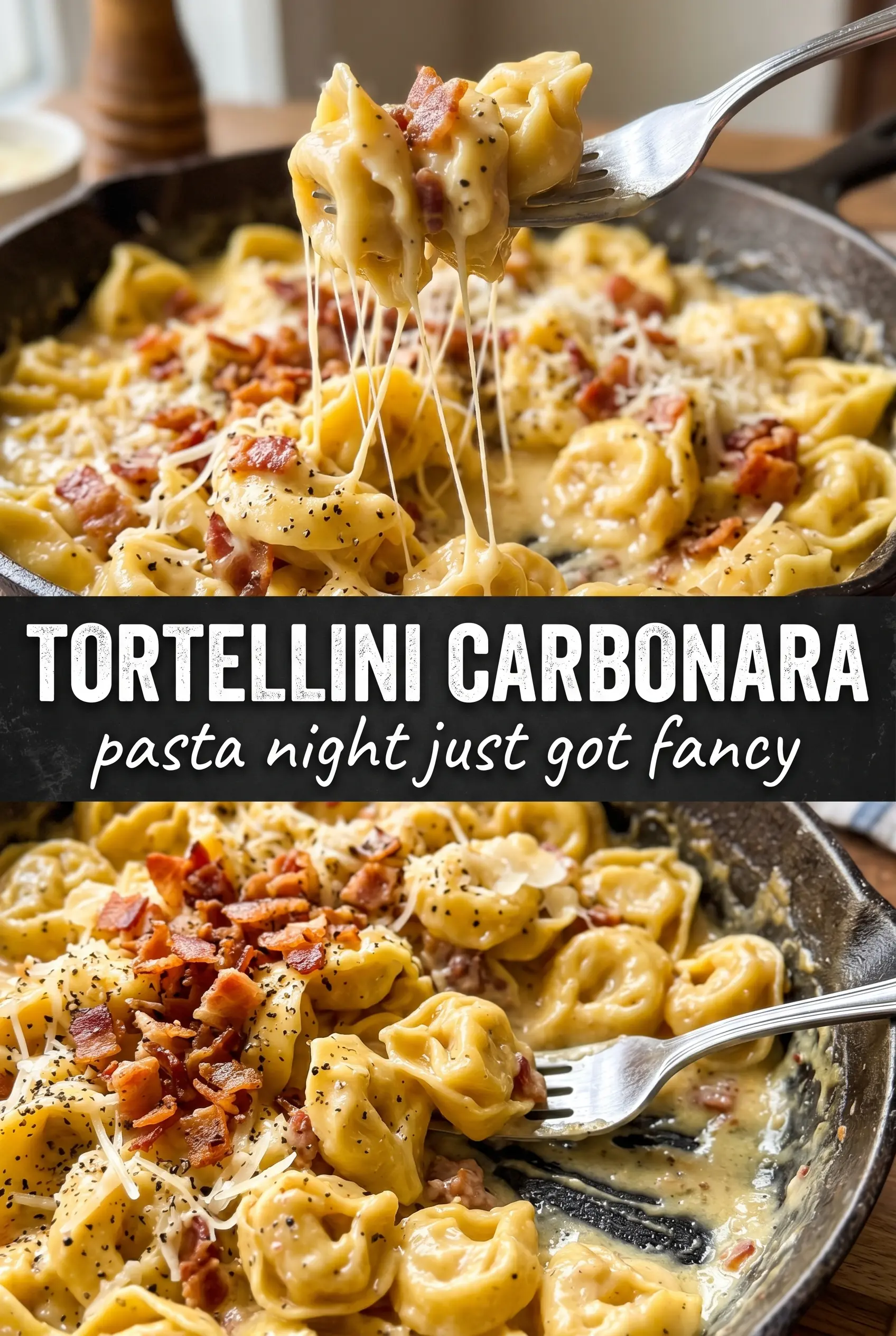
Tortellini Carbonara
Ingredients
Equipment
Method
- Bring salted water to a boil, then cook the refrigerated cheese tortellini until just al dente, stirring occasionally.
- Reserve 1 cup of pasta water, then drain the tortellini and set aside.
- Heat a large skillet over medium heat and cook the pancetta or thick-cut bacon until crispy, then remove it with a slotted spoon and leave the fat in the pan.
- Add the minced garlic to the skillet and cook for 30 seconds off heat while keeping the pan warm.
- Whisk the large eggs, egg yolk, and finely grated parmesan with plenty of cracked black pepper until smooth and thickened slightly.
- Add the hot tortellini to the skillet off the heat, pour the egg mixture over the pasta, and toss quickly to coat.
- Add reserved pasta water a splash at a time while tossing constantly until the sauce is silky and clings to every tortellini.
- Top with the crispy pancetta or bacon, extra parmesan, and fresh parsley, then serve immediately.