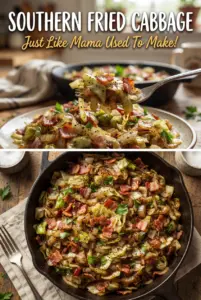
Southern fried cabbage turns humble cabbage into a skillet side with deep savory flavor, tender bites, and those browned edges that keep you going back for another forkful. The bacon drippings do the heavy lifting here, but the real magic happens when the cabbage gets enough space and time to actually caramelize instead of steaming. That’s what gives this version its sweet-savory balance and keeps it from tasting flat.
This recipe leans on a few small choices that matter: slicing the onion thin enough to soften into the fat, adding the garlic late so it stays fragrant instead of bitter, and finishing with apple cider vinegar to wake everything up at the end. A little sugar helps the cabbage brown, but it doesn’t make the dish sweet; it just nudges the edges toward that deep, cooked flavor you want in a good Southern skillet side.
Below, I’ve included the one step that keeps the cabbage from getting soggy, plus a few swaps if you need to work with what’s in the fridge. The end result is straightforward, old-school, and worth having in your back pocket when you need a side that can stand next to almost anything.
The cabbage got those caramelized edges I never seem to get at home, and the vinegar at the end pulled the bacon and onion flavor together perfectly.
Save this Southern Fried Cabbage for the nights when you want smoky bacon, sweet onion, and tender caramelized cabbage in one skillet.
The One Thing That Keeps Fried Cabbage from Going Limp
The biggest mistake with fried cabbage is crowding the pan and rushing the cook. Cabbage gives off a lot of moisture, and if the skillet is packed too full, that moisture has nowhere to go. You end up with soft, gray cabbage in a puddle instead of the sweet, browned edges that make this dish worth serving.
The fix is simple: use a large skillet, keep the heat at medium, and let the cabbage sit long enough between stirs for the moisture to cook off. The butter adds richness, but the bacon drippings bring the deeper savory base. If the pan looks dry before the cabbage is tender, a small extra knob of butter is better than raising the heat and scorching the onion.
What Each Ingredient Is Actually Doing in This Skillet
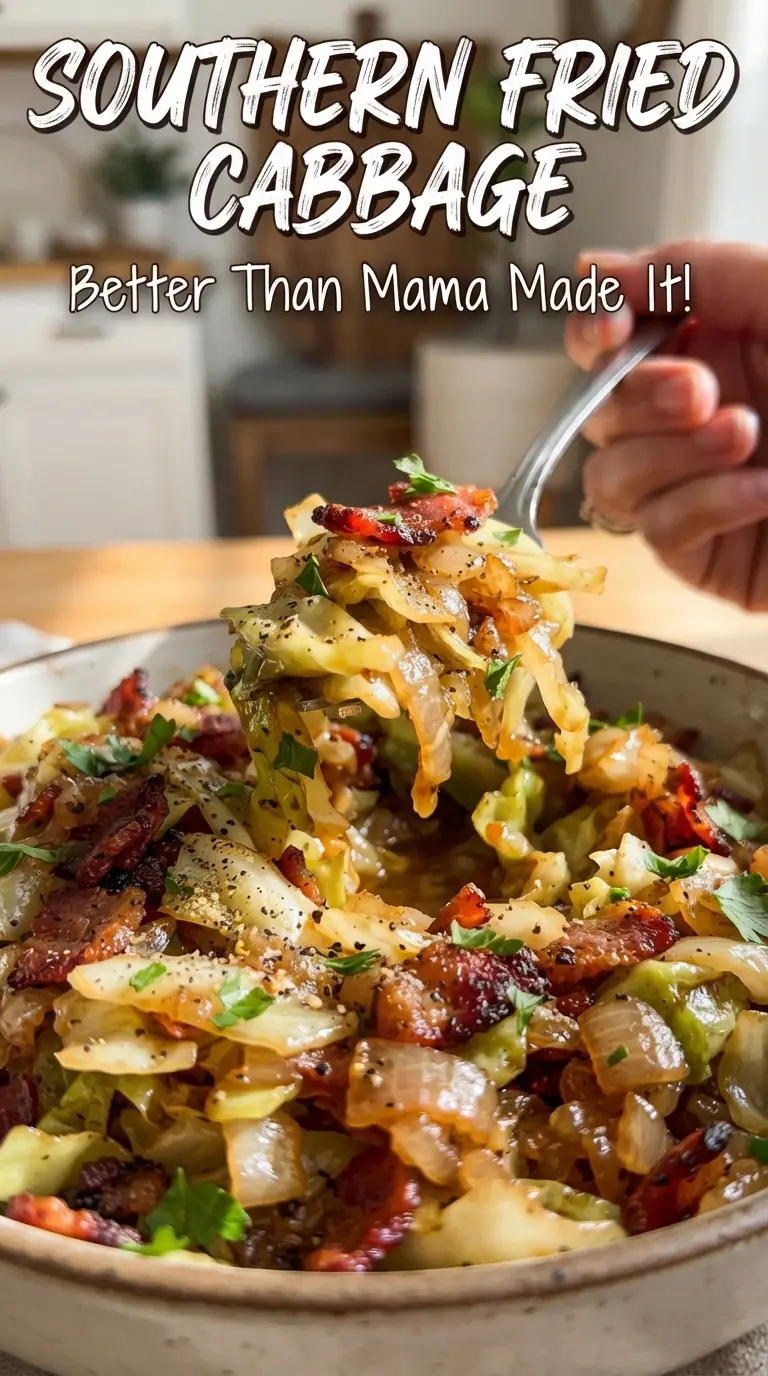
- Bacon — This is the backbone of the dish. It seasons the skillet from the start and leaves behind fat that carries the cabbage and onion. Thick-cut bacon works too, but it takes a little longer to crisp.
- Yellow onion — Onion softens into the drippings and gives the dish its sweet base. Slice it thin so it melts into the cabbage instead of staying crunchy.
- Green cabbage — Use a fresh, firm head with tight leaves. Pre-shredded cabbage works in a pinch, but chopped fresh cabbage holds its texture better and browns more evenly.
- Apple cider vinegar — Don’t skip this. It cuts through the richness at the end and makes the cabbage taste brighter instead of greasy. White vinegar works, but it tastes sharper.
- Sugar — This doesn’t make the cabbage taste sweet; it helps the edges caramelize and balances the salt and vinegar. A tiny pinch of brown sugar can stand in if that’s what you have.
How to Build the Flavor Without Steaming the Cabbage
Crisping the Bacon First
Start the bacon in a cold skillet and let the fat render slowly over medium heat. You want crisp pieces and enough drippings left behind to coat the pan, but not so much heat that the bacon burns before the fat has time to come out. Pull the bacon out when it’s crisp, then leave the drippings in the skillet; that’s where the flavor base lives.
Softening the Onion and Garlic
Add the onion to the hot drippings and cook it until it turns translucent and a little golden at the edges. That takes about 5 minutes, and the pan should smell sweet before you add the garlic. Garlic only needs 30 seconds; if it goes in too early, it can turn bitter and throw off the whole dish.
Cooking the Cabbage Down Properly
Add the cabbage with the butter, salt, pepper, red pepper flakes, and sugar, then stir to coat everything. At first it will look like too much for the pan, but it collapses fast as the moisture cooks off. Keep the heat at medium and stir occasionally, not constantly, so the cabbage can sit against the pan long enough to brown at the edges instead of sweating.
Finishing with Vinegar and Bacon
Once the cabbage is tender and caramelized, stir in the vinegar and crisp bacon. The vinegar should hit the hot pan and smell sharp for a second before it disappears into the cabbage. That last splash lifts the richness and keeps the dish from tasting heavy.
How to Adapt This for a Bigger Crowd or a Different Diet
Make It Without Bacon
Use olive oil or butter for the base and add a little smoked paprika to replace some of the savory depth bacon normally brings. The dish will still be good, but it’ll taste cleaner and less smoky, so the vinegar matters even more at the end.
Low-Carb and Keto Friendly as Written
This recipe already fits a low-carb approach because the sweetness comes from the cabbage and onion, not a heavy sauce. Skip any extra sugar beyond the teaspoon in the recipe if you want it even lower in carbs; the cabbage will still brown, just with a little less sweetness at the edges.
Double the Batch Without Losing Texture
If you’re cooking for a crowd, use the widest skillet you have or split the cabbage between two pans. If you pile it all into one narrow pan, it steams before it browns. The flavor stays the same, but the texture gets much better when the cabbage has room.
Swap the Vinegar if Needed
White vinegar works if that’s what’s in the pantry, but use a little less because it bites harder than apple cider vinegar. Lemon juice can stand in too, though it tastes brighter and less rounded. Whichever acid you use, add it at the end so the cabbage keeps its cooked sweetness.
Storage and Reheating
- Refrigerator: Store leftovers in an airtight container for up to 4 days. The cabbage softens a little more as it sits, but the flavor stays strong.
- Freezer: It freezes, but the texture gets softer after thawing. Freeze only if you’re okay with the cabbage being less crisp and more tender when reheated.
- Reheating: Warm it in a skillet over medium-low heat with a small splash of water or butter. The common mistake is blasting it in the microwave until it turns mushy; gentle heat keeps the bacon and cabbage from drying out.
Answers to the Questions Worth Asking
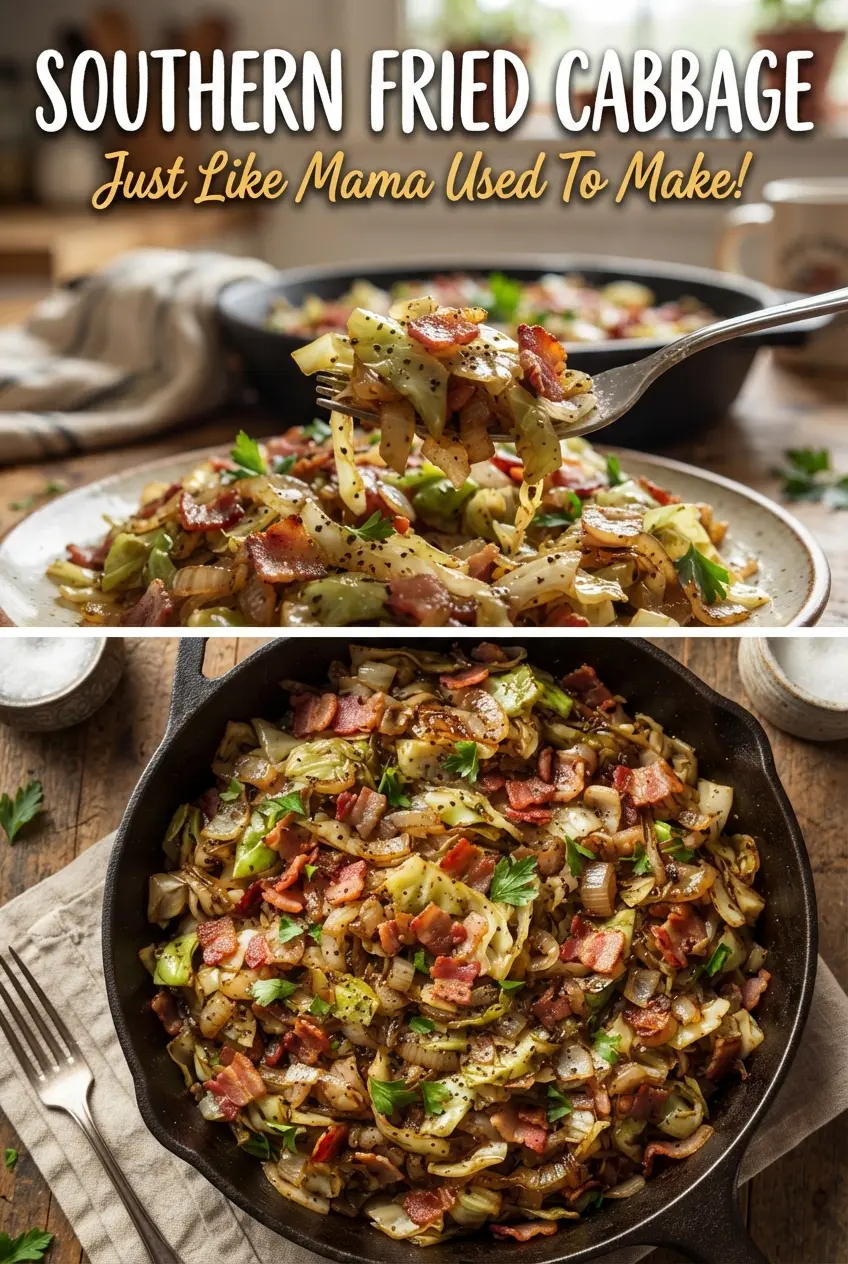
Southern Fried Cabbage
Ingredients
Equipment
Method
- Cook the bacon in a large cast iron skillet over medium heat for 8 minutes until crisp, then remove and leave the drippings in the pan.
- Add the onion to the drippings and cook for 5 minutes until softened; stir in the garlic for 30 seconds.
- Add the cabbage and butter to the skillet, then stir in the salt, black pepper, red pepper flakes, and sugar to coat evenly.
- Cook for 12-15 minutes, stirring occasionally, until the cabbage is tender and caramelized at the edges.
- Stir in the apple cider vinegar and fold in the crispy bacon, then serve warm.