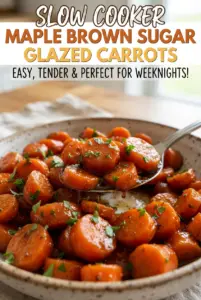
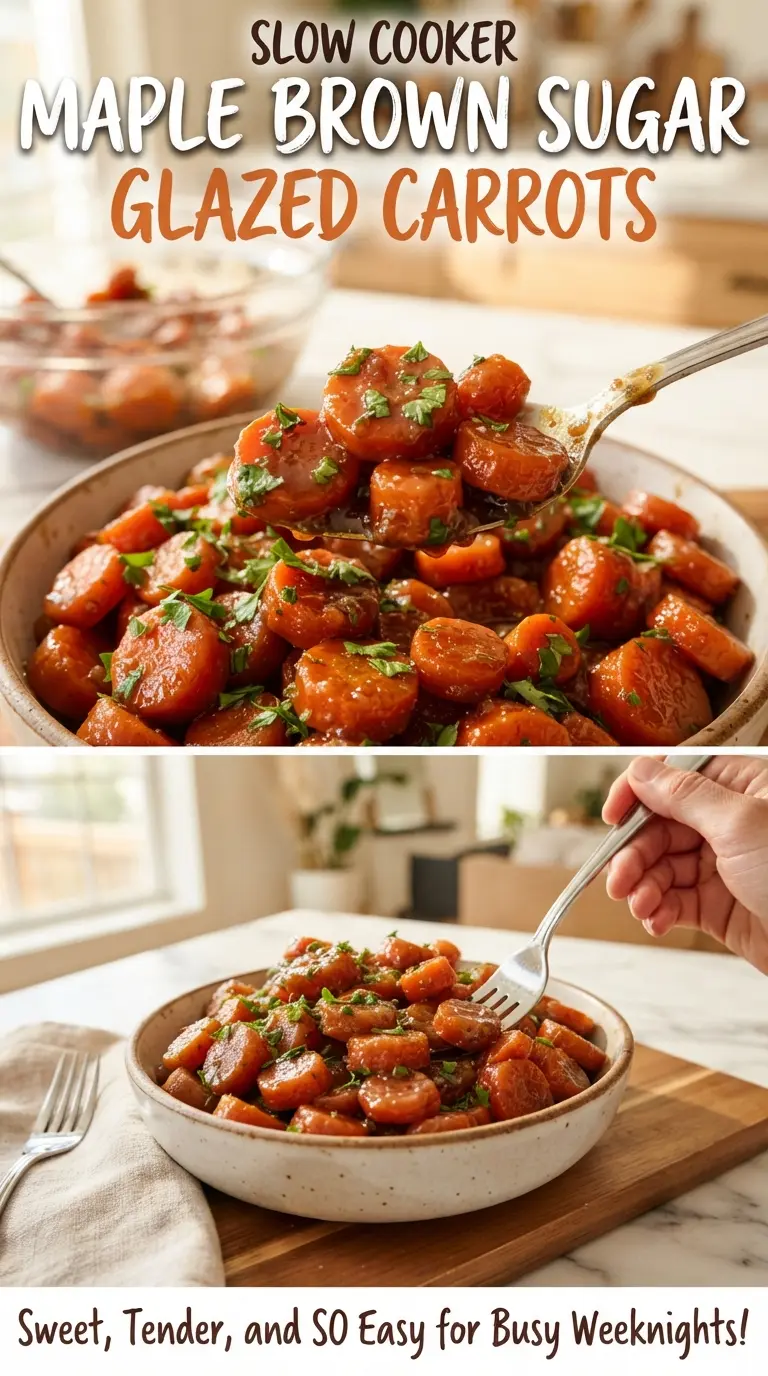
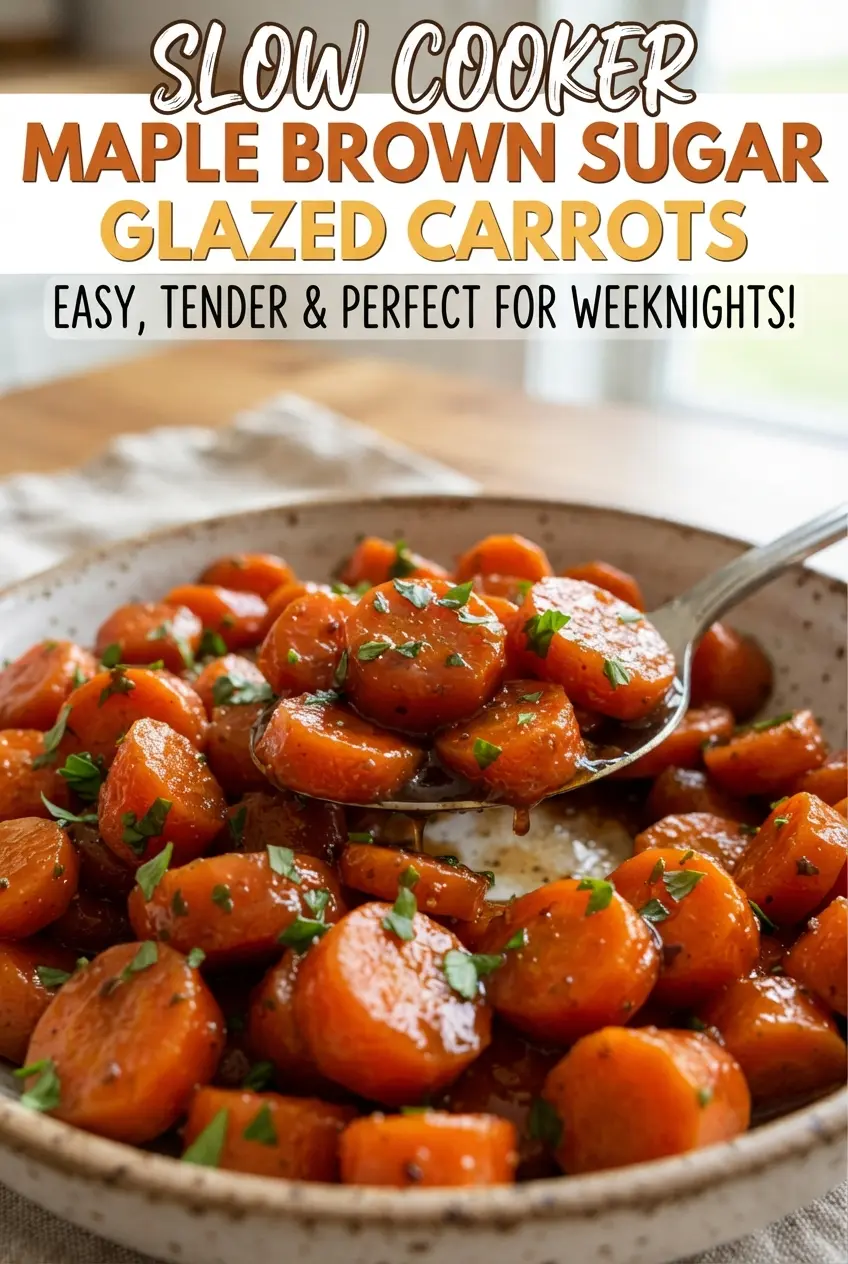
Slow cooker maple brown sugar glazed carrots come out tender, glossy, and coated in a syrupy glaze that clings to every bite. The slow cooker takes what can be an easy side and turns it into something that tastes like it simmered carefully on the stove, without tying up a burner or demanding constant attention.
The trick here is balancing the carrots with enough butter and maple to make a proper glaze, but not so much that the pot turns watery and thin. Baby carrots hold their shape well and stay pleasantly firm in the center while the edges soak up the brown sugar mixture. A little cinnamon rounds out the sweetness, and a pinch of black pepper keeps the finish from tasting flat.
Below you’ll find the small details that matter most: how to keep the glaze from breaking down, when to stir, and what to do if you want a lighter or dairy-free version without losing that sticky finish.
The glaze got thick and shiny without me standing over it, and the carrots stayed tender instead of turning mushy. I stirred once near the end and they came out coated all the way through.
Save these slow cooker maple brown sugar glazed carrots for the side dish that turns glossy, tender, and hands-off.
The Part That Keeps the Glaze Glossy Instead of Watery
The biggest mistake with glazed carrots in a slow cooker is treating the pot like a saucepan. A slow cooker doesn’t evaporate liquid the same way, so the glaze needs to start with the right ratio of sugar, fat, and just enough seasoning to coat the carrots without swimming around in syrup. Baby carrots work especially well here because they release less water than sliced whole carrots, which helps the glaze stay concentrated.
Cooking on low gives the sugar time to melt into the butter and maple syrup and settle into the carrots instead of scorching on the edges. If you crank the heat too high, the outside can soften before the glaze has a chance to thicken. Stirring once near the end matters because it pulls the syrup from the bottom back over the carrots, which is where that shiny finish comes from.
What Each Ingredient Is Actually Doing in the Slow Cooker
- Baby carrots — These hold their shape and cook evenly without peeling or chopping. If you use regular carrots, cut them into thick, even sticks so they finish at the same time.
- Brown sugar — This gives the glaze depth and helps it cling. Light brown sugar works fine, but dark brown sugar makes the sauce taste richer and a little more molasses-heavy.
- Maple syrup — Real maple syrup brings the flavor that makes this side taste special. Pancake syrup will sweeten it, but it won’t give the same clean maple finish.
- Butter — Butter carries the glaze and gives it that satin sheen. If you need a dairy-free version, use a good plant-based butter; plain oil won’t coat the carrots the same way.
- Cinnamon, salt, and black pepper — Cinnamon adds warmth, salt keeps the sweetness from tasting one-note, and black pepper gives the glaze just enough edge to keep people coming back for another bite.
- Parsley — The herb goes on at the end for color and a fresh finish. Skip it only if you have to; it keeps the carrots from looking overly candy-sweet on the plate.
Getting the Carrots Tender Without Turning Them to Mush
Coating the carrots first
Start by adding the carrots to the slow cooker before pouring in the glaze. That helps every piece get covered instead of letting the sugar settle in one sticky layer at the bottom. Toss them well so the butter and syrup reach as many surfaces as possible. If the glaze looks thin at this stage, that’s normal; it thickens as the carrots soften and release a little moisture.
Cooking until fork-tender
Cook on low for 4 to 5 hours or high for 2 to 3 hours, but start checking early. You want the carrots tender enough for a fork to slide in easily, while still holding their shape. If they go too long, they’ll taste sugary but lose the clean bite that makes this side worth serving. Different slow cookers run hot, so don’t use the clock alone.
Finishing the glaze
Stir well before serving so the syrupy sauce coats the carrots instead of pooling underneath. This is the moment when the dish changes from sweet carrots to glazed carrots. If the sauce seems loose, leave the lid off for a few minutes and stir again; the steam will escape and the glaze will tighten up a bit.
Three Ways to Adjust These Carrots Without Losing the Glaze
Dairy-Free Glazed Carrots
Swap the butter for a plant-based butter that melts smoothly. You’ll keep the same glossy coating and rich mouthfeel, while plain oil would make the glaze taste thinner and less round.
Less Sweet, More Savory
Cut the brown sugar back by 2 to 3 tablespoons and add an extra pinch of salt and pepper. The carrots will still glaze, but the finish leans more side-dish than candy-like, which works well next to ham, chicken, or roasted pork.
Using Whole Carrots Instead of Baby Carrots
Peel and cut whole carrots into thick, even coins or batons so they cook at the same rate. This gives you a slightly firmer bite and a more rustic look, but uneven pieces will turn some carrots mushy before the rest are tender.
Storage and Reheating
- Refrigerator: Store in an airtight container for up to 4 days. The glaze will thicken as it chills, so the carrots may look a little set at first.
- Freezer: Freezing works, but the texture softens after thawing. Freeze in a sealed container for up to 2 months if you don’t mind the carrots losing a little firmness.
- Reheating: Warm gently in a covered skillet or microwave at medium power with a spoonful of water to loosen the glaze. High heat can make the sugar seize and the carrots turn mealy.
Questions I Get Asked About This Recipe
Slow Cooker Maple Brown Sugar Glazed Carrots
Ingredients
Equipment
Method
- Add the baby carrots to a slow cooker, spreading them in an even layer. Visual cue: carrots should sit mostly flat so the glaze can coat them evenly.
- Whisk the brown sugar, maple syrup, melted butter, ground cinnamon, salt, and black pepper until combined, then pour over the carrots and toss. Visual cue: the mixture should look like a thick, glossy syrup coating the carrots.
- Cover and cook on LOW for 4-5 hours, or on HIGH for 2-3 hours, until the carrots are fork-tender. Visual cue: carrots should be easily pierced and the syrup should be bubbling and reduced slightly at the edges.
- Stir well to coat the carrots in the glaze. Visual cue: the glaze should cling visibly to each carrot, turning more uniformly glossy.
- Garnish with chopped fresh parsley and serve warm. Visual cue: parsley should look bright green on top of the caramel-colored glaze.