Roasted garlic white chicken lasagna soup lands in the bowl with everything people want from a comfort dinner: a silky broth, tender noodles, shredded chicken, and a creamy ricotta finish that melts into the soup as you eat. The roasted garlic gives it a mellow, almost sweet depth that plain minced garlic can’t match, and the parmesan tightens the broth just enough that it feels rich without turning heavy.
The trick is building the base in layers. You start by cooking the onion in butter, then bloom the roasted garlic in that fat before the flour goes in. That sequence matters because it keeps the garlic from tasting sharp and raw, and it helps the roux take on all that flavor instead of tasting flat. The cream goes in gradually, and the noodles simmer right in the broth so they release a little starch and give the soup that lasagna-like body.
Below, I’m walking through the one part that makes this soup special — how to keep the broth smooth while still getting a thick, spoon-coating finish. I’ve also included a few swaps and storage notes, since this is one of those recipes that holds up well for lunches the next day.
The roasted garlic made the broth taste slow-simmered, and the noodles stayed perfectly tender without getting mushy. I added a little extra parmesan on top and my husband went back for a second bowl immediately.
Save this roasted garlic white chicken lasagna soup for the nights when you want a creamy, brothy pasta bowl with real depth and zero fuss.
The Roux Has to Carry the Garlic, Not Hide It
With a soup like this, the biggest mistake is rushing past the base. If the flour cooks for too long before the broth goes in, the soup can taste pasty. If it doesn’t cook long enough, you’ll taste raw flour in the finished bowl. The sweet spot is a minute or two after whisking the flour into the butter and onion mixture — the paste should look smooth and smell a little nutty.
Roasted garlic changes the whole personality of the broth, but only if it gets mashed into the fat before the flour. That’s when the flavor blooms and spreads through the whole pot. Once the cream and broth go in, keep the heat at a gentle simmer. A hard boil can make the cream separate and turn the texture grainy.
What Each Ingredient Is Actually Doing in This Soup

- Roasted garlic — This is the backbone of the soup. Roasting turns sharp garlic into something soft, sweet, and almost spreadable, and that mellow flavor is what makes the broth taste layered instead of just creamy. Fresh minced garlic won’t give you the same depth.
- Chicken broth and heavy cream — The broth keeps the soup from becoming too rich, while the cream gives it that white lasagna comfort-food feel. Use a broth you’d actually drink on its own; a thin, watery one makes the whole pot taste dull.
- Lasagna noodles — Broken noodles are what make this soup feel like lasagna instead of just chicken noodle soup with cream. Don’t swap in very thin pasta unless you want a lighter texture, because it won’t hold the broth the same way.
- Ricotta swirl — The ricotta topping gives each bowl a cool, creamy contrast. Mixing it with parmesan and basil keeps it from tasting flat, and that little dollop softens into the hot soup without disappearing completely.
- Parmesan — Stir it in at the end so it melts smoothly and helps season the broth. Pre-grated works in a pinch, but freshly grated parmesan melts better and gives a cleaner finish.
Building the Soup in the Right Order
Cooking the Onion Until It Turns Sweet
Start with butter and diced onion in a heavy pot, and let the onion cook until it’s soft and translucent with just a hint of gold at the edges. You’re not trying to brown it hard here. You want it sweet and fragrant so it supports the garlic instead of competing with it. If the pot gets too hot, the onion will catch before it softens, and that burnt note will carry through the whole soup.
Waking Up the Roasted Garlic
Squeeze the roasted cloves from their skins and mash them into a paste before they hit the pot. Stir that paste into the onion and butter for about a minute so the fat picks up every bit of garlic flavor. This is where the soup gets its signature taste. If you drop the garlic in too late with the broth, it tastes muted and a little one-dimensional.
Whisking in the Broth Without Lumps
Once the flour has cooked briefly, add the broth and cream slowly while whisking. The first splash will look thick and messy; that’s normal. Keep whisking until the mixture turns smooth, then let it come to a gentle simmer. If you dump the liquid in all at once, the roux can seize into lumps, and you’ll spend the rest of the cook trying to chase them down.
Finishing with Pasta, Chicken, and Greens
Let the broken noodles cook until they’re tender but still have a little bite in the center. Then stir in the shredded chicken and spinach. The spinach should wilt in a couple of minutes, not disappear into sludge. Add the parmesan at the very end, off the hottest part of the burner if the soup is bubbling hard, so it melts in smoothly instead of clumping.
How to Adapt This Bowl for Different Kitchens
Gluten-Free Pasta Swap
Use a sturdy gluten-free lasagna noodle or another short gluten-free pasta that can hold up in broth. Cook it just until tender, because gluten-free pasta softens faster and can go from pleasant to mushy after a short rest in the hot soup.
Dairy-Free Version
Swap the butter for olive oil, use unsweetened full-fat oat or cashew cream in place of the heavy cream, and skip the ricotta topping. The soup will still be rich, but the finish will be a little less velvety and a little more broth-forward.
Using Leftover Rotisserie Chicken
This is the fastest path to dinner. Add the chicken near the end just long enough to warm through so it stays juicy. If you simmer it too long, especially breast meat, it can turn stringy and dry.
Storage and Reheating
- Refrigerator: Keeps for 3 to 4 days. The noodles will continue to absorb broth, so the soup thickens as it sits.
- Freezer: Freezing is possible, but the cream and noodles won’t be quite as nice after thawing. For the best texture, freeze the soup before adding the noodles and dairy, then finish fresh when you reheat.
- Reheating: Warm it slowly over low heat with a splash of broth or water to loosen it back up. A hard boil will break the cream and overcook the noodles.
Questions I Get Asked About This Recipe
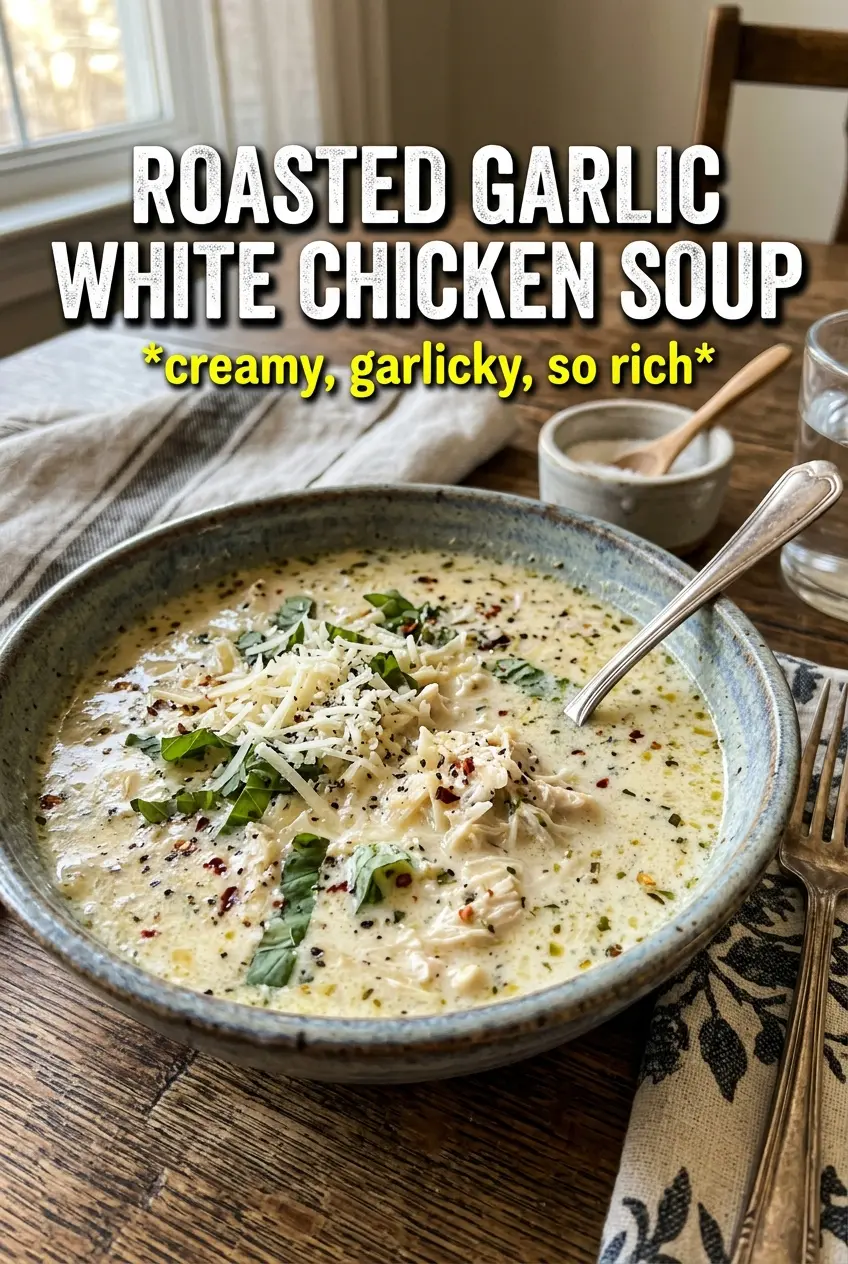
Roasted Garlic White Chicken Lasagna Soup
Ingredients
Equipment
Method
- Wrap the garlic in foil, drizzle with oil, and roast on a sheet pan at 400F for 40 min until cloves are very soft. Use the foil as a tight packet to keep garlic from drying out.
- Let the roasted garlic cool slightly, then squeeze the garlic cloves from their skins and mash them into a paste. Keep the paste ready for the next pot step.
- Melt the butter in a large pot over medium heat, then sauté the diced onion for 4 minutes. Stir occasionally until softened.
- Add the roasted garlic paste and cook for 1 minute. Keep it moving so the garlic doesn’t brown.
- Whisk in the flour and cook for 1-2 minutes. Stir until the mixture looks lightly foamy and smells cooked.
- Gradually add the chicken broth and heavy cream, whisking as you pour. Then stir in Italian seasoning, nutmeg, and white pepper.
- Bring the mixture to a simmer, then add the broken lasagna noodles. Maintain a steady simmer so the noodles cook through evenly.
- Simmer for 10-12 minutes until the noodles are tender, then add the shredded chicken and spinach. Stir to distribute chicken and greens.
- Cook for 2 minutes until the spinach wilts, then stir in the parmesan and season with salt to taste. Taste and adjust before serving.
- Mix the ricotta swirl ingredients—ricotta, parmesan, and fresh basil—until smooth and spoonable. If needed, stir longer for a uniform swirl.
- Serve the soup hot with a spoonful of the ricotta swirl dolloped on top. Add extra parmesan if desired.