Ratatouille soup turns a pile of summer vegetables into a bowl that tastes slow-cooked and thoughtful, even though the work is straightforward. The vegetables soften into the broth just enough to keep their shape, so every spoonful gives you silky tomato, sweet pepper, and tender eggplant in the same bite. A drizzle of good olive oil at the end pulls everything together and makes the whole bowl taste brighter.
What makes this version work is the order. Salted eggplant gets a head start so it cooks up plush instead of spongy, and the onions and peppers build the base before the tomatoes go in. That early layering matters because ratatouille can turn flat if all the vegetables simmer together from the beginning. Here, each one keeps enough of its own character to make the soup taste alive.
You’ll find a few practical notes below on getting the eggplant right, why the herbs matter more than you might think, and how to make the soup taste even better the next day. If you’ve ever wanted ratatouille to feel a little more substantial without losing its rustic charm, this is the version worth making.
The eggplant turned silky instead of mushy, and the broth had so much flavor from the tomato-herb base. I loved how the zucchini and squash still held their shape after simmering.
Save Remi’s Ratatouille Soup for a cozy bowl of tender vegetables, bright herbs, and rich tomato broth.
The Trick to Keeping Ratatouille Soup from Turning Soft and Muddy
Ratatouille soup can go wrong when every vegetable goes into the pot at once. Eggplant releases moisture, zucchini goes slack fast, and tomatoes can bury the sweeter vegetables before they’ve had a chance to cook through. The fix is to give the vegetables different timings so the finished soup tastes layered instead of blurred.
Salting the eggplant first is worth the extra few minutes. It pulls out some of the bitterness and helps the cubes cook up more silky than watery. You also want the onions and peppers to soften before the garlic goes in, because garlic burns fast and goes harsh if it starts the pot too early. That one detail makes the broth taste rounded instead of sharp.
- The eggplant should be rinsed and dried well after salting. Wet eggplant steams instead of browns, and you lose that soft, almost meaty texture.
- The zucchini and yellow squash go in later because they need less time than eggplant. If they cook too long, they collapse and disappear.
- Simmering at a gentle bubble matters. A hard boil breaks the vegetables apart and makes the broth cloudy in an unappealing way.
What Each Vegetable Is Actually Doing in the Pot
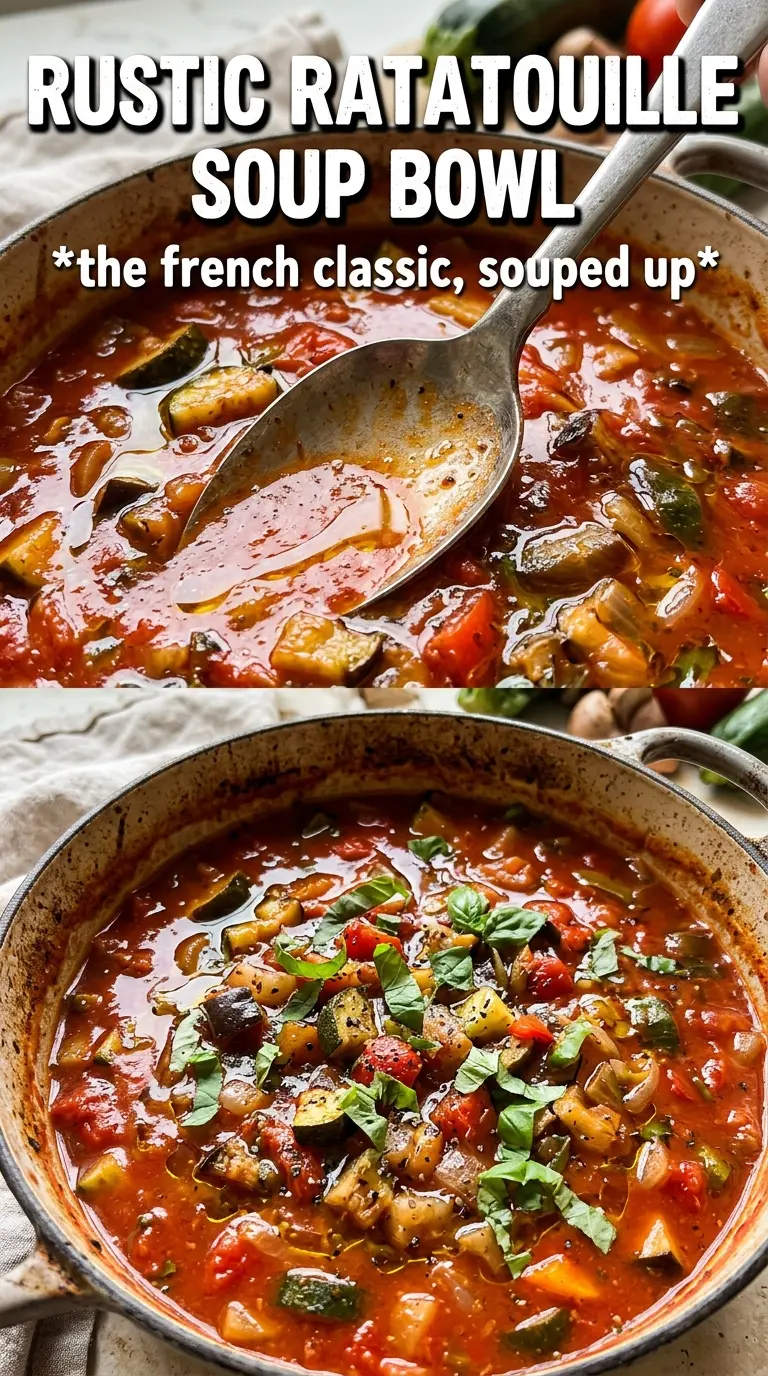
The vegetables here aren’t interchangeable filler. Each one brings a different texture and a different kind of sweetness, and that’s what makes the soup taste like ratatouille instead of generic vegetable stew.
- Eggplant — This is the ingredient that gives the soup body. Small eggplants work best because they tend to have fewer seeds and a softer texture. If yours are large and bitter, salting becomes even more important.
- Zucchini and yellow squash — These soften quickly and give the broth a fresh, light finish. Dice them a little larger than the eggplant so they don’t disappear by the time the soup is done.
- Red bell peppers — They add sweetness that balances the acidity of the tomatoes. Yellow or orange peppers work too, but green peppers will make the soup taste sharper and less round.
- Herbes de Provence — This is what pushes the flavor toward French country cooking. If you don’t have it, use a mix of dried thyme, oregano, and a little rosemary, but the blend is still the easiest way to get the right aroma.
- Fresh basil — Stirring it in at the end keeps the top note bright. If you cook it too long, it turns dull and the soup loses that fresh finish.
Building the Broth in the Right Order
Start with the Eggplant Treatment
Salt the diced eggplant and let it sit for 15 minutes, then rinse and dry it thoroughly. You’re not just removing excess moisture here; you’re setting up a better texture in the finished soup. If you skip the drying step, the eggplant hits the pot wet and steams instead of softening cleanly.
Soften the Aromatics Before the Tomatoes
Heat the olive oil, then cook the onion and red peppers until they soften and the onion looks translucent at the edges. Add the garlic next and stir just until fragrant, about a minute. If the garlic goes in too early, it can scorch while the peppers are still catching up, and that burnt edge will carry through the whole pot.
Let the Vegetables Cook in Stages
Add the eggplant and let it cook before the zucchini and yellow squash go in. The eggplant needs the extra time to lose its firmness, while the squash only needs a short head start before it starts collapsing. Once the tomatoes and broth are in, keep the simmer gentle and steady so everything turns tender without falling apart completely.
Finish with Basil and Olive Oil
Stir in the fresh basil only after the soup comes off its hard simmer. Then taste and season with salt and pepper, because tomatoes and vegetable broth can vary a lot in salt level. The final drizzle of good olive oil is not garnish for show; it gives the soup a glossy finish and adds the last bit of richness the vegetables themselves don’t have.
How to Make This Soup Fit the Ingredients You Have
Make It More Filling with White Beans
Stir in one can of drained white beans during the last 10 minutes of simmering. They add creaminess and make the soup feel more like a full meal without changing the vegetable-forward character.
Dairy-Free Serving
Skip the parmesan and finish with extra olive oil plus a pinch of flaky salt. You still get plenty of richness from the oil and the softened vegetables, so nothing feels missing.
Use What You Have in Place of Squash
If zucchini or yellow squash is missing, add extra eggplant or a diced fennel bulb. Eggplant keeps the same rustic feel, while fennel adds a gentle sweetness and a light anise note that works well with the tomatoes.
Storage and Reheating
- Refrigerator: Store for up to 4 days. The flavor gets deeper overnight, though the zucchini softens a bit more.
- Freezer: It freezes well for up to 3 months, but the squash will be softer after thawing. Cool it fully before freezing in airtight containers.
- Reheating: Warm it gently on the stove over medium-low heat. A hard boil will break down the vegetables too much and make the soup taste tired.
Answers to the Questions Worth Asking
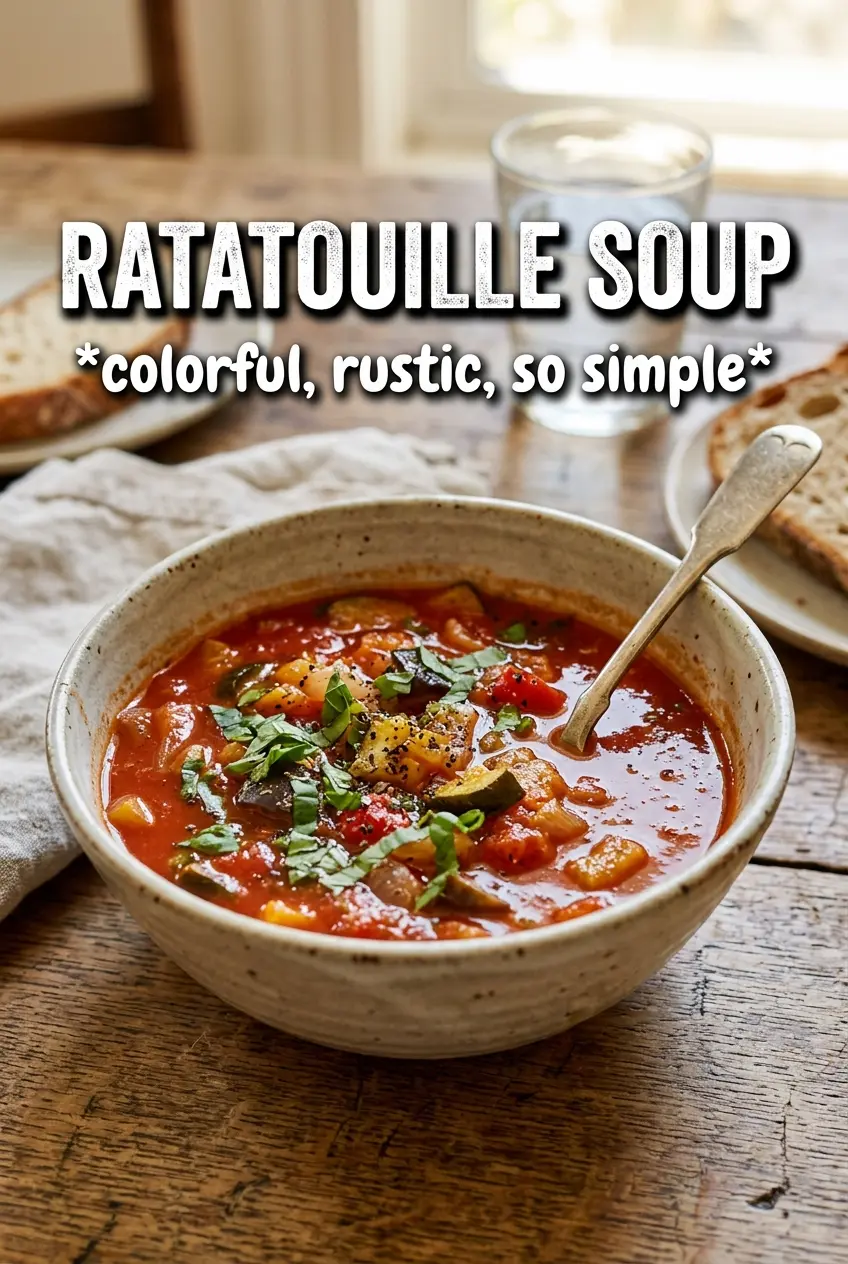
Remi's Ratatouille Soup
Ingredients
Equipment
Method
- Toss the diced eggplant with salt and let sit for 15 minutes. Rinse and dry it after the rest, so the soup won’t taste overly salted.
- Heat the olive oil in a large pot over medium heat, then sauté the onion and bell peppers for 5 minutes. Cook until softened and fragrant with a slight color at the edges.
- Add the minced garlic and the prepared eggplant, then cook for 5 minutes. Stir frequently so the garlic turns aromatic without burning.
- Add the diced zucchini and yellow squash and cook for 3 minutes. Keep stirring just until they begin to soften but still hold their shape.
- Add the crushed tomatoes, diced tomatoes, vegetable broth, herbs de Provence, dried basil, dried thyme, and red pepper flakes. Bring the pot to a gentle simmer.
- Simmer for 20-25 minutes until all vegetables are very tender. Let the broth reduce slightly so the flavors concentrate.
- Stir in the fresh basil and season with salt and pepper to taste. Cook for 1 minute just to wilt the basil.
- Finish with a drizzle of good olive oil before serving. Add parmesan on top if desired.