Parmesan roasted Brussels sprouts come out with crisp, frilly edges, tender centers, and a lacy cheese crust that turns the whole sheet pan into something worth fighting over. The cut side caramelizes against the pan while the Parmesan melts underneath and bakes into a salty, crunchy layer that clings to each sprout. A squeeze of lemon at the end keeps the richness in check and makes the whole dish taste brighter.
What makes this version work is the order. The sprouts go cut-side down on top of the cheese, so the Parmesan browns into a crust instead of disappearing into the pan. A hot oven and a dry sheet pan matter here, because excess moisture is the fastest way to end up with soft, steamed sprouts instead of the deeply browned edges you want.
If you’ve had roasted Brussels sprouts that tasted flat or limp, the details below will help. There’s a small technique shift in the process section that makes the cheese crisp instead of burn, plus a few swaps and storage notes for the nights when you want to work ahead.
The Parmesan formed a crisp, golden shell on the pan and the sprouts underneath were tender with those browned edges I never seem to get when I just toss everything together. My husband picked at the tray before dinner was even on the table.
Save these Parmesan roasted Brussels sprouts for the nights when you want a salty, crisp side with a golden cheese crust and almost no cleanup.
The Trick to a Parmesan Crust That Actually Browns Instead of Burning
The cheese has to sit directly on the parchment and the sprouts need to land cut-side down on top of it. That arrangement gives the Parmesan enough direct heat to form a crisp base while the sprouts roast through on top. If you scatter the cheese over the sprouts, it usually melts unevenly and scorches before the vegetables finish.
425°F is the sweet spot here. Hot enough to drive off moisture and brown the edges, but not so hot that the Parmesan goes bitter before the centers turn tender. The other mistake is crowding the pan; if the sprouts are piled up, they steam and the crust stays soft.
- Cut size matters — Halve the sprouts through the core so they keep their shape and roast evenly. Tiny loose leaves will still crisp up on the pan, but the main halves need that intact base.
- Parchment is non-negotiable — The cheese crust releases cleanly if you line the pan. Bare metal can glue the Parmesan down before you’re ready to serve.
- Fresh Parmesan browns best — Pre-grated cheese can work, but a finely grated block melts into a smoother, more even crust.
What Each Ingredient Is Actually Doing in This Dish
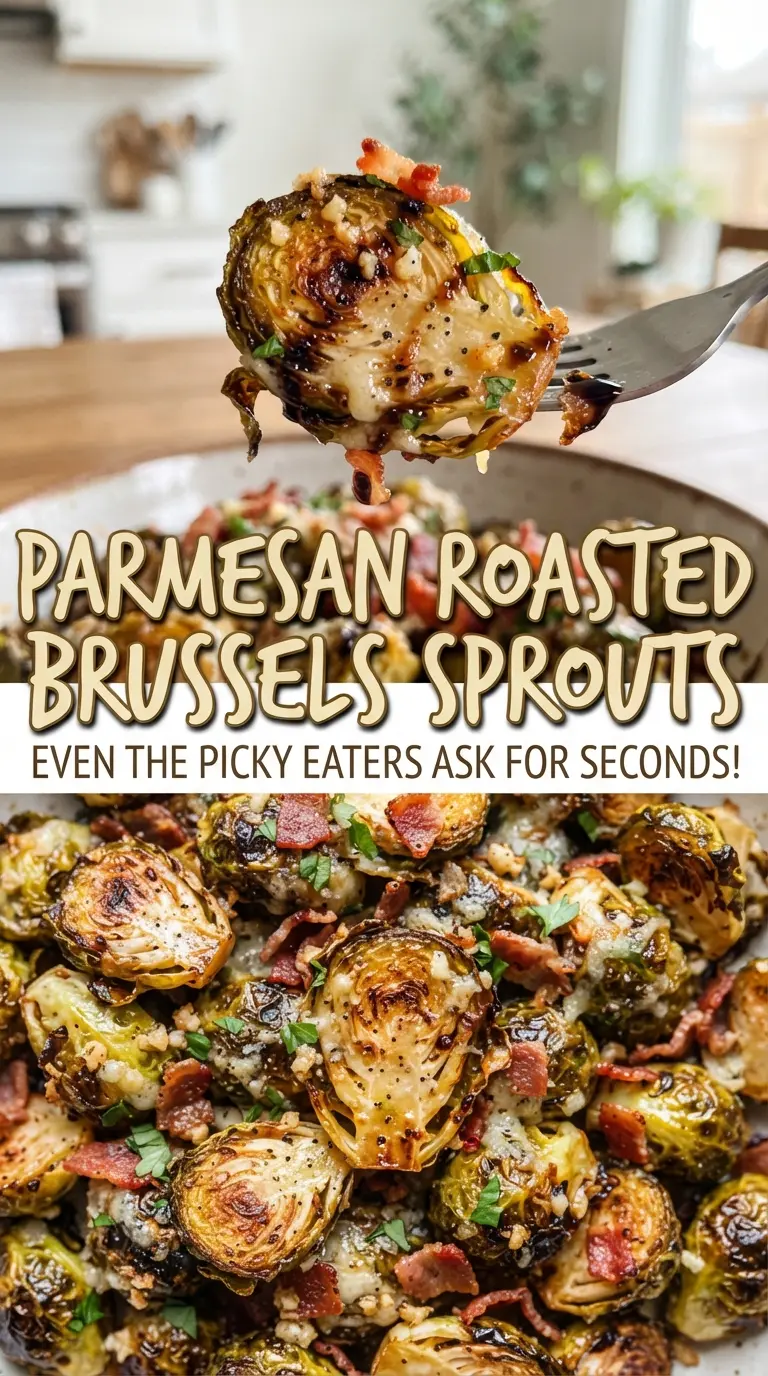
The Brussels sprouts are the backbone here, and trimming them properly matters more than most people think. Remove any bruised outer leaves and slice straight through the stem end so the cut face stays flat against the pan. That flat surface is what lets the vegetable caramelize instead of rolling around and steaming.
- Olive oil — Coats the sprouts so the edges blister instead of drying out. You don’t need an expensive bottle here, but don’t skimp, or the garlic and pepper will cling unevenly.
- Garlic — Adds savory depth, but it can burn if minced too fine and left exposed on the pan. Toss it well with the oil so it hugs the sprouts rather than sitting in little hot spots.
- Parmesan — This is the ingredient that turns the dish into something special. Grated Parmesan melts into a thin, crunchy crust; shredded cheese doesn’t melt as evenly and tends to make stringy patches instead of a lacy layer.
- Lemon juice — Use it at the end, not before roasting. Acid sharpens the finished dish, but if it goes in early it can keep the sprouts from browning as deeply.
Getting the Sprouts Tender, Charred, and Covered in Cheese
Coating the Sprouts Evenly
Toss the halved Brussels sprouts with olive oil, garlic, salt, and pepper until every cut face looks glossy. The oil carries the seasonings and helps the sprouts brown instead of drying out, so don’t leave dry patches behind in the bowl. If the garlic clumps in one area, it can scorch on the pan, so scrape the bowl well and distribute it evenly.
Building the Parmesan Base
Spread the grated Parmesan in an even layer over the parchment before adding the sprouts. It should look like a thin blanket, not mounds, because thick piles tend to melt into oily spots before they crisp. Place each sprout cut-side down directly onto the cheese and press lightly so it makes contact with the pan.
Roasting Until the Edges Frill
Roast until the sprouts are tender when pierced and the exposed leaves are deeply browned at the tips. The cheese underneath should be golden and crisp, with some darker caramelized spots around the edges. If the Parmesan is browning too fast before the sprouts are done, move the pan to a lower rack for the last few minutes rather than turning down the oven for the whole batch.
Finishing With Lemon
Squeeze the lemon juice over the sprouts the moment they come out of the oven. The heat releases the aroma and the acid cuts through the salty cheese in one move. Serve them right away while the crust is still crisp; once they sit, the steam softens the bottom layer.
Three Ways to Adjust These Parmesan Roasted Brussels Sprouts Without Losing the Point
Dairy-Free Version
Skip the Parmesan and roast the sprouts with a little extra oil, then finish with lemon and a pinch of flaky salt. You lose the crisp cheese crust, but you keep the caramelized edges and bright finish, which still makes a strong side dish.
Pecorino for a Sharper Finish
Use Pecorino Romano in place of Parmesan if you want a saltier, sharper crust. It browns a little faster, so watch the pan closely in the last five minutes and pull it when the cheese is just turning gold.
Spicy Garlic Version
Add a pinch of red pepper flakes with the garlic for a little heat. The spice works well with the lemon at the end and gives the dish more punch without changing the texture of the crust.
Storage and Reheating
- Refrigerator: Store leftovers in an airtight container for up to 3 days. The crust softens, but the flavor stays strong.
- Freezer: Not a great freezer recipe. The sprouts turn watery after thawing and the cheese crust loses its texture.
- Reheating: Reheat on a sheet pan in a 400°F oven for 8 to 10 minutes. The microwave makes the sprouts limp and wipes out the crisp edges, which is the whole point here.
Answers to the Questions Worth Asking
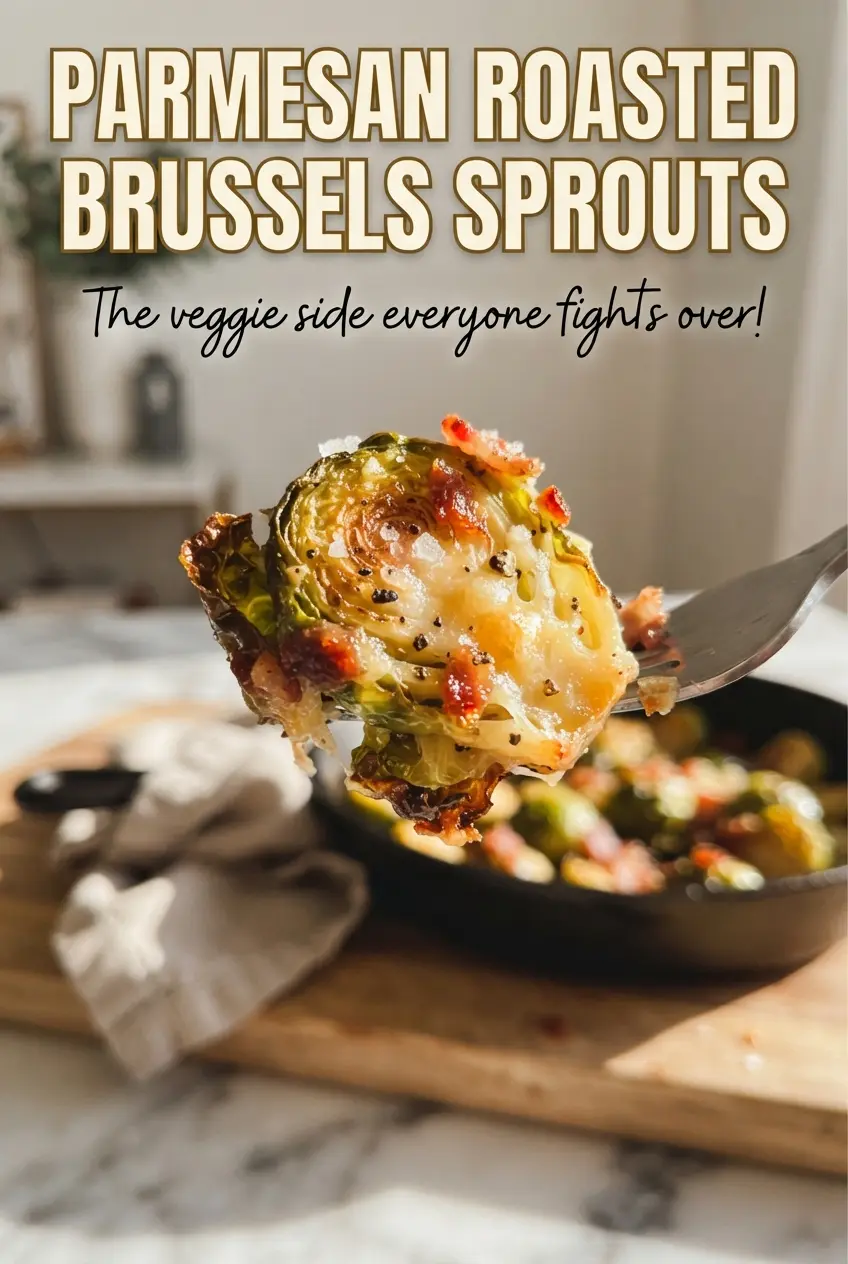
Parmesan Roasted Brussels Sprouts
Ingredients
Equipment
Method
- Preheat oven to 425F and line a sheet pan with parchment (visual cue: parchment is fully covered so the Parmesan won’t stick).
- Toss Brussels sprouts with olive oil, garlic, salt, and black pepper until evenly coated (visual cue: every cut surface looks glossy and seasoned).
- Sprinkle Parmesan evenly over the pan, then place sprouts cut-side down on top of the cheese (visual cue: Parmesan touches the cut sides directly, creating the crust base).
- Roast for 20-25 minutes until Brussels sprouts are tender and the Parmesan forms a golden crust (visual cue: browned, lacy spots on the tops).
- Squeeze lemon juice over the top and serve hot (visual cue: bright citrus sheen on the hot roasted surfaces).