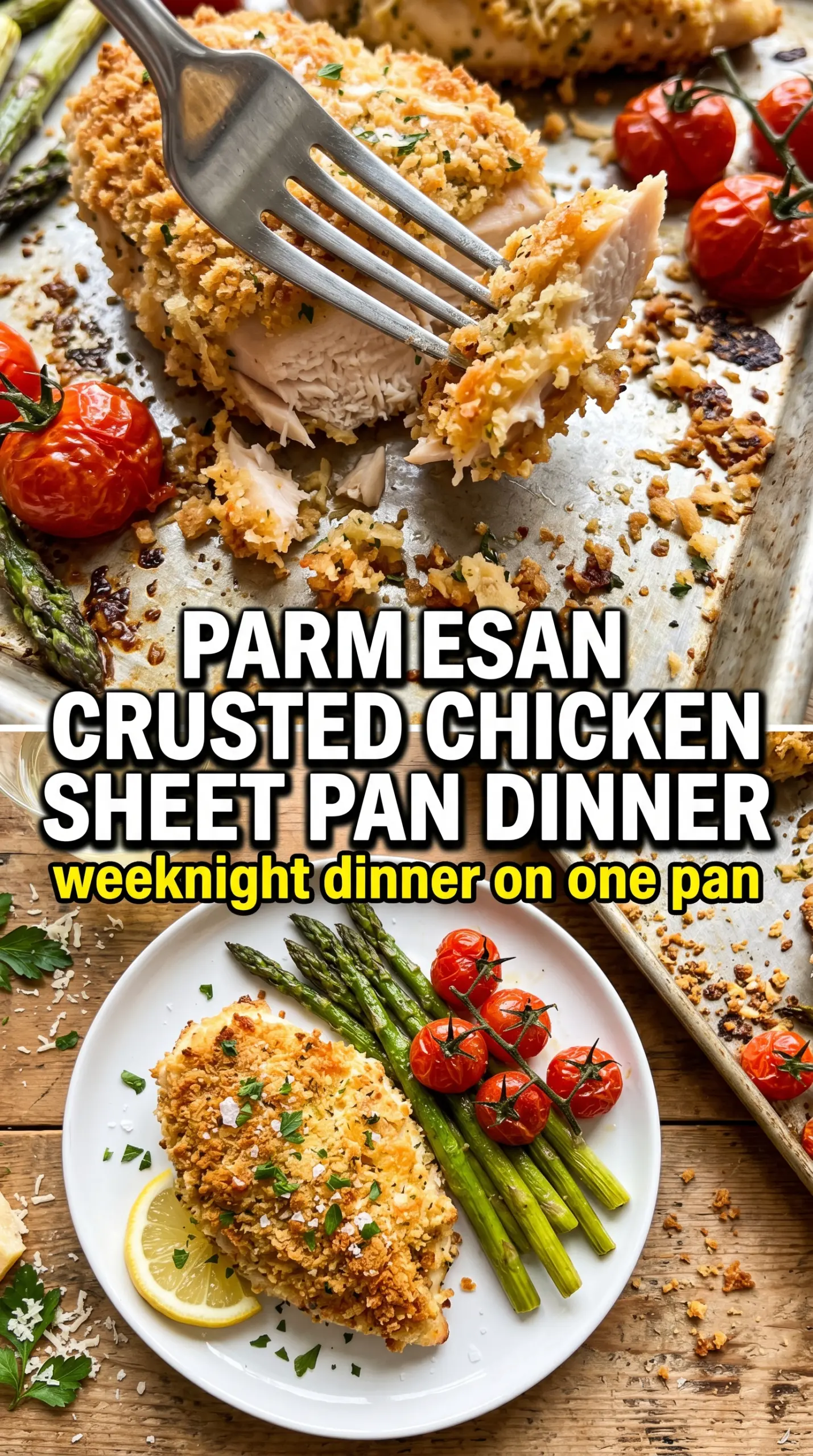
Golden parmesan-crusted chicken is the kind of dinner that comes out of the oven looking like you worked a lot harder than you did. The top turns crackly and deeply browned, while the chicken underneath stays juicy and the vegetables roast in the same pan, picking up all those savory bits around the edges. It’s the rare sheet pan meal that feels complete enough for guests but still practical enough for a Tuesday night.
What makes this version work is the coating: parmesan gives the crust its salt and sharpness, panko keeps it light, and the Dijon-mayo layer acts like edible glue so the topping stays put instead of sliding off halfway through baking. Roasting the asparagus and tomatoes right alongside the chicken means dinner finishes together, and the tomatoes burst just enough to add a little sauce to the pan without turning everything soggy.
Below, I’ve included the one detail that keeps the crust crisp instead of greasy, plus a few smart swaps if you want to adjust the vegetables or make the dish fit what’s in your kitchen.
The parmesan crust stayed on the chicken the whole time and got crisp, not mushy. I also loved that the asparagus and tomatoes were done right when the chicken was, so dinner came together without any juggling.
Love the crackly parmesan crust and roasted vegetables? Save this sheet pan chicken dinner for an easy weeknight meal that still feels special.
The Trick That Keeps the Parmesan Crust Attached
The biggest mistake with crusted chicken is treating the coating like a dry breading and hoping it sticks. Parmesan alone tends to slide once the surface starts to steam, especially if the chicken is cold or wet. The Dijon and mayonnaise mixture solves that problem by giving the crumbs something sticky and flavorful to cling to, and it helps the top brown without drying out the meat.
Press the coating on firmly. Don’t pat it on gently and walk away. You want a real layer, especially on the thickest part of the breast, because that’s where the crust usually falls off first. Baking at 425°F gives you enough heat to brown the topping before the chicken overcooks.
- Parmesan — Freshly grated parmesan melts and browns better than the shelf-stable kind. The pre-grated stuff can work in a pinch, but it won’t give you quite the same crisp, nutty crust.
- Panko — This keeps the topping lighter and craggier than regular breadcrumbs. If you swap in fine crumbs, the coating will be denser and less crunchy.
- Dijon mustard — This adds sharpness and helps the crust adhere. Yellow mustard will work for binding, but it tastes flatter.
- Mayonnaise — It sounds unusual, but this is what keeps the chicken juicy while the top browns. If you don’t want to use mayo, plain Greek yogurt is the closest swap, though it brings a little more tang.
- Asparagus and cherry tomatoes — These vegetables roast quickly enough to finish with the chicken. If your asparagus spears are very thick, cut them down or they’ll lag behind the chicken.
What Each Ingredient Is Actually Doing in This Sheet Pan Dinner
- Protein (chicken, fish, pork) — Pat dry so it browns instead of steams. Arrange in a single layer for even cooking.
- Vegetables (broccoli, carrots, potatoes) — Cut to similar sizes so everything finishes at the same time. Toss with oil so they caramelize.
- Olive oil (the cook and flavor) — Don’t skimp. Oil helps vegetables brown and carries seasonings throughout the pan.
- Seasonings (salt, spices, fresh or dried herbs) — Season everything generously because the oven’s dry heat mutes flavors.
- Coating or glaze (parmesan, pesto, or seasoning) — This adds flavor and texture. Apply some to the protein and some to the vegetables.
- High heat (425-450°F) — Hot heat helps protein brown and vegetables caramelize. Don’t crowd the pan.
- Timing (the coordination) — Add longer-cooking vegetables first; delicate ones near the end. Check at 15 and 20 minutes.
- Final finish (lemon, fresh herbs, or more seasonings) — Add these right before serving to keep them fresh and bright.
Building the Sheet Pan So Everything Finishes at the Same Time
Mix the Coating First
Stir the parmesan, panko, garlic powder, and Italian seasoning together before you touch the chicken. That keeps the coating even, so one breast doesn’t end up overloaded with cheese while another gets mostly breadcrumbs. If the parmesan is clumpy, break it up with your fingers before mixing.
Brush, Then Press
Spread the Dijon-mayo mixture over the top of each chicken breast, then press the parmesan mixture onto that layer with your hand. Don’t drag the coating around or it will clump in patches. The goal is a thick, even cap on the top side only; the underside should stay bare so it can cook cleanly on the pan.
Roast the Vegetables Around the Chicken
Toss the asparagus and tomatoes with olive oil, salt, and pepper, then arrange them around the chicken without crowding the pan. Overcrowding traps steam and softens the vegetables instead of roasting them. If the tomatoes are very large, cut them in half so they burst at the same pace as the chicken finishes.
Watch for the Color, Not Just the Clock
Pull the pan when the crust is deep golden and the chicken reaches 165°F in the thickest part. If the topping is browning too fast, the pan is probably too close to the oven’s heat source, so lower the rack one level next time. Let the chicken rest for a few minutes before slicing so the juices stay where they belong.
Three Ways to Adjust This Dinner Without Losing the Crunch
Gluten-Free Version
Swap the panko for certified gluten-free breadcrumbs or crushed gluten-free crackers. You’ll still get a crisp topping, though crackers usually brown a little faster, so keep an eye on the oven during the last few minutes.
Dairy-Free Adaptation
Use a dairy-free parmesan-style topping that melts and browns well, then lean on the Dijon and mayo for flavor. The crust won’t taste exactly the same, but you’ll still get a savory, crisp top if the substitute is finely grated.
Swap the Vegetables
Broccoli florets, green beans, or zucchini all work here, but they each cook a little differently. Broccoli needs a few extra minutes, green beans behave much like asparagus, and zucchini softens quickly, so cut it into larger pieces and add it only if you like it tender.
Storage and Reheating
- Refrigerator: Store leftovers in an airtight container for up to 3 days. The crust softens a bit, but the chicken still slices well.
- Freezer: Freeze only the chicken if you can. The vegetables turn soft after thawing, and the crust loses some of its crunch, but the flavor holds up.
- Reheating: Warm in a 375°F oven or air fryer until heated through. Skip the microwave if you want the coating to stay crisp, because it steams the crust and makes it soggy.
Questions I Get Asked About This Recipe
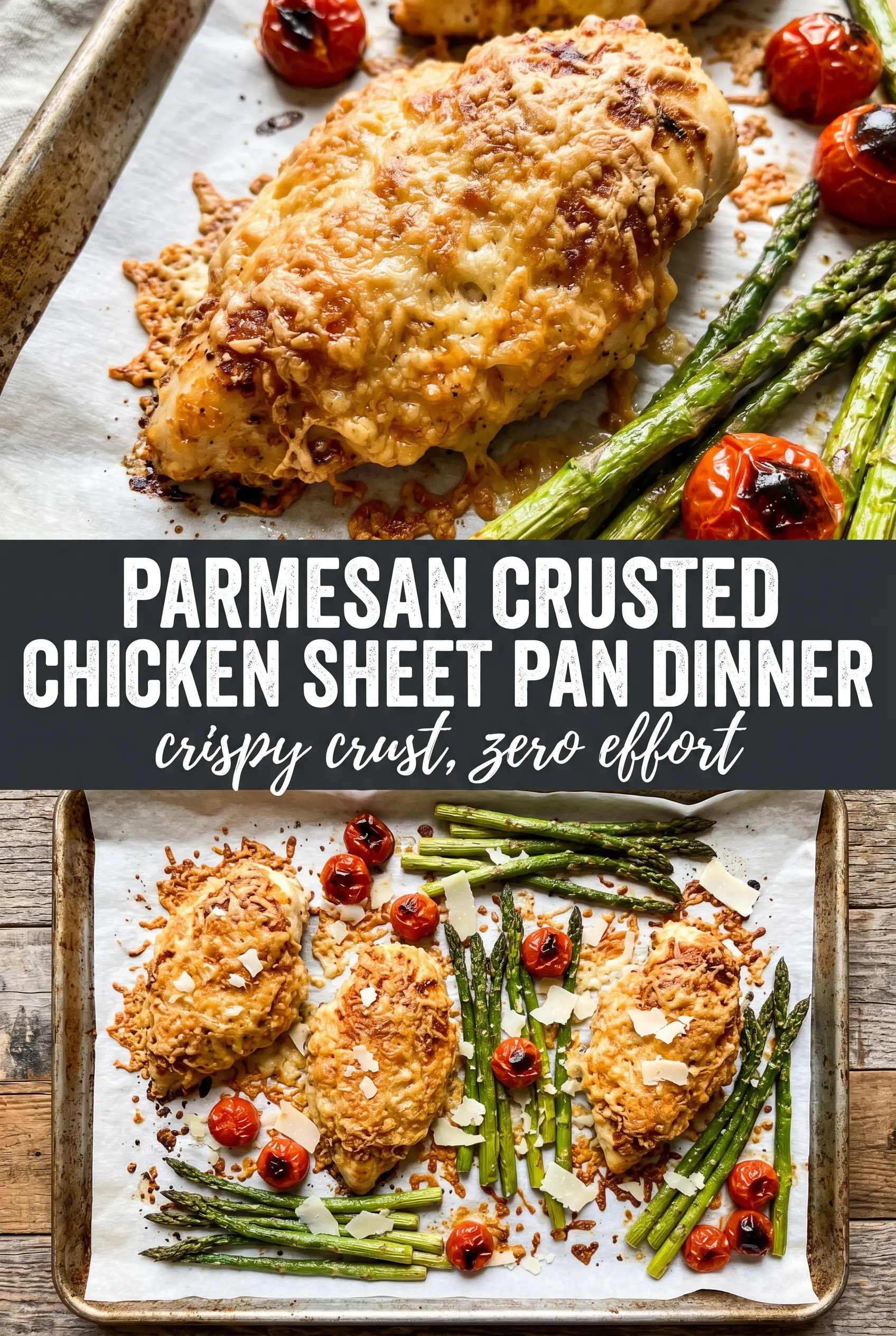
Parmesan Crusted Chicken Sheet Pan Dinner
Ingredients
Equipment
Method
- Preheat oven to 425°F and line a large sheet pan with foil for easy cleanup and crisping.
- Mix parmesan cheese, panko breadcrumbs, garlic powder, and Italian seasoning together until evenly combined.
- Brush chicken breasts with Dijon mustard and mayonnaise, then press firmly into the parmesan mixture to coat the top completely.
- Place the coated chicken on the sheet pan.
- Toss asparagus and cherry tomatoes with olive oil, salt, and pepper, then arrange them around the chicken so they roast in the pan juices.
- Bake for 22–25 minutes at 425°F, until the crust is deeply golden and crackling and the chicken is cooked through; serve immediately with lemon wedges.