Silky noodles, a glossy garlic cream sauce, and parmesan melted right into the pot make this the kind of pasta that disappears fast. The sauce clings to every strand instead of pooling at the bottom, and the garlic stays mellow and sweet rather than sharp or burnt. It tastes like you worked a lot harder than you did.
What makes this version work is the order. The garlic gets a short sauté in butter just until fragrant, then the pasta cooks directly in broth and cream so the starch thickens the sauce as it simmers. That means you don’t need a separate pot for boiling, draining, or saving pasta water, and you don’t risk watering down the final dish.
Below, I’m walking through the small details that keep the sauce smooth, plus the one substitution I’d use if you need to swap the cream or the pasta shape. The recipe is simple, but the timing matters, and that’s what keeps it from turning gluey or thin.
The sauce thickened right up as the pasta finished, and the garlic stayed mellow instead of bitter. I added a little extra parmesan at the end and it coated the noodles perfectly.
Save this one-pot creamy garlic pasta for the nights when you want a glossy parmesan sauce without washing an extra pan.
The Trick to Keeping One-Pot Pasta Creamy Instead of Gluey
The biggest mistake with one-pot pasta is treating it like regular boiled pasta. If the heat runs too high, the liquid evaporates before the noodles finish, and you end up with a sticky pan and undercooked pasta. Keep the broth and cream at a gentle boil, then lower the heat once the pasta goes in so the starch can thicken the sauce gradually.
Stir often, especially in the last few minutes. That keeps the noodles from clumping and helps the sauce coat evenly instead of grabbing in one thick layer at the bottom of the pot. If the sauce looks thin when the pasta is al dente, give it another minute off the heat with the lid off; it tightens as it sits.
What Each Ingredient Is Actually Doing in This Dish
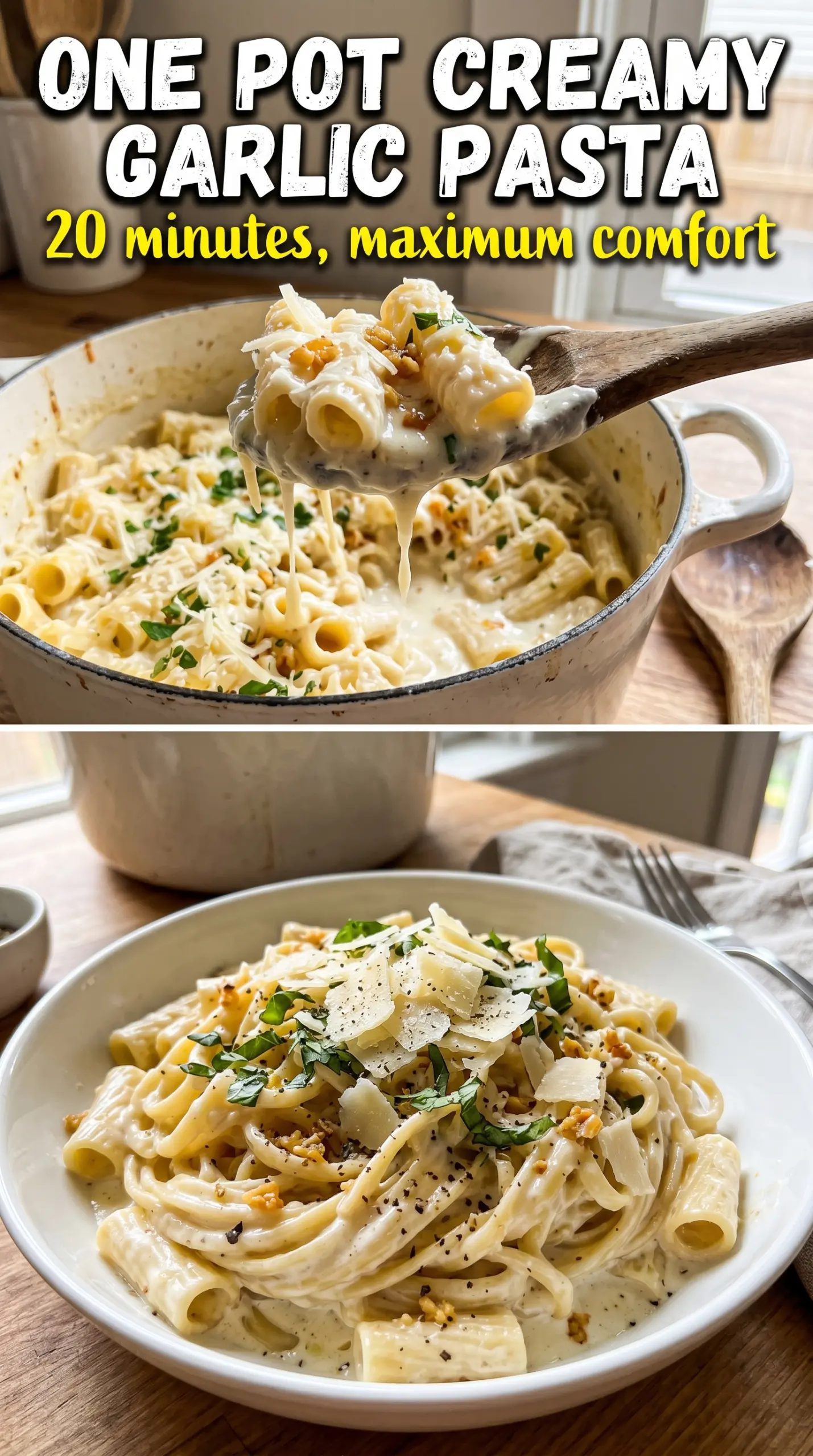
- Linguine or spaghetti — Long pasta works best because it moves through the sauce and finishes with a silky coating. Short shapes can work, but they don’t give you the same twirlable texture or glossy finish.
- Heavy cream — This is what gives the sauce body without curdling under the heat of the one-pot method. Half-and-half can work in a pinch, but the sauce will be lighter and less stable.
- Parmesan — Use finely grated parmesan so it melts smoothly. Pre-shredded cheese often has anti-caking agents that can make the sauce grainy.
- Broth — The broth seasons the pasta from the inside as it cooks, which is why the sauce tastes full even before the final salt goes in. Vegetable broth keeps this vegetarian; chicken broth adds a little more depth.
- Garlic — Fresh minced garlic is worth using here because it forms the backbone of the sauce. Cook it just until fragrant and pale gold; once it browns, it turns bitter fast.
Building the Sauce Right in the Pot
Waking Up the Garlic
Melt the butter over medium heat, then add the garlic and stir for 1 to 2 minutes. You want it fragrant and just barely golden at the edges, not toasted brown. If the garlic catches, the bitterness carries through the whole sauce, so pull the pot off the heat for a few seconds if it starts to darken too fast.
Letting the Pasta Thicken Its Own Sauce
Pour in the broth and cream, bring it to a gentle boil, then add the uncooked pasta. Stir often so the strands separate and cook evenly. The liquid should reduce as the pasta softens; if the pot looks dry before the noodles are tender, add a splash more broth or water.
Finishing with Cheese and Heat Control
Stir in the parmesan and Italian seasoning once the pasta is al dente and the liquid has turned creamy. Lower the heat before the cheese goes in so it melts into the sauce instead of clumping. If the sauce looks a little loose at first, give it a minute; parmesan thickens fast as it melts and then settles.
Serving at the Right Moment
This pasta is best served right away, while the sauce is glossy and fluid. As it sits, the starch and cheese keep thickening, which is great if you want it clingy, but not if you wait too long. Top with basil and extra parmesan just before serving so the herbs stay bright and the cheese doesn’t vanish into the sauce.
How to Adapt This for Different Kitchens and Diets
Make It Vegetarian
Use vegetable broth instead of chicken broth and the pasta stays just as rich. The parmesan already gives the dish a savory backbone, so you won’t lose much depth.
Use Half-and-Half for a Lighter Sauce
Half-and-half will work, but the sauce won’t be as plush and it needs a little more attention near the end so it doesn’t reduce too far. Keep the heat low and add a splash of broth if the pan starts drying out before the pasta is done.
Swap the Pasta Shape
Fettuccine, bucatini, or penne all work, but cooking time changes with the shape. Keep an eye on the liquid level and use the pasta texture, not the clock alone, because thicker pasta may need another minute or two.
Storage and Reheating
- Refrigerator: Store in an airtight container for up to 3 days. The sauce thickens as it chills, so the pasta will look a little tighter the next day.
- Freezer: I don’t recommend freezing this one. Cream sauces and parmesan can separate after thawing, and the pasta turns soft.
- Reheating: Warm it slowly on the stovetop over low heat with a splash of broth or cream, stirring until the sauce loosens. Microwaving on high tends to make the cheese seize and the pasta dry out in patches.
Answers to the Questions Worth Asking
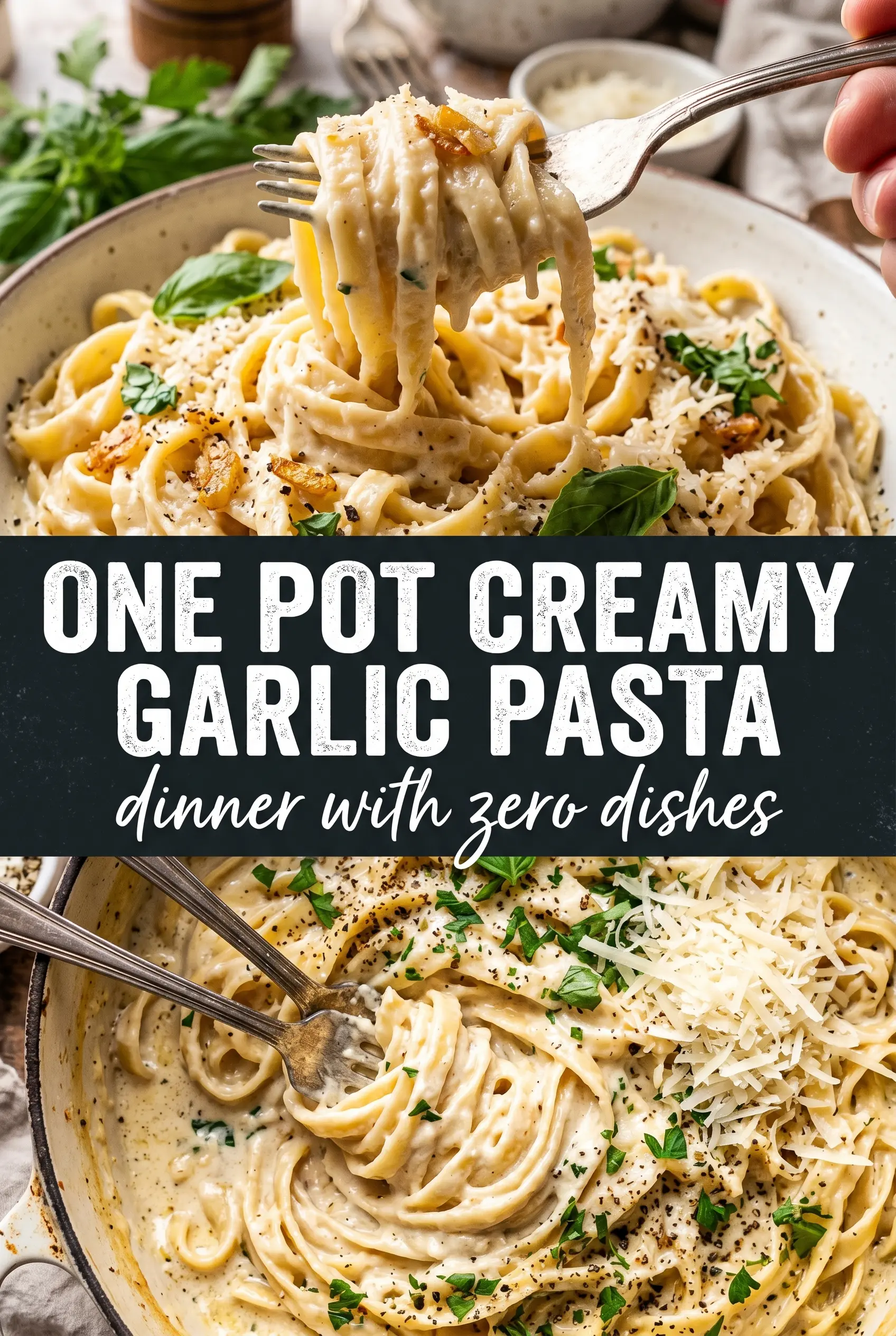
One Pot Creamy Garlic Pasta
Ingredients
Equipment
Method
- Melt the butter in a large pot over medium heat, then add the minced garlic and sauté for 1–2 minutes until fragrant and just golden.
- Add the broth and heavy cream and bring to a gentle boil, stirring so the mixture heats evenly.
- Add the uncooked linguine and cook for 10–12 minutes, stirring frequently, until al dente and the liquid has reduced into a creamy sauce.
- Stir in the parmesan and Italian seasoning until the cheese is fully melted and the sauce looks silky.
- Season generously with salt and cracked black pepper, adjusting to taste so the flavors pop.
- Serve immediately, topped with fresh basil leaves and extra parmesan.