Warm German potato salad lands with a different kind of comfort than the mayonnaise-based version most people know. The potatoes hold their shape, the bacon adds smoky salt, and the vinegar dressing soaks into every slice while it’s still hot enough to matter. It’s the kind of side dish that shows up next to grilled sausages, roast chicken, or a simple pork chop and somehow steals the plate.
What makes this version work is timing. The potatoes are dressed while they’re warm, which lets them drink in the tangy broth mixture instead of sitting there coated on the outside. The bacon drippings carry the onion, flour, and vinegar into a glossy dressing that clings without turning heavy. If you’ve ever ended up with bland potatoes or a thin, puddly sauce, the fixes are built into the method below.
Below, I’ve added the little details that matter most: how soft the potatoes should be before draining, when the dressing is thick enough, and how to keep the salad warm and balanced until serving time.
The dressing thickened just enough to coat the potatoes, and the bacon stayed crisp even after tossing. I served it warm with pork chops and there wasn’t a spoonful left.
Pin this warm German potato salad for the bacon-onion dressing that coats every slice and serves up steaming hot.
The Part Most Potato Salads Get Wrong: Dressing the Potatoes Cold
Cold potatoes don’t absorb much. They get coated, then the dressing slides off and settles in the bowl. That’s the main difference between a German potato salad that tastes lively and one that tastes like boiled potatoes with sauce on top. The hot potatoes pull in the vinegar, broth, and bacon fat while the dressing is still loose enough to move between the slices.
The other trap is overcooking the potatoes. Russets turn soft fast, and if they fall apart in the pot, they’ll break down into mash the second you stir in the dressing. You want tender slices that still have enough structure to hold the onion and bacon. Drain them well, then dress them right away while they’re still steaming.
What the Bacon Drippings and Vinegar Are Doing Here
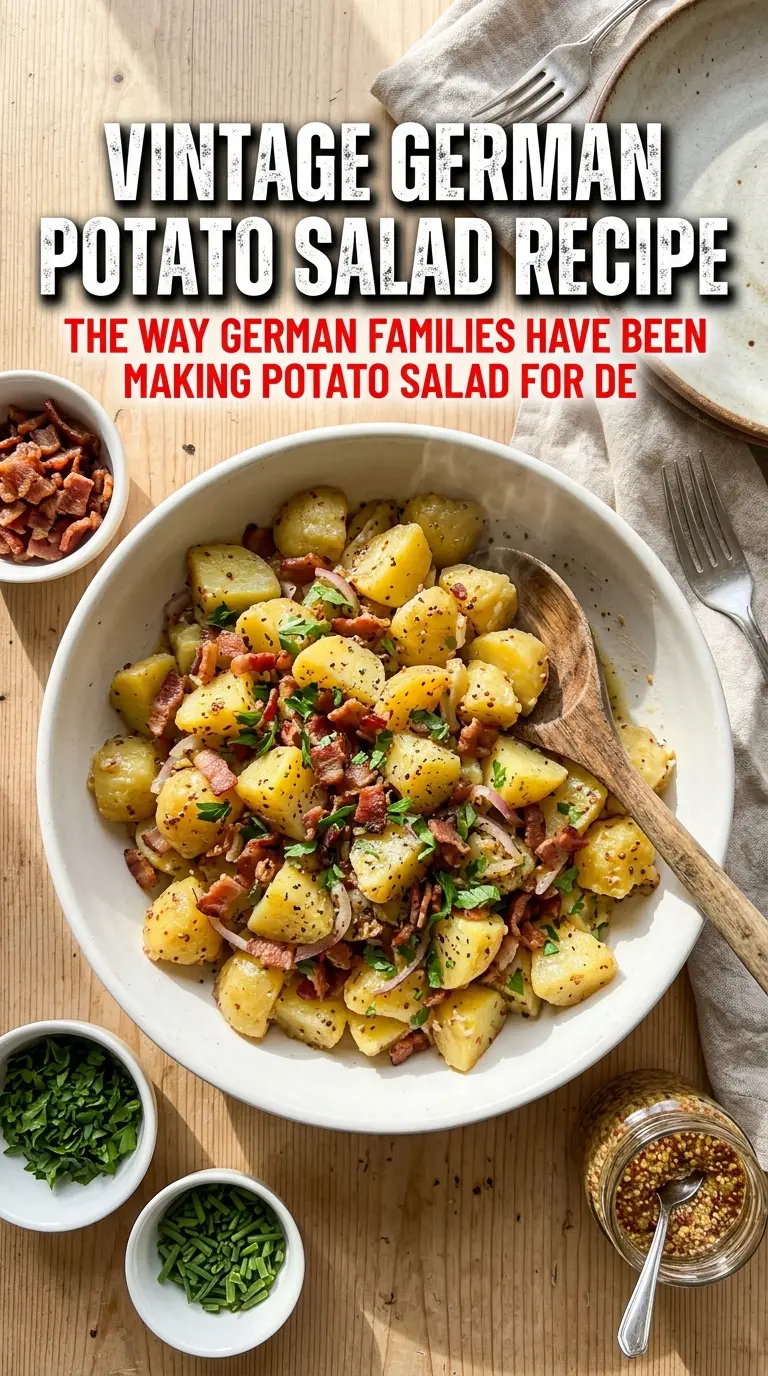
- Russet potatoes — These soften enough to soak up the dressing without turning waxy or dense. Slice them evenly so they finish at the same time; uneven slices leave you with some that are too firm and others that collapse.
- Bacon — This is the backbone of the salad’s smoky flavor. Use regular sliced bacon, not thick-cut, because you want enough drippings to cook the onion and build the dressing.
- Onion — Diced onion cooks in the bacon fat until it turns sweet and translucent. Yellow onion works best here because it mellows without disappearing.
- Beef broth — This gives the dressing depth that water can’t provide. If you need a lighter swap, chicken broth works, but the finished salad will taste a little less robust.
- White vinegar — This is what gives the salad its sharp, classic bite. Don’t cut it too much; the potatoes need that brightness to balance the bacon and broth.
- Flour — A small amount thickens the dressing just enough to cling. Stir it into the onion before adding the liquid so it doesn’t lump up.
How to Build the Warm Bacon Dressing Without Making It Gluey
Cooking the Potatoes to Tender, Not Falling Apart
Boil the sliced potatoes until a knife slips in with little resistance, but stop before the edges start to shred. If they’re too soft, they’ll break when you stir in the dressing and the salad will go muddy instead of layered. Drain them thoroughly so the dressing can coat the potatoes instead of thinning out with extra water.
Using the Bacon Fat as the Base
Cook the bacon until crisp, then leave enough drippings in the pan to sauté the onion. That fat carries the flavor of the whole salad, and it also gives the flour something to cling to. If the drippings look excessive, pour off just a little; you still need enough to coat the onions and help the dressing come together.
Finishing the Dressing at the Right Thickness
Once the flour goes in, stir until it disappears into the onions, then add the broth, vinegar, sugar, salt, and pepper. Let it simmer until it looks lightly glossy and just thick enough to coat a spoon. If it still runs like broth, give it another minute or two; if it gets too thick, the potatoes won’t absorb it evenly.
How to Adjust This for Different Tables and Diets
Make it with mustard for a sharper finish
Stir in a teaspoon of German or Dijon mustard with the vinegar and broth. It doesn’t make the salad taste like mustard; it just deepens the tang and gives the dressing a little more backbone.
Swap the beef broth for chicken broth
Chicken broth works well if that’s what you have on hand. The salad will still be savory and balanced, but the flavor will be a little lighter and less deeply browned.
Make it gluten-free with cornstarch instead of flour
Use 1 tablespoon cornstarch mixed with 1 tablespoon cold broth, then whisk it into the simmering liquid instead of the flour. It thickens a little more cleanly than flour and keeps the dressing glossy.
Skip the bacon for a vegetarian version
Use butter or a neutral oil to cook the onion, then swap the beef broth for vegetable broth and add a pinch of smoked paprika for depth. You won’t get the same smoky richness, but you’ll still get a warm vinegar dressing that works well with the potatoes.
Storage and Reheating
- Refrigerator: Store leftovers for up to 4 days. The potatoes will absorb more dressing as they sit, so the salad tastes a little more mellow on day two.
- Freezer: I don’t recommend freezing it. The potatoes turn grainy and the dressing loses its clean texture once thawed.
- Reheating: Warm it gently in a covered skillet over low heat with a splash of broth to loosen it. The common mistake is blasting it in the microwave, which makes the potatoes dry at the edges and soft in the middle.
The Questions I Get Asked About This Recipe
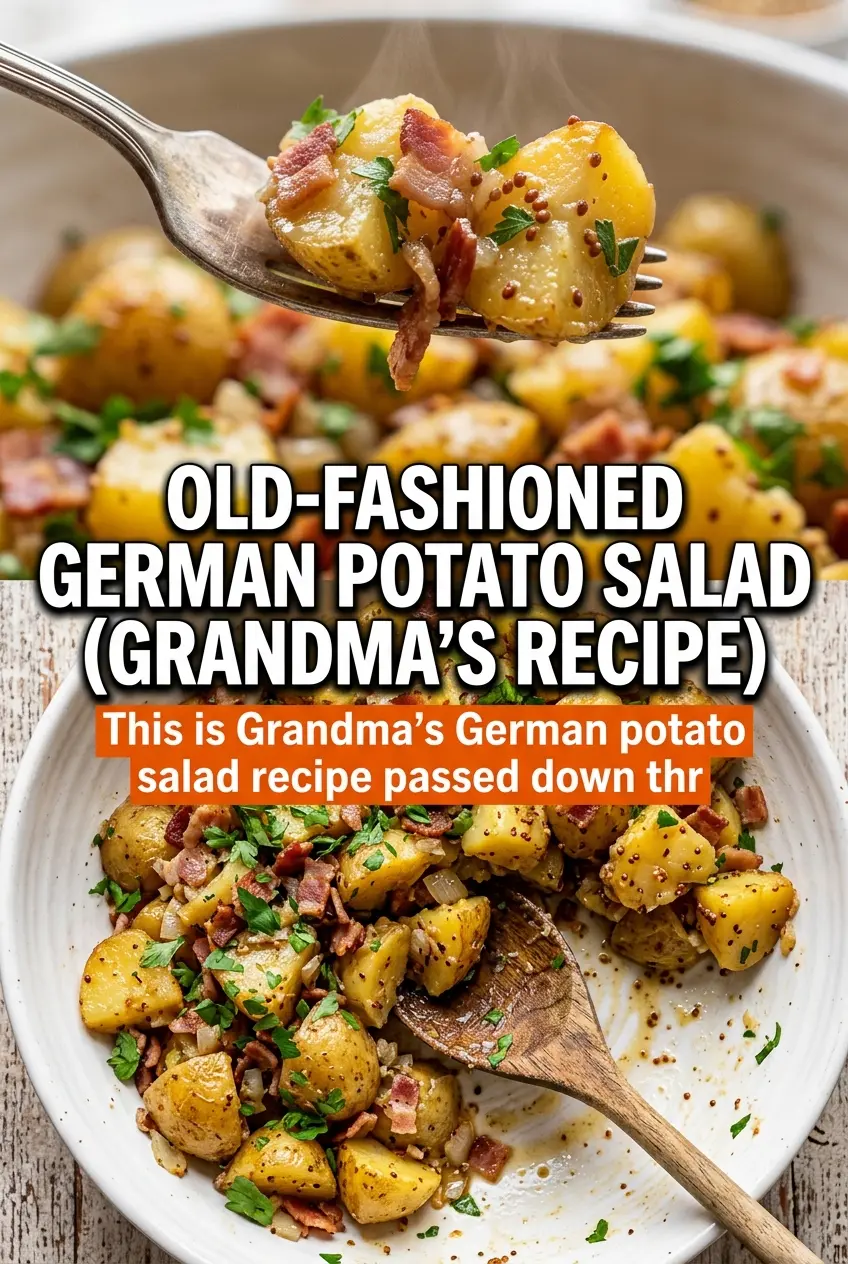
Old-Fashioned German Potato Salad
Ingredients
Equipment
Method
- Bring a pot of water to a boil, then cook the potato slices for 12-18 minutes until tender when pierced with a fork. You should see the pieces yield easily but still hold their shape.
- Drain the potatoes thoroughly and set them aside so excess water doesn’t thin the dressing. The potatoes should look matte, not watery.
- Cook the bacon in a cast iron skillet over medium heat for 6-10 minutes until crispy, then remove the bacon and reserve the drippings. The bacon should be browned and crisp, with clear fat in the pan.
- Sauté the diced onion in the reserved bacon drippings for 5-7 minutes until softened and lightly translucent. Stir often so the onions don’t brown too much.
- Sprinkle the flour over the onions and stir for 1-2 minutes to eliminate the raw flour taste. The mixture should look pasty and lightly thickened.
- Add the beef broth, white vinegar, sugar, salt, and pepper, then simmer over medium-low heat for 4-6 minutes until the dressing thickens enough to coat a spoon. It should cling in a glossy layer rather than stay watery.
- Crumble the crispy bacon and add it to the potatoes. Toss gently so the bacon distributes through the warm potato slices.
- Pour the hot vinegar dressing over the potatoes and bacon immediately, then toss until everything is evenly coated. The salad should look shiny and steamy when finished.
- Sprinkle with chopped fresh parsley and serve warm right away. You should see bright green flecks on top.