Deep orange-red, rich, and built around chicken that stays tender under a sauce that tastes cooked all the way through, Nigerian chicken stew earns its place beside plain rice fast. The best versions don’t taste raw or sharp; they have that deep, mellow tomato-pepper base that only happens after the sauce has been fried long enough for the oil to separate and rise to the top. That step is what turns a bright blended pepper mix into a stew with real body.
This version leans on bone-in chicken for flavor and uses a proper pepper blend with plum tomatoes, red bell peppers, and scotch bonnet or habanero for heat that you can actually control. The chicken gets seasoned first so every piece carries flavor into the pot, and the sauce is cooked until it darkens and loses that fresh blended taste. If you’ve ever had Nigerian stew that seemed watery or flat, the difference is almost always in that first long fry.
Below, you’ll find the cues that tell you the sauce is ready, the best way to keep the chicken from going dry, and a few smart swaps if you need to work around heat, oil, or time.
I kept waiting for the oil to rise like you said, and that was the moment it changed from blended peppers to real stew. The chicken stayed juicy, and the sauce clung to the rice instead of running everywhere.
Save this Nigerian Chicken Stew for the nights when you want that deep pepper sauce and golden chicken over steaming rice.
The Step That Keeps Nigerian Chicken Stew Deep and Not Watery
The part most people rush is the pepper base. If you stop cooking it when it still smells sharp or looks like a loose blended sauce, the stew will taste raw and thin even after the chicken goes in. You want the mixture to lose its bright, fresh edge and turn darker, thicker, and a little glossy as the oil separates on top.
That long fry also matters because plum tomatoes bring acidity and moisture. The extended cook tames both, so the finished stew tastes rounded instead of sour. Stir often enough to keep the bottom from catching, but don’t babysit it so much that the sauce never has a chance to fry in the oil.
- Let the sauce cook past the fresh-pepper stage. The color should shift from bright orange-red to a deeper brick red, and the aroma should smell cooked, not blended.
- Watch for oil separation. You should see oil floating around the edges and in small pools on top. That’s the clearest sign the base has reduced enough.
- Don’t crowd the pot with chicken too early. Adding it before the sauce is ready lowers the heat and steams the base instead of finishing it.
What Each Ingredient Is Actually Doing in This Pot

- Bone-in chicken pieces — The bones give the stew a fuller taste and help keep the meat from drying out during the simmer. Thighs and drumsticks are the safest choices if you have them.
- Plum tomatoes — These add body without as much water as some other tomatoes. If yours are especially acidic, the longer cook matters even more.
- Red bell peppers — They bring sweetness and that signature color. Don’t swap them for green peppers unless you want a sharper, less classic result.
- Scotch bonnet or habanero — This is where the heat comes from. Use one pepper for a milder pot, or leave the seeds out if you want the flavor without the full burn.
- Oil — Nigerian stew needs enough oil for frying the pepper blend properly. Cutting it too far changes the texture and makes it harder to get that finished, glossy sauce.
- Bouillon and curry powder — These deepen the savory base fast. Curry powder here is subtle, not dominant; it rounds the sauce rather than turning it into curry.
Building the Pepper Base So It Cooks Down Properly
Season the chicken before the pot ever heats up
Mix the chicken with grated onion, thyme, curry powder, bouillon, salt, and pepper, then let it sit long enough for the seasoning to sink in. That 30-minute rest matters because the stew gets its first layer of flavor from the chicken itself, not just the sauce. If the chicken tastes bland at the start, the finished stew usually tastes flat at the end too. Use a large bowl so the pieces are coated evenly and not sitting in a wet puddle of onion juice.
Fry or bake the chicken until it has color
You want the chicken golden and mostly cooked through before it goes into the stew. The surface should look set and lightly crisped, not pale and soft, because that extra bit of browning gives the sauce more depth. If you’re baking it, keep the skinless pieces from drying out by pulling them as soon as the outside firms up. The chicken will finish in the stew, so don’t cook it all the way to falling apart here.
Cook the blended peppers until the oil rises
Blend the tomatoes, bell peppers, scotch bonnet, and remaining onion until smooth, then fry that puree in hot oil over medium-high heat. It will sputter at first, then gradually thicken and darken as the water cooks off. This is the point where patience pays off; if you rush it, the stew stays sharp and loose. Stir often, scrape the bottom, and keep going until the sauce looks glossy and the oil has separated clearly.
Finish with the chicken and a short simmer
Add the fried chicken and coat every piece in the sauce, then simmer just long enough for the flavors to marry, usually 15 to 20 minutes. The sauce should cling to the chicken and look silky, not watery. Taste at the end and adjust salt only after the stew has reduced, because reduction concentrates seasoning fast. Serve it hot over steamed rice while the sauce is still thick and spoonable.
How to Adapt This for Heat, Diet, or a Smaller Pantry
Milder Heat Without Losing the Pepper Flavor
Use one scotch bonnet instead of two, or remove the seeds and inner ribs before blending. You’ll keep the bright pepper flavor and aromatic heat, but the stew will land more comfortably for people who don’t want it hot enough to overpower the rice.
Oven-Baked Chicken for a Lighter Finish
Bake the seasoned chicken until the outside sets and picks up color, then finish it in the stew. You lose a little of the deep frying richness, but you keep the structure and avoid adding too much extra oil to the final dish.
Gluten-Free and Naturally Satisfying
This stew is naturally gluten-free as written, as long as your bouillon or stock powder is certified gluten-free. Serve it with rice, boiled yam, or plantains instead of bread-based sides and nothing about the stew itself needs changing.
When You Need to Stretch It for More People
Add a little extra onion and another bell pepper rather than simply diluting the sauce with water. That keeps the stew flavorful and thick enough to coat rice, which is the main thing that gets lost when people try to make a bigger batch too quickly.
Storage and Reheating
- Refrigerator: Store in an airtight container for up to 4 days. The flavor gets deeper overnight, and the sauce will thicken as it chills.
- Freezer: It freezes well for up to 2 months. Cool it completely first, then freeze in portions so the chicken and sauce reheat evenly.
- Reheating: Warm gently on the stovetop over low to medium-low heat with a splash of water if needed. High heat can make the sauce catch at the bottom before the chicken is hot all the way through.
Answers to the Questions Worth Asking
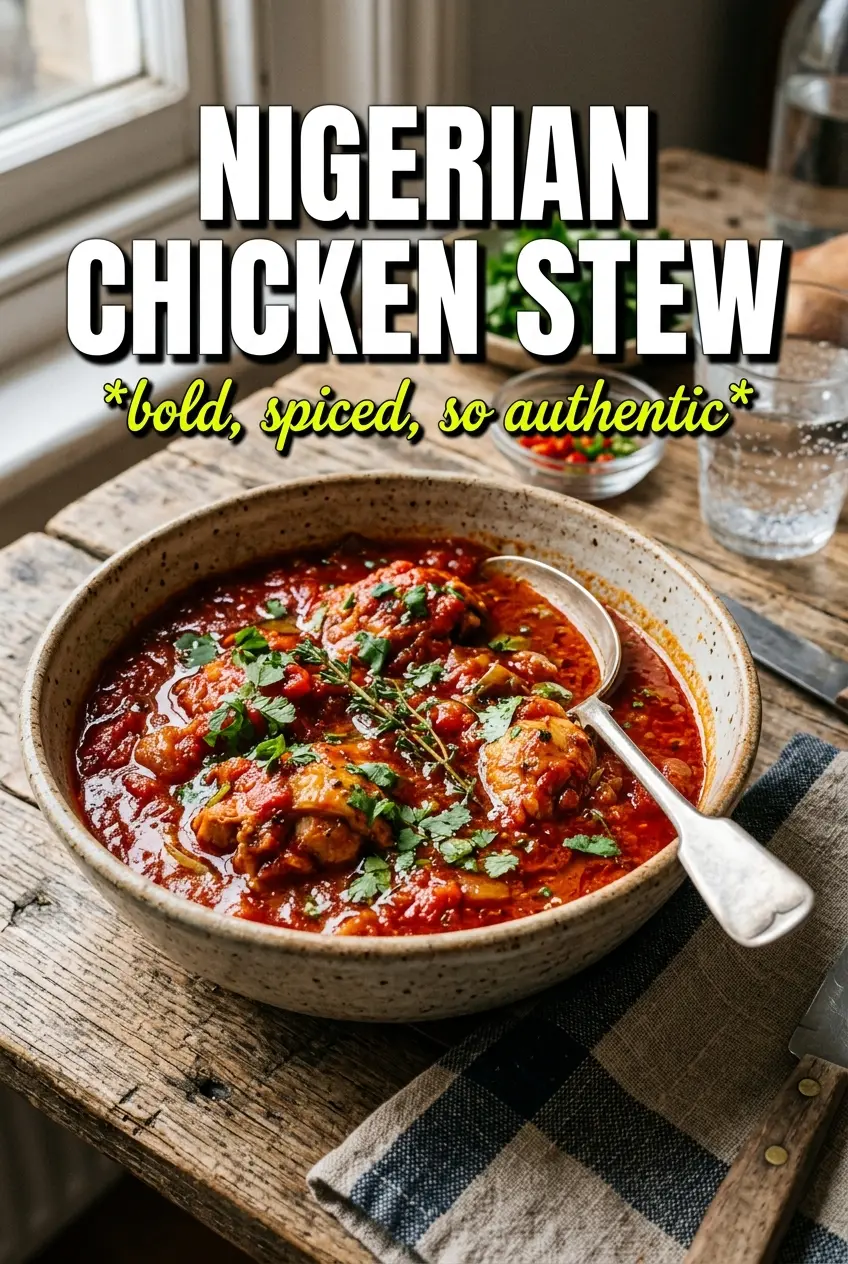
Nigerian Chicken Stew
Ingredients
Equipment
Method
- Season the chicken pieces with half the onion (grated), thyme, curry powder, bouillon, salt, and pepper, then let them marinate for 30 minutes.
- While the chicken marinates, prep a tray and set it aside for frying or oven-baking the chicken.
- Fry or oven-bake the chicken until golden and mostly cooked through, then set aside to finish in the stew.
- Blend the plum tomatoes, red bell peppers, scotch bonnet (or habanero), and the remaining onion until smooth.
- If using minced garlic, stir it into the blended sauce before cooking.
- Heat 1/2 cup oil in a large pot over medium-high heat, then carefully fry the blended pepper sauce for 30-40 minutes, stirring frequently.
- Continue cooking until the sauce is deeply cooked, darkened, and the oil floats on top, indicating it has reduced and thickened.
- Add the fried chicken to the pot and coat it in the sauce, then simmer for 15-20 minutes until well warmed through and saucy.
- Taste and adjust seasoning with salt and pepper, then serve hot over steamed rice with parsley.