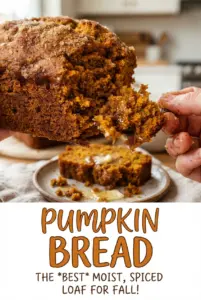
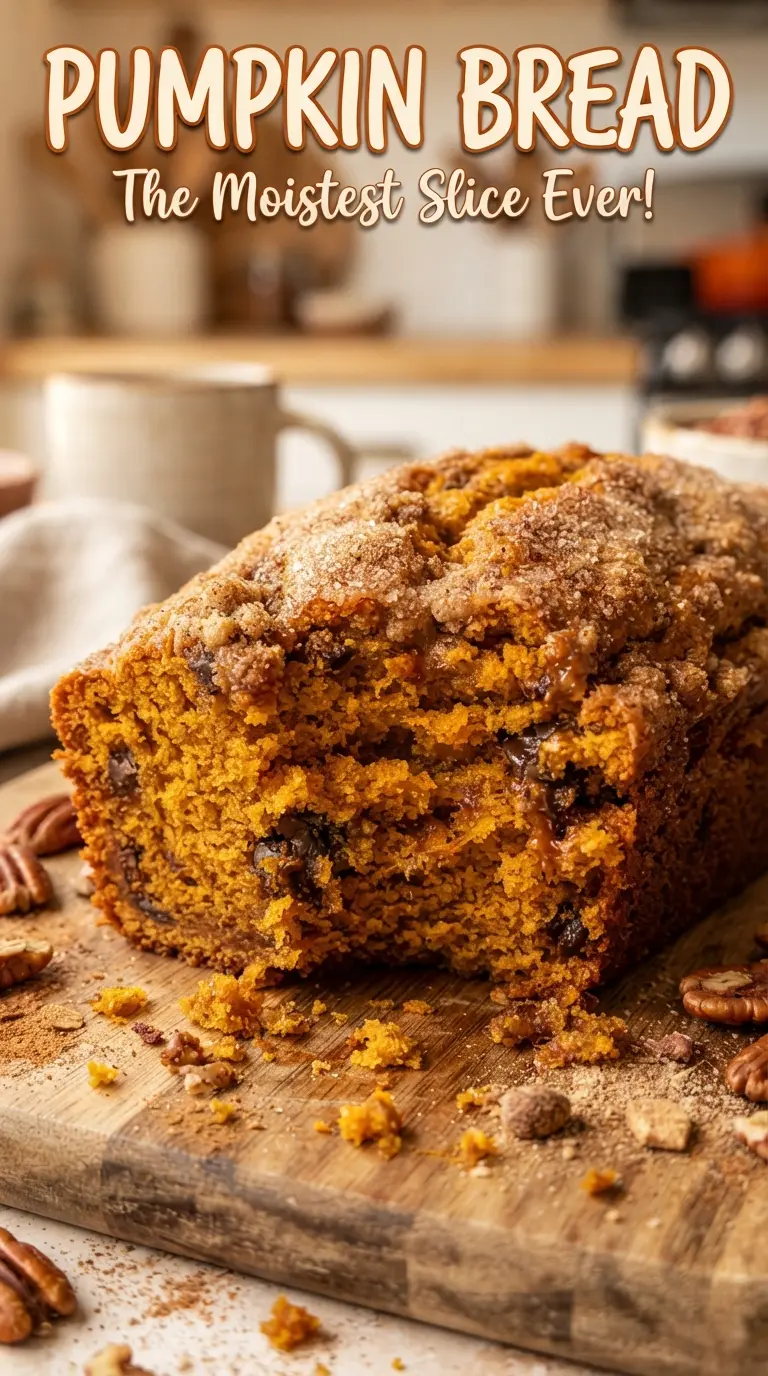
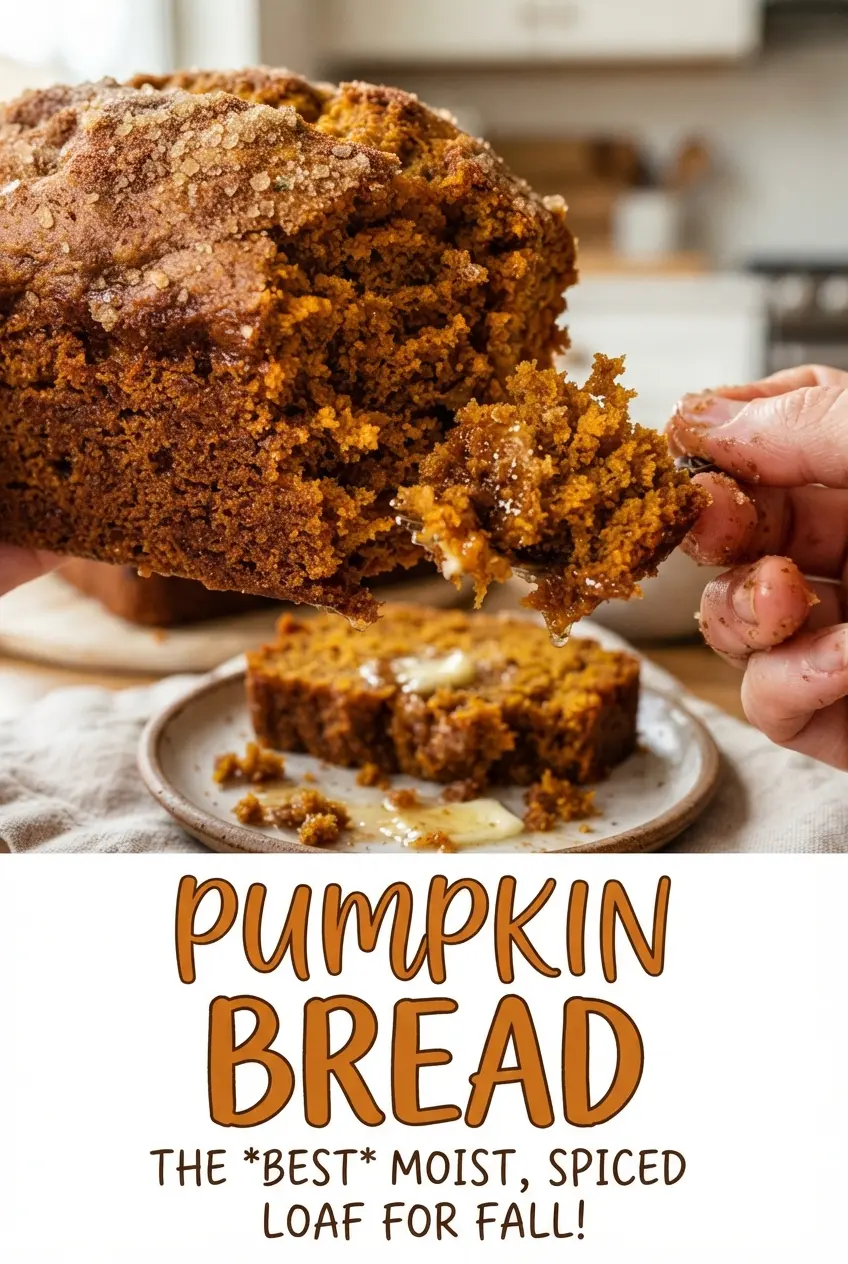
Pumpkin bread earns its place because it stays moist for days and slices cleanly without feeling heavy. The top bakes up with a delicate crackly sugar shell, while the crumb stays tender and darkly spiced underneath. That contrast is what makes one loaf disappear faster than the next.
This version leans on pumpkin puree for moisture, but the real structure comes from the balance of flour, eggs, and just enough baking soda to lift the loaf without making it cakey. Brown sugar brings a little depth, granulated sugar keeps the sweetness clean, and the tablespoon on top gives you that thin, crisp finish that shatters a bit when you cut into it. Mix it too long and the loaf turns tough, so the batter should stay a little rough.
Below, I’ve included the small things that matter most: how to keep the center from sinking, what to look for near the end of the bake, and the best swaps if you’re out of one ingredient.
The loaf stayed incredibly moist for three days, and that sugared top gave it the best little crunch right out of the oven. Mine was done right at 58 minutes and sliced perfectly once it cooled.
Save this pumpkin bread for the loaf with the crackly sugar top and moist, spiced crumb that stays tender all week.
The Reason This Loaf Stays Moist Without Turning Dense
Pumpkin bread gets dense when the batter is overmixed or when the loaf is pulled before the center has set. Pumpkin puree adds a lot of moisture, but it doesn’t build structure on its own. The flour needs to hydrate just enough to hold the loaf together, then the oven has to finish the job without drying it out.
The other trap is too much leavening. Baking soda gives lift and helps the loaf brown, but if the balance is off, the crumb can rise fast and collapse in the middle. Here, the modest amount of soda works with the pumpkin and brown sugar to give you a tender, even slice instead of a gummy middle.
What the Sugar, Oil, and Pumpkin Are Doing Here
- Pumpkin puree — Use canned puree, not pumpkin pie filling. Pure puree gives you the right texture and lets you control the spice and sweetness yourself. If your puree looks especially watery, stir it before measuring so the loaf doesn’t bake up soggy around the center.
- Vegetable oil — Oil keeps the crumb soft even after the bread cools. Melted butter can work, but the loaf won’t stay as tender on day two and three. Neutral oil is the better choice here because it lets the pumpkin and spice lead.
- Brown sugar and granulated sugar — Brown sugar adds moisture and a deeper, caramel note, while granulated sugar keeps the flavor clean and helps form that crackly top when sprinkled over the batter. You can use all brown sugar in a pinch, but the top won’t crisp the same way.
- Milk — Just a small amount loosens the batter enough to help it mix smoothly. Whole milk gives the richest crumb, but any milk you have will work. If you need a dairy-free loaf, unsweetened almond or oat milk is the easiest swap.
- Pumpkin pie spice and cinnamon — These spices need the fat from the oil and eggs to bloom properly in the oven. If your spice jar has been open for years, the loaf will taste flat, so use fresh spice if you can.
Mixing the Batter and Baking It Until the Center Sets
Whisk the Wet Ingredients Until the Sugar Dissolves
Start by whisking the pumpkin, oil, eggs, sugars, milk, and vanilla until the mixture looks smooth and glossy. You want the brown sugar mostly dissolved so the finished loaf bakes evenly instead of leaving gritty pockets behind. If the mixture looks streaky at this stage, keep whisking a little longer before adding the dry ingredients.
Fold the Flour in Without Beating the Batter
Once the dry ingredients go in, switch to a spatula or spoon and fold just until the flour disappears. A few small lumps are fine. If you keep mixing after the flour is incorporated, the loaf turns tight and can tunnel down the middle as it bakes.
Watch for the Tall Center Crack
Pour the batter into the pan, smooth the top, and sprinkle the sugar over the surface. As it bakes, the loaf should dome slightly and crack through the center while the edges pull from the pan. Start checking early enough that the top doesn’t darken too much; a toothpick should come out clean or with a few moist crumbs, not wet batter.
Let It Cool Before the First Slice
That 15-minute rest in the pan matters. The crumb is still setting when it comes out of the oven, and cutting too soon can make it collapse or gum up. Move it to a rack after that first rest and wait until it is just warm before slicing if you want clean, even pieces.
How to Adapt This Pumpkin Bread Without Losing the Good Parts
Dairy-Free Pumpkin Bread
Swap the milk for unsweetened almond milk, oat milk, or another plain non-dairy milk. The loaf still bakes up soft and fragrant because the oil carries the moisture. Choose an unflavored milk so the pumpkin spice stays front and center.
Gluten-Free Version
Use a 1:1 gluten-free baking flour that already contains xanthan gum. The texture will be a little more delicate, but the loaf should still slice well once fully cooled. Don’t use almond flour alone here; it won’t give the bread enough structure to hold together.
Less Sweet Pumpkin Bread
Reduce the granulated sugar by 2 tablespoons if you want a quieter sweetness without changing the texture much. Leave the brown sugar alone, since it helps keep the crumb moist and gives the loaf its depth. The sugar on top can stay; it doesn’t make the loaf overly sweet, and it gives you that crisp finish.
Storage and Reheating
- Refrigerator: Store wrapped or in an airtight container for up to 5 days. The crumb stays moist, though the sugar top softens a bit after the first day.
- Freezer: This loaf freezes well. Wrap the cooled bread tightly in plastic, then foil, and freeze for up to 3 months. Slice before freezing if you want to grab a piece at a time.
- Reheating: Warm slices in a toaster oven or low oven for a few minutes. Don’t microwave too long or the crumb can turn rubbery and the sugar top will lose its texture.
Answers to the Questions Worth Asking
Pumpkin Bread
Ingredients
Equipment
Method
- Preheat the oven to 350F, then grease and line a 9x5-inch loaf pan.
- Whisk all-purpose flour, baking soda, salt, pumpkin pie spice, and ground cinnamon until evenly combined.
- Whisk pumpkin puree, vegetable oil, eggs, brown sugar, granulated sugar, milk, and vanilla extract until smooth.
- Fold the dry ingredients into the wet ingredients just until no flour streaks remain.
- Pour the batter into the loaf pan and sprinkle the remaining 1 tablespoon granulated sugar on top.
- Bake for 55-65 minutes at 350F, until a toothpick comes out clean.
- Cool for 15 minutes in the pan, then move to a rack before slicing to set the crumb.