Golden, savory jailhouse rice hits the table with the kind of stick-to-your-ribs comfort that makes a cheap dinner feel like a smart one. The rice soaks up beef broth and soy seasoning while the ramen noodles soften right in the pot, giving you a mix of tender grains, slippery noodles, and browned ground beef in every bite. It eats like a full meal because it is one.
The trick here is building flavor in stages instead of dumping everything in at once. Browning the beef first gives you the base, and toasting the rice for a minute or two helps it stay separate and gives it a little nuttiness before the broth goes in. Ramen noodles get added near the end so they don’t turn mushy while the rice finishes cooking.
Below, I’ll walk through the part that keeps the texture right, the ingredient swaps that still work, and the small adjustments that help if your skillet runs hot or you want to stretch the dish further.
The rice came out fluffy and the ramen added the best chewy texture without turning soggy. I was worried about the broth amount, but it cooked down perfectly and the whole skillet was gone fast.
Save this jailhouse rice for the nights when you want a one-pot beef dinner with ramen noodles, fluffy rice, and almost no cleanup.
The Part That Keeps the Rice from Going Mushy
Most one-pot rice dishes fail for one of two reasons: the liquid ratio is off, or the pot gets opened too often. Here, the rice needs a full covered simmer so the grains can absorb the broth evenly before the ramen goes in. If you stir too much while it cooks, the rice releases starch and the whole skillet starts leaning sticky instead of fluffy.
The other place people trip up is adding the ramen too early. Those noodles cook fast, and they only need the last few minutes to soften and pick up the savory broth. Add them after the rice has already absorbed most of the liquid, then cover again so they steam instead of sit exposed in a dry pan.
What Each Ingredient Is Actually Doing in This Skillet

- Ground beef — This is the flavor foundation. A little fat left in the pan helps season the rice, but if your beef is especially greasy, drain most of it so the finished dish doesn’t taste heavy.
- Long-grain white rice — Long-grain rice stays the least sticky and gives you the best chance at separate, tender grains. Short-grain rice will cook up softer and more compact, which changes the whole texture of the dish.
- Ramen noodles — These add a chewy, springy bite that makes the skillet feel bigger and more substantial. Discard the seasoning packets; they’re too salty once you add broth, soy sauce, and Worcestershire.
- Beef broth — This does the real work of seasoning the rice from the inside out. Stock can work in a pinch, but broth usually gives a deeper beef flavor without needing extra seasoning.
- Soy sauce and Worcestershire sauce — These bring salt, color, and a savory edge that plain broth can’t do on its own. If you only have soy sauce, the dish still works, but Worcestershire adds a little roundness that makes the broth taste fuller.
- Garlic powder, onion powder, and smoked paprika — These dry seasonings cling to the beef and rice better than fresh aromatics in this style of skillet. Smoked paprika adds a subtle cooked flavor that makes the whole pot taste like it simmered longer than it did.
- Green onions — They matter more than garnish here. That fresh, sharp finish keeps the dish from tasting one-note, especially since the rice and noodles are both soaking up a lot of savory broth.
Building the Skillet in the Right Order
Browning the Beef First
Start with a wide, deep skillet or pot so the beef has room to brown instead of steam. Break it up as it cooks and keep going until you see some deeper color on the bits in the pan; that browned fond is where the best flavor starts. Drain excess fat if there’s a pool left behind, but leave a little behind for the rice to pick up.
Toasting the Rice Before the Liquid Goes In
Add the dry rice straight to the hot beef and stir for about 2 minutes. You’re looking for the edges to turn a little glossy and slightly golden, not dark brown. This step helps the grains stay more distinct after cooking and gives the finished dish a better nutty base.
Letting the Broth Do the Work
Pour in the broth, soy sauce, Worcestershire, and seasonings, then bring everything up to a boil before dropping the heat. Once it’s covered, keep the simmer low and steady. If the pot boils hard, the liquid evaporates too fast and the rice can cook unevenly on the bottom while staying firm on top.
Finishing with the Ramen
When the rice has absorbed most of the broth, break the ramen noodles into the skillet and stir them in. Cover again and let them soften for the last few minutes until both the rice and noodles are tender. If the pan looks dry before everything is done, add a splash of hot broth or water instead of turning the heat up.
Ways to Stretch, Lighten, or Work Around What You Have
Use ground turkey instead of beef
Ground turkey works well if you want a lighter skillet, but it needs a little help because it doesn’t bring the same built-in richness as beef. Leave a tablespoon of oil in the pan and season it well with the soy sauce and Worcestershire so the finished dish still tastes full.
Make it gluten-free
Use gluten-free ramen or skip the noodles and keep the rice base only, then add extra broth as needed. Swap in tamari for the soy sauce and check your Worcestershire label, since many versions contain gluten.
Add vegetables without upsetting the texture
Frozen peas, diced carrots, or corn fit easily into this skillet, but add them with the broth so they cook through at the same time as the rice. Fresh vegetables with a lot of water, like zucchini, can make the pot mushy unless you cook them separately first.
Storage and Reheating
- Refrigerator: Store leftovers in an airtight container for up to 4 days. The rice firms up a little as it chills, and the noodles absorb more liquid.
- Freezer: It freezes well for about 2 months, though the noodles soften more after thawing. Cool it completely before freezing in portions so it reheats more evenly.
- Reheating: Reheat on the stove or in the microwave with a splash of broth or water. The mistake most people make is blasting it dry, which tightens the rice and makes the noodles tough instead of bringing the skillet back to life.
Answers to the Questions Worth Asking
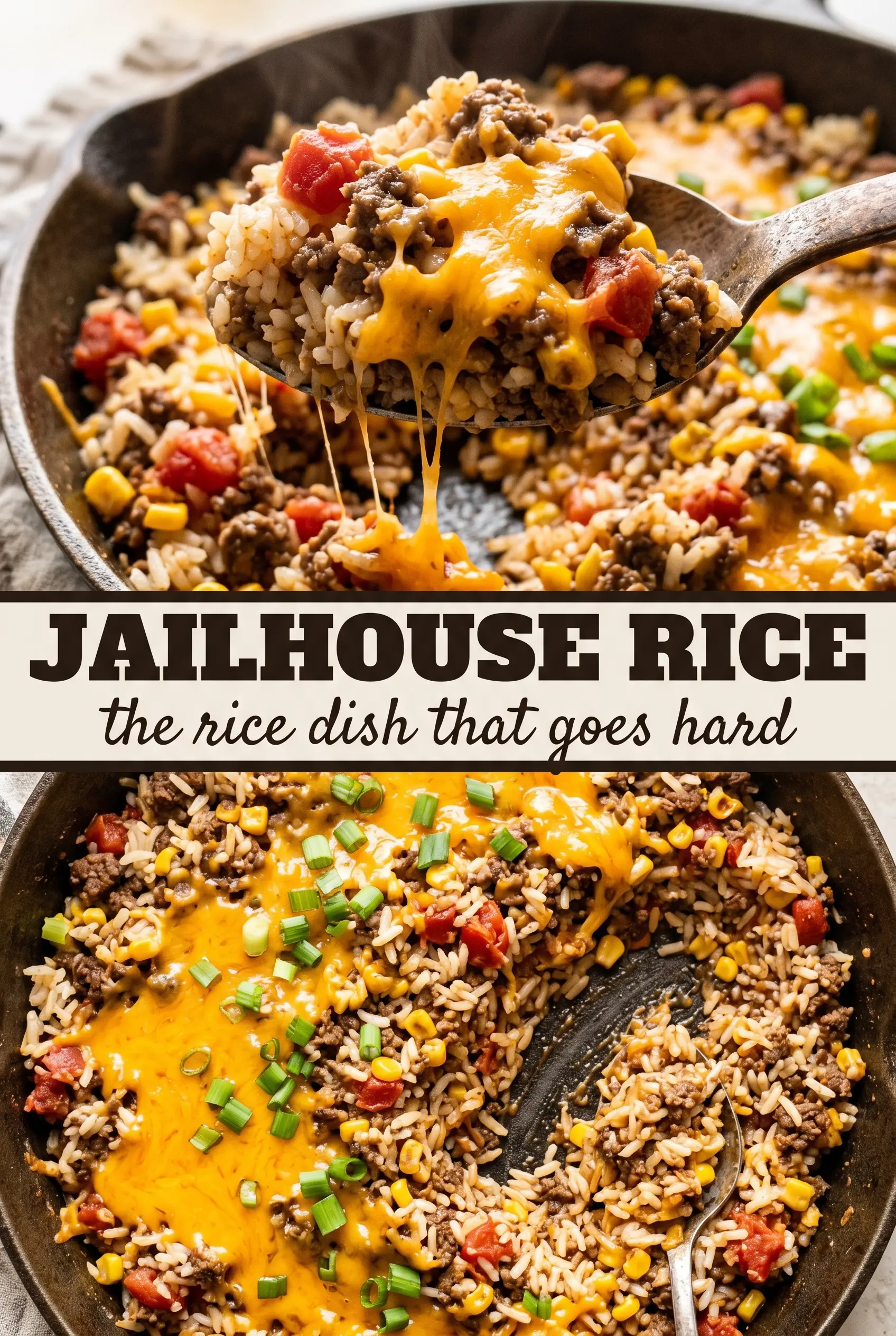
Jailhouse Rice
Ingredients
Equipment
Method
- Brown the ground beef in a large deep skillet or pot over medium-high heat, breaking it apart until no longer pink, then drain excess fat. Visual cue: the beef should look browned with bits stuck to the pan.
- Add the long-grain white rice to the skillet and toast for 2 minutes while stirring until slightly golden. Visual cue: grains start to look warmer in color and smell nutty.
- Stir in the beef broth, soy sauce, Worcestershire sauce, garlic powder, onion powder, smoked paprika, salt, and black pepper, then bring to a boil. Visual cue: bubbles should break across the surface after a brief simmer.
- Reduce heat to low, cover, and cook for 15 minutes without lifting the lid. Visual cue: steam should build under the cover as the liquid absorbs.
- Break the ramen noodles into the skillet, stir them in, cover, and cook for 5 more minutes until the rice and noodles are both tender. Visual cue: noodle strands soften and the mixture turns cohesive.
- Fluff with a fork, garnish with green onions, and serve. Visual cue: individual grains and noodle strands separate slightly instead of clumping.