Instant Pot beef stew turns out with tender chunks of chuck, soft potatoes, and carrots in a gravy that tastes like it simmered all afternoon. The pressure cooker does the long work fast, but the flavor still depends on the same old rules: brown the beef well, scrape up every bit from the bottom, and give the sauce a minute to thicken at the end. When those pieces are handled right, you get a stew with real depth instead of a flat, boiled-tasting broth.
This version leans on tomato paste, Worcestershire, and a short deglaze to build a dark, savory base before the pressure ever comes on. Yukon gold potatoes hold their shape better than russets, and the cornstarch slurry goes in after cooking so the gravy thickens cleanly instead of turning gluey under pressure. The peas go in at the very end for color and a fresh pop against the rich stew.
Below, I’ll walk through the one step that keeps the pot from scorching, how to know the beef is browned enough, and a few smart swaps if you need to work with what’s already in the kitchen.
The beef came out fork-tender and the gravy thickened up perfectly after the slurry went in. I loved that the potatoes held their shape and the peas stayed bright at the end.
Save this Instant Pot beef stew for a thick, hearty dinner with tender beef and gravy that finishes silky, not thin.
The Browning Step That Keeps the Stew from Tasting Flat
The pressure cooker makes the beef tender, but it doesn’t build flavor for you. That part happens in the browning stage, and skipping it leaves you with meat that’s soft but one-dimensional. Brown the chuck in batches so the pieces sear instead of steam, and don’t crowd the pot or you’ll end up with gray meat and a pale broth.
The other place people lose flavor is the bottom of the pot. After the onion, garlic, and tomato paste go in, the 1/2 cup of broth is there to loosen every browned bit before pressure cooking. That deglaze matters because those stuck-on spots dissolve into the gravy and give it the deep, savory backbone you want in a good stew.
What Each Ingredient Is Actually Doing in This Stew
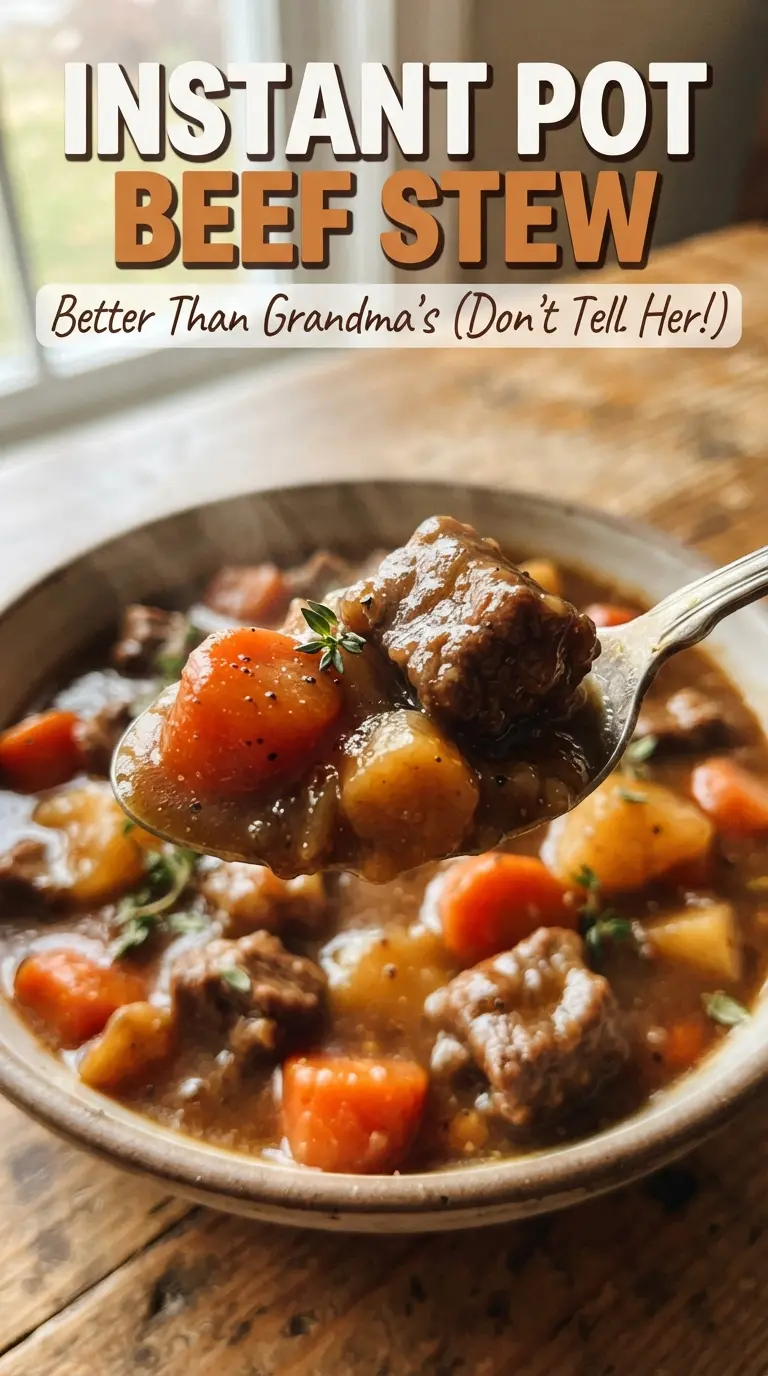
- Beef chuck — This is the right cut because it has enough collagen to turn tender under pressure without drying out. Leaner stew meat can work, but it won’t give you the same spoon-tender texture or the same body in the broth.
- Tomato paste — It doesn’t make the stew taste like tomato. It adds concentrated depth and helps the gravy look darker and taste rounder after pressure cooking.
- Worcestershire sauce — This is one of the easiest ways to add savory complexity fast. If you don’t have it, soy sauce works in a pinch, but use a little less since it’s saltier and has a sharper edge.
- Yukon gold potatoes — They hold their shape better than russets and give the stew a naturally creamy feel around the edges. Cut them into even cubes so they finish at the same rate as the carrots.
- Cornstarch slurry — Thickens the stew after cooking without turning the pot base cloudy or pasty under pressure. Stir it in on sauté and let the stew bubble for a minute or two until the broth loses its raw, thin look.
- Frozen peas — They go in at the end because they only need a minute from the heat of the stew. Add them too early and they turn dull and mushy.
Building the Stew in a Way the Instant Pot Likes
Browning the Beef in Batches
Season the beef, then sear it in a thin layer of oil until the surfaces are deeply browned, not just tan. If the pieces are touching too much, they’ll steam and release liquid before they color, which costs you flavor later. Pull each batch out as soon as the outside is crusted; the inside will finish under pressure.
Softening the Onion and Scraping the Pot
Cook the onion for about 3 minutes, then add the garlic and tomato paste long enough to lose their raw edge. Once you pour in the broth, scrape the bottom until it feels clean under the spoon. That step is what keeps the Instant Pot from throwing a burn warning and it also pulls all the browned flavor into the sauce.
Pressure Cooking the Vegetables and Beef
Add the beef back with the remaining broth, Worcestershire, thyme, bay leaf, potatoes, and carrots, then seal and cook on high pressure for 35 minutes. Natural release for 10 minutes gives the meat a softer finish and helps keep the broth from spurting out when you open the valve. If you quick-release too early, the liquid can boil hard and cloud the stew more than you want.
Finishing the Gravy
Switch to sauté and stir in the cornstarch slurry while the stew is still hot. It should thicken to a glossy gravy that lightly coats the back of a spoon in a few minutes. Stir in the peas, remove the bay leaf, and serve while the potatoes are still holding their shape.
How to Adapt This Instant Pot Beef Stew Without Losing the Good Part
For a thicker, spoon-coating gravy
Use the full cornstarch slurry, then let the stew simmer for a minute or two after it goes in. If you want it even thicker, mix up another small slurry and add it gradually. The key is to thicken after pressure cooking, not before, or the sauce can turn pasty and the bottom can scorch.
For a gluten-free version
This stew is naturally gluten-free if your broth and Worcestershire sauce are certified gluten-free. Cornstarch does the thickening job cleanly here, so you don’t need flour at all. Check labels on the broth, because that’s the ingredient most likely to hide gluten.
For a lower-carb bowl
Swap the potatoes for extra carrots, celery, or mushrooms if you want a lighter version. The texture changes, though: you’ll lose some of the natural starch that helps body the broth, so the finished stew will taste a little looser unless you add a bit more thickener at the end.
Storage and Reheating
- Refrigerator: Keeps well for 4 days. The gravy thickens as it chills, and the potatoes soften a little more by day two.
- Freezer: Freezes well for up to 3 months, but the potatoes can turn slightly grainy after thawing. For the best texture, freeze before adding the peas if you know you’ll be making it ahead.
- Reheating: Reheat gently on the stove over medium-low with a splash of broth or water. High heat can make the beef tighten up and can break the gravy into a greasy layer and a thin layer underneath.
Answers to the Questions Worth Asking

Instant Pot Beef Stew
Ingredients
Equipment
Method
- Season the beef chuck cubes with salt and black pepper. Heat oil on SAUTE and brown the beef in batches until well browned, working in batches so the pot stays hot.
- Cook the diced onion for 3 minutes in the remaining cooking juices. Add the minced garlic and tomato paste, stirring until fragrant.
- Pour in 1/2 cup broth and deglaze, scraping the bottom of the pot to lift the browned bits. Stop when the liquid looks smooth and no browned streaks remain.
- Add the browned beef, remaining broth, Worcestershire sauce, dried thyme, bay leaf, cubed Yukon gold potatoes, and carrots. Spread everything into an even layer so the vegetables cook uniformly.
- Seal the Instant Pot and cook on HIGH pressure for 35 minutes. The stew should come to pressure quickly and then cook until the beef and potatoes are tender.
- Let the pressure release naturally for 10 minutes before opening the lid. Wait until the float valve drops for a safe, gentle release.
- Switch to SAUTE and stir in the cornstarch slurry (cornstarch mixed with water). Simmer, stirring often, until the gravy thickens to a spoon-coating consistency.
- Stir in the frozen peas and cook just until heated through, about a few minutes. Remove the bay leaf and serve while hot.