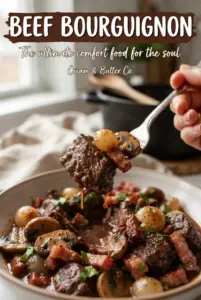
Rich, spoon-tender beef, sweet carrots, and potatoes that hold their shape make this Ina Garten beef stew the kind of dinner people settle into. The broth turns deep and glossy from red wine, browned beef, and the little bit of flour clinging to the meat, so every bite tastes layered instead of flat. It’s the kind of stew that tastes like it took all day, even though most of the work is patient oven time.
The difference here is in the order of the build. Browning the beef in batches gives you a real fond on the bottom of the pot, and that fond becomes the base of the stew once the wine goes in. The tomato paste, Worcestershire, garlic, rosemary, and thyme don’t make this taste like tomato sauce; they round out the beef and keep the broth from feeling thin. The peas go in at the end for freshness and a little sweetness, which keeps the finished pot from tasting heavy.
Below, I’ll walk through the small details that matter most, including how to avoid crowding the pan when you brown the beef and how to keep the vegetables from turning mushy in the oven.
The beef came out fork-tender and the broth thickened just enough after the oven time. I loved that the carrots and potatoes kept their shape, and the peas at the end made it taste fresh instead of heavy.
Save this red wine beef stew for the kind of dinner that needs tender beef, Yukon-style potatoes, and a broth with real depth.
The Browning Stage Is Where the Stew Gets Its Depth
If the beef goes into the pot crowded, it steams instead of browns, and steamed beef makes a flat stew. Brown it in batches until you get a deep crust on the outside and a pile of browned bits on the pan bottom. That’s the flavor base. The flour on the meat helps thicken the broth later, but it also browns more evenly if you give it a little time in the hot oil.
The other thing that matters here is the deglaze. Once the wine hits the pot, scrape with purpose and get every bit loose before anything else goes in. If those browned bits stay stuck, you lose the richest part of the stew. A good deglaze turns the wine darker almost immediately and gives the broth that slow-cooked taste from the first hour.
What Each Ingredient Is Doing in the Pot
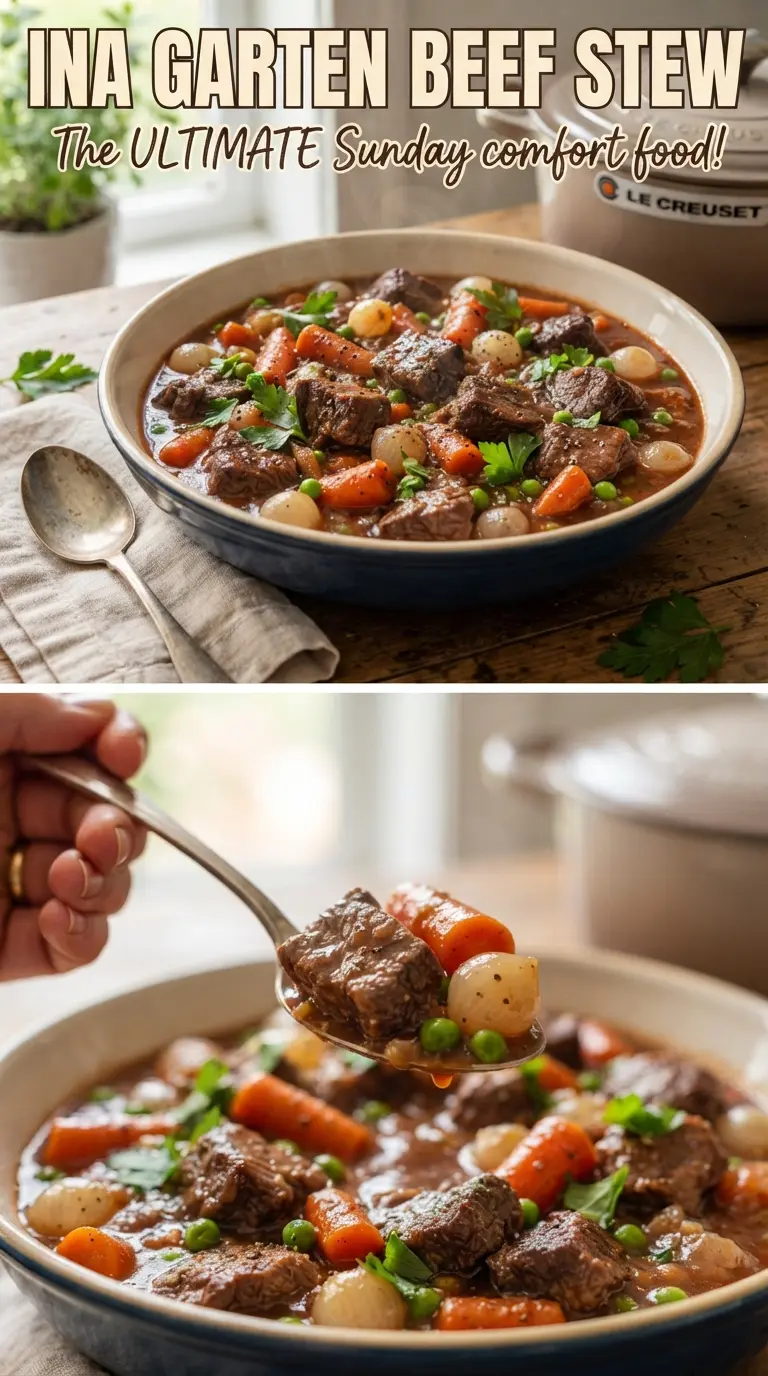
- Beef chuck — This is the cut that turns tender instead of stringy after a long, slow braise. Leaner stew meat can work in a pinch, but it won’t give you the same rich texture or beefy broth.
- Dry red wine — This adds acidity and depth, and it helps lift the browned bits off the pot. Use a wine you’d actually drink; cooking wine tastes harsh and salty here.
- Tomato paste and Worcestershire sauce — The tomato paste gives the stew body, while Worcestershire adds that background savoriness that makes the broth taste finished. Together they make the liquid taste fuller without turning it tomato-forward.
- Carrots, onions, and potatoes — These hold the stew together and give you a proper spoonful in every bite. Cut them in larger pieces so they can handle the long oven time without collapsing.
- Fresh rosemary, thyme, and peas — The herbs bring the French-inspired note, but the peas are the finishing touch that keeps the pot from feeling heavy. Frozen peas are the right choice; fresh aren’t necessary here.
Building the Stew So the Vegetables Stay Intact
Start with the Beef and the Pot Bottom
Toss the beef with the flour, salt, and pepper before it hits the oil, then brown it in batches over medium-high heat. You want color, not pale gray edges. If the pan looks crowded or wet, stop and work in smaller batches because that moisture kills the browning. The goal is a crust that clings to the meat and dark bits left behind in the pan.
Use the Wine to Pull Up the Flavor
Once the beef is out, pour in the wine and scrape until the bottom of the pot is clean. Stir in the broth, tomato paste, Worcestershire, and garlic before returning the beef. That gives the liquid time to taste integrated before it goes into the oven. If the tomato paste sits in a lump, whisk it into the hot liquid now rather than later.
Braise Until the Beef Gives Easily
Bring everything to a simmer, cover the pot, and move it to the oven at 300°F. The low heat is what turns chuck tender without shredding the vegetables. After about 1 3/4 hours, check the beef with a fork; it should break apart with light pressure, and the carrots should be tender without falling apart. If the vegetables are soft before the beef is done, your pieces were cut too small.
Finish with Peas and a Final Seasoning Check
Pull out the rosemary sprig, then stir in the peas and simmer on the stove for about 5 minutes. That short finish keeps them bright instead of drab and overcooked. Taste at the end and adjust salt and pepper after the stew has reduced a little. The broth should taste deep, savory, and balanced, not just salty.
How to Adapt It When You Want a Different Finish
Gluten-Free Beef Stew
Skip the all-purpose flour and use a 1:1 gluten-free flour blend instead, or dust the beef lightly with cornstarch for browning and thicken the finished stew at the end if needed. The texture stays close to the original, but the broth may need a few extra minutes on the stove to come together.
Dairy-Free and Naturally Dairy-Free Already
This stew is already dairy-free as written, which is part of why it’s such a dependable cold-weather main dish. Keep the broth, wine, and herbs the same, and you won’t lose any richness.
Make It Thicker and More Spoon-Coating
If you like a stew that clings more heavily to the meat and vegetables, let it simmer uncovered on the stove for a few extra minutes after the peas go in. That concentrates the broth without muddying the flavors. Don’t boil hard or the beef can tighten up.
Storage and Reheating
- Refrigerator: Store for up to 4 days. The flavor deepens overnight, and the broth will thicken as it chills.
- Freezer: Freezes well for up to 3 months. Cool it completely first and leave a little headspace if you’re using containers.
- Reheating: Warm gently on the stove over low heat until hot all the way through. A hard boil can make the beef dry and the potatoes break apart.
Answers to the Questions Worth Asking

Ina Garten-Style French-Inspired Beef Stew
Ingredients
Equipment
Method
- Preheat the oven to 300°F. Toss the beef chuck with the all-purpose flour, kosher salt, and black pepper until evenly coated.
- Heat the olive oil in a Dutch oven until shimmering. Brown the beef in batches so the cubes develop color, then set browned beef aside while you finish the rest.
- Pour in the dry red wine and scrape up the browned bits from the bottom of the pot. Stir in the beef broth, tomato paste, Worcestershire sauce, and minced garlic until smooth.
- Return the browned beef to the pot. Add the chopped onions, carrot chunks, halved small potatoes, rosemary sprig, and fresh thyme leaves.
- Bring the stew to a simmer on the stove, then cover with a lid. Bake for 1 3/4-2 hours at 300°F until the beef and vegetables are tender and the surface bubbles steadily.
- Remove the rosemary sprig and stir the stew. Add the frozen peas and simmer on the stove for 5 minutes, until the peas are hot and bright green.
- Season the stew to taste after the peas are cooked through. Let it bubble briefly so the sauce thickens slightly and clings to the meat.