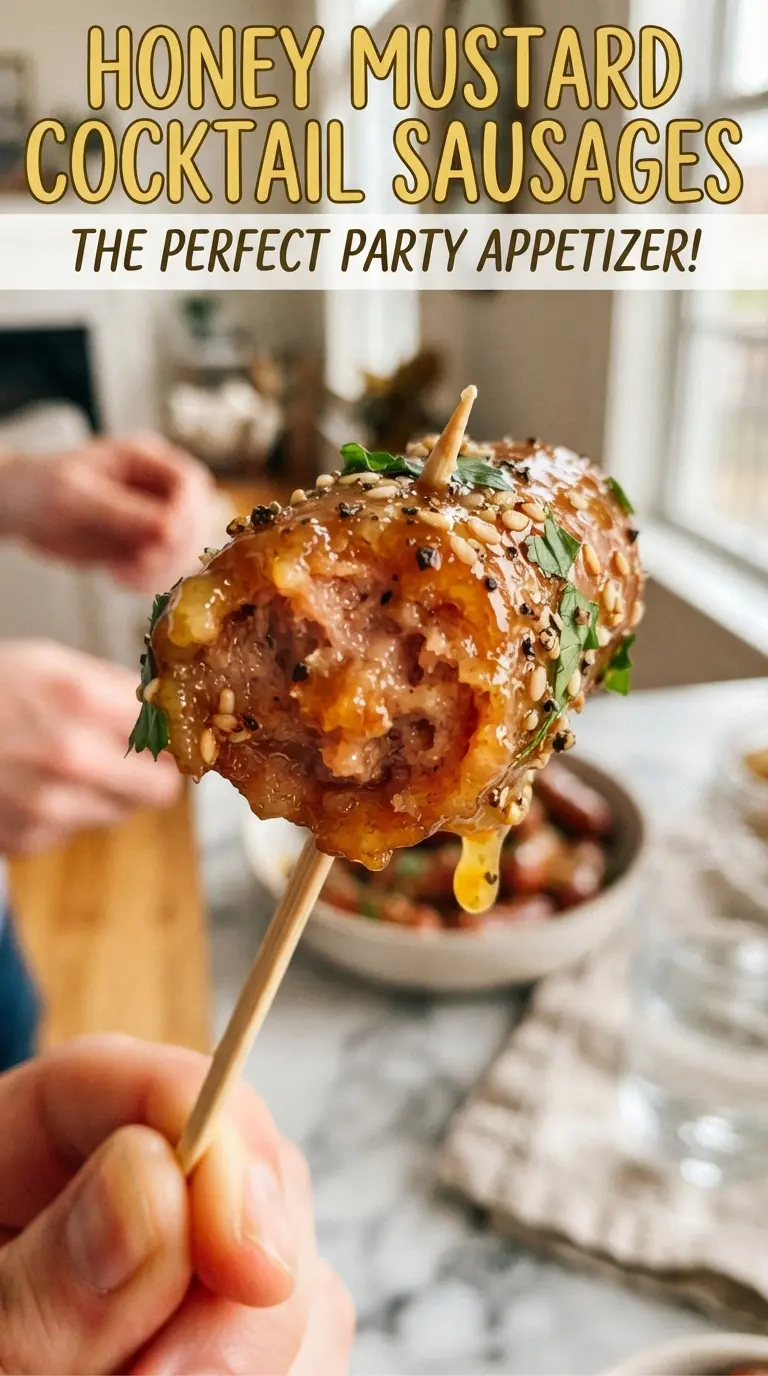
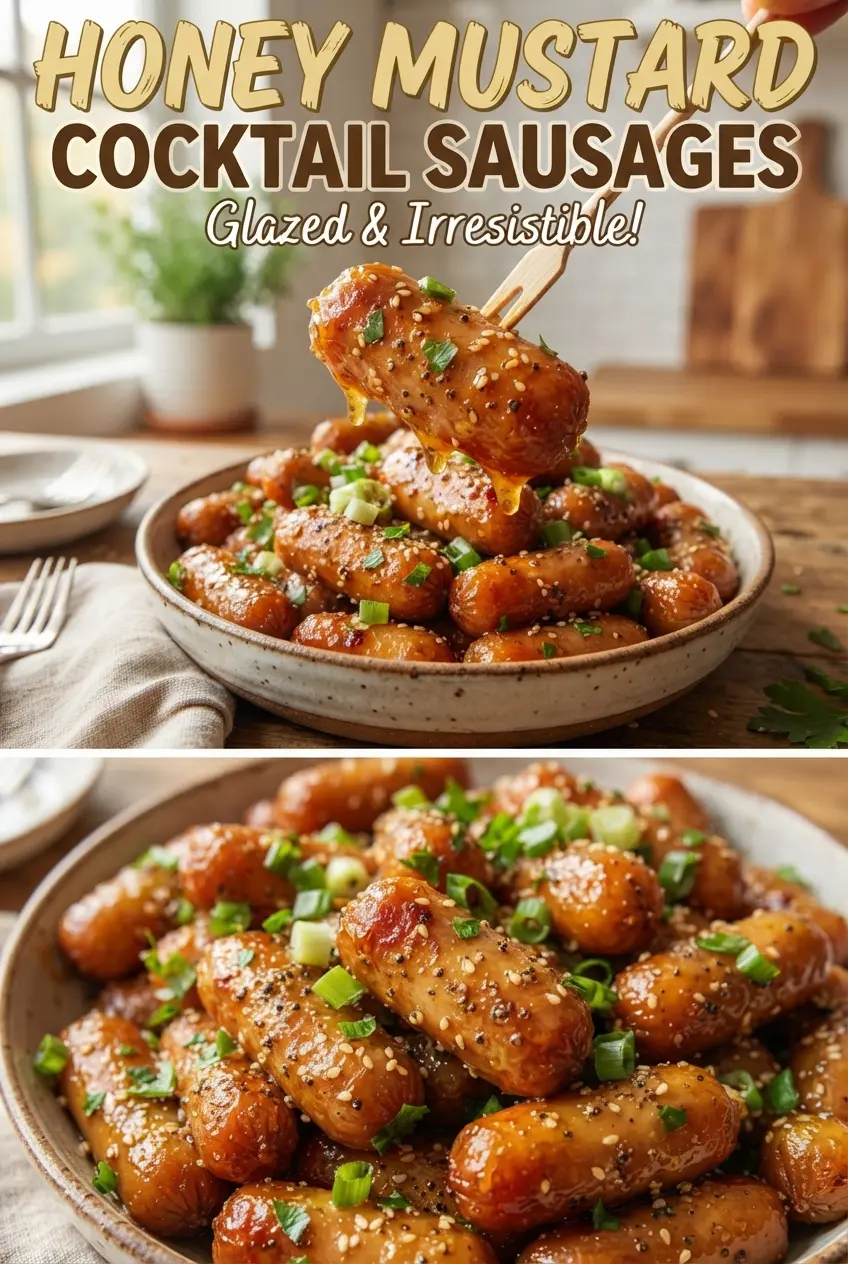
Sticky, glossy honey mustard cocktail sausages disappear fast because they hit every note people want in an appetizer: sweet, sharp, salty, and just a little savory from the browned sausage and garlic. The sauce clings instead of pooling, which means every bite tastes coated, not drowned, and the finish stays balanced instead of turning candy-sweet.
The trick is starting the sausages in the skillet long enough to get some color before the glaze goes in. That browning gives the sauce a deeper base, and the combination of whole grain mustard and Dijon keeps the glaze textured and punchy. A small splash of soy sauce and a knob of butter round everything out and help the glaze turn silky as it reduces.
Below, you’ll find the little timing details that keep the glaze thick and sticky, plus a few smart swaps if you want to stretch the batch or change the heat and sweetness.
The glaze thickened up exactly like you said, and the whole pan was gone before I even got the toothpicks out. The sesame seeds and chives made them look fancy with almost no extra work.
Save these sticky honey mustard cocktail sausages for your next party spread or game-day appetizer table.
The reason the glaze stays sticky instead of splitting
The biggest mistake with cocktail sausages is rushing the sauce once it hits the pan. Honey can go from glossy to burnt fast, and mustard can turn grainy if it boils hard. Keep the heat at a steady simmer after the glaze goes in. That gives the water in the honey and mustard time to evaporate so the sauce tightens around the sausages instead of sliding off.
The other thing working here is the balance between two mustards. Whole grain mustard brings texture and a little bite, while Dijon melts into the glaze and smooths it out. If you use only one or the other, the result can taste flat or one-note. The butter matters too; it softens the edges and gives the sauce a sheen that makes the sausages look as good as they taste.
- Browned sausage — That first 5 to 6 minutes in the skillet builds flavor and keeps the final dish from tasting boiled. You want some caramelized spots before the glaze goes in.
- Honey — It does the heavy lifting for stickiness and sweetness. Maple syrup will work in a pinch, but the glaze will taste a little less round and set a little differently.
- Whole grain mustard — This gives the sauce texture and those little mustard pops in each bite. It’s hard to fake that with smooth mustard alone.
- Dijon mustard — This brings sharpness and helps the glaze emulsify. If you only have yellow mustard, the sauce will taste brighter and more acidic, but it won’t have the same depth.
- Soy sauce — Just enough to add salt and savory backbone without making the glaze taste like teriyaki. Low-sodium soy sauce works well if that’s what you keep on hand.
What Each Ingredient Is Actually Doing in This Recipe
- Primary ingredient (the star) — Quality matters most. Choose the best you can find.
- Cooking medium (oil, butter, or broth) — This carries flavors and prevents dryness.
- Seasonings (salt, pepper, spices, herbs) — Layer flavors so nothing overpowers. Build depth gradually.
- Aromatics (garlic, onion, herbs) — Cook with fat to bloom flavors. Become the foundation.
- Supporting ingredients — Complement the main ingredient without overpowering it.
- Sauce or liquid (if applicable) — Brings flavors together. Balance richness with acid.
- Acid (lemon, vinegar, wine, or other) — Brightens and prevents flat-tasting results.
- Final finish (garnish, glaze, or sauce) — Prevents one-dimensional taste and adds visual appeal.
Building the glaze so it coats every sausage
Getting color on the sausages first
Melt the butter in a large skillet over medium heat, then add the cocktail sausages in a single layer. Let them sit long enough to pick up color on a few sides before stirring. That browning gives the glaze something to cling to and keeps the final texture from feeling soft all the way through. If the pan looks crowded, the sausages will steam instead of sear, so use a wide skillet.
Waking up the garlic
Add the minced garlic and cook it just until fragrant, about 30 seconds. Any longer and it can turn sharp or bitter once the glaze simmers. The garlic should smell warm and nutty, not browned. This tiny step adds depth without making the sauce taste garlicky in a heavy way.
Reducing the honey mustard sauce
Whisk the honey, whole grain mustard, Dijon, and soy sauce together, then pour it over the sausages. Stir often as it simmers so the glaze coats evenly and doesn’t catch on the bottom of the pan. After 8 to 10 minutes, it should look thick, glossy, and sticky enough to leave a trail when you drag a spoon through it. If it still looks loose, keep it moving over the heat for another minute or two rather than turning the burner up.
Finishing for the table
Sprinkle the sesame seeds over the sausages while the glaze is still hot so they stick. Add the chives right before serving for freshness and color. Serve them warm with toothpicks while the glaze is still tacky; once they sit too long, the sauce firms up and loses that glossy finish.
How to adapt these cocktail sausages for different crowds
Make them milder for kids or sensitive palates
Use 4 tablespoons total of honey mustard-style flavor by keeping the Dijon but cutting it back slightly, then add a little extra honey. The glaze will stay sticky, but the sharp mustard edge softens enough that the sausages read sweeter and gentler.
Make them gluten-free without losing the glaze
Use a gluten-free soy sauce or tamari and check that your cocktail sausages are certified gluten-free. The texture of the glaze stays the same, and the flavor still lands salty, sweet, and punchy.
Stretch the batch for a bigger party
Add another package of sausages and increase the glaze by about one-third. Don’t double the sauce unless you also use a larger skillet, or the pan will be too crowded and the glaze will take longer to reduce.
Add a little heat
Stir in a pinch of cayenne or a teaspoon of hot sauce with the glaze. That gives the sweet mustard sauce a gentle kick without changing the sticky finish.
Storage and Reheating
- Refrigerator: Store leftovers in an airtight container for up to 4 days. The glaze will thicken as it chills.
- Freezer: These freeze well for up to 2 months, though the glaze may lose a little shine. Freeze in a flat layer, then thaw overnight in the refrigerator.
- Reheating: Warm gently in a skillet over low heat with a splash of water to loosen the sauce. High heat can make the glaze seize and stick to the pan before the sausages are hot through.
Questions I Get Asked About This Recipe
Honey Mustard Cocktail Sausages
Ingredients
Equipment
Method
- Melt the butter in a large skillet over medium heat, then add the cocktail sausages and brown them for 5-6 minutes until golden. Keep them in a single layer and turn as needed so they brown evenly.
- Add the minced garlic and cook for 30 seconds until fragrant. Stir quickly so it doesn’t brown.
- Whisk the honey, whole grain mustard, Dijon mustard, and soy sauce, then pour the mixture over the sausages. Make sure the sausages are coated as the glaze begins to bubble.
- Simmer for 8-10 minutes, stirring often, until the glaze is thick and sticky and clings to the sausages. Reduce heat if it starts to darken too quickly.
- Sprinkle the sesame seeds and chopped fresh chives over the sausages. Serve warm with toothpicks while the glaze is glossy.