Grilled zucchini turns from mild and watery to smoky, tender, and deeply satisfying when the heat is high enough to put real color on the cut sides. The lemon garlic drizzle finishes the job with warmth, brightness, and just enough bite to wake up every slice. This is the kind of side dish that disappears fast because it doesn’t sit on the plate acting like filler; it tastes like something you meant to make.
The key is using enough heat to sear the zucchini instead of steaming it. Thin planks cook fast, so the grill has to be ready before the vegetables go on, and the drizzle works best when the garlic gets a brief turn in warm oil before the lemon goes in. That little bit of heat softens the garlic’s sharp edges and helps the sauce taste rounder and more balanced.
Below, I’ll show you how to keep the zucchini from going mushy, how to get those clean grill marks, and why the drizzle should be poured on at the table instead of left to sit. That last part matters more than it sounds like it does.
The zucchini stayed tender but not soggy, and the warm lemon garlic drizzle soaked into the grill marks in the best way. I served it with chicken and my husband asked why we don’t make this every week.
Like this grilled zucchini with lemon garlic drizzle? Save it for the nights when you want a fast side with smoky grill marks and a bright, garlicky finish.
Why Grilled Zucchini Stays Firm Instead of Going Soft
Zucchini fails on the grill for one main reason: it sits over heat too long before it has a chance to pick up color. Once that happens, the flesh collapses, the surface goes pale, and you end up with something more steamed than grilled. This version keeps the slices thick enough to hold their shape and uses a hot, oiled grate so the first contact creates browning instead of sticking.
The other trap is salting too early and waiting around. Salt pulls moisture out fast, which is fine when you’re roasting and want some evaporation, but on the grill it can leave the surface slick and fragile. Season it right before it hits the heat, and turn it once it releases cleanly. If it fights the grate, it needs another minute.
What the Garlic, Lemon, and Olive Oil Are Each Doing Here
The drizzle is simple, but every part earns its place. The olive oil carries the garlic and lemon across the zucchini and helps the sauce cling to the grill marks instead of running straight to the bottom of the platter. Use a good olive oil if you want the sauce to taste fuller, though a standard bottle works fine here because the garlic and lemon are the louder flavors.
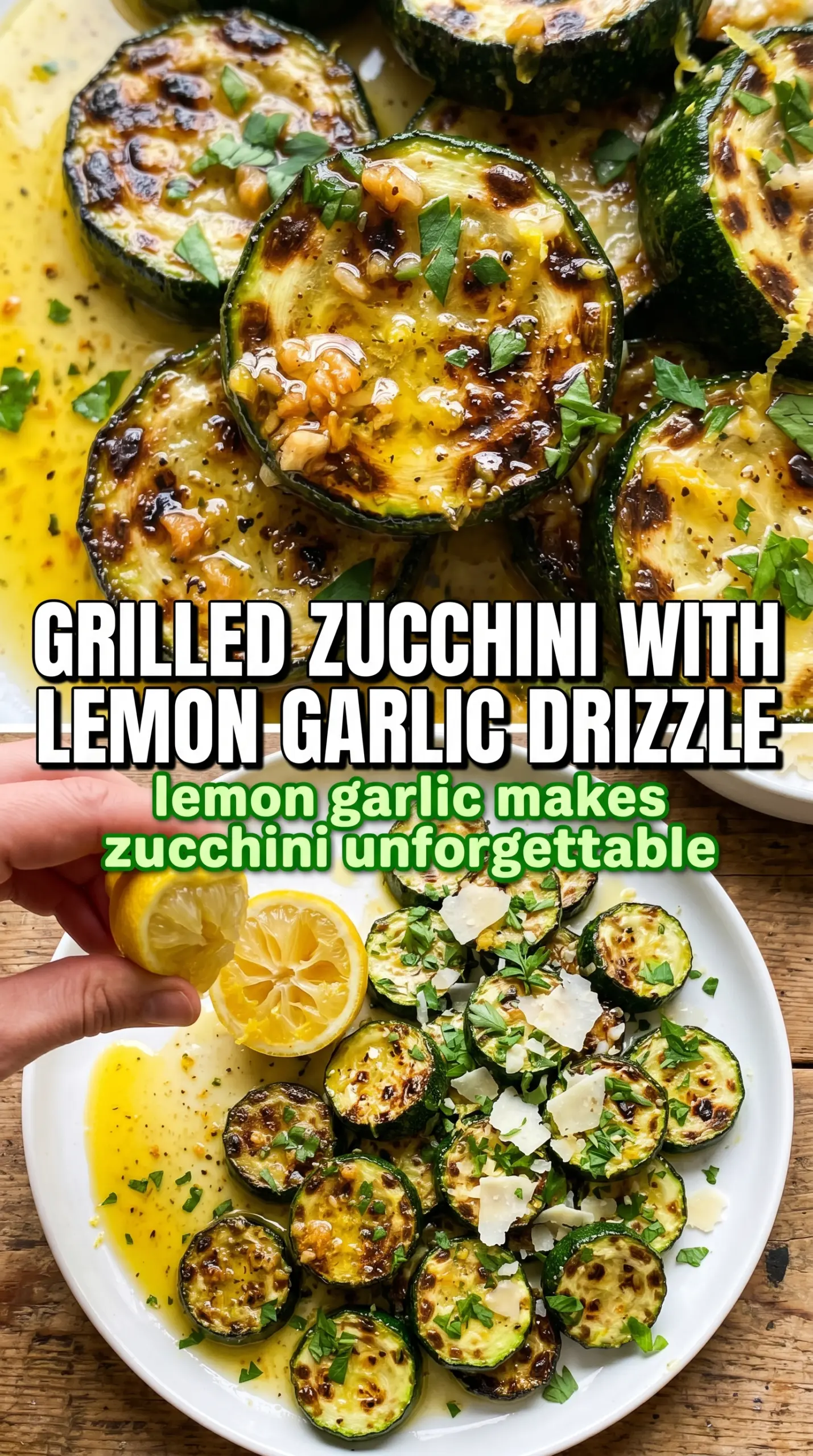
- Zucchini — Medium zucchini give you the best balance of tenderness and structure. Smaller ones have fewer seeds and a firmer bite, which is great here. If yours are large and seedy, slice them into planks and trim away the soft center so they don’t slump on the grill.
- Olive oil — You need enough to coat the zucchini lightly and to build the warm drizzle. Don’t swap in butter for the drizzle; it can separate more easily once the lemon goes in. If you want a more neutral finish, use avocado oil on the zucchini and keep olive oil in the sauce.
- Fresh lemon juice and zest — Bottled juice tastes flat here. Fresh lemon brings the sharp, clean finish the grilled zucchini needs, and the zest carries the brighter oils that make the drizzle smell like more than just acid. Zest before juicing so you don’t wrestle a slippery lemon later.
- Garlic — Mince it finely so it softens fast in the warm oil. If it browns, it turns bitter in a hurry, so the pan comes off the heat as soon as it smells fragrant. That quick off-heat finish keeps the garlic sweet and rounded instead of harsh.
- Red pepper flakes — They don’t make the dish hot; they give the sauce a little edge so the lemon doesn’t read sharp. If you want a milder drizzle, cut the amount in half. Skip them entirely and the sauce will still work, just with less lift.
The Fast Grill-and-Drizzle Sequence That Keeps Everything Bright
Oiling and seasoning the zucchini
Brush the zucchini lightly with olive oil and season it just before grilling. The goal is a thin sheen, not a slippery coating, because too much oil can flare on the grill and soften the surface before it browns. The planks should look glossy and lightly seasoned, not wet.
Getting the grill marks without overcooking
Lay the zucchini on a preheated medium-high grill and leave it alone until it releases easily. You’re looking for dark grill marks and tender edges, not complete collapse. Three to four minutes per side is usually enough, but thicker planks may need another minute. If the slices go limp before they pick up color, the grill wasn’t hot enough.
Making the warm lemon garlic drizzle
Warm the olive oil in a small pan, add the garlic, and let it cook just until fragrant, about a minute. The garlic should soften, not brown. Pull the pan off the heat before stirring in the lemon juice, zest, red pepper flakes, parsley, salt, and pepper. Adding lemon to hot oil on the heat can make the sauce taste harsh and can dull the fresh herbs.
Finishing at the table
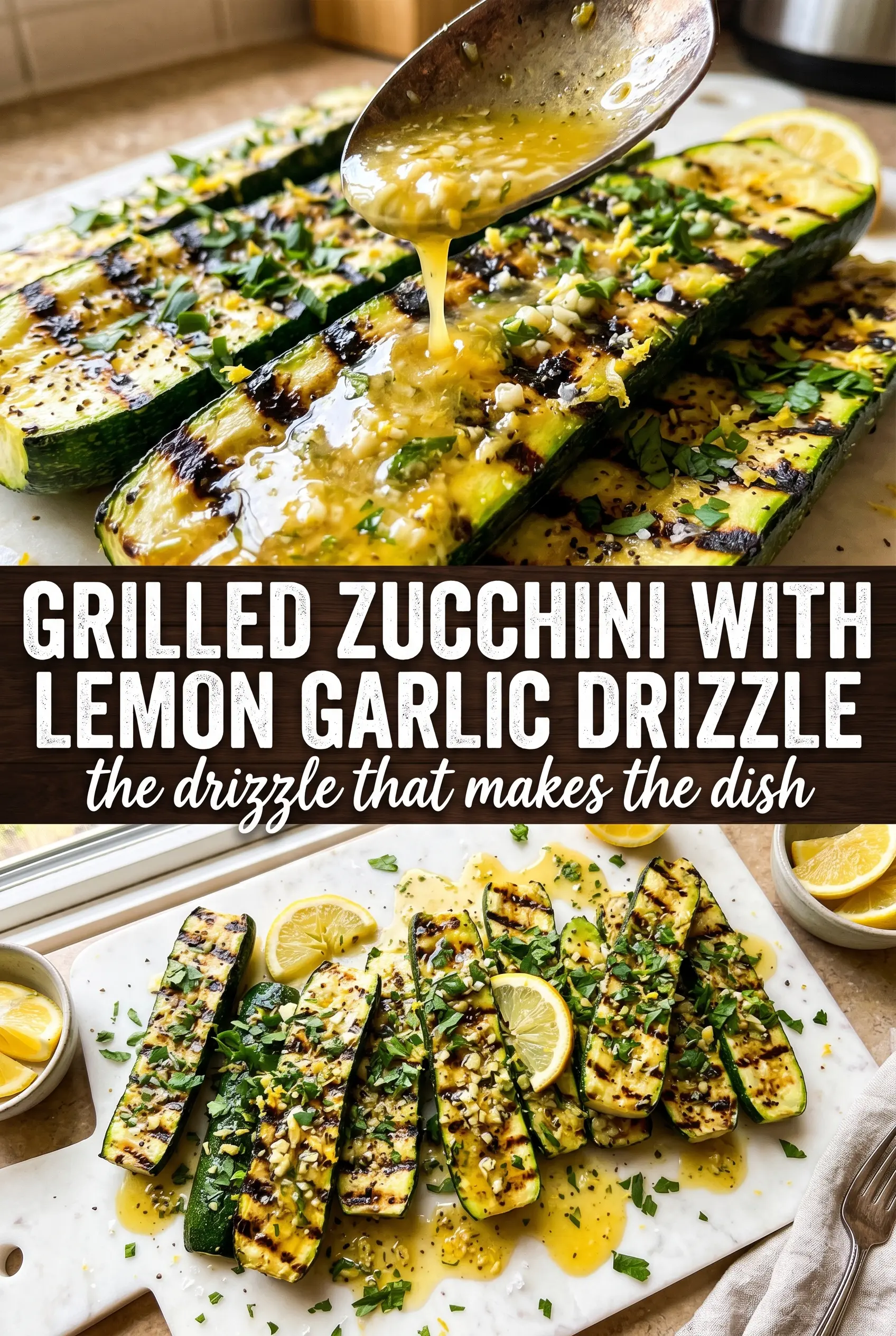
Arrange the zucchini on a platter and pour the warm drizzle over the top right before serving. That keeps the grill marks defined and lets the sauce pool in the ridges instead of disappearing into the vegetable. This is one of those dishes that tastes best immediately, while the zucchini is still warm and the lemon is still bright.
How to Adjust This Grilled Zucchini Without Losing the Point
Dairy-Free as Written
This recipe already happens to be dairy-free, which is part of why it works so well as a side dish for almost anything. Keep the olive oil base and the herb finish, and you won’t lose any richness. If you want a little more body, add a pinch of flaky salt at the end instead of trying to make the sauce creamy.
No Grill, Same Finish
A grill pan or a cast-iron skillet gives you the same charred edges if the outdoor grill isn’t happening. Heat the pan until it’s hot enough to sizzle on contact, then work in batches so the zucchini sears instead of steaming. You’ll still get the sauce in the grooves, which is the part people notice first.
Extra Herb, Brighter Finish
Parsley keeps the drizzle clean, but basil or mint can shift it toward something a little fresher and more summery. Use them in place of part of the parsley, not all of it, so the sauce still tastes balanced with the garlic and lemon. Basil gives it a softer edge; mint makes it pop.
Storage and Reheating
- Refrigerator: Store leftover zucchini for up to 3 days. It will soften, but the flavor stays good.
- Freezer: I don’t recommend freezing it. Zucchini turns watery and mushy after thawing, and the drizzle loses its fresh edge.
- Reheating: Warm it in a skillet over medium-low heat just until heated through. Microwaving makes it collapse fast, especially if the drizzle is already on it.
Answers to the Questions Worth Asking
Grilled Zucchini with Lemon Garlic Drizzle
Ingredients
Equipment
Method
- Brush the zucchini with olive oil and season with salt and black pepper. Make sure both cut sides are coated for even browning.
- Preheat the grill to medium-high and oil the grates. When the grill is ready, place zucchini on the bars to form grill marks.
- Grill the zucchini for 3–4 minutes per side, until char marks form and the zucchini is tender. Arrange the finished planks on a serving platter as you cook.
- Warm 4 tablespoons olive oil in a small pan over medium heat. Add the minced garlic and cook for 1 minute until fragrant.
- Remove the pan from the heat and stir in fresh lemon juice, lemon zest, red pepper flakes, and chopped parsley. Keep the drizzle warm for easy pouring.
- Pour the warm lemon garlic drizzle generously over the grilled zucchini. Let it pool in the grill marks before serving.
- Serve immediately. Scatter extra parsley on top if desired.