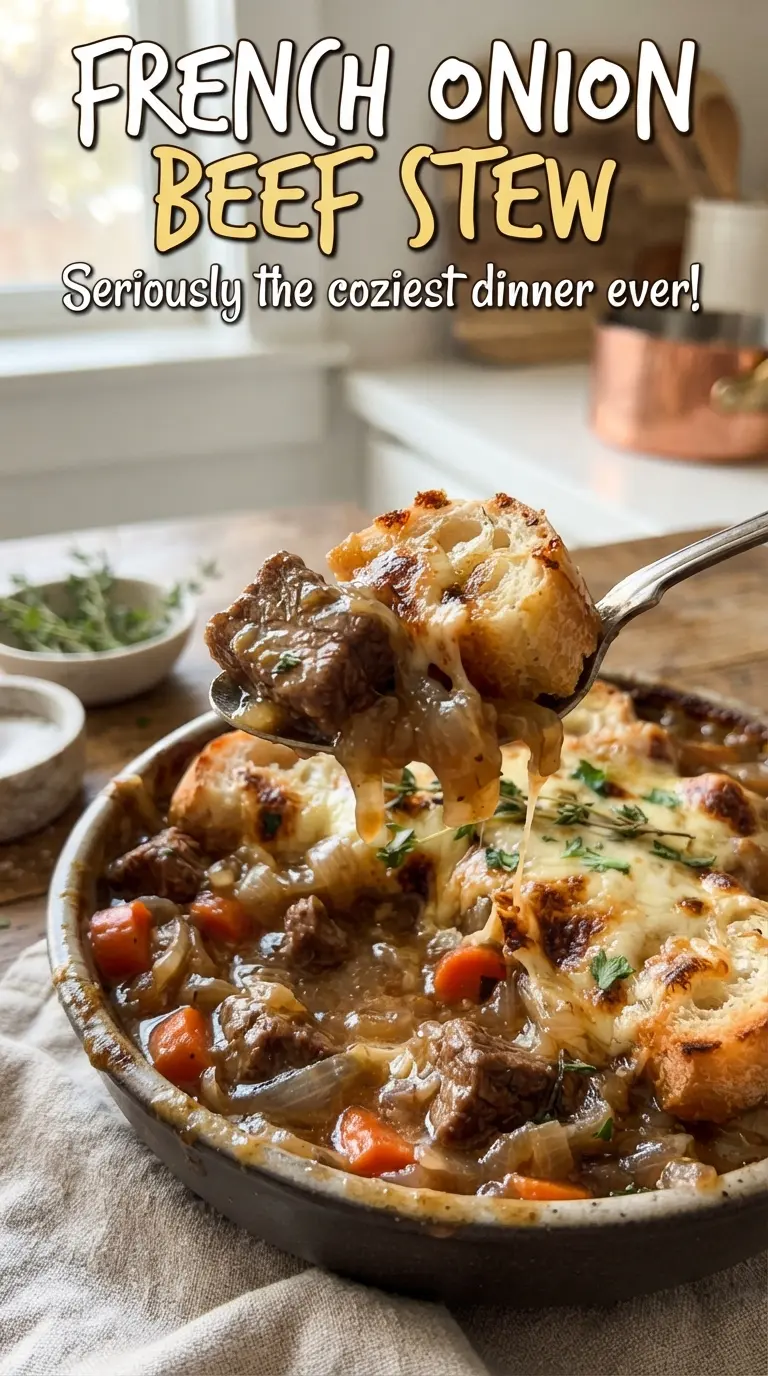
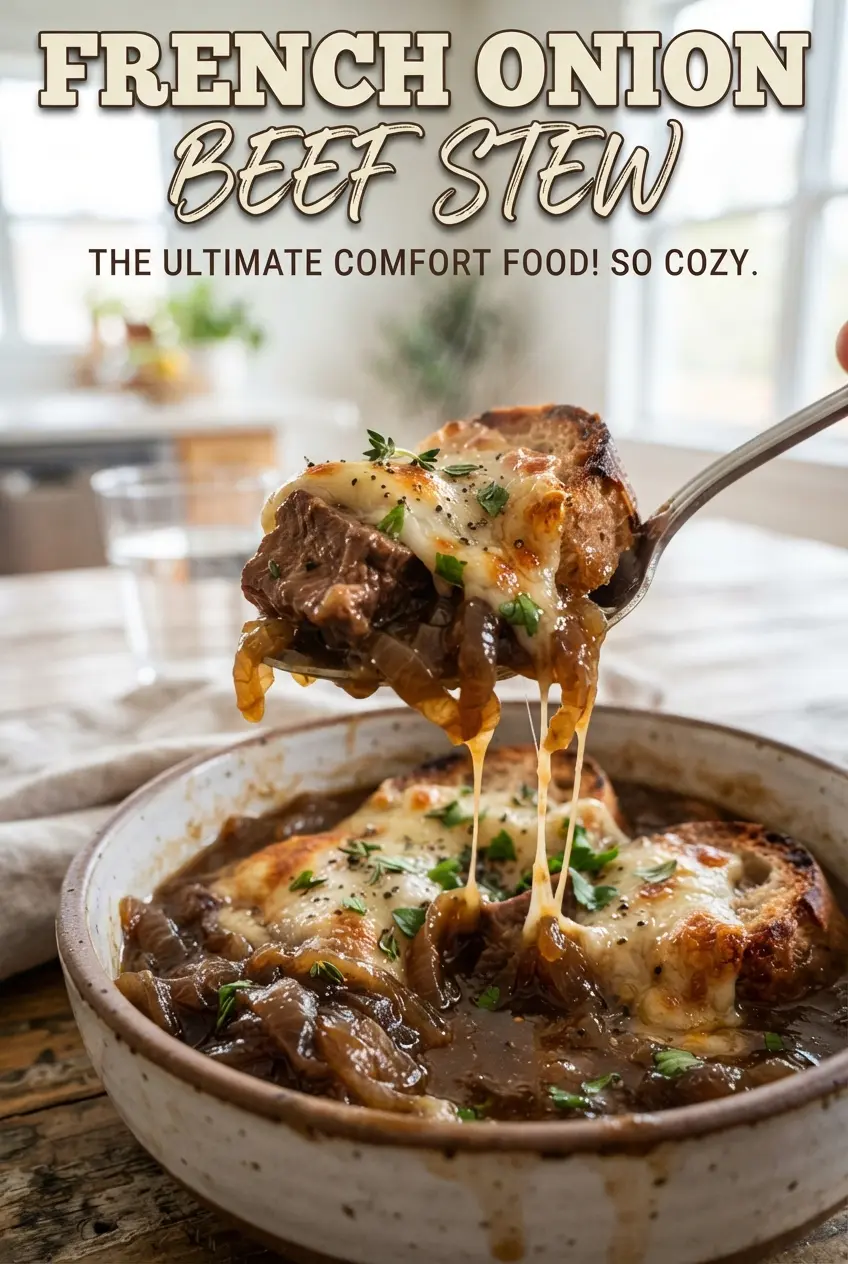
French onion beef stew has that rare kind of comfort that lands somewhere between a slow-braised dinner and a bowl of French onion soup with a fork in it. The beef turns tender enough to pull apart with a spoon, the onions melt down into a deep savory sweetness, and the toasted baguette on top catches just enough broth to stay intact under the browned Gruyere. Every bite feels layered, not heavy.
What makes this version work is patience in two places that matter most: the beef gets a proper sear before it ever sees liquid, and the onions are cooked long enough to lose their sharpness and take on real color. That combination gives the stew a built-in richness that doesn’t depend on extra cream or a long ingredient list. The wine and Worcestershire deepen the broth without making it taste winey, and the thyme keeps everything tasting balanced instead of flat.
Below, I’ll walk through the parts that actually change the outcome: how to keep the onions from steaming, when to add the flour, and how to broil the bowls so the cheese turns bubbling and bronzed instead of oily.
The onions turned deep golden and the broth got that classic French onion taste without being salty. I broiled the bowls for just 2 minutes and the Gruyere bubbled up perfectly over the baguette.
Save this French Onion Beef Stew for the night you want deep caramelized onion flavor, tender beef, and bubbling Gruyere under a toasted baguette.
The Part Most French Onion Stews Rush: The Onions
If the onions go in too fast, they steam, soften, and taste sweet but flat. What you want here is real caramelization: the moisture cooks off, the edges turn amber, and the pan picks up those dark little browned bits that give the broth its backbone. That’s why the onions get their own long stage before anything else is added.
The sugar isn’t there to make the stew sweet. It helps the onions start browning a little more evenly, especially if they’re very fresh and full of water. Stir often and lower the heat if the pan starts catching too fast. You’re looking for deep golden onions that collapse into a jammy layer, not brittle, burnt strands.
What Each Ingredient Is Actually Doing in This Stew
- Beef chuck — This is the cut that gives you tender, spoonable beef after a long simmer. Leaner stew meat will work in a pinch, but it won’t give you the same silky bite or the same rich broth.
- Yellow onions — They’re the core flavor here. White onions soften, but yellow onions caramelize with a deeper, more rounded sweetness that suits this stew best.
- Dry white wine — It lifts the browned bits from the pot and adds sharpness that keeps the stew from tasting heavy. Use something dry, not sweet, or the broth turns muddled.
- Gruyere — It melts into that stretchy, nutty topping you want over the baguette. Swiss cheese can stand in, but it won’t brown with the same depth.
- Baguette — The toast gives the stew its French onion moment. Slice and toast it before topping the bowls so it stays sturdy under the cheese.
Building the Stew So the Beef Stays Tender and the Broth Stays Rich
Searing the Beef in Batches
Brown the beef in a single layer and leave space between the pieces. If the pan is crowded, the meat steams and never develops the dark crust that gives the stew its first layer of flavor. You’re looking for a deep brown surface, not a gray one. Pull the beef out as soon as it’s browned; it will finish in the broth later.
Caramelizing the Onions Without Burning Them
Melt the butter, add the onions, and keep the heat at a level where they slowly soften and turn color. Stir often enough to prevent scorching, but not so constantly that they never sit long enough to brown. If the pan looks dry before the onions are ready, a splash of water helps lift the fond without stopping the caramelization. The onions should end up glossy, deep golden, and almost spreadable.
Building the Broth Before the Long Simmer
Cook the garlic and flour briefly so the raw flour taste disappears, then pour in the wine and scrape the bottom well. That step keeps the stew from tasting pasty and pulls all the browned flavor into the liquid. Add the broth, Worcestershire, thyme, bay leaf, and beef, then keep the simmer gentle. A hard boil will tighten the meat before it has time to soften.
Finishing Under the Broiler
Ladle the stew into oven-safe bowls, top each one with a baguette slice, and pile on the Gruyere. Broil just until the cheese bubbles and spots of brown appear at the edges. If you walk away for even a minute, the line between bronzed and burnt comes fast, so stay close and watch the color. The goal is melted, bubbling cheese with a crisp top and a bread layer that still holds up.
How to Adapt This for a Different Table
Gluten-Free Version
Swap the all-purpose flour for a gluten-free flour blend or a cornstarch slurry added near the end of the simmer. Use gluten-free bread for the topping, or skip the bread entirely and broil the Gruyere over the stew in the bowls. The flavor stays the same; the texture just shifts slightly in the broth.
No Wine Needed
Replace the white wine with an equal amount of beef broth plus a teaspoon of white wine vinegar or lemon juice. You’ll lose a little of the sharp edge that wine brings, but you’ll keep the brightness that keeps the stew from tasting one-note.
Make It Ahead for Better Flavor
This stew tastes even deeper the next day because the onions, beef, and broth have time to settle together. Cook it fully, chill it, and reheat gently before adding the bread and cheese topping. Broil the bowls just before serving so the topping stays crisp and melted instead of soggy.
Storage and Reheating
- Refrigerator: Store the stew without the baguette and cheese for up to 4 days. The flavor deepens, and the beef stays tender.
- Freezer: The stew base freezes well for up to 3 months. Freeze before adding the bread and cheese, then thaw overnight in the fridge.
- Reheating: Warm it slowly on the stove over low to medium-low heat until steaming. A hard boil can make the beef stringy and the broth greasy, so keep the heat gentle and add the baguette and Gruyere only after reheating.
Answers to the Questions Worth Asking
French Onion Beef Stew
Ingredients
Equipment
Method
- Season the beef chuck cubes with salt and black pepper. Heat olive oil in a Dutch oven over medium-high heat and brown the beef in batches, then set aside.
- Melt the butter in the Dutch oven and add the sliced yellow onions and sugar. Cook, stirring often, for 30-35 minutes until the onions are deep golden.
- Add the minced garlic and all-purpose flour and cook for 1 minute. Pour in the dry white wine and scrape the bottom of the pot until browned bits release.
- Add the beef broth, Worcestershire sauce, fresh thyme, and bay leaf to the pot, then stir. Return the browned beef, cover, and simmer for 2 hours until tender.
- Ladle the stew into oven-safe bowls and top each with a toasted baguette slice and shredded Gruyere. Broil for 2-3 minutes until the cheese is bubbly and browned.