Cold pasta salad can be dull when it’s just noodles and dressing, but this antipasto version eats like the best part of an Italian appetizer tray turned into a side dish. You get chewy rotini, salty salami and pepperoni, creamy provolone and mozzarella, briny olives, and sweet peppers in every forkful. It’s the kind of bowl that disappears fast at a cookout because there’s always one more interesting bite waiting.
The trick is balancing all that richness with enough dressing and enough chill time. Rotini holds onto the Italian dressing in its spirals, while the marinated artichokes and pepperoncini bring extra tang so the salad doesn’t taste flat after it sits. Rinsing the pasta under cold water matters here because you want it cooled quickly and lightly tightened up before it meets the cheese and meats.
Below, I’ll walk through the parts that matter most: how to keep the pasta from getting sticky, which ingredients are worth splurging on, and how to make this salad ahead without losing texture.
The dressing soaked into the rotini perfectly after chilling, and the pepperoncini gave it that sharp little bite that kept the salami and provolone from feeling heavy. I had to add a splash more dressing right before serving, but the texture held up beautifully.
Save this antipasto pasta salad for potlucks, cookouts, and make-ahead lunches when you want a chilled side that tastes like a deli platter in pasta form.
The Reason Antipasto Pasta Salad Tastes Better After It Sits
The biggest mistake with pasta salad is treating the dressing like a last-minute coating instead of part of the seasoning. Rotini needs time to absorb some of that Italian dressing, and the meats and cheese need time to cool the pasta down without turning greasy. If you serve it right away, the flavors stay separated and the salad can taste loud in one bite and flat in the next.
Chilling changes the texture in a good way. The pasta firms up, the dressing settles into the grooves, and the salty ingredients start working together instead of competing. That said, don’t drown it at the start. A modest first toss plus a small splash at the end gives you a salad that still tastes bright after it’s been in the fridge.
- Cold pasta is the base of the whole dish. Rinsing after cooking stops the pasta from carrying over heat and keeps the cheese from softening too much too soon.
- Artichokes and pepperoncini are doing more than adding tang. Their brine-like bite keeps the salad from tasting heavy, especially after the salami and pepperoni go in.
- Parmesan helps the dressing cling. It adds a little salty backbone and thickens the coating just enough that the salad doesn’t puddle at the bottom of the bowl.
What Each Ingredient Is Actually Doing in This Bowl
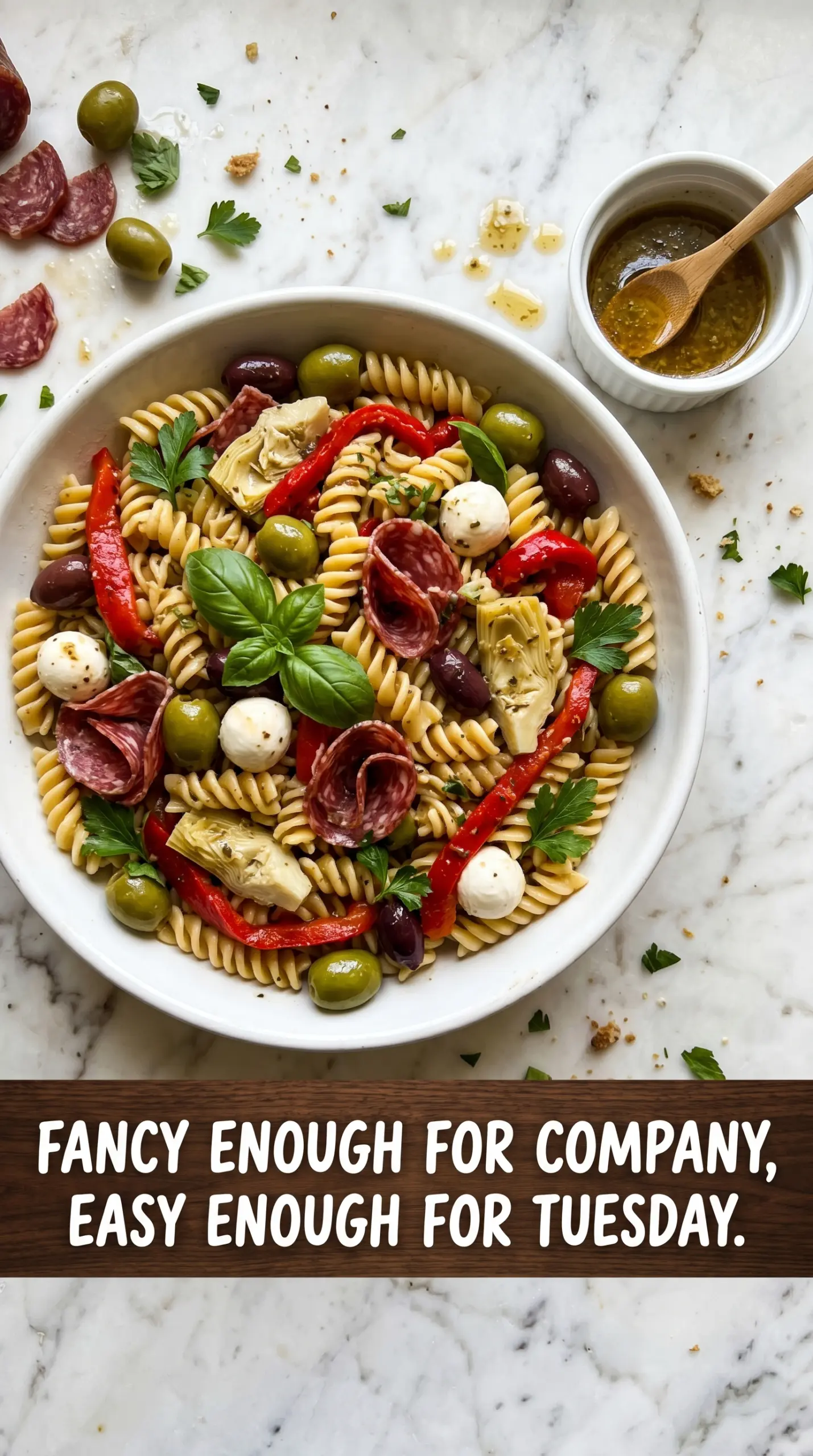
- Rotini pasta — The spirals hold dressing better than smooth pasta shapes. If you swap it, pick something with ridges or curves like fusilli or penne so the dressing doesn’t slide right off.
- Salami and pepperoni — These bring the deli-style bite that makes the salad feel like antipasto instead of ordinary pasta salad. Use good store-brand sliced meats if you want to save money; the cubes and quarters matter more than fancy packaging here.
- Provolone and fresh mozzarella — Provolone gives structure and a mild sharpness, while mozzarella adds soft creaminess. If you use only one cheese, the salad loses some of that platter-like contrast.
- Marinated artichoke hearts, roasted red peppers, olives, and pepperoncini — This is the flavor engine. Don’t skip the marinated elements; they season the pasta from the inside out and keep the salad lively after chilling.
- Italian dressing and Parmesan — Bottled dressing is fine here, especially if it’s punchy and acidic. Parmesan adds a salty finish, and it also helps the dressing cling instead of sliding to the bottom of the bowl.
Building the Salad So the Pasta Doesn’t Turn Gummy
Cook the Pasta Just Past Al Dente
Cook the rotini according to the package, then stop when it still has a little bite left. Pasta salad firms up in the fridge, so if you start with pasta that’s already fully soft, it’ll go mushy by the time you serve it. Drain it well and rinse with cold water until the steam is gone and the noodles feel cool to the touch.
Cut the Add-Ins to Match the Pasta
Cube the salami and provolone so each piece lands on a fork with the pasta instead of falling out of the bowl. Quarter the pepperoni and artichokes, slice the pepperoncini, and halve the tomatoes so every ingredient is close in size. That balance matters because this salad is at its best when one scoop gives you a little bit of everything.
Toss, Chill, and Finish Before Serving
Mix everything in a large bowl so the dressing can coat without tearing the cheese. Refrigerate for at least 2 hours; that’s when the flavors marry and the pasta stops tasting separate from the rest. Before serving, toss again and add a splash more dressing if the pasta has absorbed most of it, since chilled pasta always drinks up more than you expect.
How to Adapt It for Different Crowds and Diets
Gluten-Free Antipasto Pasta Salad
Use a sturdy gluten-free rotini that holds its shape after chilling. Cook it just to tender, then rinse and cool it right away, because gluten-free pasta can go soft faster than wheat pasta once the dressing hits it.
Dairy-Free Version
Leave out the provolone, mozzarella, and Parmesan, then add extra olives, artichokes, and roasted peppers for depth. You’ll lose the creamy, mellow notes from the cheese, so choose a dressing with good acidity and a little garlic to keep the salad from tasting too sharp.
Make It Meat-Light
Cut the salami and pepperoni in half and replace the missing volume with extra tomatoes, artichokes, and peppers. The salad stays punchy and substantial, but it reads a little more like a vegetable-forward antipasto bowl.
Storage and Reheating
- Refrigerator: Keeps well for 3 to 4 days. The pasta will absorb more dressing over time, so expect the salad to look drier on day two.
- Freezer: Don’t freeze it. The fresh mozzarella, tomatoes, and dressing all change texture in a bad way after thawing.
- Reheating: Serve it cold. If it has been refrigerated overnight, let it sit at room temperature for 15 to 20 minutes and toss in a spoonful or two of dressing to wake it back up.
Questions I Get Asked About This Recipe
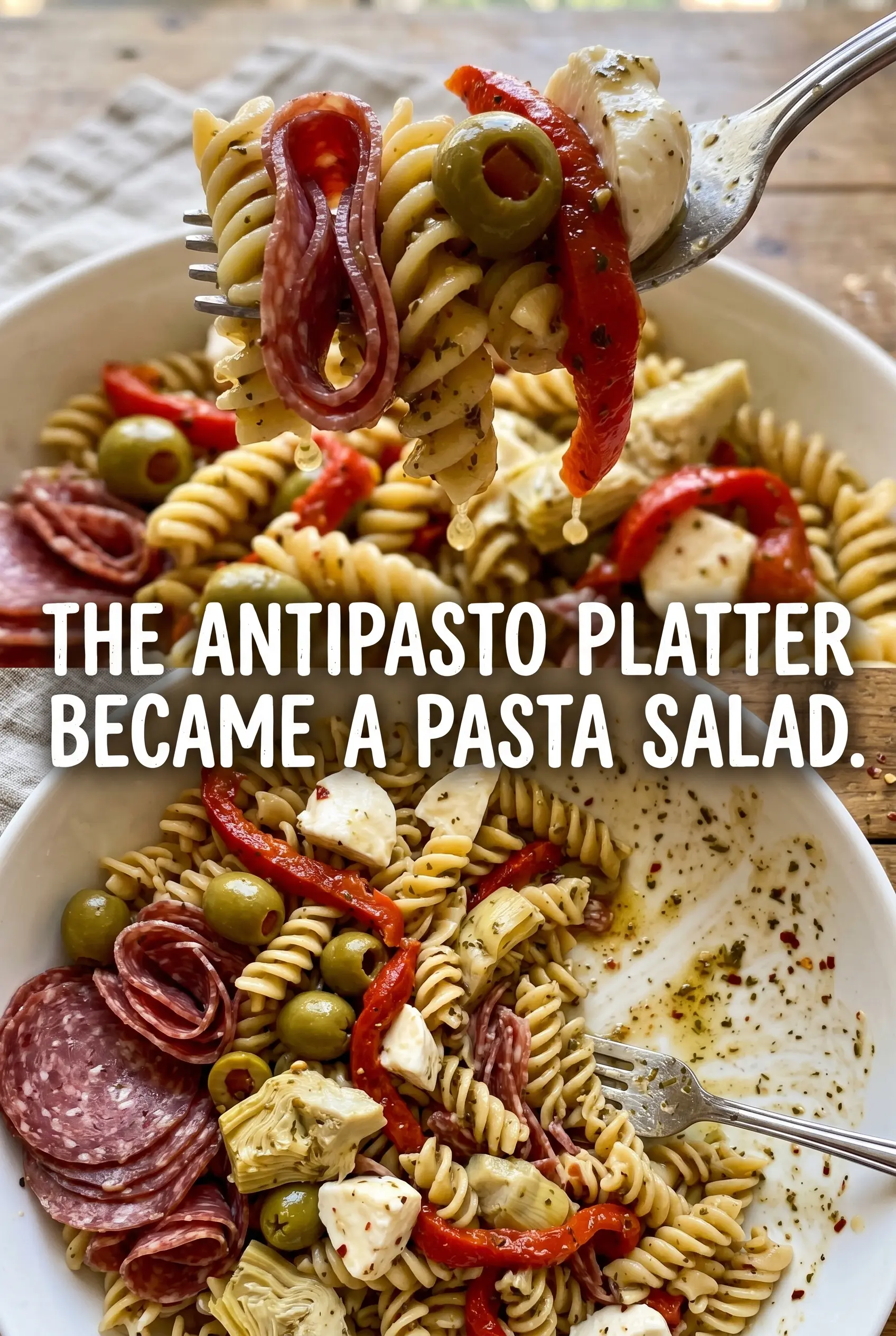
Easy Italian Antipasto Pasta Salad
Ingredients
Method
- Cook rotini pasta according to package directions. Drain it and rinse with cold water until cool to the touch, then drain well (visual cue: pasta looks separated, not clumped).
- Allow the rinsed pasta to drain in the colander for 2 minutes. This helps prevent watered-down dressing later (visual cue: no pooling water in the bowl).
- Combine rotini pasta, salami, pepperoni, provolone, fresh mozzarella balls, cherry tomatoes, marinated artichoke hearts, roasted red peppers, Kalamata olives, and pepperoncini in a large bowl. Stir gently just to distribute the mix (visual cue: an even spread of colors).
- Add Italian dressing, Parmesan cheese, and Italian seasoning to the bowl. Toss until everything is evenly coated and glossy (visual cue: pasta is coated with visible seasoning).
- Refrigerate the pasta salad for 2 hours to allow flavors to meld. Cover it so it stays fresh (visual cue: ingredients look set and flavors deepen).
- Toss again before serving and add more Italian dressing if needed. Serve chilled (visual cue: pasta looks evenly coated again, not dry at the bottom).