Deep, savory crock pot beef stew earns its place in the rotation because the beef turns spoon-tender while the broth cooks down into something rich enough to coat the potatoes and vegetables without tasting muddy. The slow cooker does the heavy lifting here, but the order of the ingredients matters just as much as the time. Build it wrong and you get soft vegetables floating in thin broth. Build it right and every bite tastes like it simmered all afternoon on purpose.
The trick is starting with the vegetables under the beef so they catch the flavor as the juices drip down, then finishing with a cornstarch slurry only after the meat is already tender. That last step matters. If you thicken too early, the stew can turn gluey before the potatoes and carrots are fully cooked. Red wine adds depth, but if you skip it and use more broth, you still get a full-bodied stew as long as the tomato paste and Worcestershire have time to work.
Below, I’m sharing the small details that keep the broth savory instead of flat, plus the one reheating trick that keeps the beef from drying out the next day.
The broth thickened up beautifully at the end, and the beef was falling apart after 8 hours on low. I loved that the potatoes held their shape instead of turning mushy.
Save this Crock Pot Beef Stew for the nights when you want tender beef, hearty vegetables, and a thick savory broth with almost no hands-on work.
The Part That Keeps the Beef Tender Instead of Tough
Beef chuck is the right cut here because it has enough fat and connective tissue to turn silky over a long cook. Lean stew meat can taste dry by the time the vegetables are done, even if it starts out looking fine. Chuck holds on to its structure early, then relaxes into soft chunks that break apart with a spoon.
The other mistake I see all the time is rushing the thickener. A slow cooker traps moisture, so the stew often looks thinner than it should until the very end. Let the beef finish first, then stir in the cornstarch slurry and give it another 20 to 30 minutes on High so the broth turns glossy and coats the back of a spoon.
- Beef chuck — This is the cut that gives you tender, beefy stew instead of stringy cubes. Cut it into 1.5-inch pieces so it has time to soften without shredding completely apart.
- Red wine — It adds depth and a little acidity, which keeps the broth from tasting flat. If you don’t use wine, replace it with more beef broth and keep the tomato paste in place so the stew still has body.
- Tomato paste — This is not just for color. It gives the broth a roasted, concentrated base that makes the stew taste cooked all day long.
- Baby potatoes — They hold their shape better than larger waxy potatoes cut too small. Halving them is enough; if you chop them finer, they’ll soften too much by the end.
What Each Ingredient Is Doing in the Slow Cooker

- Onion, celery, and carrots — These build the vegetable base and flavor the broth as they cook. Putting them on the bottom helps them soften in the liquid and keeps the beef from sitting directly against the slow cooker insert.
- Garlic — Fresh minced garlic gives a sharper finish than jarred garlic. Add it with the broth and tomatoes so it doesn’t scorch on the bottom.
- Diced tomatoes — They add acidity and enough liquid to help the stew taste balanced. The tomatoes won’t make it taste like chili; they just round out the broth.
- Worcestershire sauce — This is the quiet ingredient that makes the whole pot taste more savory. It adds saltiness, tang, and a little fermented depth that broth alone can’t match.
- Thyme, rosemary, and bay leaves — These herbs are what make the kitchen smell like dinner has been going all day. Use dried herbs here; fresh rosemary can turn a little sharp in long-cooked stews.
Building the Pot So the Broth Turns Rich, Not Watery
Start with the vegetables
Spread the potatoes, carrots, celery, and onion across the bottom of the slow cooker first. They don’t just add flavor; they also create a bed that keeps the beef from sitting too low in the liquid. If you pile everything in randomly, the potatoes on top can dry out while the bottom turns overly soft.
Layer the beef and seasonings without stirring
Set the seasoned beef over the vegetables, then pour in the broth, wine, tomatoes, tomato paste, Worcestershire, and herbs. Don’t stir it into a soup right away. The slow cooker does better when the flavoring ingredients work their way down through the pot gradually, and that keeps the meat from getting lost at the bottom.
Cook until the beef gives easily
Low and slow gives the best texture here. After about 8 hours on Low, the beef should break apart when pressed with a spoon, and the potatoes should be tender but still intact. If the beef still feels tight, give it more time rather than cranking the heat and hoping it catches up.
Thicken only after the meat is tender
Stir the cornstarch and water together until smooth, then add it at the end with the slow cooker on High. The broth should go from loose to lightly glossy within 20 to 30 minutes. If it still looks thin, let it go a little longer instead of adding more slurry right away; too much thickener can make the stew heavy instead of rich.
How to Change This Stew Without Losing What Makes It Good
Skip the wine and keep the depth
Use an extra cup of beef broth instead of wine. The stew will taste a little softer and less tangy, so the tomato paste and Worcestershire matter even more. That swap works fine if you want a family-friendly version or just don’t keep wine around.
Make it gluten-free without changing the texture
This recipe is already close, but check your Worcestershire sauce and beef broth to be sure they’re gluten-free. Cornstarch is the thickener here, so you don’t need flour. That keeps the broth glossy and the finish clean.
Add mushrooms for a deeper, earthier pot
Add 8 to 12 ounces of sliced mushrooms on top of the vegetables. They’ll release their moisture into the stew and give the broth a darker, woodsy flavor. The stew will taste a little more robust and a little less classic, but it works well.
Store it for leftovers that reheat well
Refrigerator: Store in an airtight container for up to 4 days. The broth will thicken as it chills, and the potatoes will absorb some liquid. Freezer: Freeze for up to 3 months, though the potatoes soften a bit after thawing. Reheating: Warm gently on the stove or in the microwave with a splash of broth, stirring halfway through so the stew loosens evenly without turning the beef dry.
Questions I Get Asked About This Recipe
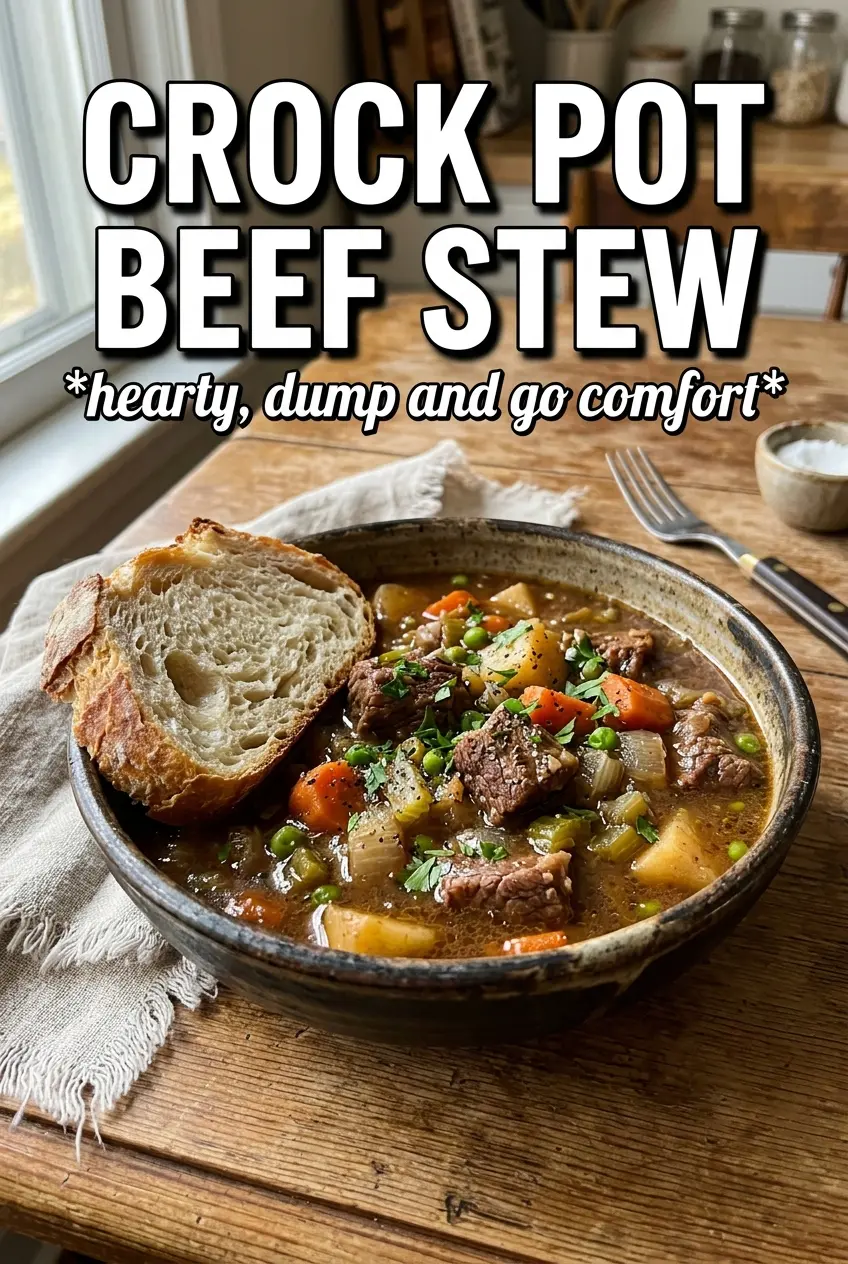
Crock Pot Beef Stew
Ingredients
Equipment
Method
- Season the beef generously with salt and pepper.
- Add the potatoes, carrots, celery, and onion to the bottom of a slow cooker.
- Nestle the beef on top, then add garlic, beef broth, wine, diced tomatoes, tomato paste, Worcestershire sauce, dried thyme, dried rosemary, and bay leaves.
- Cover and cook on Low for 8 to 10 hours, or High for 4 to 5 hours, until the beef is fall-apart tender.
- Remove the bay leaves and discard.
- Stir the cornstarch slurry (cornstarch mixed with water) into the stew until no dry lumps remain.
- Cook on High for 20 to 30 minutes until the broth thickens and looks glossy.
- Season with additional salt and pepper to taste and stir through.