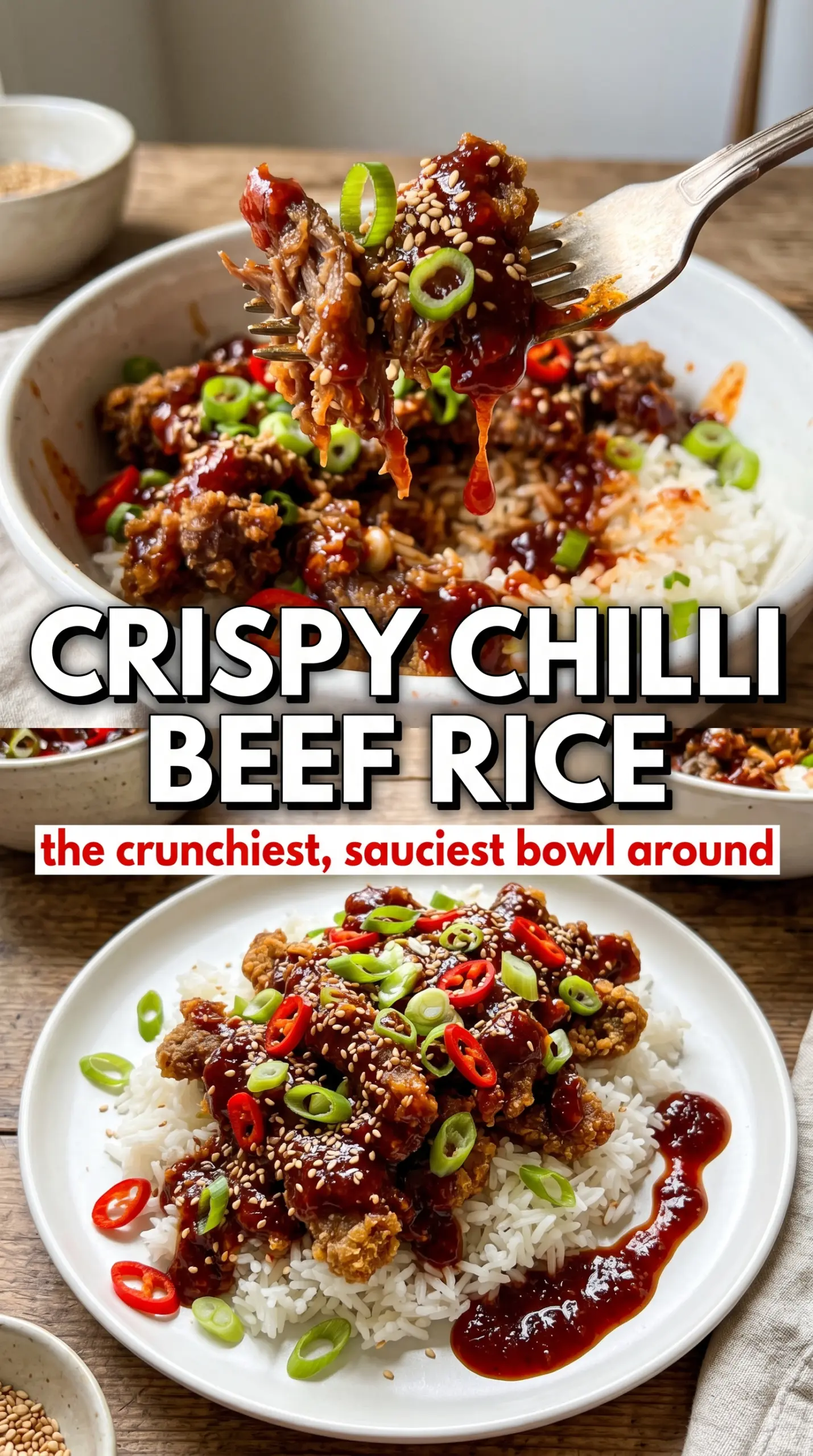
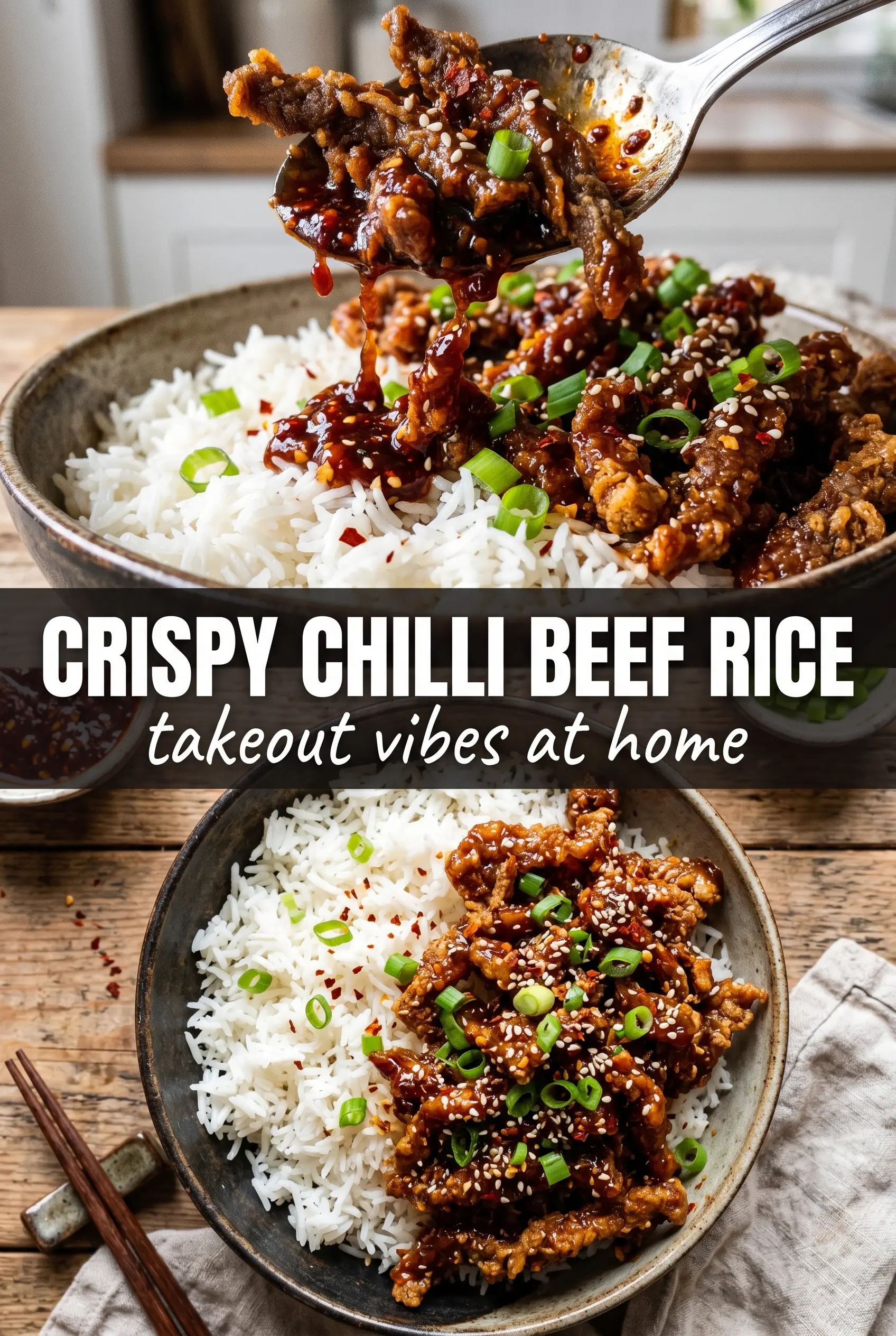
Crispy chilli beef rice hits the table with the kind of contrast that keeps you going back for another forkful: shatteringly crisp beef, a sticky sweet-spicy glaze, and fluffy rice underneath to catch every bit of sauce. The beef stays crunchy because it’s coated in cornstarch and fried in batches instead of crowded into one pan, which is the difference between real crisp edges and soggy takeout-style disappointment.
The sauce is built fast and used fast. Sweet chilli sauce brings body and shine, soy sauce adds salt and depth, and a little brown sugar gives the glaze that lacquered finish without making it cloying. Thin-sliced flank steak matters here too, because it cooks quickly and stays tender long enough to survive a hard fry and a quick toss in the wok.
Below, you’ll find the timing that keeps the beef crisp, the one step that prevents the sauce from going thin, and a few smart variations if you want to adjust the heat or make the dish work with what’s already in your kitchen.
The beef came out properly crunchy, even after tossing it in the sauce for just a minute. I served it over jasmine rice and my husband kept saying it tasted better than our usual takeout.
Crispy Chilli Beef Rice with shatteringly crisp strips and glossy sweet-spicy sauce is worth saving for your next takeout-style dinner at home.
The Crispy Beef Trick That Keeps This Dish From Going Soft
The whole game here is surface texture. Cornstarch doesn’t just coat the beef; it dries out the outside just enough to fry into a brittle shell that can stand up to a quick toss in sauce. If you skip the thin slicing or overcrowd the pan, the beef steams instead of fries, and you lose the crunch before the sauce even hits it.
The other mistake is letting the beef sit in the sauce too long. This dish is built for speed. The wok step should take less than a minute once the sauce goes in, because the goal is to glaze the beef, not braise it. That quick finish keeps the coating crisp in the center and sticky at the edges.
- Thin-sliced flank steak — Slice it against the grain and as thin as you can manage. Thin beef fries fast and stays tender; thicker pieces need longer cooking and turn chewy before they crisp.
- Cornstarch — This is what gives the beef that light, crackly shell. Flour won’t give the same shattery finish, and too much starch clumping on the meat will fry up dusty instead of crisp.
- Sweet chilli sauce — This carries both sweetness and body, which means you don’t need to build the sauce from scratch to get a glossy coating. If yours is very thick, loosen it with a teaspoon of water before it goes into the wok.
- Rice vinegar — The vinegar keeps the glaze from tasting flat. Lemon juice can work in a pinch, but it’s sharper and less rounded than rice vinegar.
What Each Ingredient Is Actually Doing in This Recipe
- Primary ingredient (the star) — This carries the main flavor. Quality matters here more than anywhere else.
- Cooking medium (oil, broth, or sauce) — This carries flavors and prevents the dish from tasting dry or one-dimensional.
- Aromatics (onion, garlic, herbs) — These add depth and complexity. They sweeten and mellow as they cook.
- Seasonings (salt, spices, herbs) — These define the personality and keep the dish from tasting flat.
- Vegetables (texture, nutrition, color) — Choose ones that complement the protein. Cut to size so they cook evenly.
- Acid (lemon, vinegar, tomato, wine) — This brightens and prevents heavy dishes from tasting one-dimensional.
- Optional richness (cream, cheese, butter) — These make the dish luxurious. Balance with acid so it stays bright.
- Proper technique (heat, time, stirring) — Follow the method to get the best results. Even great ingredients need proper technique.
Frying, Tossing, and Glazing Without Losing the Crunch
Coating the Beef Evenly
Put the sliced beef in a bowl and toss it with cornstarch, salt, and pepper until every strip looks dry and lightly dusty. The cornstarch should cling in a thin layer, not form gummy clumps, so separate any stuck-together slices before they hit the oil. If the beef is wet, pat it dry first or the coating will slide off in the fryer.
Frying in Small Batches
Heat the oil to about 350°F and fry the beef in batches for 2 to 3 minutes, just until it looks deeply golden and crisp at the edges. If the oil is too cool, the coating drinks up grease; if it’s too hot, the outside browns before the beef has a chance to crisp through. Drain the cooked beef on paper towels and keep it in a loose pile, not under a bowl, so the steam doesn’t soften it.
Building the Sauce in the Wok
Use a hot wok or skillet with just a tablespoon of oil, then cook the garlic and sliced chilli for about 30 seconds until fragrant. Add the sauce ingredients and let them simmer for a minute, just long enough to turn glossy and slightly thickened. If the garlic starts to brown hard before the sauce goes in, the heat is too high and the final sauce will taste bitter.
Bringing It Together at the Last Second
Add the crispy beef to the wok and toss quickly until every piece is coated. The sauce should cling in a thin lacquer, not pool at the bottom. Serve it immediately over rice with green onions and sesame seeds, because the crust starts to soften once it sits in sauce for more than a few minutes.
How to Adapt This Crispy Chilli Beef Rice for Your Kitchen
Make It Gluten-Free
Use a gluten-free soy sauce or tamari and check that your sweet chilli sauce is gluten-free. The texture stays the same because the crisping comes from cornstarch and frying, not from wheat-based coating.
Turn Up or Dial Down the Heat
Use fresh sliced chilli for a brighter, sharper heat, or switch to chilli flakes for a steadier background burn. If you want it milder, leave out the chilli altogether and let the sweet chilli sauce carry the flavor.
Swap the Steak for Chicken
Thin chicken breast or thigh strips work well with the same coating and fry time, though thigh gives you a juicier result. Cook them until they’re fully done and crisp before saucing, because undercooked chicken can’t be rescued with a quick glaze.
Storage and Reheating
- Refrigerator: Store leftovers for up to 3 days. The beef will soften as it sits, but the flavor stays good.
- Freezer: Freezing isn’t ideal once the sauce is on the beef. The coating loses its crisp texture after thawing, so this dish is best made fresh.
- Reheating: Reheat in a hot skillet or air fryer until the beef is hot and the edges wake back up. The microwave makes the coating soggy fast, so skip it if you want any crunch left.
Answers to the Questions Worth Asking
Crispy Chilli Beef Rice
Ingredients
Equipment
Method
- Toss the sliced flank steak with cornstarch, salt, and black pepper until the beef is well coated and looks dry-sticky at the edges.
- Heat enough oil for 1/2 inch deep in a deep pot or Dutch oven until it reaches 350°F, indicated by active bubbling around a tiny beef piece.
- Fry the beef in batches for 2–3 minutes per batch at 350°F, until the strips are extremely crispy and golden, then drain on paper towels.
- Mix the sweet chilli sauce, soy sauce, rice vinegar, brown sugar, and sesame oil together until smooth.
- Heat 1 tablespoon oil in a wok or skillet, then cook the minced garlic and sliced red chilli for 30 seconds, until fragrant and sizzling.
- Add the chilli sauce mixture and simmer for 1 minute, until it looks glistening and slightly thickened.
- Add the crispy beef and toss quickly to coat in the sauce so the surface turns glossy red-orange without soaking, indicated by crisp edges still showing.
- Serve immediately over cooked rice to preserve the crunch, then garnish with green onions and sesame seeds.