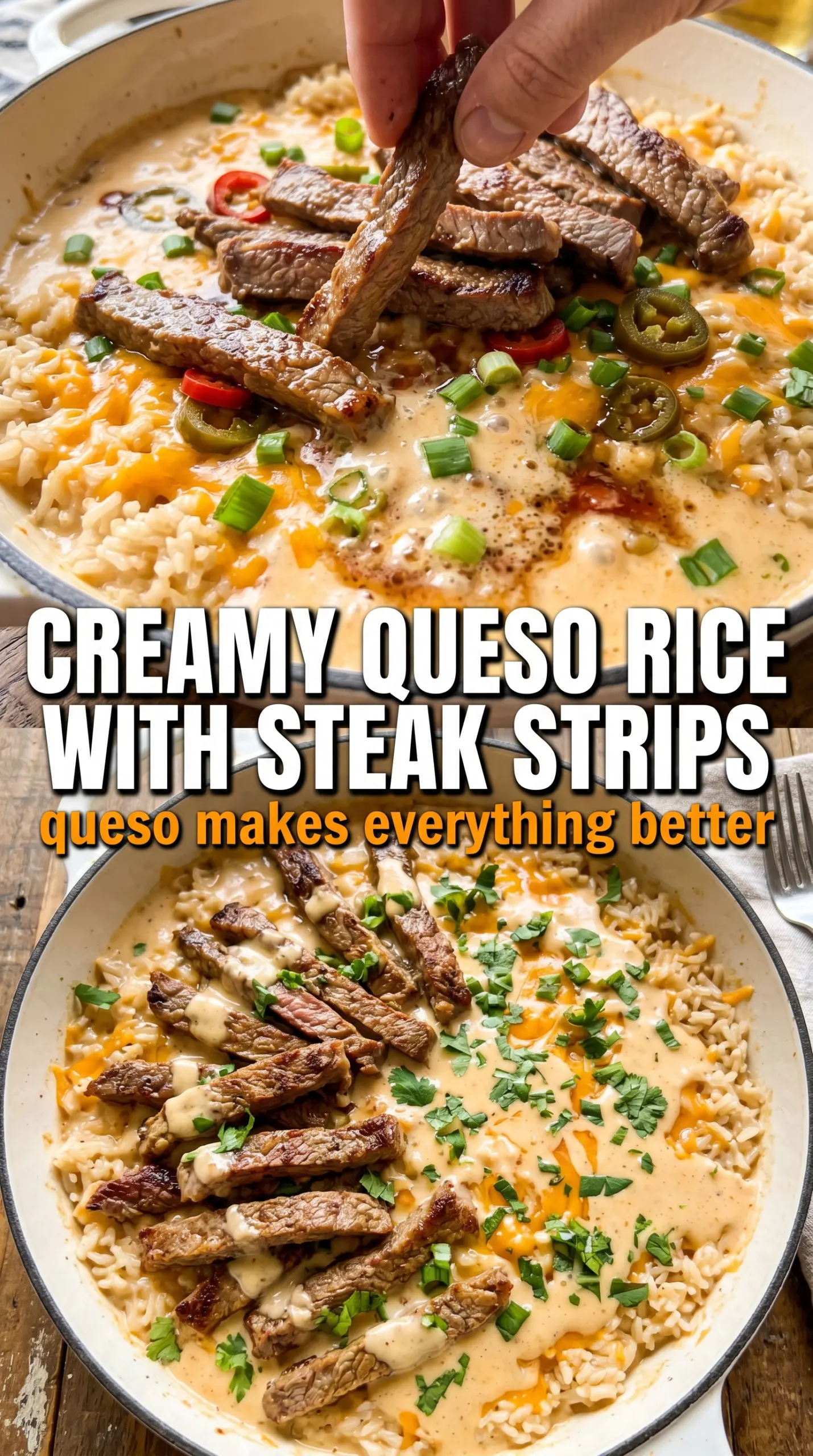
Queso-coated rice turns into something a lot more satisfying than a side dish when it’s creamy enough to cling to every grain and sturdy enough to hold a pile of seared steak on top. The rice stays rich and spoonable, the steak brings the browned edges and savory bite, and the fresh pico keeps each bowl from feeling heavy. It’s the kind of dinner that disappears fast because every forkful gets a little bit of everything.
The trick is keeping the queso smooth and the rice separate until the very end. Velveeta melts cleanly, which is exactly why it works here, and Rotel adds just enough tomato and chile flavor without thinning the sauce out too much. I also like using a hot skillet for the steak so the strips brown quickly before they have time to overcook. The whole bowl comes together in about 30 minutes, and the parts all stay distinct instead of turning into one soft, muddy mix.
Below, you’ll find the small details that matter most: how to keep the queso from tightening up, why thin steak strips cook better than chunks, and what to swap if you want a slightly lighter bowl without losing that creamy Tex-Mex feel.
The queso stayed silky all the way through and coated the rice instead of disappearing into it. I was surprised how fast the steak seared too — it stayed tender and the whole bowl tasted like something from a good Tex-Mex spot.
Like this creamy queso rice with steak strips? Save it for the nights when you want a fast bowl dinner with silky queso, browned steak, and fresh pico on top.
The Reason the Queso Stays Smooth Instead of Turning Grainy
The biggest failure in a dish like this is rushing the cheese sauce. If the milk is boiling hard or the pan is too hot when the cheese goes in, the sauce can tighten up and turn greasy instead of glossy. Gentle heat keeps the proteins from seizing, which is what gives you that pourable queso that coats rice instead of breaking around it.
Another detail that matters is the cheese itself. Processed cheese melts more evenly than a sharper block cheese here, and that’s not a shortcut I’d skip unless you want to change the whole texture of the dish. The Rotel adds moisture and seasoning at the same time, so you don’t need to overwork the sauce trying to build flavor after it’s already thick.
What Each Ingredient Is Actually Doing in the Bowl
- Sirloin steak — Thin strips brown fast and stay tender. Anything too thick takes longer to cook and can turn chewy before the outside gets that good crust. If you swap cuts, flank steak works well when sliced thin across the grain.
- Long-grain white rice — This is the right rice for holding the queso without turning paste-like. Medium-grain rice can get a little too sticky here, and brown rice needs more liquid and time than this recipe is built for.
- Velveeta or processed cheese — This is what makes the sauce smooth and stable. A sharper cheese can work in small amounts, but it won’t melt with the same silkiness. If you want a little extra cheddar flavor, stir in a handful at the end after the processed cheese has fully melted.
- Rotel tomatoes with green chiles — These bring acidity, mild heat, and enough liquid to loosen the queso without thinning it out. Drain it only if your can looks unusually watery; otherwise, use it as is.
- Fresh pico de gallo, cilantro, and jalapeños — The bowl needs something bright at the end. Those toppings cut through the richness and keep the queso rice from feeling heavy after the first few bites.
Building the Bowl in the Right Order
Season and Sear the Steak First
Coat the steak strips with cumin, chili powder, salt, and pepper before the pan ever heats up. A cast iron skillet over high heat gives you the fastest sear, which is what you want here because thin strips cook quickly and can dry out if they sit too long. Once the edges are browned and the center is just cooked through, pull them out and set them aside. If the pan gets crowded, the steak steams instead of searing, and you lose the browned flavor that makes the bowl taste complete.
Cook the Queso Low and Slow
Melt the butter, cook the garlic just until fragrant, then add the milk and let it come up to a gentle simmer. The moment the cheese goes in, keep the heat low and stir constantly until the sauce turns smooth and glossy. If it looks grainy, the burner is too hot. Pull it off the heat for a minute and keep stirring; the sauce usually comes back together once the temperature drops.
Coat the Rice Before Topping It
Add the cooked rice directly to the queso and fold it through until every grain is coated. The rice should look creamy and loose, not stiff like a casserole. If it seems too thick, add a splash of milk and stir again until it relaxes. Divide it into bowls while it’s hot so the sauce stays fluid enough to cradle the steak on top.
Finish with Fresh Toppings
Lay the steak strips over the queso rice, then add pico de gallo, cilantro, and jalapeños. That fresh finish matters because the bowl is rich by design, and the acidity from the tomatoes keeps it balanced. Serve right away while the rice is still steaming and the queso hasn’t had time to firm up.
How to Adapt This Bowl Without Losing the Creamy Texture
Make It Gluten-Free Without Changing the Bowl
This recipe is naturally gluten-free as written, as long as your processed cheese and Rotel are certified gluten-free if that matters for your kitchen. The texture stays the same, so there’s no tradeoff here.
Swap the Steak for Chicken or Shrimp
Thin chicken strips or peeled shrimp work if you want a different protein. Chicken needs a little more time in the pan, while shrimp cooks faster than the steak and should come off as soon as it turns opaque. Both keep the bowl in the same Tex-Mex lane, though steak gives the deepest savory bite.
Lighten It Up with Cauliflower Rice
Cauliflower rice works if you want a lower-carb version, but it won’t hold the queso as densely as white rice. Cook it until the moisture cooks off before tossing it with the sauce, or the bowl gets watery fast.
Storage and Reheating
- Refrigerator: Store the rice and steak separately if you can, up to 3 days. The queso will thicken as it chills.
- Freezer: The steak freezes well, but the queso sauce doesn’t thaw as smoothly. I’d freeze the cooked steak and rice only, then make the cheese sauce fresh.
- Reheating: Reheat the rice with a splash of milk over low heat or in short microwave bursts, stirring often. Don’t blast the queso on high heat or it can turn oily before the rice is hot.
Questions I Get Asked About This Recipe

Creamy Queso Rice with Steak Strips
Ingredients
Equipment
Method
- Season the steak strips with cumin, chili powder, salt, and black pepper.
- Heat the olive oil in a cast iron skillet over high heat, then sear the steak strips for 2–3 minutes until browned and cooked to desired doneness; set aside.
- Melt the butter in a saucepan over medium heat, add the garlic, and cook for 1 minute.
- Add the whole milk and bring it to a gentle simmer.
- Add the cubed processed cheese and Rotel tomatoes with green chiles, then stir constantly until fully melted and smooth.
- Toss the cooked long-grain white rice with the queso sauce until evenly coated and creamy.
- Divide the queso rice into bowls and top with the seared steak strips, pico de gallo, cilantro, and jalapeños.