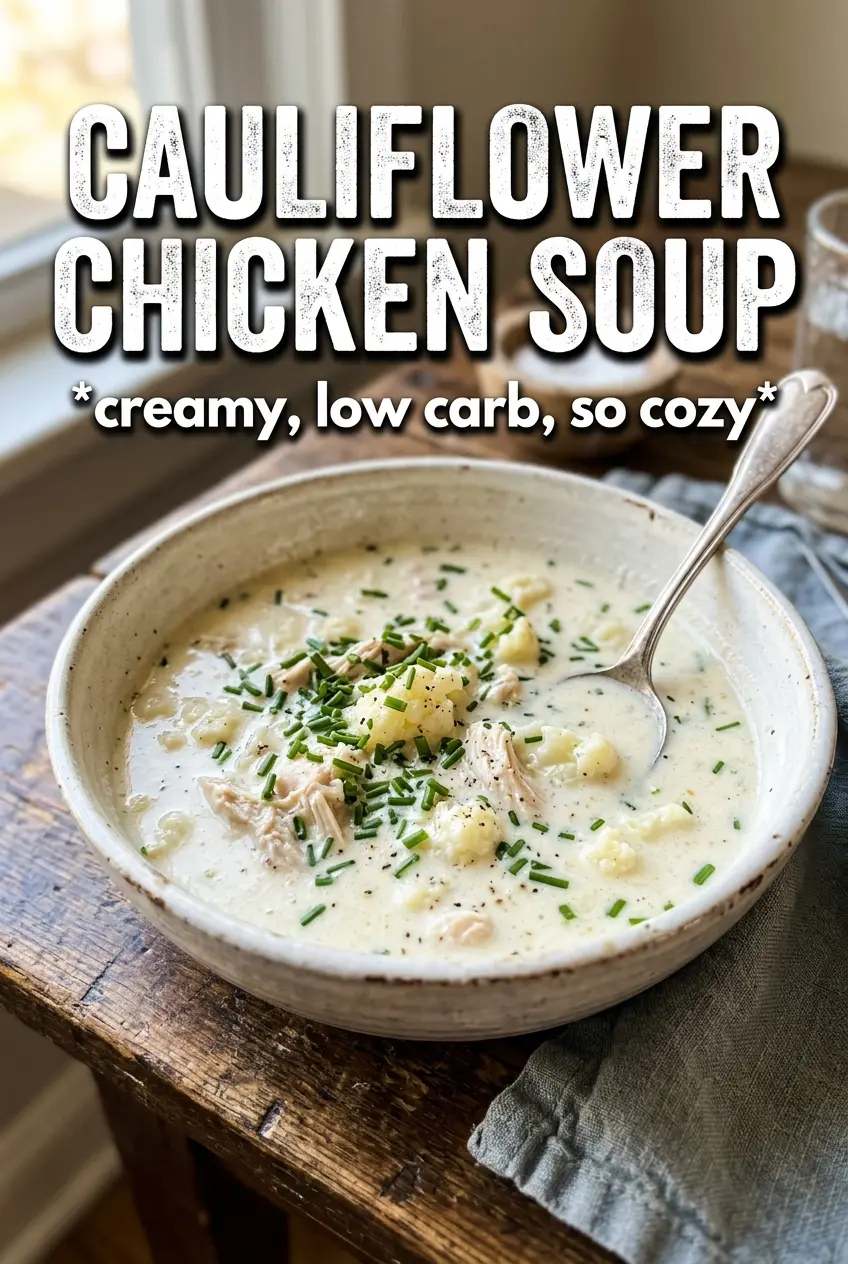
Cauliflower chicken soup lands in that comforting middle ground between hearty and light: creamy enough to feel like a bowl of supper, but not so heavy that you need a nap after it. The cauliflower softens into the broth and gives the soup body without making it gluey, while the chicken stays tender and the cheddar melts in with just enough sharpness to keep each spoonful interesting.
What makes this version work is the balance of texture. Blending only part of the soup gives you a naturally thick base while keeping some cauliflower florets intact, so the bowl still eats like a soup instead of a puree. A little smoked paprika adds warmth without turning the broth spicy, and the cream goes in at the end so it stays smooth instead of separating.
Below you’ll find the exact point where you want the cauliflower fully tender, how much to blend for the best texture, and the small finishing step that keeps the cheese silky. Those details matter here.
The cauliflower got perfectly tender and blending just half of it made the soup creamy without losing the little chunks. I also loved that the cheddar stayed smooth when I stirred it in off the heat.
Save this cauliflower chicken soup for a creamy, chunky bowl that finishes with melted cheddar and fresh chives.
The Trick to Keeping This Soup Creamy Without Turning It Heavy
The biggest mistake with cauliflower soup is trying to make it smooth from the start. Once you overblend the whole pot, it can turn past creamy and land in that thick, pasty zone that feels dull instead of comforting. This soup works because the cauliflower breaks down enough to thicken the broth naturally, but a few florets stay intact for texture and contrast.
The other thing that matters is heat. Add the cream after the cauliflower is tender and the soup is at a gentle simmer, not a hard boil. If the pot is roaring when the cheddar goes in, the cheese can turn grainy and the dairy can lose its silky finish. Pulling the soup back to low heat keeps everything smooth.
- Chicken breast — Dicing it before it goes in helps it cook fast and stay tender. If you use leftover chicken, add it near the end just long enough to warm through.
- Cauliflower — Fresh florets hold their shape better than frozen and give the best texture after partial blending. Frozen works in a pinch, but the soup will be a little softer.
- Heavy cream — This is what gives the soup its rounded finish. Half-and-half can work, but it won’t taste as lush and it is more likely to curdle if the heat is too high.
- Cheddar — Use freshly shredded cheese if you can. Pre-shredded cheese contains anti-caking agents that don’t melt as smoothly.
What Each Ingredient Is Actually Doing in This Recipe

- Primary ingredient (the star) — Quality matters most. Choose the best you can find.
- Cooking medium (oil, butter, or broth) — This carries flavors and prevents dryness.
- Seasonings (salt, pepper, spices, herbs) — Layer flavors so nothing overpowers. Build depth gradually.
- Aromatics (garlic, onion, herbs) — Cook with fat to bloom flavors. Become the foundation.
- Supporting ingredients — Complement the main ingredient without overpowering it.
- Sauce or liquid (if applicable) — Brings flavors together. Balance richness with acid.
- Acid (lemon, vinegar, wine, or other) — Brightens and prevents flat-tasting results.
- Final finish (garnish, glaze, or sauce) — Prevents one-dimensional taste and adds visual appeal.
What Each Stage Is Doing in the Pot
Softening the Onion and Garlic
Start with the butter, onion, and garlic and cook them until the onion turns translucent and the kitchen smells sweet, not sharp. If the garlic browns, it will turn bitter fast, so keep the heat at medium and stir often. This step builds the base of the soup, and skipping it leaves the broth flat.
Cooking the Chicken in the Base
Add the diced chicken and let it lose its pink color on the outside before the broth goes in. You are not trying to brown it deeply here; you just want the pieces to firm up so they keep their shape. If the pan looks dry, the butter left from the onions is enough, but if your pot runs hot, a splash of broth keeps the chicken from sticking.
Simmering Until the Cauliflower Gives In
Once the broth, cauliflower, garlic powder, and smoked paprika are in, bring the pot to a boil and then drop it to a steady simmer. The cauliflower should become very tender, almost collapsing when pressed with a spoon. If the florets are still firm, the blender won’t give you that naturally creamy texture, so give them the full time.
Blending Only Half the Pot
Use an immersion blender to blend about half the soup, leaving visible chunks of chicken and cauliflower behind. That balance is what gives the bowl body without making it feel like puree. If you do not have an immersion blender, scoop a few cups into a standard blender and return it to the pot, but don’t blend the whole batch unless you want a much thicker soup.
Finishing With Cream and Cheddar
Stir in the cream first, then bring the soup back to a gentle simmer before adding the cheddar. The cheese should melt in slowly as you stir; if the soup is boiling, it can turn gritty. Taste at the end and season well with salt and pepper, because the broth and cheese need that final adjustment to wake up.
How to Adapt This Bowl for Different Kitchens and Different Nights
Dairy-Free Version
Swap the butter for olive oil and use full-fat coconut milk or an unsweetened dairy-free cream in place of the heavy cream. Skip the cheddar unless you have a dairy-free melting cheese you trust, because many of them can get stringy instead of silky. The soup will still be rich, but it will lean lighter and a little less sharp.
Extra Thick and Hearty
Blend a little more of the soup if you want it to eat like a stew, or simmer it uncovered for a few extra minutes before adding the cream. That reduces the broth and concentrates the cauliflower flavor. Just don’t boil it hard after the cheese goes in or the texture can turn grainy.
Lower-Carb, Higher-Protein Lunch Bowls
Keep the recipe as written and add a little extra diced chicken for a more filling bowl. Cauliflower already keeps the carb count lower than a potato-based soup, so the easiest way to boost staying power is more chicken, not more starch. A sprinkle of cheddar on top helps it feel complete without changing the texture in the pot.
Storage and Reheating
- Refrigerator: Store for up to 4 days. The soup thickens as it chills, so expect a denser texture the next day.
- Freezer: It freezes, but the cream and cheddar can separate a little after thawing. Freeze before adding the dairy for the best results, then finish with cream and cheese when reheating.
- Reheating: Warm it slowly over low heat and stir often. If you crank the heat, the dairy can break and the cheese can go grainy, especially after refrigeration.
Questions I Get Asked About This Recipe
Cauliflower Chicken Soup
Ingredients
Equipment
Method
- Melt the unsalted butter in a large pot over medium heat; then sauté the onion for 4 minutes until softened, with a gentle sizzling sound.
- Add the minced garlic and cook for 1 minute, stirring constantly until fragrant (about the time the aroma noticeably intensifies).
- Add the diced chicken breast and cook for 4-5 minutes, stirring occasionally until the outside turns opaque.
- Add the chicken broth, cauliflower florets, garlic powder, and smoked paprika; stir to combine and scrape up any browned bits.
- Bring to a boil, then reduce to a simmer and cook for 15-18 minutes until the cauliflower is very tender, looking fork-tender and easily crushed.
- Using an immersion blender, blend about half the soup until smoother while leaving some cauliflower chunks for texture (visual cue: mixture turns partially creamy, not fully smooth).
- Stir in the heavy cream and return to a gentle simmer, keeping it at a steady low bubble rather than a hard boil (about 1-2 minutes to reheat).
- Stir in the shredded cheddar and cook until melted, then season with salt and pepper to taste, until the soup looks glossy and cohesive.
- Ladle into bowls and top with extra cheddar and chives, letting the cheddar melt slightly from the hot soup.