Penne coated in a rusty-red Cajun cream sauce with blackened chicken and sweet peppers is the kind of dinner that disappears fast and still feels worth repeating. The sauce clings to every ridge of the pasta, the chicken stays juicy under that deep seasoned crust, and the bell peppers keep the whole dish from tasting heavy. It’s bold without being fussy, which is exactly why it earns a place in the regular rotation.
What makes this version work is the sequence. The chicken gets a hard sear first so you build a dark, savory base in the pan, then the peppers soften in those same browned bits before the cream goes in. Parmesan thickens the sauce without making it gluey, and a little reserved pasta water gives you control at the end if the pan tightens up more than you want.
If you’ve ever had Cajun pasta turn gritty, thin, or oddly flat, the details below will help you avoid that. There’s a useful note on heat control, a few smart swaps, and the handful of small things that make the sauce stay smooth.
The chicken got that deep blackened crust without drying out, and the sauce coated the penne perfectly after I added a splash of pasta water. My husband went back for seconds and asked if I could make it again next week.
Save this creamy Cajun chicken pasta for the nights when you want blackened chicken, a silky parmesan sauce, and dinner on the table fast.
The One Pan Trick That Keeps Cajun Cream Sauce Smooth
The biggest mistake with Cajun pasta is rushing the cream sauce over heat that’s too high. Once the chicken is out, the pan needs a moment for the temperature to drop before the dairy goes in. That keeps the cream from tightening too fast and helps the parmesan melt into the sauce instead of turning grainy.
Those browned bits left from the chicken are part of the flavor here, so don’t scrub the skillet clean. The peppers soften in that same pan and pick up the seasoning from the leftover spice and chicken drippings, which is why the sauce tastes layered instead of flat. If the sauce looks thin at first, let it simmer a few minutes before deciding it needs help. It usually does its thickening slowly, and that’s what you want.
What Each Ingredient Is Actually Doing in This Pasta
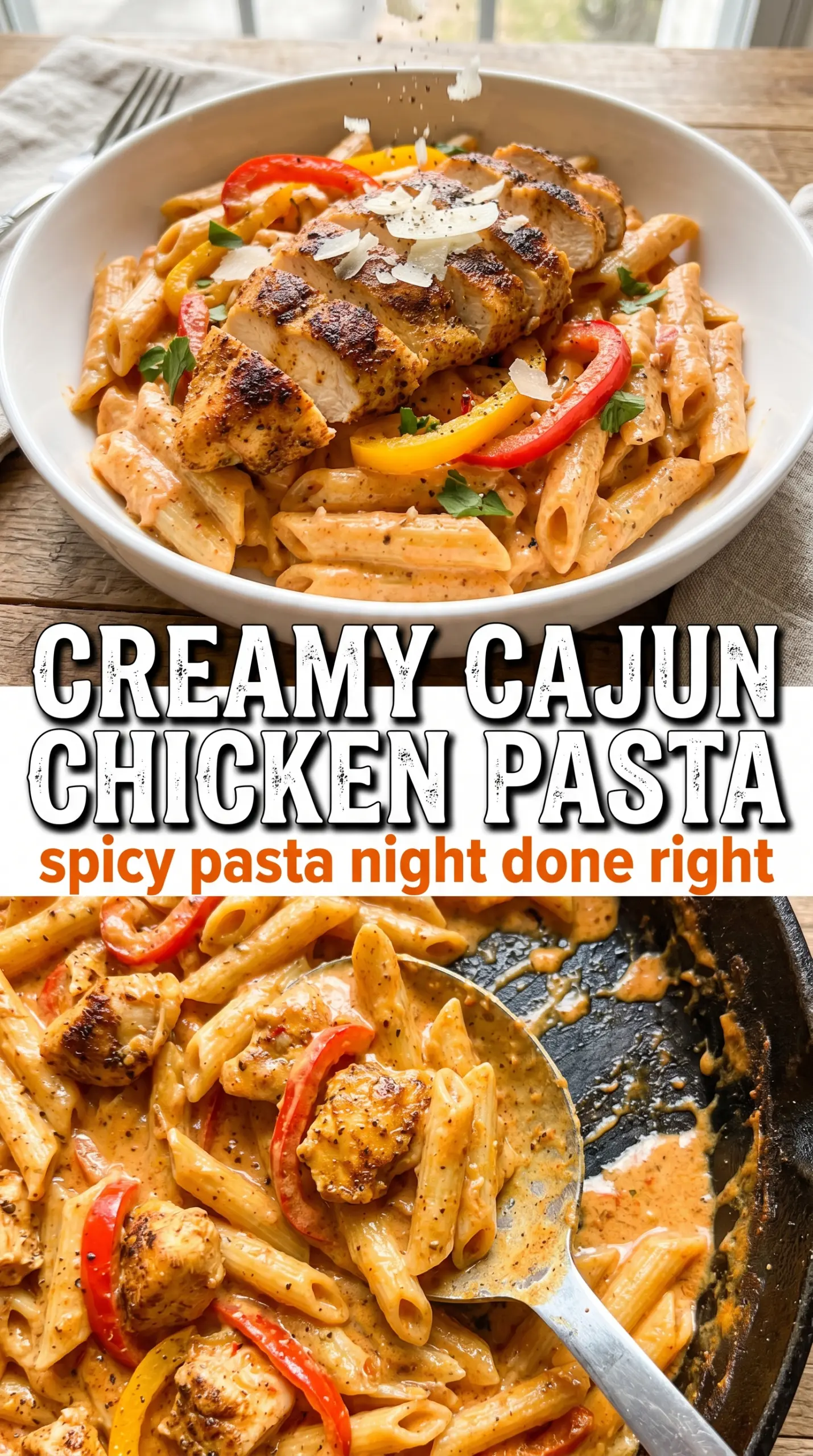
- Chicken breast — Slicing it into strips gives you faster, more even searing and keeps the meat tender. If you use thicker pieces, the outside will overcook before the center is done.
- Cajun seasoning — This is the backbone of the dish, so use one you actually like the flavor of. Some blends are saltier than others, which is why the recipe waits until the end for extra salt instead of adding it early.
- Penne — The ridges hold onto the sauce better than smooth pasta. Rigatoni or rotini can work too, but thin noodles won’t catch the cream sauce the same way.
- Heavy cream — This gives you the silky body that makes the sauce coat instead of puddle. Half-and-half can work in a pinch, but the sauce will be looser and a little less rich.
- Parmesan — Use finely grated parmesan so it melts cleanly. Pre-shredded cheese often has anti-caking agents that can make the sauce feel sandy.
- Bell peppers — They add sweetness and give the dish a little snap under all that cream. Red and yellow peppers work best here because they soften and sweeten without turning bitter.
Building the Sauce After the Chicken Gets Its Crust
Searing the Chicken Hard Enough
Toss the chicken with half the Cajun seasoning, then spread it in a hot skillet with olive oil. You want a deep brown crust, almost blackened in spots, and the chicken should release from the pan when it’s ready to turn. If it sticks, it needs another minute; forcing it will tear off the crust before it has a chance to form. Pull it out as soon as it’s cooked through so it stays juicy while you finish the sauce.
Softening the Peppers Without Losing Their Bite
Melt the butter in the same pan and add the sliced peppers. They should sizzle right away and soften at the edges while still holding their shape in the center. Once the garlic and remaining Cajun seasoning go in, stir only long enough for the garlic to smell fragrant, about a minute. Garlic burns fast in butter, and burnt garlic will take the whole sauce with it.
Finishing the Cream Sauce and Pasta
Pour in the broth and cream, then let the sauce simmer until it lightly coats a spoon. Stir in the parmesan off the hottest part of the burner so it melts smoothly. Add the pasta and chicken back in, then loosen everything with a splash of reserved pasta water if needed. The sauce should cling to the penne and move slowly across the pan, not sit watery at the bottom.
How to Adjust This Pasta Without Losing the Creamy Cajun Feel
Make it dairy-free with coconut cream
Swap the heavy cream for full-fat coconut cream and use a dairy-free parmesan alternative or skip the cheese entirely. The sauce will still be rich, but it’ll pick up a faint coconut note and won’t taste quite as sharp or savory without the parmesan.
Use shrimp instead of chicken
Shrimp works well if you want a faster version, but it cooks in just a few minutes, so it needs to come out of the pan as soon as it turns pink and opaque. It brings a sweeter seafood flavor that plays nicely with the Cajun seasoning, though the dish will feel lighter than the chicken version.
Make it gluten-free with the right pasta
Use a sturdy gluten-free penne and cook it just to al dente, since gluten-free pasta can go soft fast once it sits in the sauce. Keep a little extra pasta water nearby because GF pasta often needs more help loosening the sauce at the end.
Add extra vegetables without watering it down
Mushrooms or spinach fit naturally here, but cook the mushrooms until their liquid evaporates and wilt the spinach at the very end. If you add watery vegetables too early, they dilute the sauce and keep it from clinging to the pasta the way it should.
Storage and Reheating
- Refrigerator: Store leftovers in an airtight container for up to 3 days. The sauce will thicken as it chills, and the pasta will absorb some of it.
- Freezer: Freezing isn’t ideal because cream sauces can separate and the pasta softens. If you must freeze it, cool it completely first and reheat gently after thawing.
- Reheating: Warm it in a skillet over low heat with a splash of broth or cream. High heat is what usually breaks the sauce, so go slowly and stir often until it loosens again.
Answers to the Questions Worth Asking
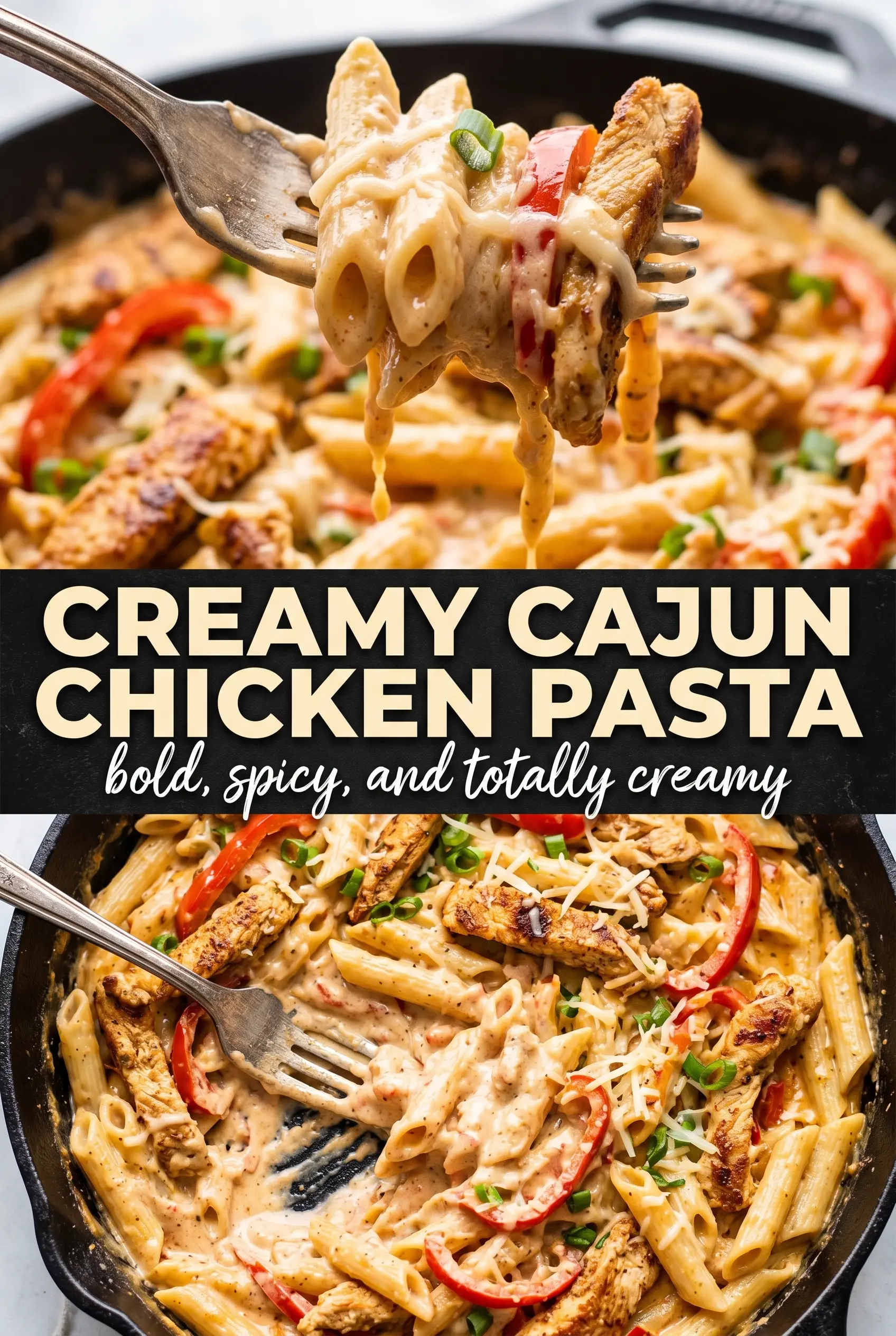
Creamy Cajun Chicken Pasta
Ingredients
Equipment
Method
- Bring a large pot of salted water to a boil, then cook penne until al dente. Reserve 1/2 cup pasta water, drain, and set aside.
- Toss the chicken strips with 1 tablespoon of the Cajun seasoning. Heat the olive oil in a large skillet over high heat, then sear the chicken for 4–5 minutes until deeply blackened and cooked through, and set aside.
- Melt the butter in the same skillet. Sauté the bell peppers for 3–4 minutes, add the garlic and the remaining Cajun seasoning, and cook for 1 minute.
- Add the chicken broth and heavy cream, then simmer for 4–5 minutes until slightly thickened. Stir in the parmesan until melted.
- Add the drained pasta and the reserved chicken back to the skillet, then toss to coat in the sauce. Add pasta water as needed so every piece looks glossy and sauce clings.
- Serve immediately, topped with fresh parsley.