Cranberry orange relish hits that sweet-tart middle ground that cuts through rich food better than almost any other holiday side. It stays bright, crunchy, and lively instead of turning into a jammy sauce, and that texture is exactly why people go back for another spoonful. The raw fruit keeps its edge, while the sugar draws out enough juice to bind everything together without cooking away the fresh orange flavor.
The trick is pulsing the cranberries and orange just enough to chop them finely without turning them into paste. A whole, seeded orange brings the peel, juice, and pulp together in one move, which gives the relish its bold citrus bite. The sugar needs time to dissolve and mellow the tartness, so the chill time matters just as much as the mixing.
Below, you’ll find the one detail that keeps the texture clean instead of mushy, plus a few smart swaps if you want to dial the sweetness or skip the liqueur.
I loved that the relish stayed bright and chunky after chilling overnight. The orange zest came through, and it was perfect with turkey the next day.
Cranberry orange relish gets its best texture after a long chill, so this is the one to make ahead for bright, chunky holiday flavor.
The Reason Raw Cranberries Need Time, Not Heat
Raw cranberry relish can taste sharp and disjointed right after mixing. The sugar hasn’t had time to pull juices from the fruit yet, so the texture feels dry and the citrus can seem harsh. After a few hours in the fridge, the cranberries soften just enough to hold together, and the orange mellows into the mix instead of sitting on top of it.
The other thing that matters here is the chop. If you puree the fruit, you lose the clean, confetti-like texture that makes relish different from sauce. If the pieces are too large, the sugar won’t distribute evenly and every bite will feel different. Finely chopped but not mashed is the sweet spot.
What Each Ingredient Is Actually Doing in This Relish

- Fresh cranberries — These bring the tart backbone and the poppy texture. Frozen cranberries work too if you thaw and drain them first, but fresh ones keep a firmer bite and a cleaner color.
- Navel orange, unpeeled — The peel adds perfume and a faint bitterness that keeps the relish from tasting flat. Seed it well before chopping, because stray seeds can make the texture gritty.
- Sugar — This isn’t just for sweetness. It draws out liquid, rounds the cranberry tartness, and creates the glossy spoonable texture after chilling. You can reduce it a little, but too much reduction leaves the relish harsh and dry.
- Orange liqueur or orange juice — Liqueur adds a deeper citrus note and a little warmth; juice keeps it bright and family-friendly. Either way, that small splash helps the sugar dissolve and loosens the mixture just enough to settle into the fridge.
- Fresh mint — Use it as garnish, not a main flavor. It gives the bowl a fresh aroma right at serving and makes the relish look fresher than it tastes on its own.
Chopping, Chilling, and Knowing When It’s Ready
Pulse the Fruit to the Right Size
Add the cranberries and orange chunks to a food processor and pulse in short bursts. Stop as soon as everything looks finely chopped with no big chunks left; you want distinct bits, not a wet purée. If you keep going after it looks chopped, the orange peel breaks down too far and the relish turns muddy.
Mix Before the Sugar Starts Clumping
Transfer the chopped fruit to a bowl and stir in the sugar, orange liqueur or juice, and salt right away. The mixture will look dry at first, then loosen as the sugar starts pulling out moisture. If you wait too long before mixing, the fruit settles in the processor bowl and you lose the even distribution that makes every spoonful taste balanced.
Let the Fridge Do the Work
Cover the bowl and chill it for at least 4 hours, or overnight if you can. This is where the flavor settles and the juices turn glossy. Stir it once or twice if you think of it, but the main goal is time; serving it too soon gives you sharp fruit and a sandy texture, while the rested version tastes cohesive and clean.
Finish With a Fresh Stir and Mint
Before serving, stir the relish well so the syrupy juices move back through the chopped fruit. Taste it at this point if you want to check the balance; a little more sugar can soften a particularly tart batch of cranberries. Spoon it into a bowl and top with mint right before it hits the table so the garnish stays bright.
How to Adjust the Sweetness, Citrus, and Texture Without Losing the Point
Make it less sweet without making it harsh
Cut the sugar back by 1/4 cup if you like a sharper relish, but don’t go much farther unless your orange is unusually sweet. Too little sugar leaves the cranberries biting and the juices thin instead of glossy. If you want a lighter finish, add a little extra orange juice after chilling instead of stripping out all the sugar up front.
Skip the liqueur and keep the citrus bright
Orange juice works perfectly here if you want a non-alcoholic version. The flavor will be a little cleaner and less rounded, so use the orange zest from the peel to keep the aroma up. The texture stays the same as long as you keep the liquid amount close.
Use frozen cranberries when fresh aren’t available
Frozen cranberries can go straight into the food processor, but if they’re clumped together, break them up first so the chop stays even. The flavor is still good, though the finished relish may release a little more liquid as it sits. If that happens, give it a stir before serving and let the extra juice coat the fruit.
Storage and Reheating
- Refrigerator: Store covered for up to 5 days. It gets a little juicier as it sits, which is normal.
- Freezer: It freezes well for up to 2 months, though the texture softens after thawing. Thaw in the refrigerator and stir before serving.
- Reheating: No reheating needed. Serve it chilled or at cool room temperature; heat will flatten the bright citrus flavor and soften the fruit too much.
Answers to the Questions Worth Asking
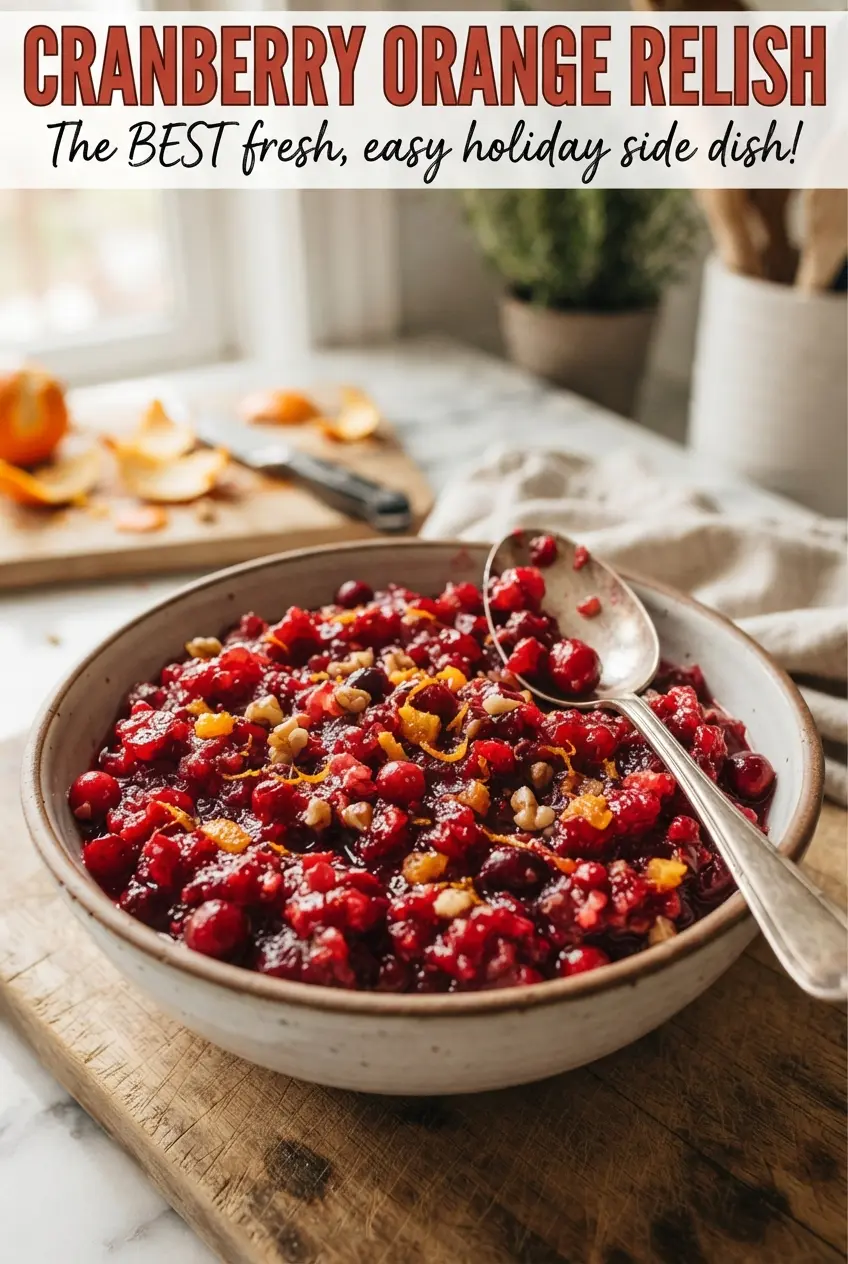
Cranberry Orange Relish
Ingredients
Equipment
Method
- Pulse the fresh cranberries and the unpeeled orange chunks in a food processor until finely chopped but not pureed, stopping to scrape down if needed.
- Transfer the mixture to a bowl, then stir in the sugar, orange liqueur or orange juice, and salt until evenly combined.
- Cover and chill for 4 hours or overnight in the refrigerator to let the relish thicken and the flavors meld.
- Stir well before serving so the citrus juices and sugar distribute evenly.
- Garnish with fresh mint and serve chilled or at cool room temperature.