Coconut chicken rice bowls land in that sweet spot between fast and satisfying: tender chicken, a silky coconut sauce, and bright toppings that keep every bite from feeling heavy. The sauce coats the rice instead of pooling around it, and the whole bowl comes together with enough color and contrast that it feels like an actual meal, not a last-minute patchwork dinner.
The key is searing the chicken first and building the sauce in the same pan. That gives you the browned bits that make the coconut milk taste fuller, and it keeps the sauce from tasting flat. A little turmeric brings warmth and color, while lime juice and mango salsa cut through the richness so the bowl stays fresh from the first bite to the last.
Below, I’ve included the timing cue that keeps the sauce from turning watery, plus the swaps that still give you a good bowl when you’re missing one of the toppings.
The coconut sauce thickened up beautifully and clung to the chicken instead of turning soupy. I added extra lime at the end and the mango on top made the whole bowl pop.
Like this coconut chicken rice bowl? Save it for the nights when you want a creamy, bright dinner with jasmine rice, mango salsa, and almost no cleanup.
The Reason the Sauce Stays Creamy Instead of Breaking
The mistake most people make with coconut milk chicken is boiling the sauce hard after the chicken goes back in. Coconut milk can separate if you blast it with heat, and once it looks grainy, there’s no fixing it back into the same smooth texture. A gentle simmer is enough to reduce the sauce and concentrate the flavor without stripping out the creaminess.
Seared chicken helps here too. Those browned bits left in the pan dissolve into the sauce and give it depth without needing extra ingredients. If the pan looks dry after the chicken comes out, that’s a good thing — the coconut milk is about to pick up all that flavor from the bottom.
What Each Ingredient Is Actually Doing in the Bowl
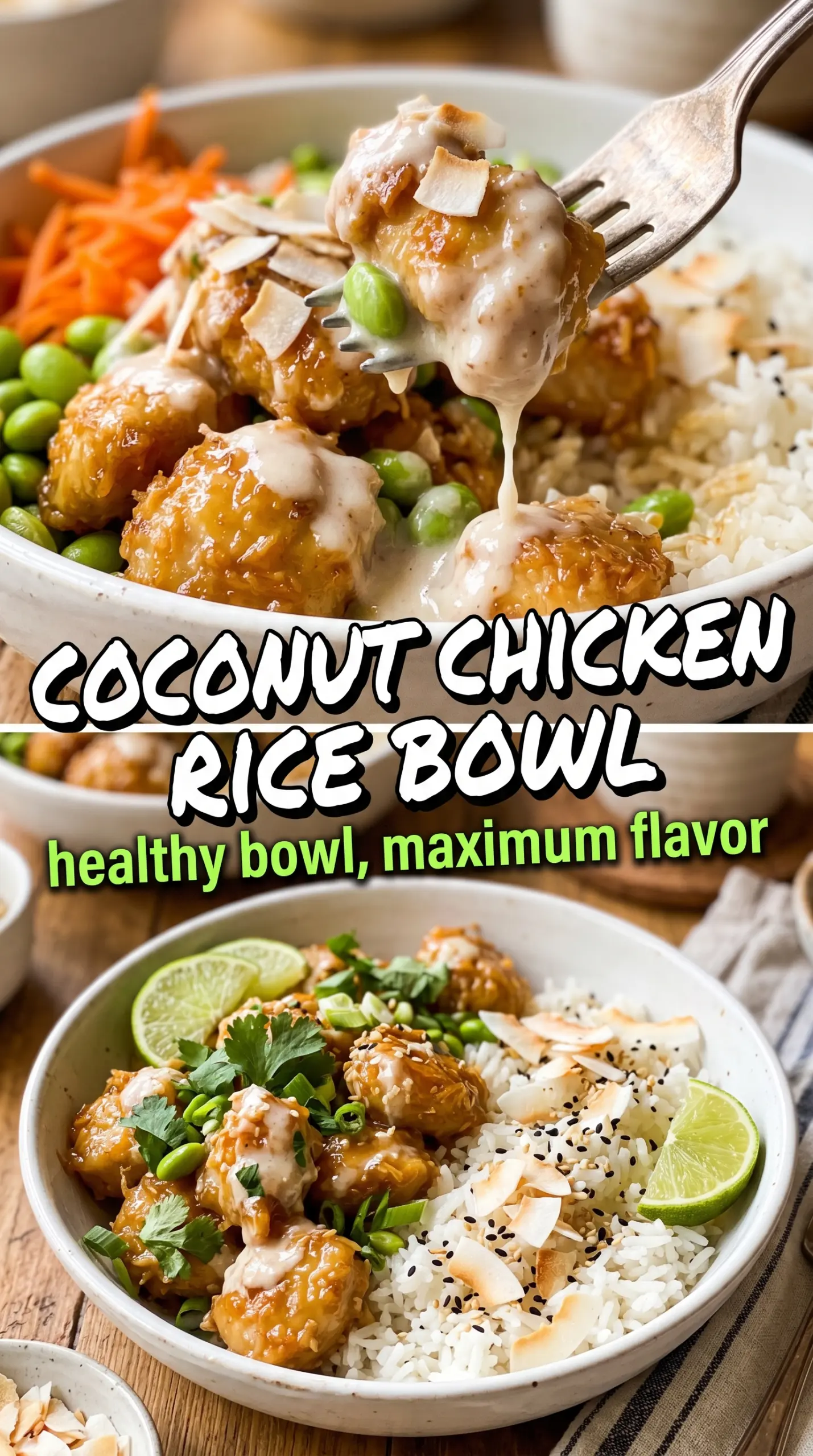
- Chicken breast — Bite-sized pieces cook quickly and stay tender as long as you pull the pan off the heat when the centers are just cooked through. Thighs work too if you want a richer result and a little more forgiveness.
- Coconut milk — Full-fat coconut milk gives the sauce its body and keeps it from tasting thin. Light coconut milk will work in a pinch, but the sauce won’t cling to the rice the same way.
- Red curry paste — You only need a teaspoon here, but it adds warmth and a little backbone under the coconut. If yours is very salty or spicy, start with half and taste before adding more.
- Lime juice and mango salsa — These are what keep the bowl from feeling heavy. The lime sharpens the sauce, and the mango adds sweet, juicy contrast that makes the coconut flavor taste brighter.
- Jasmine rice — This is the base that soaks up the sauce best. Long-grain white rice works if that’s what you have, but jasmine gives you the soft, fragrant texture that fits this bowl.
How to Build the Bowl So the Sauce Clings to Every Bite
Getting a Real Sear on the Chicken
Heat the oil until it shimmers before the chicken goes in, then leave the pieces alone long enough to pick up color. If you stir too early, the chicken steams and you lose the browned surface that gives the whole dish its flavor base. You’re looking for golden edges and a pan with sticky browned bits, not pale chicken floating in its own moisture. The chicken doesn’t need to be cooked through at this stage; it finishes in the sauce later.
Building the Coconut Sauce in the Same Pan
Add the garlic and ginger after the chicken comes out and stir for about a minute, just until they smell sharp and fragrant. Then pour in the coconut milk, soy sauce, lime juice, honey, turmeric, and curry paste, scraping the bottom of the pan as you go. That scrape matters because it lifts all the flavor from the sear into the sauce. Bring it to a simmer, not a boil, or the coconut milk can turn oily around the edges.
Reducing Without Overcooking the Chicken
Return the chicken to the pan and let it simmer for 10 to 12 minutes, stirring now and then, until the sauce thickens slightly and coats the spoon. If the sauce still looks thin at the end, let it go another minute or two; if it gets too tight, splash in a spoonful of water or broth. The chicken should be opaque all the way through but still juicy when you cut it open. Overcooked chicken breast gets stringy fast, so pull it as soon as it’s done.
Finishing the Bowl
Spoon the chicken and sauce over warm jasmine rice, then add cilantro, mango salsa, and lime wedges at the table. The hot rice catches the sauce, and the cold salsa keeps the bowl from feeling one-note. Add the lime right before eating so the top layer stays bright instead of muddy. A final squeeze is what makes the coconut and turmeric taste alive.
Ways to Adjust This Coconut Chicken Rice Bowl Without Losing the Balance
Dairy-Free and Naturally Gluten-Free
As written, this bowl is already dairy-free, and it can be gluten-free if you use a gluten-free soy sauce or tamari. The texture stays the same, so this is an easy place to accommodate both needs without changing the finished dish.
Swap the Chicken for Shrimp
Shrimp works well if you want a faster version, but it only needs a few minutes in the sauce at the end. Add it after the coconut milk mixture has simmered for a minute or two, then cook just until pink and curled. If you add shrimp too early, it turns rubbery before the sauce is done.
Use Chicken Thighs for a Richer Bowl
Boneless thighs bring a little more richness and stay tender even if you simmer a minute too long. They take about the same amount of time, but they’ll give you a softer, more succulent bite and a slightly deeper pan sauce.
Storage and Reheating
- Refrigerator: Store the chicken and sauce for up to 4 days. The sauce thickens as it chills, so it may look tighter the next day.
- Freezer: Freezes well for up to 2 months. Cool it fully first and freeze the chicken and sauce separately from the rice if you want the best texture.
- Reheating: Warm gently on the stove or in the microwave with a splash of water to loosen the sauce. Don’t boil it hard, or the coconut milk can separate and the chicken will dry out.
Answers to the Questions Worth Asking
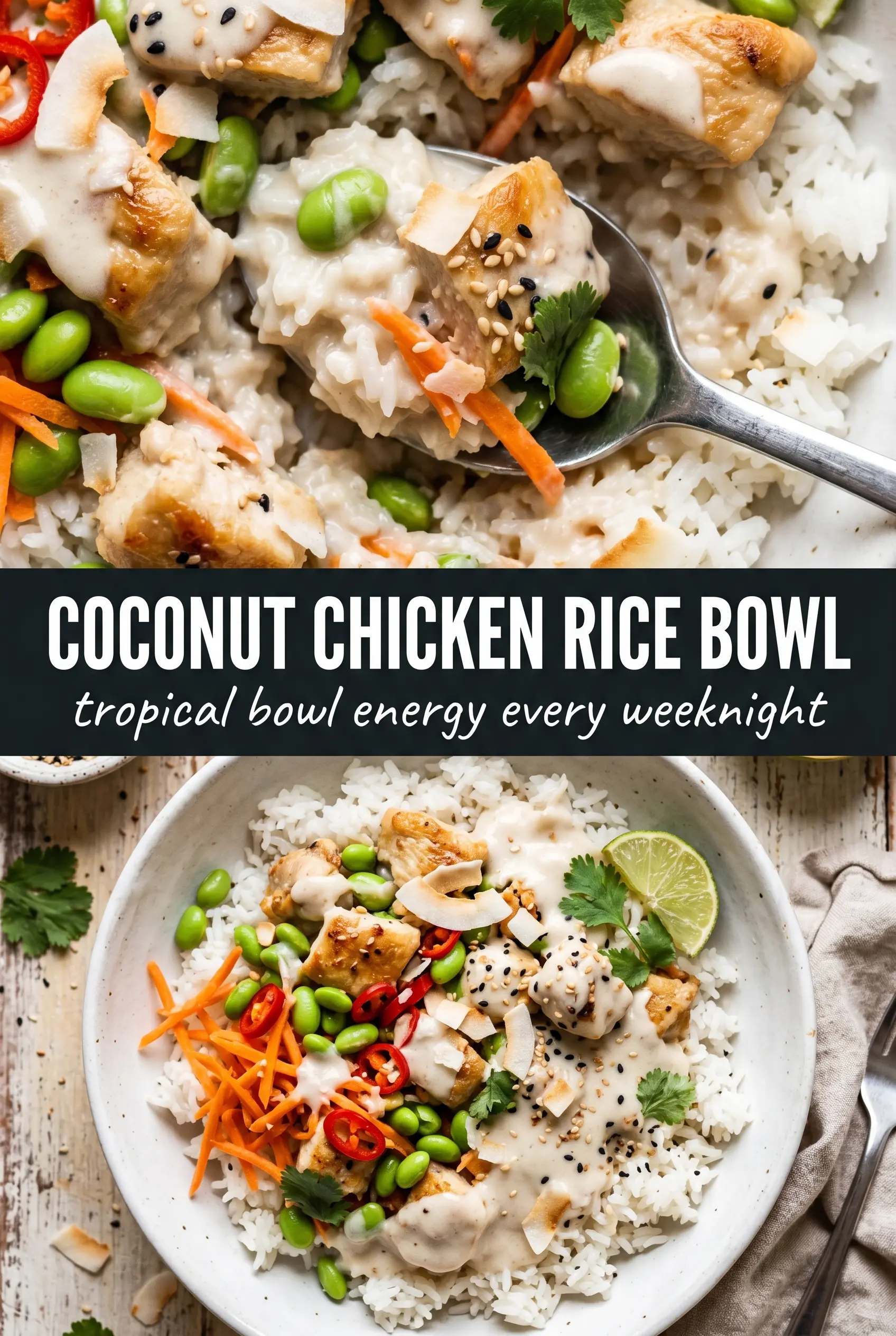
Coconut Chicken Rice Bowl
Ingredients
Equipment
Method
- Season the chicken pieces with salt and pepper, then heat oil in a skillet over high heat. Sear for 4–5 minutes until the chicken is golden, then set it aside.
- In the same pan, sauté the garlic and ginger for 1 minute, stirring until fragrant. Keep the heat high enough to prevent browning.
- Add coconut milk, soy sauce, lime juice, honey, turmeric, and red curry paste to the pan. Stir well so the curry paste fully dissolves.
- Bring the sauce to a simmer, then return the seared chicken to the pan. Adjust the heat to maintain a steady bubbling simmer.
- Simmer for 10–12 minutes, stirring occasionally, until the sauce reduces and thickens slightly and the chicken is cooked through. The chicken should be opaque with no pink in the center.
- Spoon the coconut chicken over cooked jasmine rice in bowls. Top with mango salsa, fresh cilantro, and lime wedges for serving.