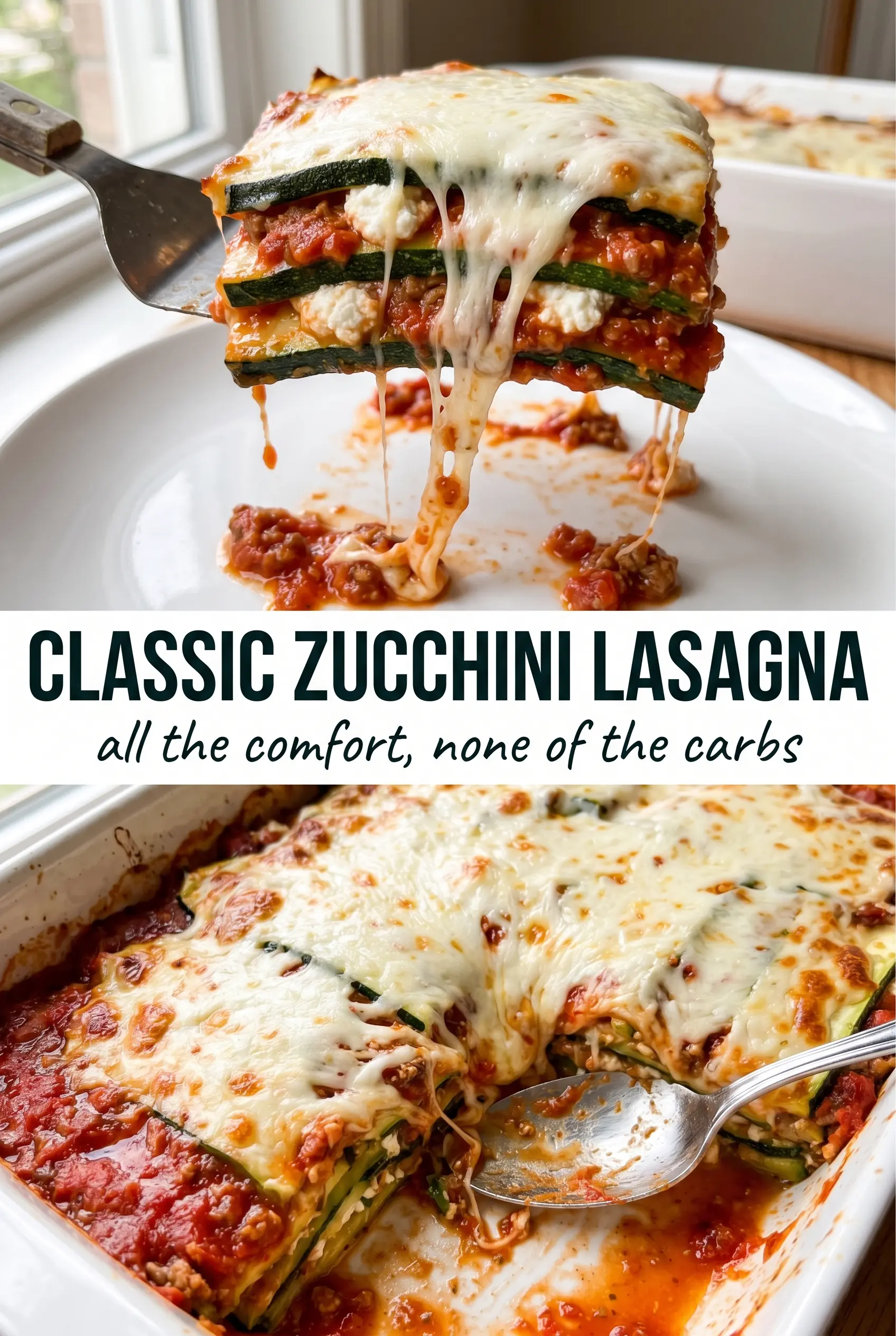
Classic zucchini lasagna earns its place on the table because it delivers those sturdy, cheesy layers people want from lasagna without turning into a watery casserole. The zucchini softens just enough to stand in for noodles, but it still holds its shape, so each slice comes out with a clean edge instead of collapsing into the pan. The meat sauce stays rich, the ricotta layer stays creamy, and the mozzarella browns on top the way it should.
The trick is treating the zucchini like a vegetable with a lot of water to give up, because that’s exactly what it is. Salted slices sit long enough to draw out moisture, then they get dried and briefly roasted so they don’t flood the baking dish later. That extra step is what separates a neat, layered lasagna from one that puddles on the plate.
Below, I’ll walk through the parts that matter most: how to keep the zucchini from getting soggy, what each cheese layer is doing, and the small timing details that help this lasagna slice cleanly after baking.
The zucchini layers held up beautifully and the lasagna sliced clean after resting. I was skeptical about the extra roasting step, but it kept the bottom from getting watery and the ricotta stayed creamy instead of sliding around.
Save this zucchini lasagna for the night you want big lasagna layers without the noodle mess.
The Zucchini Trick That Keeps This Lasagna From Going Watery
The biggest mistake with zucchini lasagna is treating the squash like pasta and skipping the moisture control. Zucchini holds a lot of water, and once it hits the oven, that water has to go somewhere. If you don’t pull it out first, it leaks into the ricotta and meat sauce, and the whole pan turns loose before it has a chance to set.
That’s why this recipe uses two safeguards. The salt draw helps pull moisture from the slices before they ever meet the sauce, and the brief roast or grill dries the surface even more. You’re not trying to fully cook the zucchini. You’re just reducing the water content enough that the lasagna can bake into clean layers.
- Zucchini planks — Slice them lengthwise into even 1/4-inch planks so they stack neatly and cook at the same rate. Thicker slices stay too firm; thinner ones can disappear into the filling.
- Salt — This isn’t for seasoning alone. It pulls water out, which is the whole reason the layers stay distinct.
- Foil-covered baking — The covered bake keeps the top from browning too fast before the middle is hot. The final uncovered stretch is what gives you that browned, bubbling finish.
What Each Ingredient Is Actually Doing in This Dish
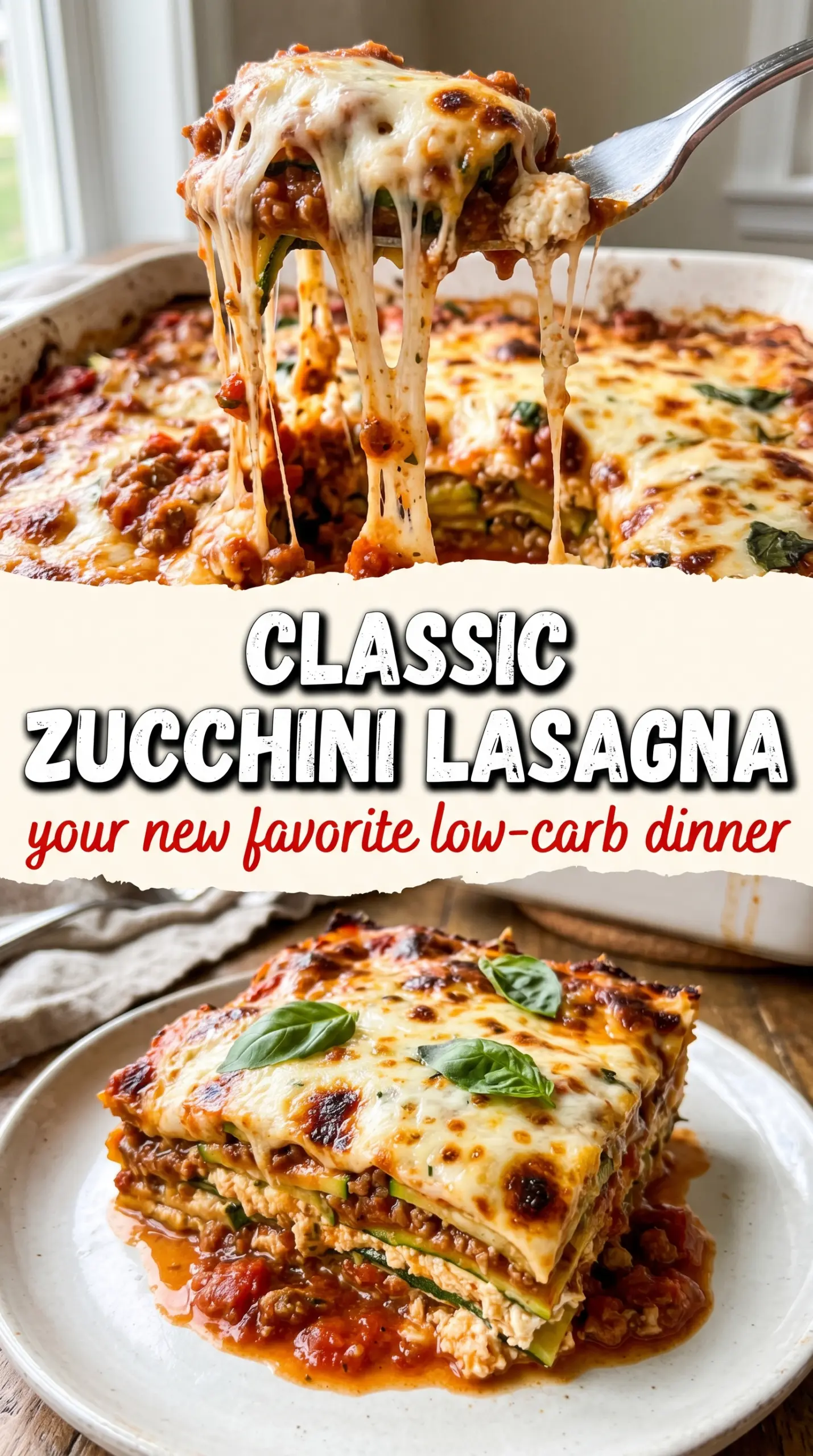
- Ground beef or Italian sausage — Beef gives you a clean, classic meat sauce. Italian sausage brings more seasoning and a little extra richness, so use it if you want the filling to taste deeper without adding much else.
- Marinara sauce — A jarred marinara works fine here as long as it tastes balanced on its own. If it’s overly sweet, the lasagna can lose that savory edge, so choose one you’d actually eat straight from the jar.
- Ricotta — This is the creamy layer that gives the lasagna its structure. Mixing it with egg and parmesan helps it set instead of oozing out when you cut the pan.
- Mozzarella — Shredded mozzarella melts into that stretchy top layer everyone expects. Buy a block and grate it if you can, since pre-shredded cheese often melts a little less smoothly.
- Parmesan and parsley — Parmesan sharpens the ricotta mixture and the finish on top, while parsley keeps the cheese layer from tasting flat. Fresh basil at the end adds a clean, herbal note that cuts through the richness.
Building the Layers So the Center Stays Set
Drying the Zucchini First
Salt the zucchini planks and let them sit long enough to bead up moisture on the surface. Pat them dry until they no longer feel slick, because any water left behind ends up inside the lasagna. The short oven roast or grill takes that a step further and gives the zucchini a firmer, more lasagna-friendly texture.
Cooking the Meat Sauce Down
Brown the meat with the onion until the onion looks soft and the meat has real color, not just gray steam. Drain the fat before adding the garlic, marinara, and seasoning so the sauce stays balanced instead of greasy. Let it simmer until it thickens slightly; a loose sauce is fine for pasta, but here it makes the casserole slide apart.
Stacking and Resting
Layer a thin base of sauce first, then zucchini, ricotta, sauce, and mozzarella. Repeat with purpose, not haste, and finish with sauce and cheese on top so the exposed edges don’t dry out. After baking, let the pan rest for the full 15 minutes. If you cut too soon, the filling will rush out before it has time to settle.
How to Adapt This for Different Tables and Different Pan Sizes
Make It with Italian Sausage for a Stronger Savory Finish
Swap the ground beef for Italian sausage if you want a fuller, more seasoned sauce without adding extra spices. Mild sausage keeps the flavor classic, while hot sausage adds a little heat that works well with the creamy ricotta.
Make It Gluten-Free Without Changing the Structure
This recipe is naturally gluten-free as long as your marinara and sausage are certified gluten-free. The lasagna stays satisfying because the zucchini gives you the layered bite people are missing, not because of a noodle substitute trying to copy pasta.
Use Part-Skim Ricotta and Less Cheese for a Lighter Pan
Part-skim ricotta works if you want a lighter finish, though it won’t taste as lush as whole-milk ricotta. You can trim the mozzarella a little too, but don’t cut it too far or the top won’t brown and seal the layers the same way.
How to Make It Ahead and Reheat It Well
This lasagna can be assembled a day ahead and kept covered in the refrigerator before baking. If you bake it first, refrigerate leftovers for up to 4 days, and freeze individual portions for up to 2 months. Reheat covered in a 350°F oven until hot in the center; the mistake is blasting it uncovered in the microwave, which turns the zucchini soft and the cheese tough.
Questions I Get Asked About This Recipe
Classic Zucchini Lasagna
Ingredients
Equipment
Method
- Salt the zucchini planks and let them sit for 20 minutes, then pat them very dry with paper towels to prevent a watery lasagna.
- Roast the zucchini planks on a sheet pan in a 425°F oven for 10 minutes to remove more moisture, then set aside.
- Preheat the oven to 375°F.
- Brown the ground beef or Italian sausage with the diced onion, drain the fat, then add the minced garlic, marinara sauce, and Italian seasoning.
- Simmer the sauce for 10 minutes until thickened slightly.
- Mix the ricotta with the egg, grated parmesan, chopped parsley, and salt and pepper until smooth and evenly combined.
- Assemble in a 9x13 dish by spreading 1/2 cup meat sauce, layering zucchini planks, spreading the ricotta, adding meat sauce, and then adding mozzarella.
- Repeat the layers, ending with meat sauce and mozzarella on top.
- Cover with foil and bake for 40 minutes.
- Uncover and bake for 15 minutes at 375°F until golden and bubbly.
- Rest the lasagna for 15 minutes before cutting so the layers set.
- Serve with extra parmesan and fresh basil.