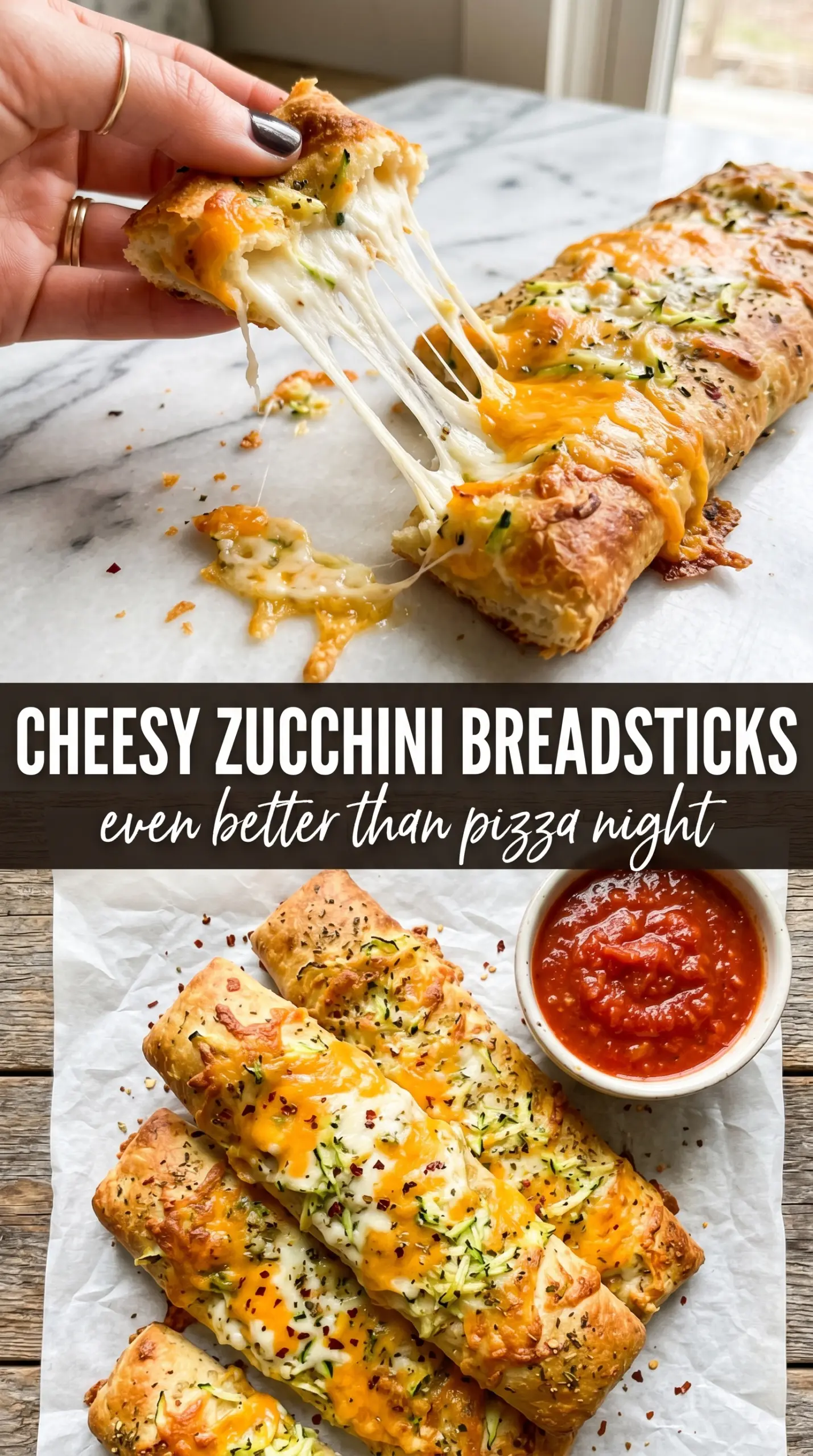
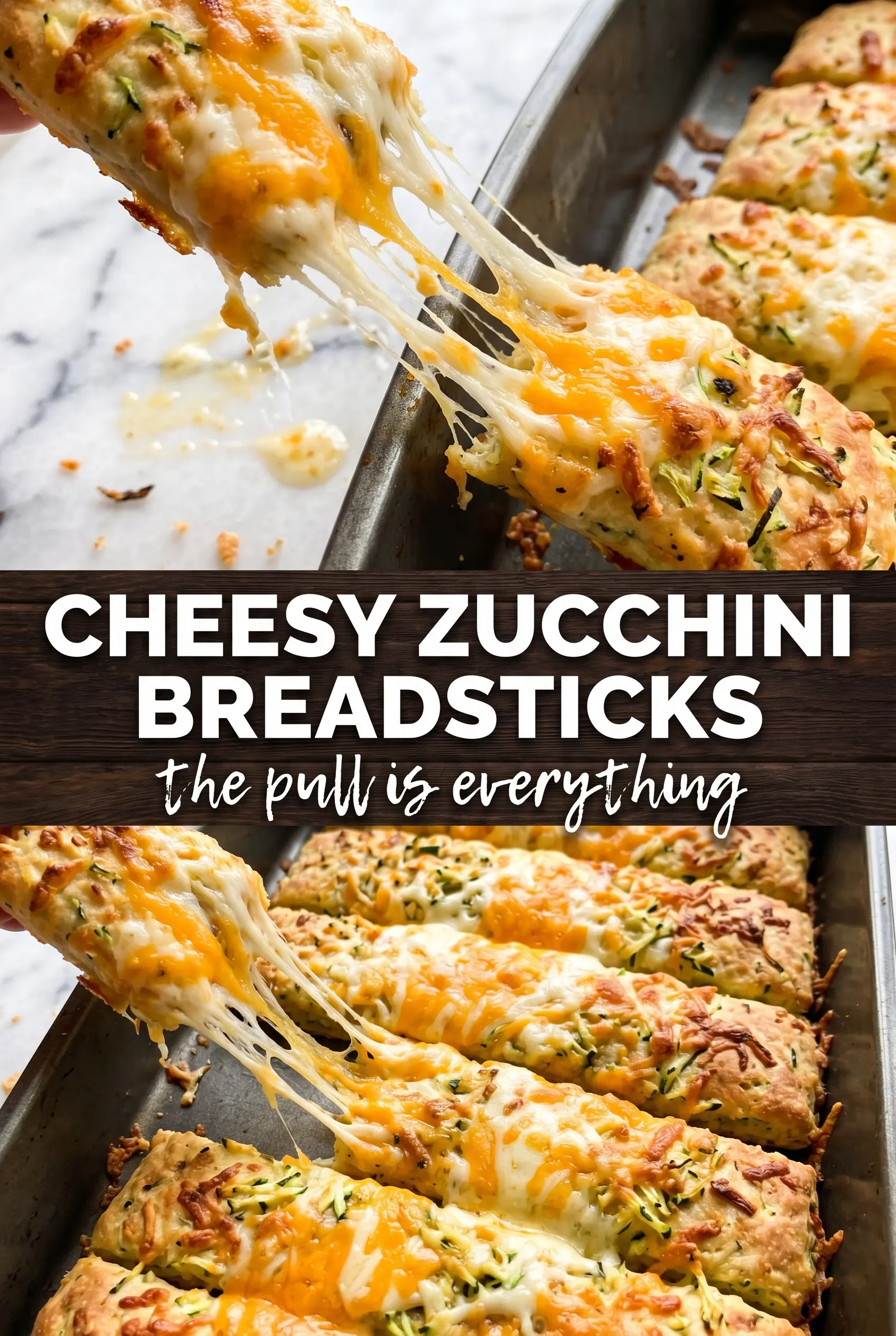
Cheesy zucchini breadsticks bake up with crisp edges, a tender middle, and enough melted mozzarella to pull into long strings when you lift a piece from the pan. The zucchini keeps them light without turning them soggy, and the Parmesan gives the whole tray a salty, savory backbone that tastes closer to pizza night than a vegetable side dish.
The part that makes these work is moisture control. Zucchini holds a shocking amount of water, and if you skip the squeeze, the mixture steams instead of setting. A clean kitchen towel and a little patience are the difference between soft, sliceable breadsticks and a tray that falls apart. Baking the base before adding the last layer of cheese gives the bottom a chance to brown before the top melts, which keeps the texture balanced.
Below you’ll find the exact trick for getting the zucchini dry enough, the ingredient swaps that still give you a sturdy result, and a few variations that make these fit low-carb or gluten-free cooking without losing the cheesy pull.
I was skeptical that zucchini breadsticks would hold together, but squeezing the zucchini dry made all the difference. They baked up crisp around the edges and the mozzarella on top got perfectly bubbly. My kids dipped them in marinara and asked for them again the next night.
Save these cheesy zucchini breadsticks for the next time you want crispy edges, stretchy mozzarella, and a marinara dip that tastes like pizza night.
The Zucchini Squeeze That Keeps the Breadsticks Firm
Most zucchini recipes fail for the same reason: too much water trapped in the vegetable. Once the heat hits the pan, that moisture turns to steam and loosens the whole structure. Here, the squeeze isn’t a side note. It’s the step that decides whether you get sliceable breadsticks or a soft, wet bake that won’t hold its shape.
Use a clean kitchen towel and twist hard enough that the zucchini clumps into a dry, compact mass. You’re aiming for shreds that feel almost fibrous, not glossy or damp. If the zucchini still feels heavy after squeezing, wring it again. The mixture should press into the pan without puddling or weeping liquid around the edges.
What the Cheese and Binder Are Actually Doing Here
- Zucchini — This is the base, but it needs to be very dry before it goes into the bowl. Fresh zucchini is fine; small-to-medium zucchini usually have fewer seeds and a tighter texture, so they work a little better than oversized ones.
- Mozzarella — This gives the breadsticks their stretch and helps bind the mixture as it melts. Shred it yourself if you can; pre-shredded cheese works, but it often contains anti-caking agents that melt a little less smoothly.
- Parmesan — This adds salt and structure. It also helps the bottom brown, which matters because zucchini on its own won’t caramelize the same way dough does.
- Egg — The egg is the glue. Without it, the mixture tends to crumble when sliced. One egg is enough here because the zucchini is compacted and the cheese does a lot of the holding.
- Almond flour or breadcrumbs — Almond flour keeps the recipe low carb and gives a slightly tender, nutty finish. Regular breadcrumbs work too and give a more classic pizza-parlor texture, but the almond flour version browns a little faster.
Building the Base, Topping, and Final Bake
Mixing the Base Until It Holds Together
Stir the squeezed zucchini with the egg, one cup of mozzarella, Parmesan, seasonings, and almond flour until everything is evenly coated. The mixture should look thick and slightly shaggy, not wet or soupy. If it seems loose, that usually means the zucchini still has too much moisture; add a spoonful more almond flour only if you’ve already squeezed the zucchini well and it still needs help holding together.
Pressing It Into a Thin, Even Rectangle
Spread the mixture onto parchment and press it into a rectangle about half an inch thick. Uneven thickness causes uneven baking, so pay attention to the corners and edges, which are easy to leave thicker than the center. The surface doesn’t need to be perfectly smooth, but it should be compact enough that the shreds are packed together and not loose on top.
Baking the Bottom Before the Cheese Goes On
Bake until the underside is golden and the edges look set and a little crisp. That first bake is what gives these breadsticks their structure, so don’t rush it. If the base still looks pale and soft when you add the final cheese layer, the finished breadsticks can turn gummy in the center instead of slice cleanly.
Finishing With the Stretchy Top Layer
Scatter the remaining mozzarella over the hot surface and return it to the oven just until the cheese melts and bubbles. The top should look glossy and lightly spotted, not browned into a crust. Let the tray rest for five minutes before slicing; that short cooling time lets the cheese settle so the strips lift cleanly instead of dragging apart.
How to Adapt These Breadsticks for Different Diets and Cravings
Keto-Friendly Version
Use almond flour instead of breadcrumbs and keep the rest of the recipe as written. The almond flour keeps the texture tender and helps the mixture set without adding starch, which makes this the best route if you want a lower-carb breadstick that still holds together well.
Classic Breadcrumb Version
Use regular breadcrumbs if you want a more familiar, pizza-shop-style bite. They add a slightly firmer crumb and a more bread-like finish, though the recipe won’t be as low carb. This is the better choice if you’re serving them to kids who expect something closer to garlic bread.
Extra Cheesy Garlic Version
Add a pinch more garlic powder and an extra handful of mozzarella on top for a more indulgent result. The breadsticks will be a little softer at the center and a little less crisp on top, but they’ll pull apart in bigger, gooier strands and lean harder into pizza-night territory.
Storage and Reheating
- Refrigerator: Store leftovers in an airtight container for up to 3 days. The edges soften a little, but the flavor stays strong.
- Freezer: These freeze reasonably well after baking. Cool completely, slice, and freeze in a single layer before transferring to a bag. The texture is softer after thawing, but they still work well for quick snacks.
- Reheating: Reheat on a baking sheet in a 375°F oven or toaster oven until the cheese loosens and the edges crisp back up. The microwave will make them rubbery and wet, which is the fastest way to lose the texture that makes them good.
Questions I Get Asked About This Recipe
Cheesy Zucchini Breadsticks
Ingredients
Equipment
Method
- Preheat oven to 425°F and line a sheet pan with parchment.
- Grate zucchini and squeeze it in a clean kitchen towel until as dry as possible, removing as much liquid as you can.
- Mix zucchini with egg, 1 cup mozzarella, parmesan, garlic powder, Italian seasoning, dried basil, salt, and black pepper until combined.
- Add almond flour (or breadcrumbs) and stir until the mixture holds together.
- Press mixture into a 10x8 inch rectangle on the parchment, about 1/2 inch thick, smoothing the surface so it bakes evenly.
- Bake 20 minutes until golden on the bottom and edges.
- Top with remaining mozzarella and bake 5 minutes more until cheese is melted and bubbly.
- Cool 5 minutes so slices hold their shape, then slice into strips.
- Serve warm breadsticks with marinara sauce for dipping and garnish with fresh basil.