Carne guisada earns its place on the table by turning a few humble ingredients into a deep, spoon-coating beef gravy with soft, falling-apart chunks of chuck. The best versions aren’t rushed. They start with a hard sear, build flavor in the same pot, and finish with beef that’s tender enough to break with the edge of a spoon but still holds its shape in the gravy.
What makes this version work is the order. Browning the beef first gives the sauce its backbone, and the flour cooked with the onions and peppers keeps the gravy from tasting raw or thin. The tomatoes add body and a little brightness, but the real flavor comes from letting everything simmer low and slow until the beef relaxes into the sauce instead of fighting it.
Below, you’ll find the small details that matter most: how dark to take the sear, why the gravy thickens the way it does, and what to do if yours looks a little loose before the end. It’s the kind of dish that gets better the more you understand it.
The beef got unbelievably tender and the gravy thickened up just right after the full simmer. I served it in warm flour tortillas and my husband asked if we could have it again the next night.
Love this carne guisada? Save it to Pinterest for the nights when you want tender beef, rich chile-spiced gravy, and warm tortillas without a lot of fuss.
The Sear That Builds the Gravy Before the Simmer Starts
The biggest mistake with carne guisada is crowding the beef and expecting it to brown. If the pieces sit too close together, they steam, the bottom of the pot stays pale, and you lose the dark fond that gives the gravy its depth. Work in batches over high heat and leave the meat alone until it actually releases from the pot on its own.
That browned layer is the backbone of the dish. Once the onions, peppers, broth, and tomatoes go in, they lift all that flavor back into the sauce. If your gravy tastes flat, it usually means the beef never browned enough in the first place.
What the Flour, Tomatoes, and Chuck Each Bring to the Pot
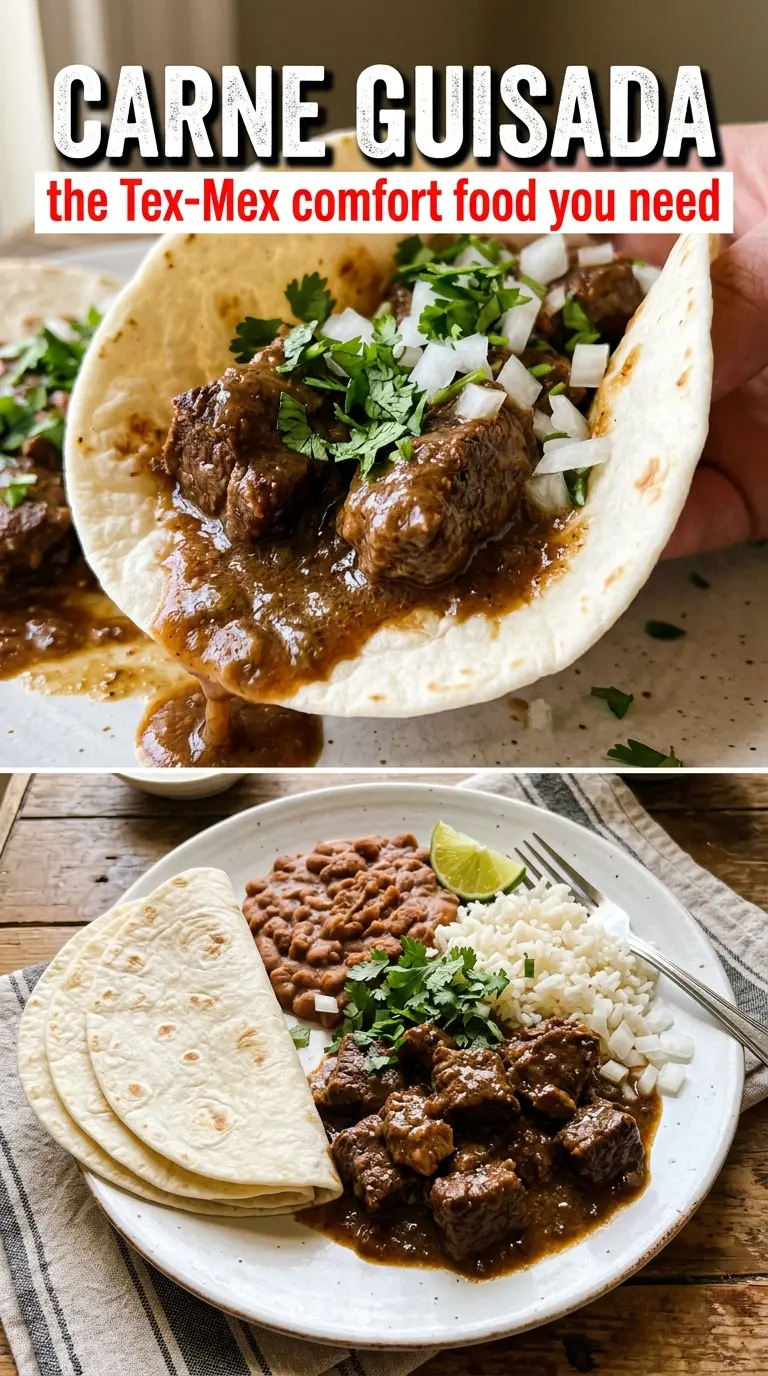
- Beef chuck — This is the cut that turns silky after a long simmer. It has enough connective tissue to soften into the gravy, which is what gives carne guisada that tender, stewy texture. Stew meat works in a pinch, but chuck gives you better flavor and a more reliable finish.
- Flour — A couple tablespoons stirred into the vegetables gives the gravy body without making it pasty. Cook it for a full minute so it doesn’t taste raw, then add the liquid slowly while scraping the bottom of the pot. That’s how you get a smooth sauce instead of little flour lumps floating around.
- Diced tomatoes — They don’t make the dish taste like tomato sauce. They add acidity, color, and just enough moisture to help the braise settle into a rich gravy. If you want a deeper, slightly less bright finish, use fire-roasted diced tomatoes.
- Flour tortillas — This is the serving move that matters. Warm tortillas catch the gravy and make every bite feel complete. Corn tortillas can work, but they change the whole experience; flour tortillas are the classic match for this style of carne guisada.
Building the Braise So the Beef Turns Tender Instead of Dry
Seasoning and Browning the Beef
Coat the beef with salt, pepper, cumin, chili powder, and garlic powder before it hits the pan. The seasoning that clings to the meat becomes part of the crust, not just the sauce. Sear the cubes in hot oil until each side has a deep brown color, then pull them out. If the pan looks dry, add a small splash more oil before the next batch instead of lowering the heat.
Softening the Vegetables and Cooking Out the Flour
Once the beef is out, add the onion and bell pepper to the same pot and cook them until they soften and pick up some color from the fond. The garlic goes in at the end so it doesn’t burn and turn bitter. When you sprinkle in the flour, stir constantly for about a minute. It should look like a thin paste coating the vegetables, not dry powder sitting on top.
Slow Simmering Until the Gravy Clings
After the broth and tomatoes go in, scrape the bottom well so none of that browned flavor is left behind. Return the beef, add the oregano, cover, and keep the pot at a low simmer. You want tiny bubbles, not a hard boil. A boil tightens the meat and can make the gravy look greasy instead of glossy. After about 1.5 to 2 hours, the beef should give easily when pressed and the gravy should coat a spoon.
How to Adapt This Carne Guisada Without Losing the Soul of It
Make It Gluten-Free
Swap the flour for a 1:1 gluten-free flour blend and cook it the same way with the vegetables. The gravy will still thicken, though it may need an extra few minutes at the end to settle into the same body. Serve with corn tortillas if you want to keep the whole meal gluten-free.
Use a Slow Cooker After the Sear
Brown the beef and cook the onions, peppers, and flour on the stove first, then transfer everything to the slow cooker and cook on low until the beef is tender. The key is not skipping the stovetop browning, because that’s where the gravy gets its depth. Without that step, the flavor tastes flatter and more one-note.
Add Potatoes for a Heartier Pot
Stir in 1-inch potato chunks about halfway through the simmer so they finish tender but don’t turn to mush. Waxy potatoes hold their shape best, while russets will break down more and thicken the gravy. This turns the dish into a fuller one-pot meal without changing the flavor in any major way.
Storage and Reheating
- Refrigerator: Store in an airtight container for up to 4 days. The gravy thickens as it chills, which actually helps the flavor settle in.
- Freezer: Carne guisada freezes well for up to 3 months. Cool it completely first, then freeze in portions so the beef and gravy reheat evenly.
- Reheating: Warm it gently on the stovetop over low heat with a splash of broth or water if needed. Don’t blast it over high heat, or the beef can tighten up and the gravy can separate at the edges.
Questions I Get Asked About This Recipe
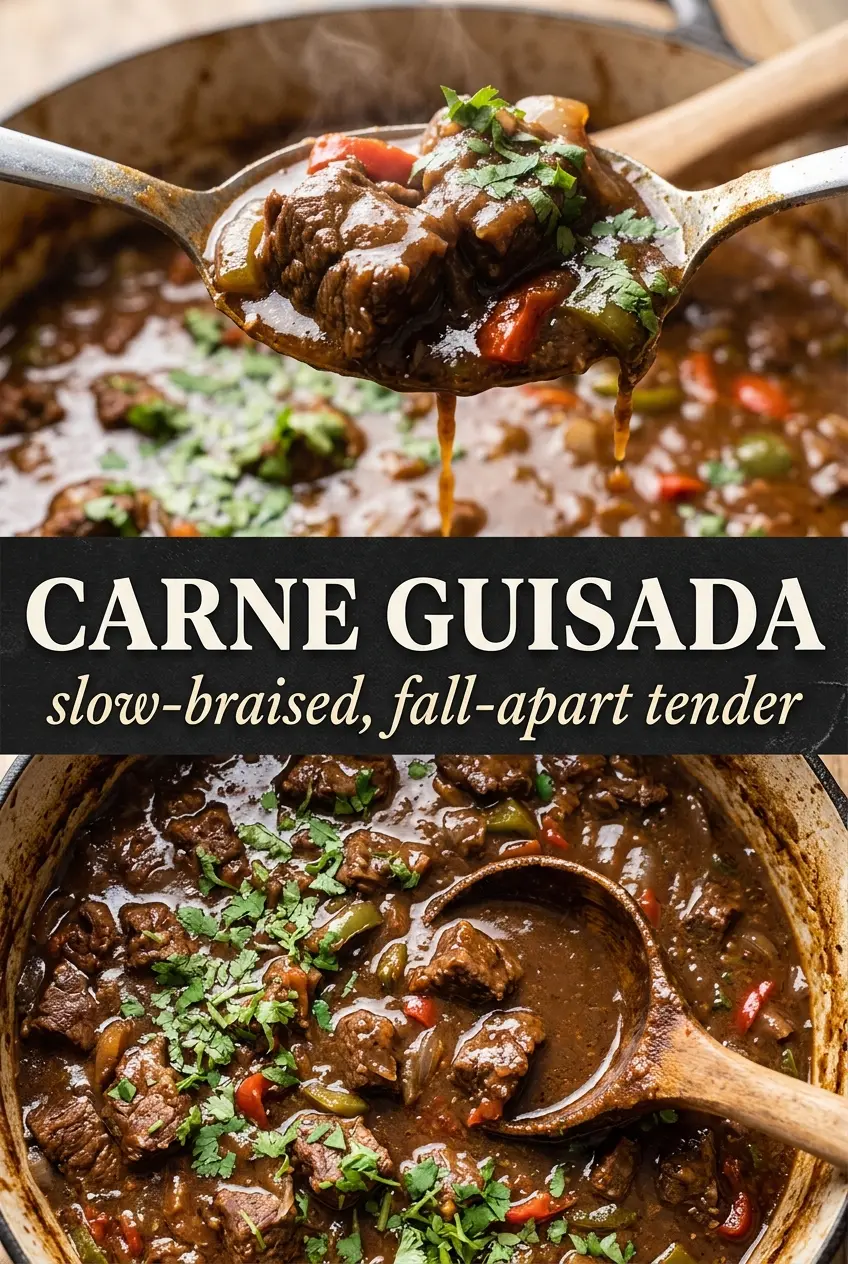
Carne Guisada (Tex-Mex Mexican Beef Stew)
Ingredients
Equipment
Method
- Season the beef cubes generously with salt, black pepper, cumin, chili powder, and garlic powder, coating all sides. Let the seasoning sit while you heat the pot.
- Brown the beef in batches in hot vegetable oil in a heavy pot over high heat, keeping the pieces from crowding, then remove and set aside. Continue until deeply browned on multiple sides.
- Sauté the onion and green bell pepper in the same pot for 5 minutes, stirring to prevent burning. Cook until softened and lightly golden.
- Add the minced garlic and cook for 1 minute, stirring constantly until fragrant. Do not brown the garlic.
- Sprinkle the flour over the vegetables and stir for 1 minute to cook off the raw flour taste. The mixture should look slightly pasty.
- Add beef broth and diced tomatoes, scraping up the browned bits from the bottom of the pot. Stir until the mixture is smooth and evenly combined.
- Return the beef to the pot and add oregano, then cover with a lid. Bring the mixture to a gentle simmer.
- Simmer on low for 1.5–2 hours, keeping the surface at a steady low bubble, until the beef is extremely tender and the gravy has thickened. Stir occasionally to prevent sticking if needed.
- Ladle the carne guisada into bowls and serve with warm flour tortillas. Garnish with cilantro and fresh lime just before eating.