Caramel Apple Sangria lands in that sweet spot where it tastes festive and put-together, but it still comes together in minutes. The cider keeps it crisp, the fruit brings a fresh orchard note, and the caramel gives each sip a soft, dessert-like finish without turning the whole pitcher heavy. Served well chilled, it pours golden and bright with slices of apple and pear floating through the glass.
What makes this version work is balance. Pinot grigio stays light enough to let the cider and fruit show up, while the caramel vodka or caramel sauce adds warmth and sweetness in a way that feels rounded instead of syrupy. The ginger ale goes in at the end so the sangria keeps its sparkle, and the long chill time gives the fruit enough time to absorb the wine-cider mixture without going mushy.
Below, you’ll find the small details that matter most: how to keep the caramel from clumping, when to add the fizz, and the best way to rim the glasses so the sugar actually sticks.
I used the caramel sauce version and whisked it into the cider first like you suggested. The sangria chilled up beautifully, and the apple slices picked up the caramel-cider flavor without getting soft.
Love the caramel-apple flavor and those cinnamon-spiced fruit slices? Save this Caramel Apple Sangria for your next easy pitcher cocktail.
The Trick to Keeping This Sangria Bright Instead of Muddy
The biggest mistake with fruit sangria is overloading the pitcher too early with carbonation or letting the fruit sit long enough to turn dull and soft. This version stays lively because the wine, cider, and caramel mixture get time to meld first, while the ginger ale waits until the very end. That last-minute fizz keeps the drink from flattening out.
Caramel sauce can be tricky if it goes in cold or straight from a sticky spoon. Whisking it into the liquid works because the cider helps loosen it and disperse it evenly. If you use caramel vodka instead, the flavor is cleaner and the sangria stays a little drier. Either way, the fruit should taste infused, not candied.
What the Apples, Pears, and Caramel Each Bring to the Pitcher
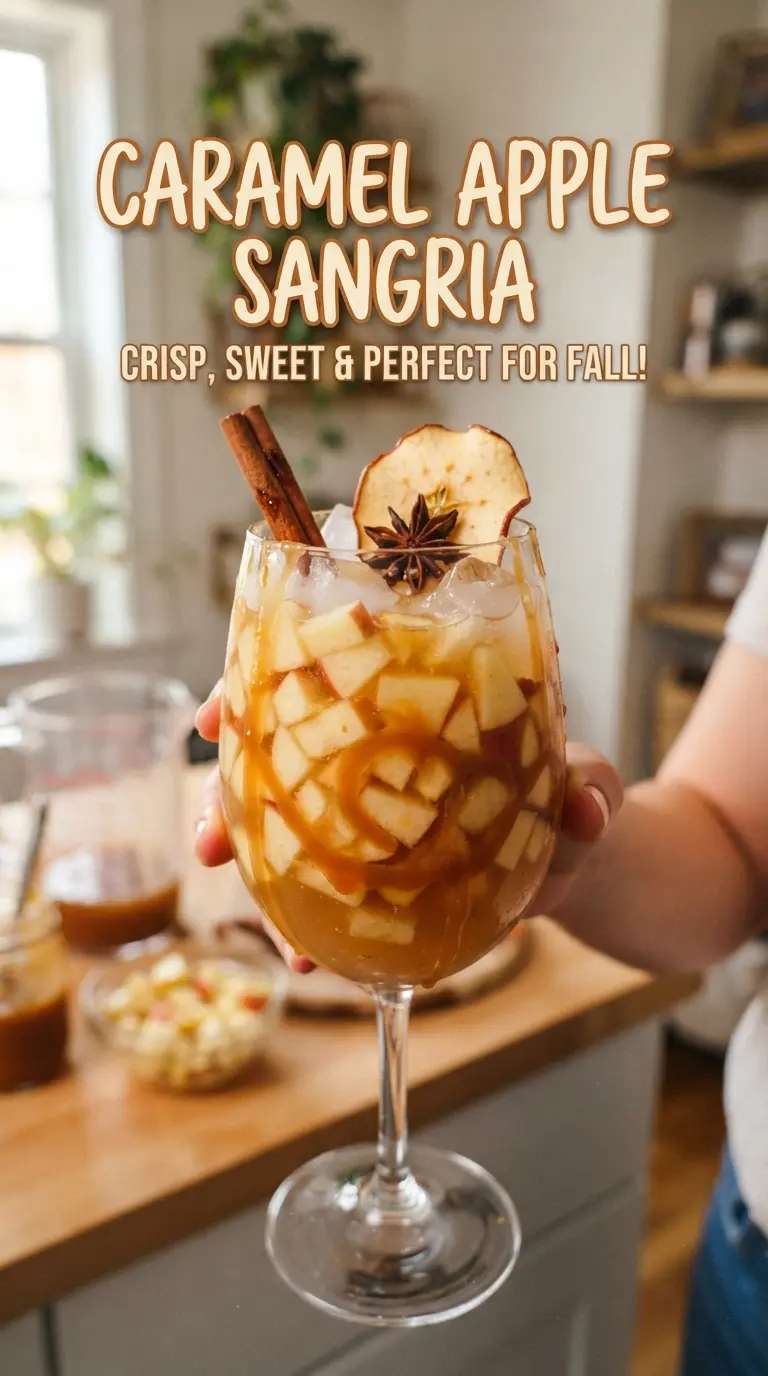
- Pinot grigio — A dry, crisp white wine keeps the drink from becoming cloying. You don’t need an expensive bottle, but a sweet wine will tip this too far into syrupy territory.
- Apple cider — This is where the autumn-apple character comes from. Use real cider, not apple juice, if you want depth and a little tang.
- Caramel vodka or caramel sauce — Vodka gives a cleaner finish, while caramel sauce adds a richer dessert note. If you use sauce, whisk it into the wine and cider until it disappears completely; otherwise it can settle at the bottom of the pitcher.
- Apples and pear — Thin slices matter because they chill fast and release flavor without turning mushy. Firm apples hold their shape best, and the pear adds a soft floral sweetness that rounds out the pitcher.
- Cinnamon sticks — These steep gently and scent the sangria without the gritty texture you get from ground cinnamon. Don’t substitute powder here unless you want a cloudy drink.
- Ginger ale or club soda — Ginger ale adds a little sweetness and spice, while club soda keeps the finish lighter. Add either right before serving so the bubbles stay sharp.
Building the Pitcher So the Flavors Actually Meld
Mixing the Base First
Start with the wine, cider, and caramel element in a large pitcher and stir well before anything else goes in. That first mix is where the drink either comes together smoothly or ends up with streaks of caramel at the bottom. If you’re using caramel sauce, whisk until the liquid looks uniform and glossy before adding fruit.
Letting the Fruit Steep
Add the apple slices, pear slices, and cinnamon sticks, then chill the pitcher for at least 2 hours. That resting time lets the fruit perfume the liquid and soften just enough without losing all its bite. If you rush this step, the sangria tastes thin and the fruit still tastes raw.
Finishing With the Fizz
Stir in the ginger ale or club soda right before serving, not earlier. This is the point where people usually drain the bubbles out by adding it too soon. Pour over ice, include a few pieces of the soaked fruit in each glass, and rim the glasses just before serving so the caramel doesn’t slide off.
Make It Less Sweet
Use club soda instead of ginger ale and choose caramel vodka instead of caramel sauce. The drink keeps its caramel-apple character, but the finish turns crisper and more wine-forward.
Dairy-Free and Naturally Gluten-Free
This recipe already fits both of those needs as written, as long as you check your caramel sauce or caramel vodka label if you use a flavored version. The drink stays just as smooth and festive without any swaps.
Turn It Into a Nonalcoholic Pitcher
Replace the wine with more apple cider and a splash of white grape juice for body. Add the ginger ale at the end as usual, and you’ll still get the same spiced apple-caramel profile without the alcohol.
Storage and Serving
- Refrigerator: The base mixture can sit for up to 24 hours before serving. The fruit softens a little more as it rests, but the flavor gets better, not worse.
- Freezer: This doesn’t freeze well once mixed. The wine and cider lose their texture, and the fruit turns limp after thawing.
- Serving: Add the ginger ale right before pouring. If the pitcher sits with the soda for too long, the bubbles disappear and the drink tastes flat instead of bright.
Answers to the Questions Worth Asking
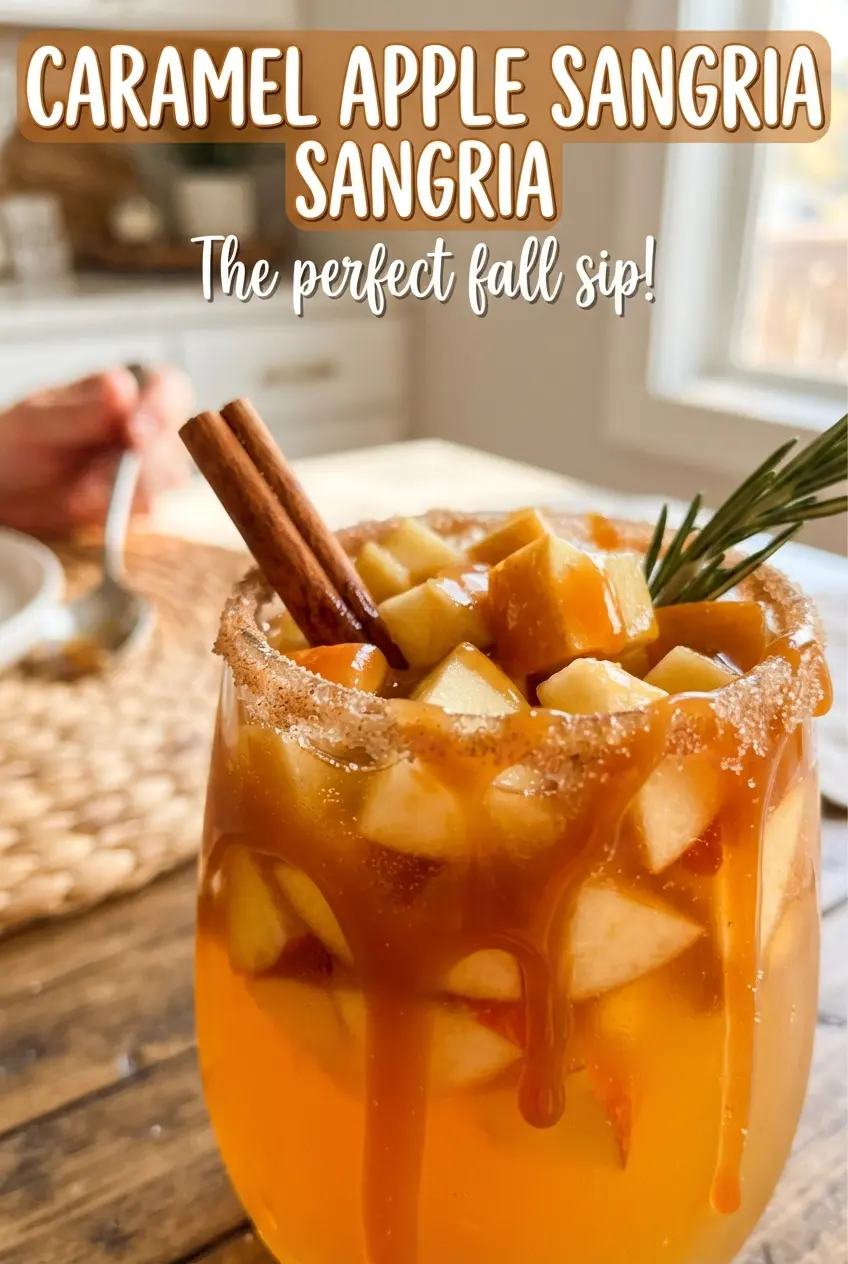
Caramel Apple Sangria
Ingredients
Method
- Combine the chilled pinot grigio, apple cider, and caramel vodka (or caramel sauce) in a large pitcher, whisking well if using caramel sauce.
- Add the thinly sliced apples, pear slices, and cinnamon sticks to the pitcher and gently stir to distribute the fruit and spice.
- Chill the pitcher at least 2 hours so the fruit soaks up the flavor and the sangria turns lightly spiced.
- Dip the glass rims in caramel sauce, then into coarse sugar to create the caramel-sugar rim.
- Top the sangria with the chilled ginger ale or club soda just before serving, then pour over ice with some fruit in each glass.