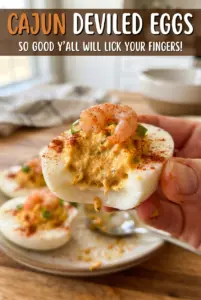
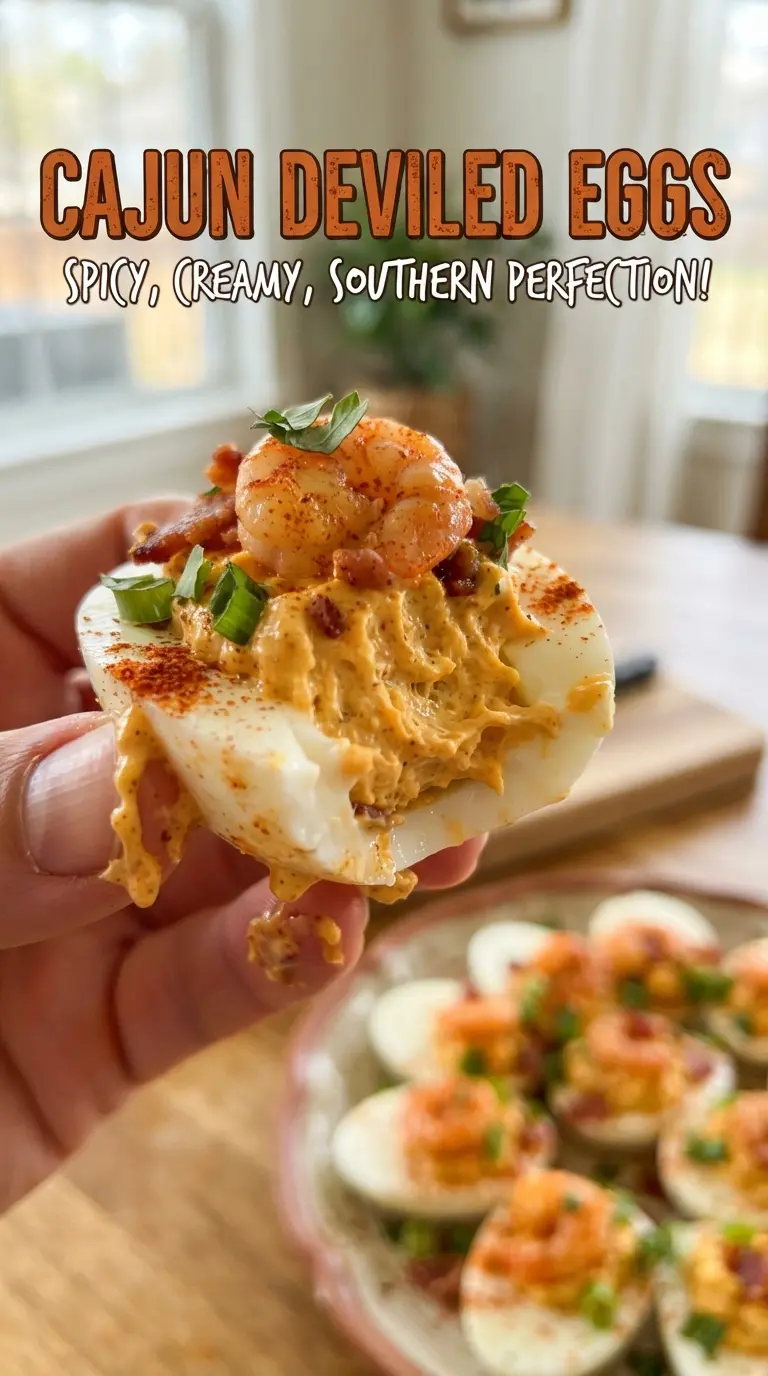
These Cajun deviled eggs bring the kind of bold, creamy bite that disappears fast from a platter. The filling stays smooth and tangy, with just enough heat to wake up the yolk without overwhelming it, and the seared shrimp on top turns a familiar appetizer into something people hover over. The Cajun seasoning gives the eggs a deeper, smokier edge than the usual paprika-only version, and the relish keeps the filling from tasting flat.
The trick is balance. The yolks need to be mashed while they’re still a little warm so the filling turns velvety instead of grainy, and the shrimp need a hot pan and a very short cook so they stay tender. If they go too long, they turn tight and rubbery, which is the fastest way to lose that clean Cajun shrimp finish. A little mustard sharpens the filling, the hot sauce lifts it, and the butter in the pan helps the seasoning bloom on the shrimp instead of tasting dusty.
Below, you’ll find the small details that make these egg halves look polished on a serving plate, plus a few smart ways to adjust the heat, the garnish, or the make-ahead timing.
The filling was silky and the shrimp stayed tender with just a little crust from the Cajun seasoning. I made them two hours ahead and they held up great on the platter.
Cajun Deviled Eggs with shrimp are the kind of appetizer that disappears before dinner starts.
The Part That Keeps the Yolks Creamy Instead of Pastelike
The biggest mistake with deviled eggs is overworking the yolks or pushing the seasoning too hard before the mixture is smooth. Once the yolks are completely cooked, they still need to be mashed until there are no dry lumps left, then mixed with just enough mayonnaise to loosen them into a pipeable filling. Too little mayo leaves the filling crumbly; too much turns it loose and dull. The mustard, relish, and hot sauce do more than add flavor here — they cut the richness so the eggs taste bright instead of heavy.
The shrimp topping changes the whole balance, so the filling underneath needs to stay clean and creamy. If the yolks taste flat after mixing, the problem is usually underseasoning, not lack of mayo. A little more Cajun seasoning goes a long way, but it should taste seasoned in the bowl because the egg whites will soften that seasoning once everything sits together.
What Each Ingredient Is Actually Doing in These Eggs
- Eggs — The yolks are the base of the filling, so start with eggs that are fresh enough to peel cleanly but not so fresh that the shells cling stubbornly. Older eggs peel easier after the ice bath, which matters when you want neat halves for piping and topping.
- Mayonnaise — This is what makes the filling creamy and smooth. Full-fat mayo gives the best texture; a lighter version will work, but the filling won’t feel as rich or hold the same satin finish.
- Creole mustard — It adds bite, tang, and a little texture that plain yellow mustard can’t match. If you need a substitute, use Dijon, but expect a sharper, less Louisiana-style flavor.
- Hot sauce — This keeps the filling lively without making it obviously spicy. Use a vinegar-based hot sauce so the filling tastes bright instead of heavy.
- Cajun seasoning — This is the backbone of the dish, especially on the shrimp. Some blends are saltier than others, so taste before adding more; if yours is very salty, hold back a little and adjust after mixing.
- Sweet pickle relish — It softens the richness and adds tiny bits of sweetness that round out the filling. Drain it lightly if it’s watery, or the filling can loosen more than you want.
- Shrimp — They give each egg a clean, savory finish and turn the dish into something that feels party-ready. Halving them lengthwise helps them sit flat and stay balanced on the egg whites.
- Butter — It helps the Cajun seasoning bloom in the skillet and gives the shrimp a better sear than oil alone. Don’t let it brown deeply; you want the pan hot enough to cook fast, not long enough to burn the butter.
Building the Shrimp Topping So It Stays Tender
Boiling and Peeling Without Drying Out the Yolks
Put the eggs in cold water first, then bring the pot to a boil so the whites set evenly instead of tightening up around the shell. The 12-minute rest off the heat finishes the yolks without chalking them. The ice bath matters here because it stops the cooking fast and makes peeling easier; if you skip it, the eggs can keep cooking and the yolks get dry at the edges. Peel them once they’re fully chilled, then slice cleanly lengthwise for the neatest presentation.
Mixing the Filling Until It Pipes Cleanly
Mash the yolks first, then stir in the mayonnaise, mustard, hot sauce, relish, and most of the Cajun seasoning. The filling should look smooth and hold soft ridges when you drag a spoon through it. If it seems stiff, add a little more mayo, not more relish, because extra relish can make the texture watery and the flavor uneven. Taste before piping; this is the point where the seasoning should already taste complete.
Searing the Shrimp Fast and Hot
Toss the halved shrimp with the remaining Cajun seasoning, then get them into the buttered pan while the butter is still foaming. They need just 1 to 2 minutes per side, long enough to turn pink and curl slightly, but not so long that they tighten into little rings. If the pan is crowded, the shrimp will steam and lose that light sear, so cook them in a single layer. Pull them as soon as they’re opaque all the way through.
Finishing the Platter
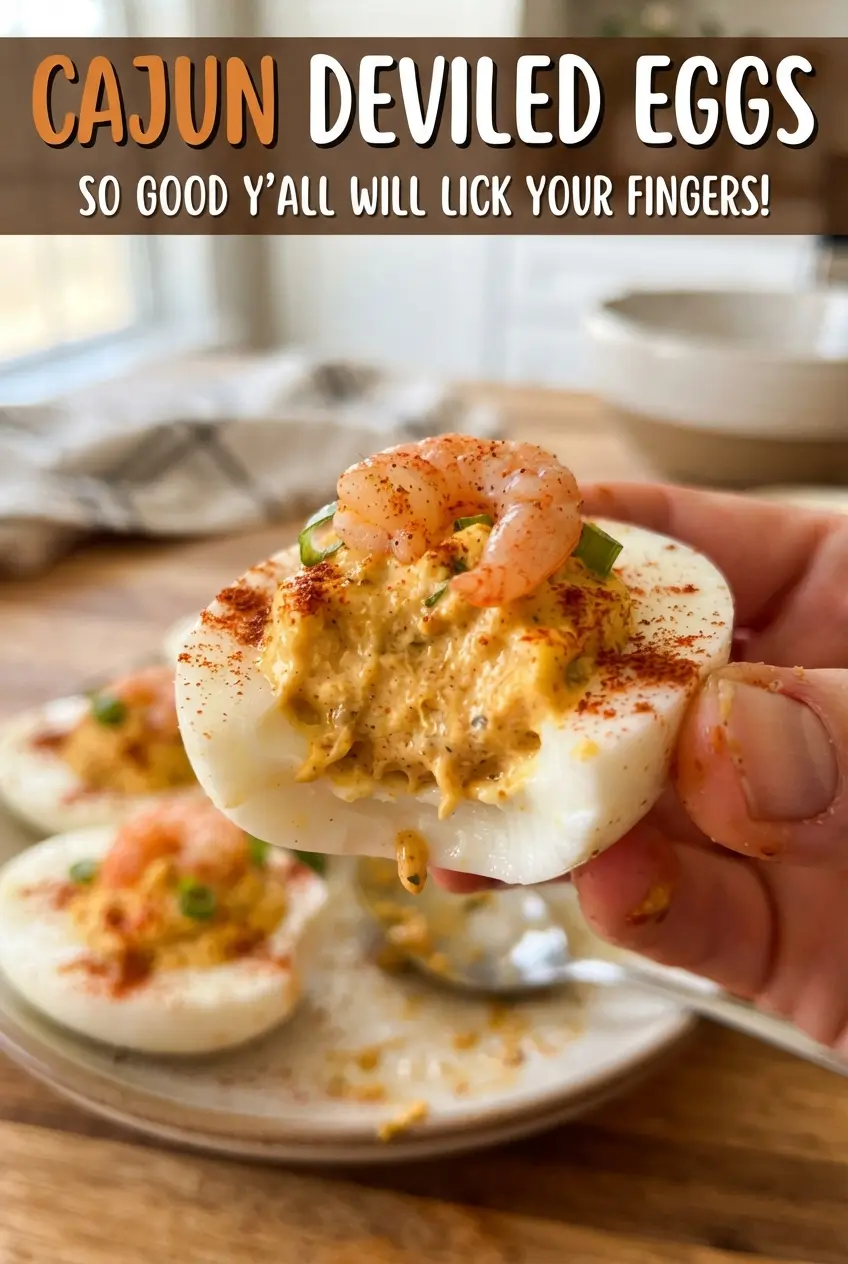
Pipe or spoon the filling into the egg whites, then top each one with a shrimp half and a few sliced green onions. The garnish gives the platter a fresh finish and keeps the eggs from looking heavy. If you’re serving them later, add the shrimp close to serving time so they stay glossy and tender. The eggs will hold their shape better if they’re chilled after filling and before garnishing.
Three Ways to Adjust These Cajun Deviled Eggs Without Losing the Point
Milder Party Version
Cut the hot sauce in half and use a lighter hand with the Cajun seasoning. You’ll still get the savory, smoky edge from the shrimp and mustard, but the bite drops back enough for guests who like flavor without much heat.
Dairy-Free and Gluten-Free by Default
This recipe already works well for both as long as your Cajun seasoning and hot sauce are labeled gluten-free. Use a dairy-free butter substitute or a neutral oil for the shrimp if needed, and the filling itself stays just as creamy with mayo doing the heavy lifting.
No Shrimp Topping
If you want the Cajun flavor without seafood, skip the shrimp and finish with extra green onion and a dusting of seasoning. The eggs become more classic in style, but the filling still carries the same punchy, tangy Cajun profile.
Make-Ahead for a Crowd
Boil, peel, and mix the filling up to a day ahead, then keep the whites and filling separate until serving time. Cook the shrimp the day you plan to serve them so they keep their texture, then assemble everything shortly before the platter goes out.
Storage and Reheating
- Refrigerator: Store filled eggs in a covered container for up to 2 days. The shrimp are best added closer to serving, since they can tighten a little as they sit.
- Freezer: Don’t freeze assembled deviled eggs. The whites turn rubbery and the filling separates after thawing.
- Reheating: These are best served cold or cool, not reheated. If the shrimp were made ahead, let them sit at room temperature for 10 to 15 minutes before assembling so they don’t taste stiff straight from the fridge.
Answers to the Questions Worth Asking
Cajun Deviled Eggs
Ingredients
Equipment
Method
- Place the eggs in a pot, cover with cold water, and bring to a boil; cover, remove from heat, and let stand 12 minutes. The whites should look fully set by the time you move them.
- Chill the eggs in an ice bath for 10 minutes, then peel and halve lengthwise. You should be able to handle the eggs easily without heat.
- Mash the yolks with mayonnaise, Creole mustard, hot sauce, sweet pickle relish, and 1 teaspoon Cajun seasoning until smooth. Stop when the mixture looks creamy with no visible lumps.
- Toss the shrimp with the remaining Cajun seasoning. Make sure each shrimp half is evenly coated before searing.
- Melt the butter in a cast iron skillet and sear the shrimp for 1-2 minutes per side until pink. Flip only once so they stay juicy and firm.
- Pipe the filling into the egg whites. Fill each cavity generously so the center holds its shape.
- Top each with a shrimp half and garnish with sliced green onions. Finish with a visible Cajun-seasoned shrimp and a bright green onion accent on top.