Buffalo chicken pasta salad hits that sweet spot between bold and comforting. You get chilled pasta that holds onto a creamy ranch dressing, spicy chicken in every bite, crisp celery for crunch, and enough blue cheese to give the whole bowl a sharp finish without overpowering it. It eats like a main dish, but it still feels casual enough for a cookout, game day spread, or the kind of fridge dinner you actually look forward to.
The key is balance. The chicken gets coated in buffalo sauce before it ever meets the pasta, which keeps the heat focused and gives you better coverage than stirring hot sauce into the whole bowl at the end. Rinsing the pasta after cooking stops it from soaking up too much dressing while it chills, and the hour in the fridge gives the flavors time to settle into one another instead of tasting separate and cold in a flat way.
Below, I’ll walk you through the one step that keeps the salad creamy instead of muddy, plus a few swaps that help if you want to dial the heat up or down.
The ranch stayed creamy after chilling and the buffalo chicken coated everything without turning the pasta soggy. I added the blue cheese at the end like you suggested and it stayed nice and sharp.
Pin this buffalo chicken pasta salad for a creamy, spicy make-ahead lunch that still has crunch after chilling.
The Trick That Keeps Buffalo Chicken Pasta Salad Creamy Instead of Heavy
Most pasta salads with a bold dressing go wrong because the pasta drinks up the dressing before it has a chance to coat the rest of the bowl. That leaves you with dry spots, a thick clump at the bottom, and chicken that tastes seasoned while the pasta tastes blank. In this version, the pasta is rinsed cold right after cooking, which cools it quickly and removes surface starch that would otherwise tighten everything up.
The other thing that matters is timing. Buffalo sauce goes on the chicken first, not mixed into the dressing, so the heat stays bright and the ranch stays creamy. If you stir the buffalo sauce directly into the full bowl, the dressing can pick up a muddy orange color and lose some of its clean tang.
- Cold-rinsed pasta — This keeps the salad from turning gluey and gives the dressing a clean surface to cling to. Warm pasta keeps softening and can make the ranch seem thinner than it is.
- Buffalo sauce on the chicken first — Coating the chicken before it hits the bowl gives you stronger flavor in every bite and better visual contrast. It also keeps the spice from disappearing into the dressing.
- Chilling time — That hour in the fridge is not optional here. The celery stays crisp, the dressing settles, and the pasta absorbs just enough flavor without going soft.
What Each Ingredient Is Actually Doing in the Bowl
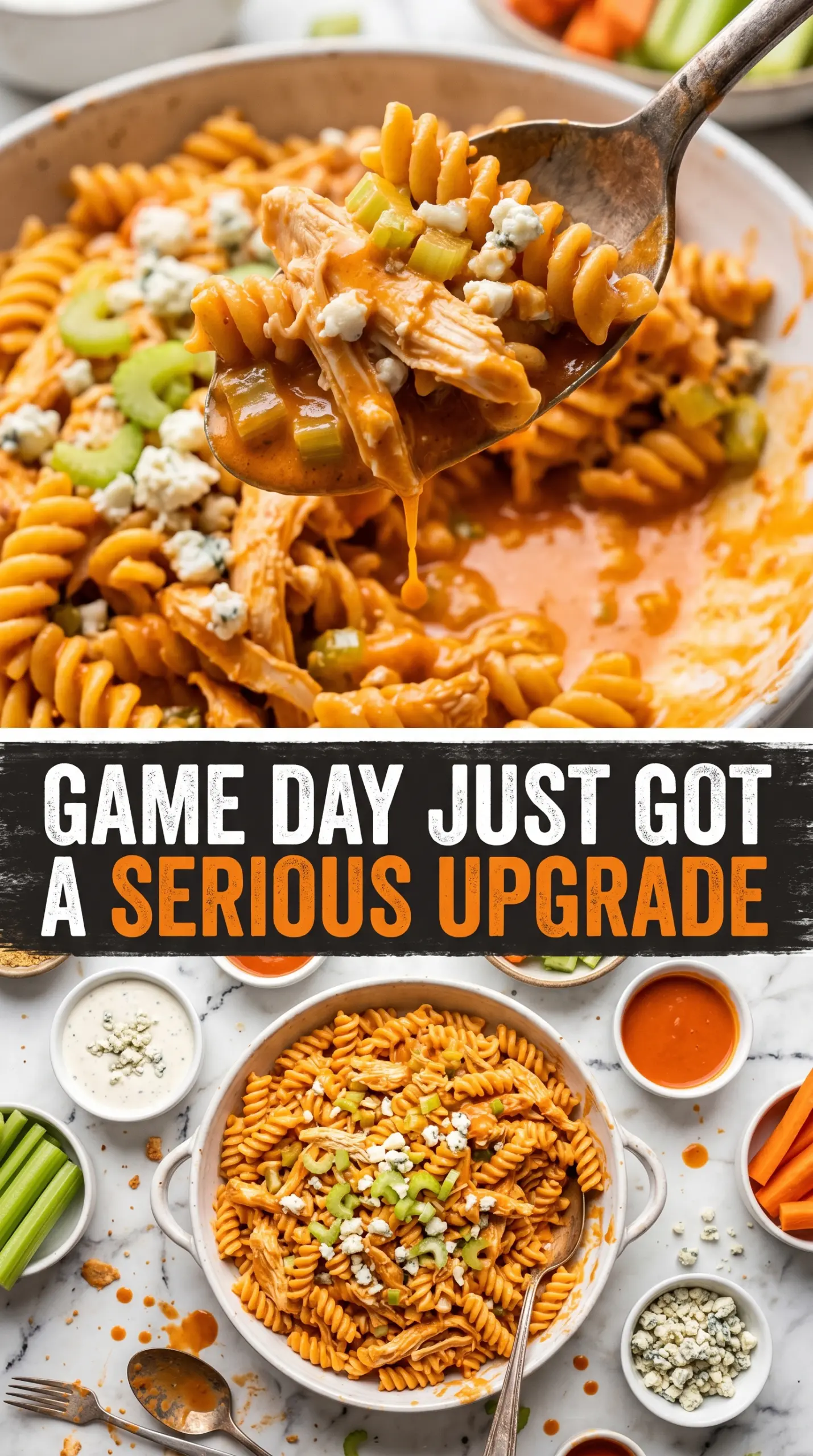
- Penne or rotini — Short pasta with ridges or curls holds onto ranch dressing better than long pasta. Rotini gives you more nooks; penne gives you a sturdier bite. Use either one, but don’t overcook it or it’ll collapse after chilling.
- Cooked chicken breast — Mild chicken is the blank canvas that lets the buffalo sauce do its job. Leftover rotisserie chicken works well if it’s not heavily seasoned, and you can use thighs if you want a richer, juicier result.
- Buffalo sauce — This is where the heat and tang come from, so use one you actually like on its own. If yours runs very salty, start with a little less ranch seasoning elsewhere in the meal and taste before adding more.
- Ranch dressing — Ranch smooths out the heat and turns this from spicy chicken pasta into a true pasta salad. A thicker bottled ranch holds up better than a thin one, and homemade ranch works if it’s chilled and not too loose.
- Blue cheese crumbles — Blue cheese gives the bowl a sharp, salty edge that makes the buffalo sauce taste fuller. If you’re not a blue cheese person, swap in feta for a milder bite, but expect a cleaner finish and less depth.
- Celery and green onions — These keep the salad from feeling soft all the way through. Celery brings crunch; green onion adds a fresh onion note without taking over.
- Cherry tomatoes — They add sweetness and a little juiciness so the salad doesn’t lean too heavy. Halve them so they release just enough moisture to brighten the bowl without watering it down.
Building the Bowl So Nothing Turns Soggy
Cook the Pasta Past Al Dente, Then Rinse It Cold
Cook the pasta until it is just tender with no hard center, then drain it and rinse under cold water until it stops steaming. That rinse removes surface starch and cools the pasta fast, which matters because warm pasta keeps soaking up dressing after it’s mixed. Let it drain well before it goes into the bowl, or the extra water will thin the ranch.
Coat the Chicken Before It Meets the Dressing
Toss the diced chicken with buffalo sauce in a separate bowl until every piece looks lacquered and red-orange. This keeps the heat concentrated and prevents the dressing from going flat. If the chicken looks dry in spots, add a spoonful more sauce now rather than trying to fix it after the salad is assembled.
Mix the Creamy Base, Then Fold in the Crunch
Add the ranch dressing to the pasta, chicken, celery, and tomatoes, then toss until everything is evenly coated. Fold in most of the blue cheese gently so it doesn’t dissolve into the dressing. Save the rest for the top right before serving, because that final sprinkle gives you the sharpest flavor and the best texture contrast.
Chill Before You Taste for Final Salt
Refrigerate the salad for at least an hour before serving. This is when the dressing settles into the pasta and the buffalo flavor gets more even. Taste it after chilling, then season with salt and pepper if it needs it, since cold food always tastes a little duller than it does at room temperature.
How to Make This Buffalo Chicken Pasta Salad Fit Different Tables
Dairy-Free Version
Use a dairy-free ranch and skip the blue cheese, or replace it with diced avocado right before serving. You’ll lose the sharp salty punch of blue cheese, but the salad still keeps its creamy, spicy balance and holds up well for lunch.
Less Heat, Same Buffalo Character
Cut the buffalo sauce with a little extra ranch before tossing it with the chicken. That softens the burn without taking away the tangy wing-style flavor. If you go too far, the salad can taste more like plain ranch pasta, so keep some heat in the mix.
Gluten-Free Pasta Salad
Use a sturdy gluten-free short pasta and cook it just until tender, because many gluten-free noodles go soft fast after chilling. Rinse it well and drain thoroughly so the dressing doesn’t slide off. The texture will be a little different, but the flavor works beautifully.
Make It a Little Heartier
Add extra chicken and slightly reduce the pasta if you want a more protein-forward main dish. The dressing ratio still works, but you may need a small splash more ranch to keep everything coated. This version works especially well for meal prep when you want the bowl to eat like a full lunch.
Storage and Reheating
- Refrigerator: Keep covered for up to 3 days. The pasta will absorb some dressing, so it gets a little thicker by day two.
- Freezer: This one doesn’t freeze well. The ranch separates and the vegetables lose their crunch.
- Reheating: Serve it cold or let it sit at room temperature for 15 to 20 minutes. Don’t microwave it, because the ranch can split and the celery will turn limp.
Answers to the Questions Worth Asking
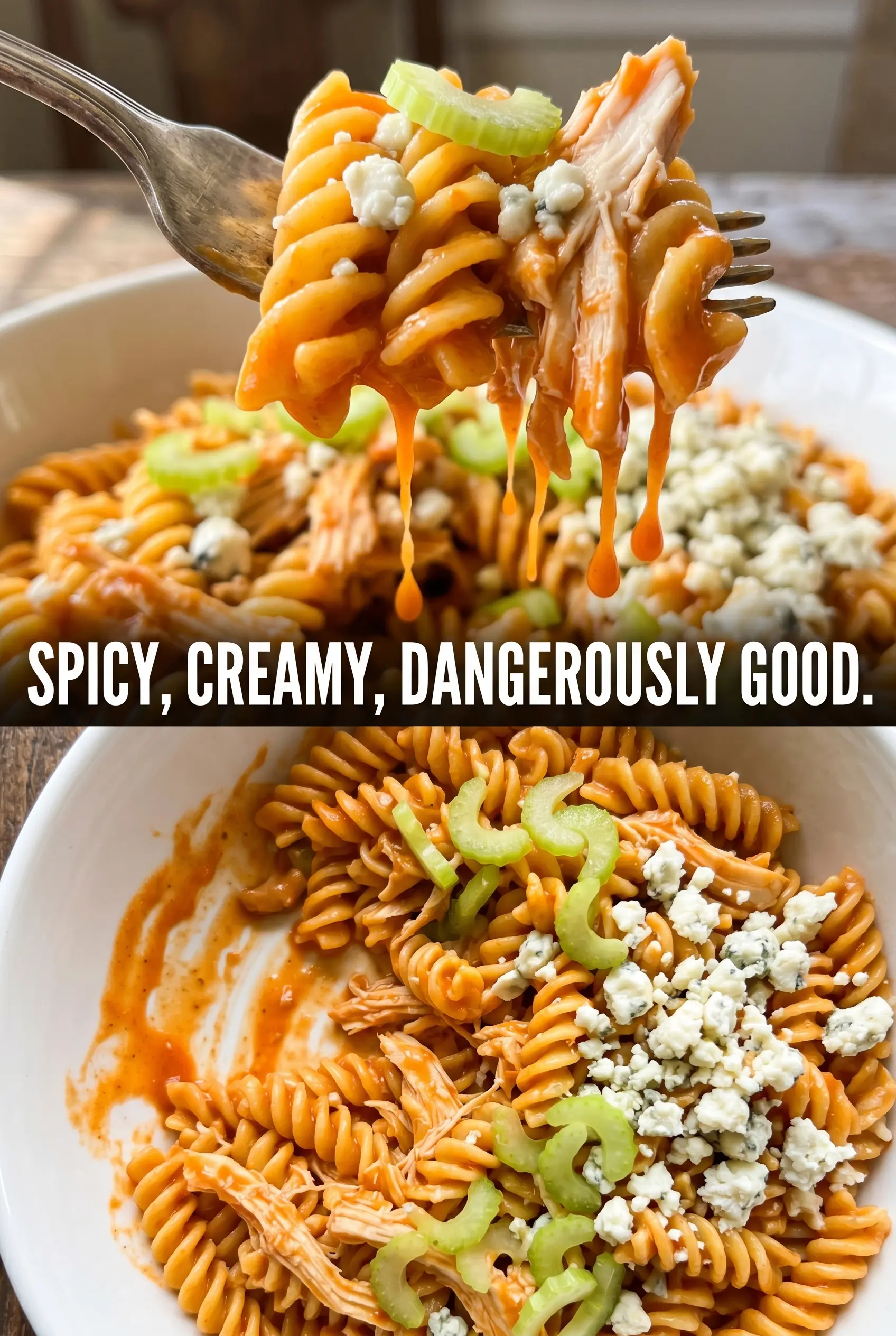
Buffalo Chicken Pasta Salad
Ingredients
Method
- Cook penne or rotini pasta according to package directions until al dente, then drain and rinse with cold water to stop the cooking.
- Toss diced cooked chicken breast with buffalo sauce until every piece is coated in an even, glossy layer.
- In a large bowl, combine the cooled pasta, buffalo chicken, diced celery, and halved cherry tomatoes.
- Add ranch dressing and toss until the pasta is coated and the salad looks creamy rather than dry.
- Gently fold in most of the blue cheese so it disperses but doesn’t fully break down.
- Refrigerate the salad for at least 1 hour to firm up the texture and let the flavors mingle.
- Top the chilled salad with the remaining blue cheese and sliced green onions just before serving.