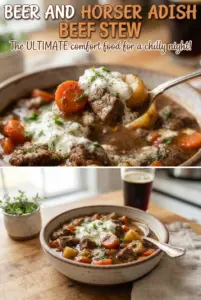
Beer and horseradish turn a standard beef stew into something deeper, sharper, and worth making on repeat. The beef cooks until it’s spoon-tender, the broth picks up the malty edge of brown ale, and the horseradish cuts through the richness at the finish so every bite stays lively instead of heavy.
The trick is in the layers. Browning the beef first builds the base flavor, then the tomato paste and beer scrape up all those browned bits from the pot. Horseradish goes in twice: once in the stew for a quiet background heat, and again in the sour cream for a cool, punchy topping that wakes up the whole bowl.
Below, I’ve included the parts that matter most, from how to keep the beef from steaming in the pot to the reason the horseradish belongs both in the broth and on top. If you’ve made beef stew before and wanted more character without making it fussy, this version delivers.
The stew was rich and beefy, and the horseradish in the sour cream gave it this bright kick at the end. My husband said the potatoes soaked up the broth perfectly, and the leftovers were even better the next day.
Save this beer-braised beef stew for the nights when you want deep flavor, tender beef, and that cool horseradish sour cream on top.
The Browning Step That Decides Whether the Stew Tastes Flat or Deep
The biggest mistake with beef stew is crowding the pot and rushing the sear. Beef chuck needs space against hot oil so it can brown instead of steam, and those browned surfaces are what give the broth its dark, savory backbone. If the meat goes gray all over, the stew will still cook through, but it won’t have the same depth.
Flouring the beef before browning helps the juices cling to the meat and gives the stew a slightly fuller body once it simmers. The flour also catches in the fond at the bottom of the pot, which matters here because the beer and broth need something to carry all that flavor into the liquid. Keep the heat at a lively medium-high for the sear, then lower it once the onion goes in so the garlic and tomato paste don’t scorch.
What the Beer and Horseradish Are Doing in the Pot
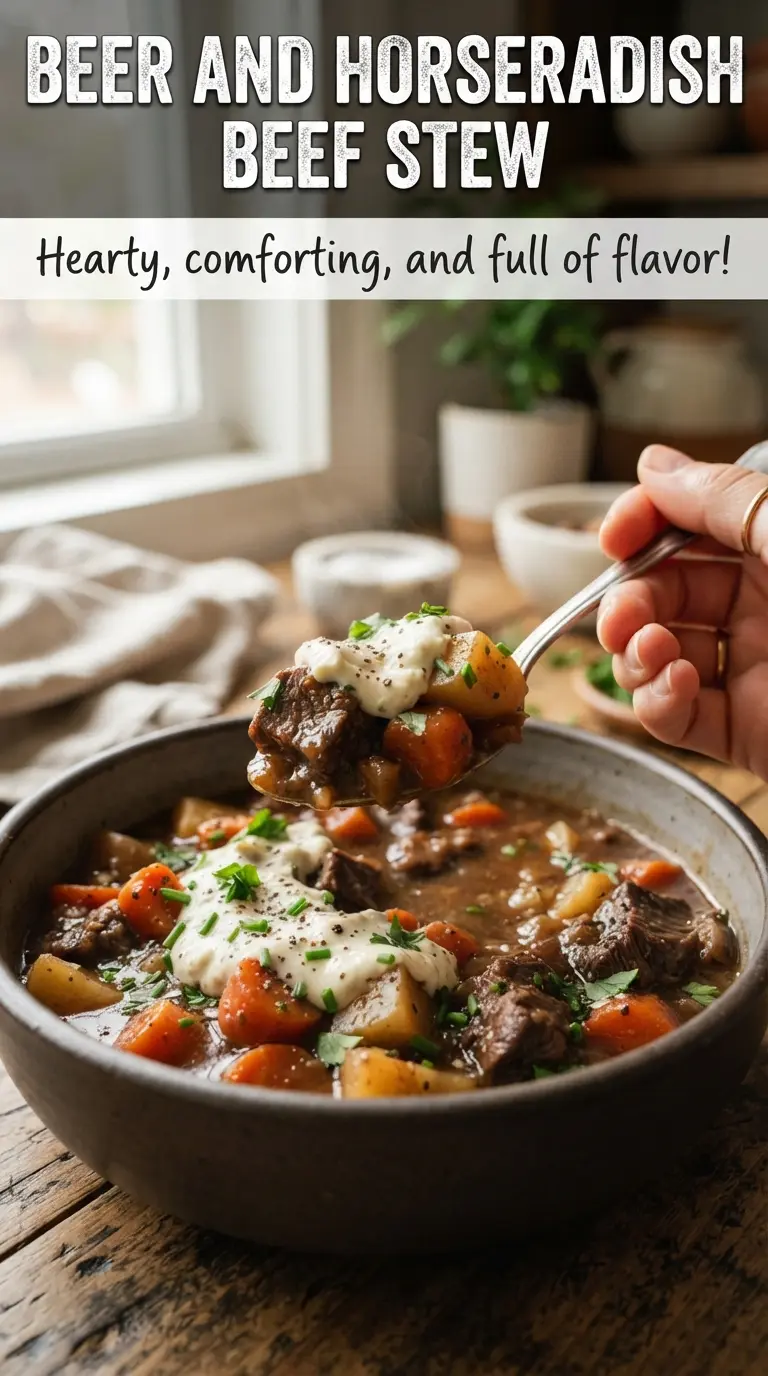
- Beef chuck — This cut is built for long simmering. It starts out firm and tough, then turns tender as the collagen breaks down. Leaner beef won’t give you the same silky texture.
- Brown ale or amber beer — The beer adds malt and a little bitterness that keeps the stew from tasting one-note. A bottle you’d actually drink is the right move; avoid anything aggressively hoppy, because that can turn bitter after simmering.
- Prepared horseradish — This is the ingredient that changes the finish. Stirring some into the stew gives a subtle heat under the beef, while the rest mixed with sour cream makes the topping sharp and cooling at the same time.
- Tomato paste — It doesn’t make the stew taste like tomato. It gives the broth a darker color and a quiet sweetness that rounds out the beer and Worcestershire.
- Potatoes and carrots — Add them late so they hold their shape. If they go in at the beginning, they’ll collapse before the beef is ready.
Building the Stew in the Right Order
Browning the Beef in Batches
Season the cubes first, then toss them with flour so the surface dries into a better crust. Brown the meat in a single layer and don’t move it until the bottom releases easily and turns deep brown. If the pan looks crowded, stop and do another batch. That extra few minutes pays off in flavor every time.
Softening the Onion and Toasting the Tomato Paste
Once the beef comes out, the onion goes into the same pot to pick up the drippings left behind. Cook it until it turns soft and a little sweet, then add the garlic and tomato paste just long enough for the paste to darken slightly and stop smelling raw. If the garlic burns, the whole pot will taste sharp, so keep it brief.
Deglazing With Beer and Starting the Simmer
Pour in the beer and scrape the bottom with a wooden spoon until the pot looks clean. That’s where the best flavor is hiding. Add the broth, horseradish, Worcestershire, brown sugar, thyme, and beef, then bring it to a gentle simmer before covering it. A hard boil will tighten the meat instead of relaxing it.
Finishing With Potatoes, Carrots, and the Horseradish Cream
The potatoes and carrots go in after the beef has had time to soften on its own. Simmer them until the potatoes are tender at the center and the carrots give without turning mushy. At the end, stir the remaining horseradish into sour cream until smooth and spoon it over each bowl. That cool, sharp topping is what keeps this stew from feeling heavy.
How to Adjust This Stew for the Pantry You Have
Make It Gluten-Free
Swap the all-purpose flour for a gluten-free flour blend that behaves well for dredging. The coating still helps the beef brown and gives the broth a little body, though the finished stew may be slightly looser than the original.
Skip the Beer and Keep the Depth
Use extra beef broth in place of the beer and add 1 teaspoon red wine vinegar for a little lift. You’ll lose the malty note, but the stew will still taste rich if you brown the beef well and scrape up every browned bit from the pot.
Make It Dairy-Free
Leave off the sour cream topping and finish each bowl with a spoonful of the stew broth mixed with a little extra prepared horseradish. You won’t get the creamy contrast, but the sharp finish still works against the beef and potatoes.
Storage and Reheating
- Refrigerator: Store the stew for up to 4 days. The flavor deepens overnight, and the broth may thicken a bit as it chills.
- Freezer: It freezes well for up to 3 months. Freeze the stew without the sour cream topping, then thaw in the fridge before reheating.
- Reheating: Warm it gently on the stove over medium-low heat until hot. Don’t boil it hard, or the potatoes can break apart and the beef can dry out.
Answers to the Questions Worth Asking
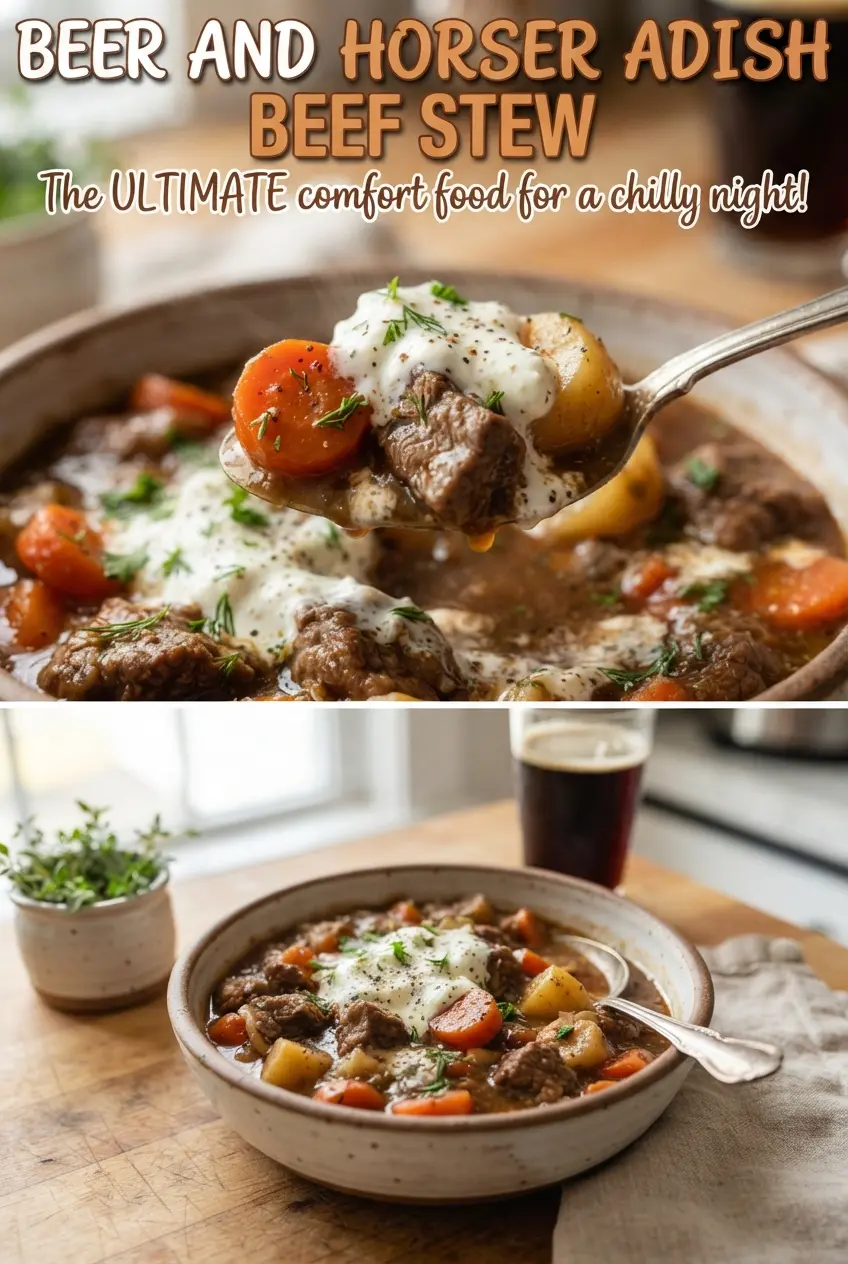
Beer and Horseradish Beef Stew
Ingredients
Equipment
Method
- Season the beef with salt and black pepper, then toss with the all-purpose flour until lightly coated. Heat vegetable oil in a Dutch oven over hot heat, then brown the beef in batches until browned on the outside, 2-4 minutes per batch, using a visual cue of deep golden edges.
- Add the chopped onion to the pot and cook for 5 minutes, stirring, until softened and glossy. Stir in the minced garlic and tomato paste and cook for 1 minute, until fragrant and darker in color.
- Pour in the beer and scrape the bottom of the pot to loosen the browned bits, stirring until the liquid looks cohesive. Stir in the beef broth, 2 tablespoons prepared horseradish, Worcestershire sauce, brown sugar, and dried thyme, then return the beef to the pot if any juices separated.
- Cover and simmer for 1 3/4 hours (about 105 minutes), maintaining a gentle bubbling rather than a hard boil, until the beef is becoming tender and the broth looks thicker.
- Add the cubed potatoes and sliced carrots, then stir so everything is submerged. Simmer for 45-60 minutes, until the potatoes are tender when pierced, with a visual cue of carrots softening and the stew thickening slightly.
- Mix the sour cream with the remaining prepared horseradish until smooth and pale with visible flecks. Serve each bowl with a dollop of the horseradish sour cream and a sprinkle of fresh chives.