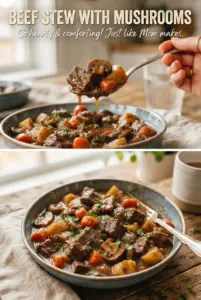
Deep, brown, and full of slow-simmered comfort, beef stew with mushrooms delivers the kind of rich spoonful that makes a quiet dinner feel complete. The beef turns tender enough to cut with a fork, the mushrooms soak up the gravy, and the potatoes thicken the pot just enough without turning it muddy. It’s the kind of stew that tastes even better after it sits for a few minutes, when the broth settles into something glossy and layered.
What makes this version work is the order. The mushrooms get browned first in butter and oil, so they keep their depth instead of disappearing into the stew. The beef is tossed with flour before searing, which gives the broth body later, and the tomato paste cooks briefly with the onions and garlic so it loses its raw edge before the wine goes in. A splash of soy sauce doesn’t make it taste Asian; it just adds the kind of savory bass note that makes the whole pot taste more developed.
Below you’ll find the small details that keep the stew rich instead of thin, plus a few smart swaps if you need them. If you’ve ever ended up with gray beef or mushrooms that vanished into the sauce, this method fixes both.
The mushrooms stayed meaty instead of getting lost, and the gravy thickened up beautifully once the potatoes went in. I used a decent red wine and the stew tasted like it had been on the stove all afternoon.
Save this beef stew with mushrooms for a slow-simmered dinner with golden mushrooms, fork-tender beef, and a rich gravy.
The Reason the Mushrooms Go in Before the Simmer Starts
Beef stew gets muddy fast when every ingredient goes into the pot at once. Mushrooms release a lot of moisture, and if they steam instead of brown, they bring a flat, rubbery texture to the finished stew. Browning them first concentrates their flavor and gives the broth a deeper, woodsy edge that stays noticeable even after two hours of simmering.
The other quiet issue is the flour on the beef. It isn’t there just to help with browning; it also helps the stew take on a light, silky body as it cooks. If you skip that step, the broth can taste a little thin even when the beef is tender. The wine and tomato paste round out the base, but the real key is taking a few minutes at the start to build color in the pot instead of chasing it at the end.
What Each Ingredient Is Doing in the Pot
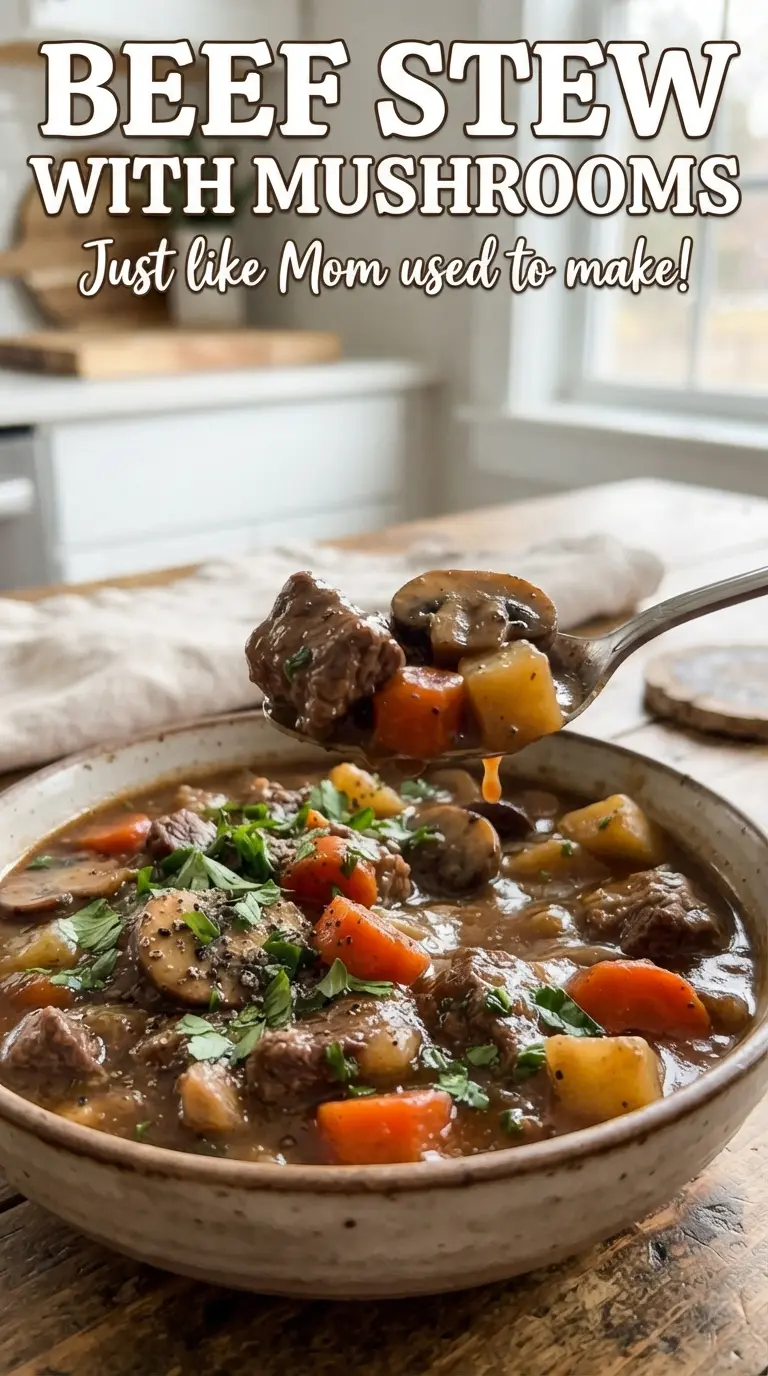
- Beef chuck — This cut needs time, but it pays you back with tender, beefy pieces and enough connective tissue to enrich the broth. Leaner stew meat cooks up drier and less forgiving. Cut the cubes evenly so they finish at the same time.
- Cremini mushrooms — These hold their shape better than white button mushrooms and give the stew a deeper flavor. If you only have white mushrooms, they’ll work, but they’ll be softer and a little less earthy. Don’t crowd the pan when browning them or they’ll steam.
- Red wine — A dry wine helps loosen the browned bits on the bottom of the pot and adds acidity that keeps the stew from tasting heavy. Use a wine you’d actually drink; harsh or overly sweet wine will show up in the final flavor.
- Tomato paste and soy sauce — These are the quiet builders. Tomato paste adds body and a little sweetness once cooked briefly, while soy sauce deepens the savory notes without making the stew taste like soy sauce. If you don’t want to use wine, add a bit more broth plus a splash of balsamic for brightness.
- Potatoes and carrots — Add them later so they keep their shape. If they go in at the start, the potatoes break apart and the carrots turn dull and overcooked before the beef is done.
Building the Stew So It Tastes Slow-Cooked, Not Muddy
Brown the mushrooms until their liquid is gone
Start the mushrooms in butter and oil and leave them alone long enough to take on color. At first they’ll release moisture and look crowded in the pan, then the liquid will cook off and the edges will start to brown. That’s the point where their flavor changes from mild to deep. If you rush this stage, they stay spongy and disappear into the stew instead of standing up in it.
Sear the beef in batches, not all at once
Season the beef, toss it with flour, and brown it in a single layer. If you pile it in, the meat steams and the flour turns pasty instead of forming a good crust. You’re looking for dark edges and a pan with brown bits stuck to the bottom. Those bits are the start of the gravy, so don’t wash them away.
Cook the onion, garlic, and tomato paste until the paste darkens
Once the beef is out, use the same pot for the onion. It should soften and pick up the color left behind in the pan. Add the garlic and tomato paste for a minute, just until the paste darkens a shade and smells sweeter. If the paste goes in raw, the stew can taste sharp and unfinished.
Simmer low and add the vegetables late
After the wine loosens the pot, add the broth, soy sauce, thyme, bay leaves, and beef, then cover and keep the simmer gentle. You want occasional bubbles, not a hard boil, or the beef can tighten before it softens. Add the potatoes, carrots, and mushrooms near the end so they stay intact and don’t collapse into the sauce. The stew is done when the beef yields easily and the potatoes are tender at the center.
How to Adapt It Without Losing the Heart of the Stew
Gluten-Free Version
Skip the all-purpose flour and brown the beef plain, then thicken the stew with a cornstarch slurry near the end if needed. You’ll lose a little of the built-in body, but the flavor stays just as deep if you still brown the meat well.
Dairy-Free Version
Use olive oil for both the mushrooms and the beef, then skip the butter entirely. The stew will be a touch less rich at the edges, but the browned mushrooms and long simmer still carry the dish.
No-Wine Option
Use an extra 1/2 cup broth and add 1 tablespoon balsamic vinegar or red wine vinegar for brightness. The stew will still be savory and full-bodied, but it won’t have quite the same subtle depth that wine brings to the pot.
Storage and Reheating
- Refrigerator: Store in an airtight container for up to 4 days. The stew thickens as it sits, and the flavors get deeper overnight.
- Freezer: It freezes well for up to 3 months. Cool completely first, then portion it into freezer-safe containers, leaving a little space at the top.
- Reheating: Reheat gently on the stove over medium-low with a splash of broth or water. A hard boil can make the beef tighten and can break the texture of the potatoes.
Answers to the Questions Worth Asking
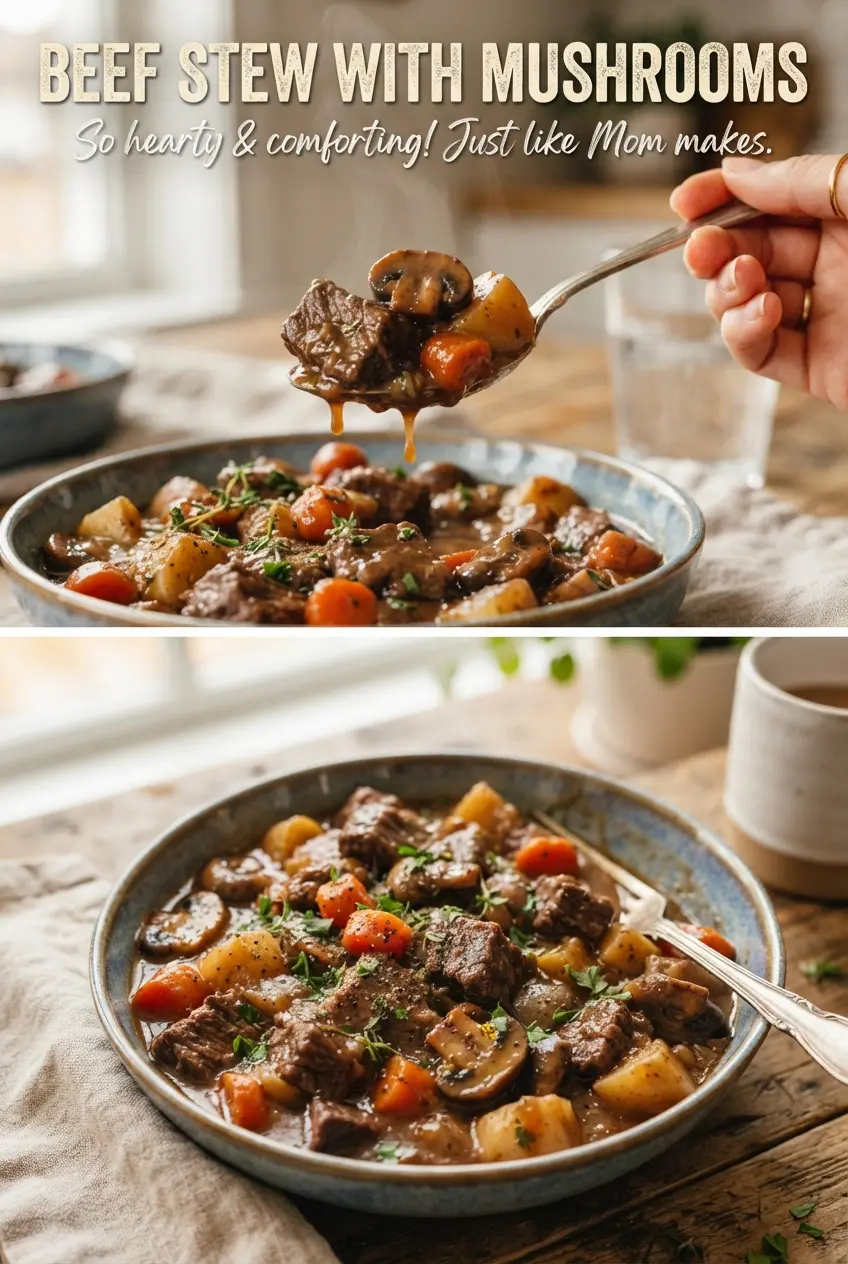
Beef Stew with Mushrooms
Ingredients
Equipment
Method
- Melt the butter with 1 tablespoon of the olive oil in a Dutch oven, then add the cremini mushrooms and cook for 8 minutes until golden. Set the browned mushrooms aside.
- Season the beef chuck with the salt and black pepper, toss it with the all-purpose flour, and brown in batches in the remaining oil. Brown until well colored before moving the beef aside.
- Cook the onion in the Dutch oven for 4 minutes, then add the garlic and tomato paste and cook for 1 minute. Deglaze with the red wine, scraping up the browned bits.
- Return the beef to the pot, then add the beef broth, soy sauce, dried thyme, and bay leaves. Cover and simmer for 1 3/4 hours.
- Add the potatoes, carrots, and the reserved mushrooms, then cover and simmer for 45-60 minutes until the vegetables are tender. Remove the bay leaves and serve.