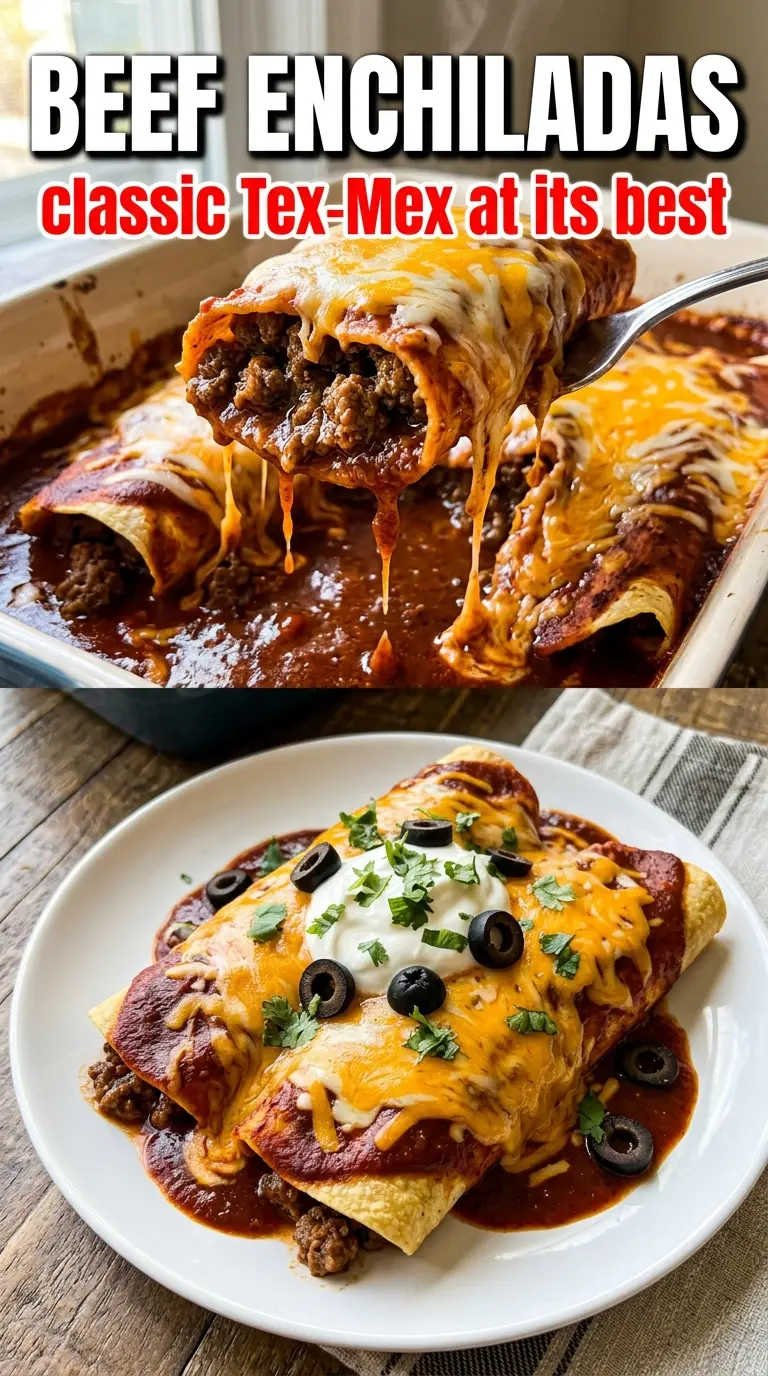
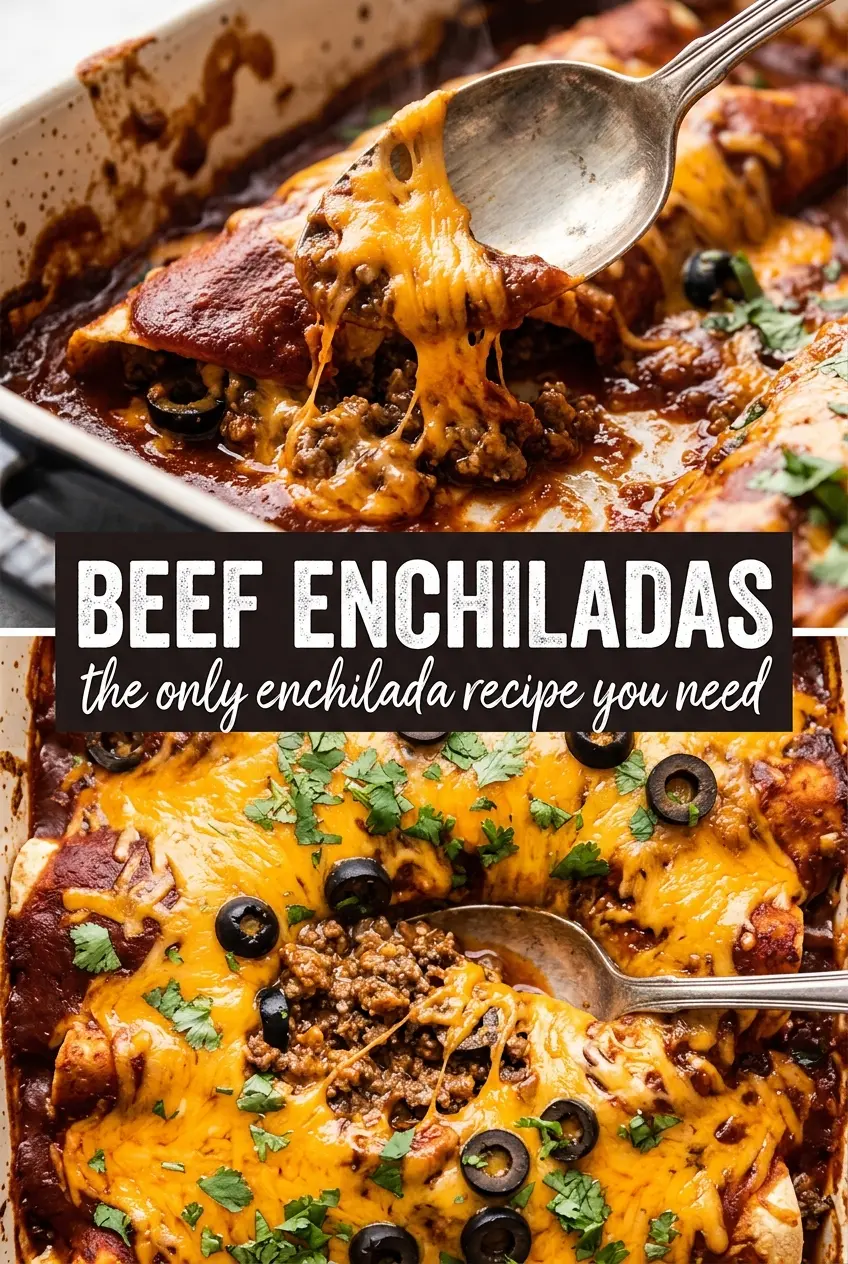
Tightly rolled beef enchiladas are the kind of dinner that disappears fast because they hit all the right notes at once: saucy, cheesy, and sturdy enough to hold together when you lift one from the pan. The tortillas soften in the oven without turning mushy, the beef stays savory and seasoned, and the red enchilada sauce bakes into the cheese until the top turns bubbly and spotted at the edges.
What makes this version work is the order. The bottom layer of sauce keeps the enchiladas from sticking, the tortillas get warmed before rolling so they don’t crack, and the beef filling is seasoned before it goes into the tortillas so every bite tastes finished. A little cheese goes inside the rolls, not just on top, which helps the filling stay tucked in and gives you that pull when you cut into the pan.
Below you’ll find the exact trick for keeping corn tortillas flexible, plus a few smart swaps if you want to change the heat level or stretch the filling a little further. Once you’ve made them this way, the pan tends to become a repeat dinner instead of a one-off.
The tortillas stayed flexible, the filling was well seasoned, and the sauce baked into the cheese instead of pooling at the bottom. My husband went back for a second helping before I even sat down.
These beef enchiladas bake up saucy, cheesy, and sliceable — save them for the nights when you want a Tex-Mex dinner that feels like a full meal without extra fuss.
The Part Most People Get Wrong About Corn Tortillas
Corn tortillas crack when they’re cold, dry, or overloaded. That’s why so many enchiladas split open before they even hit the oven. Warming them briefly in a damp paper towel gives them enough flexibility to roll without tearing, and it also keeps them from absorbing sauce too fast and turning gummy.
The other place people stumble is the filling. If the beef mixture is watery, the tortillas slide around and the casserole loses shape. Let the seasoned beef simmer for those few minutes after adding the water so the seasoning clings to the meat instead of sitting in the pan.
- Ground beef — Use an 80/20 or 85/15 blend for the best balance of flavor and texture. Leaner beef works, but it can taste dry unless you keep the sauce generous.
- Red enchilada sauce — This is the backbone of the dish, so use one you actually like. If your sauce tastes flat from the can, a pinch of cumin or a little salt stirred into the pan helps wake it up.
- Corn tortillas — Don’t swap in flour tortillas here unless you want a softer, more casserole-like result. Corn tortillas give you the classic enchilada texture and hold up better under the sauce.
- Mexican cheese blend — Pre-shredded cheese is fine, though freshly shredded melts a little cleaner. Save a handful for the top so the edges turn golden while the middle stays melty.
What Each Ingredient Is Actually Doing in This Enchilada
- Tortillas (the wrapper) — Use fresh or warm them first so they stay pliable and don’t crack when rolling.
- Filling (cooked chicken, beef, or beans) — Prepare ahead so rolling is fast. Don’t overstuff or tortillas burst and filling leaks out.
- Sauce (red, green, white, or cream-based) — This keeps the enchiladas from drying out. Coat the pan and between layers generously.
- Cheese (the binding and golden top) — Mix some throughout the filling and save enough for a generous top layer. Use a cheese that melts smoothly.
- Spices in the sauce (cumin, chili powder, garlic) — Build bold flavor into the sauce. Don’t just season at the end.
- Sour cream or crema (optional but recommended) — This adds tang and richness. A dollop on top before baking looks intentional.
- Fresh cilantro or jalapeños (the garnish) — Add after baking so they stay fresh. These prevent the dish from tasting one-dimensional.
- Baking covered at 350°F (the technique) — Covered keeps everything moist. Uncover for the last 5 minutes if you want a crispy top.
How to Keep the Enchiladas Rolled, Saucy, and Intact
Cooking the Beef Filling
Brown the beef with the onion until the meat loses its pink color and the onion looks soft and translucent. Drain the fat if there’s a lot in the pan, then stir in the garlic, taco seasoning, and water. Let it simmer long enough for the liquid to reduce and coat the meat; if it still looks soupy, the filling will leak out when you roll it.
Softening the Tortillas
Wrap the stack of tortillas in a damp paper towel and microwave them for about a minute. They should bend without snapping but still feel sturdy enough to handle. If they sit out too long after warming, they dry out again, so work with them while they’re still warm.
Assembling the Pan
Spread a thin layer of enchilada sauce in the baking dish first. That keeps the tortillas from sticking and gives the bottom layer moisture from the start. Fill each tortilla with a modest line of beef and a small sprinkle of cheese, then roll it snugly and place it seam-side down; overfilling is the fastest way to get torn tortillas and a messy pan.
Baking Until the Cheese Bubbles
Pour the remaining sauce evenly over the rolls, then finish with the rest of the cheese. Bake uncovered until the sauce is bubbling around the edges and the cheese is melted with a few browned spots. If the top looks done before the center is hot, let it stay in the oven a few extra minutes; enchiladas should be steaming all the way through, not just browned on top.
How to Change the Heat, the Cheese, or the Make-Ahead Plan
Milder Enchiladas for Kids or Heat-Sensitive Guests
Use a mild red enchilada sauce and skip jalapeños at the table. If your taco seasoning runs spicy, cut it back slightly and add a pinch of cumin instead. You keep the savory beef flavor without the back-of-the-throat burn.
Dairy-Free Enchiladas That Still Hold Together
Swap the cheese for a good dairy-free shred that melts well, or leave it off the inside of the rolls and use it only on top if that’s what your brand handles best. The casserole will taste a little less rich, but the sauce and seasoned beef still carry the dish.
Stretching the Filling for a Bigger Crowd
Add a drained can of black beans or a small handful of cooked rice to the beef mixture. That gives you more volume and turns the filling into something heartier without losing the saucy, rolled-enchilada feel.
Storage and Reheating
- Refrigerator: Store covered for up to 4 days. The tortillas soften a bit more as they sit, but the flavor gets even better by day two.
- Freezer: Freezes well after baking. Cool completely, wrap the dish tightly, and freeze for up to 2 months. Thaw in the fridge before reheating so the center warms evenly.
- Reheating: Cover and reheat in a 350°F oven until hot in the middle. The biggest mistake is blasting it uncovered in the microwave, which dries the edges before the center is warm.
Answers to the Questions Worth Asking
Beef Enchiladas
Ingredients
Equipment
Method
- Preheat the oven to 375°F and spread 1/2 cup enchilada sauce in the bottom of a 9x13 dish so the tortillas bake evenly.
- Brown the ground beef with the diced onion over medium-high heat, then drain excess fat to prevent a greasy filling.
- Add the minced garlic, taco seasoning, and water, then simmer for 5 minutes to thicken the beef mixture slightly.
- Warm the corn tortillas wrapped in a damp paper towel in the microwave for 1 minute to make them pliable for rolling.
- Fill each tortilla with the beef mixture and a sprinkle of cheese, roll up, and place seam-side down in the prepared dish.
- Pour the remaining enchilada sauce evenly over the rolled enchiladas and top with the remaining cheese for a melty, cheesy top layer.
- Bake uncovered for 20–25 minutes at 375°F until the cheese is bubbly and lightly melted across the casserole.
- Serve immediately with sour cream, cilantro, and jalapeños so each bite gets fresh, tangy heat.