Baked ratatouille turns simple summer vegetables into something elegant, tender, and deeply savory. The top gets glossy and lightly caramelized while the vegetables underneath soften into the tomato sauce, each slice holding just enough shape to look beautiful on the plate. It eats like a vegetable tian with the soul of classic French ratatouille, which is why it earns a place on the table instead of sitting off to the side as an afterthought.
What makes this version work is the balance between the sauce and the sliced vegetables. The crushed tomato base keeps the vegetables from drying out and gives the whole dish a rich, slow-cooked flavor without needing hours in the oven. Thin, even slices matter here because they cook at the same pace; if the slices are too thick, the center stays firm while the edges go soft.
Below, you’ll find the trick for getting that neat spiral arrangement to bake evenly, plus a few smart swaps if your produce is a little different from mine. It’s one of those dishes that looks restaurant-level but is built from very ordinary ingredients and a little patience.
The vegetables came out tender without turning mushy, and the tomato base kept everything from drying out. I used a mandoline like you suggested and the layers baked evenly with the edges just starting to caramelize.
Pin this baked ratatouille for a dinner that looks like a centerpiece and tastes even better after the vegetables soften into the tomato sauce.
The Secret to Ratatouille That Holds Its Shape Instead of Turning Watery
The biggest mistake with baked ratatouille is crowding in thick slices and hoping the oven will sort it out. It won’t. Thick vegetables release more moisture as they bake, and once the pan fills with steam, the top turns soft before it ever has a chance to caramelize. Thin, even slices let the vegetables soften at the same rate, which keeps the finished dish neat instead of sloppy.
The other piece is the sauce underneath. It needs to be thick enough to coat the bottom of the pan without pooling, because that sauce is what protects the vegetables from scorching while also concentrating the flavor. If it looks loose in the pan, simmer it a little longer before assembling. A spoon dragged through it should leave a brief trail.
- Eggplant — This gives the dish its silky texture, but only if it’s sliced thin enough to cook through. If your eggplant is large and seedy, salt the slices lightly and let them sit for 10 to 15 minutes before patting dry; that helps tame any bitterness and keeps the bake from getting muddy.
- Roma tomatoes — Roma tomatoes work best because they’re meatier and less watery than slicing tomatoes. If you use a juicier tomato, expect a softer final texture and consider removing some seeds before slicing.
- Crushed tomatoes — This is the base that carries the whole dish. Canned crushed tomatoes are better than fresh here because they cook down into a steady, cohesive sauce that won’t break apart under the vegetable layers.
- Herbes de Provence — This blend gives the dish its French backbone. If you don’t have it, use a mix of thyme, oregano, and a little rosemary, but go light on the rosemary because it can take over fast.
What Each Layer Is Doing in the Pan
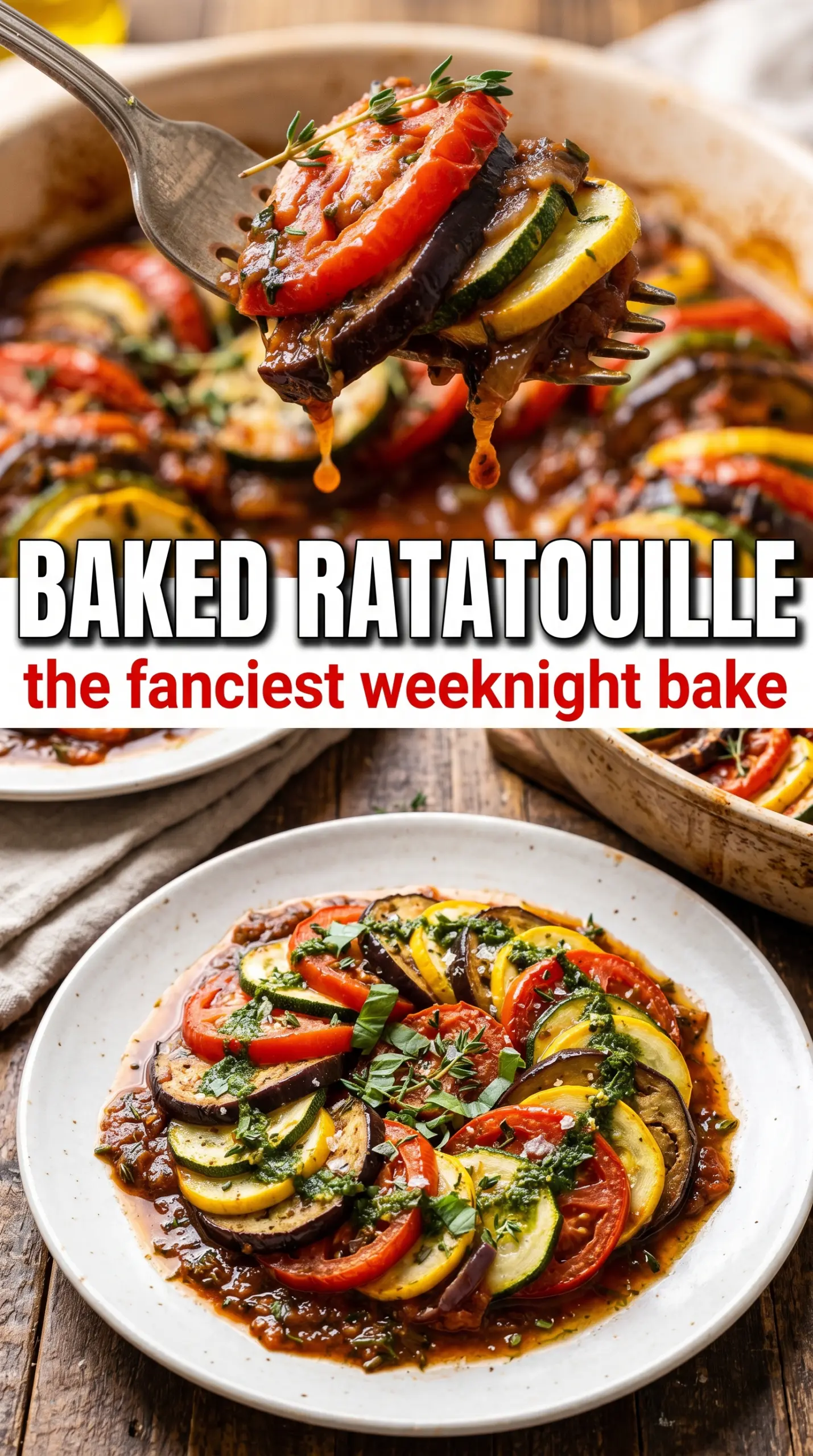
Eggplant soaks up the olive oil and softens into a creamy layer. Thin slices are the difference between tender and spongy, so don’t rush this part.
Zucchini and yellow squash bring structure and a lighter sweetness. They release water as they bake, which is why the slices need to be cut evenly and arranged tightly so they cook through without collapsing.
The tomato sauce underneath is not just for flavor. It keeps the vegetables moist, seasons the whole dish from below, and gives you that classic ratatouille taste in every bite.
Olive oil and fresh thyme finish the top with shine and aroma. Use a good olive oil here because it ends up on the vegetables, not just in the pan.
Building the Spiral So the Vegetables Bake Evenly
Making the Sauce Base
Start by softening the shallot and garlic in olive oil until they smell sweet and look translucent, not browned. Browning garlic too early makes the sauce taste sharp, and that bitterness will sit underneath everything else. Add the crushed tomatoes, thyme, and herbes de Provence, then simmer until the sauce looks a little thicker and more spoonable. When you drag a spoon through the pan and the line stays open for a second, it’s ready.
Getting Uniform Slices
Slice the eggplant, zucchini, yellow squash, and tomatoes about 1/8 inch thick. A mandoline makes this far easier, and it matters because uneven slices cook unevenly; thick ones stay firm while thin ones overcook. If the tomatoes are especially juicy, blot them lightly with paper towels so they don’t add extra liquid to the pan.
Assembling the Concentric Circles
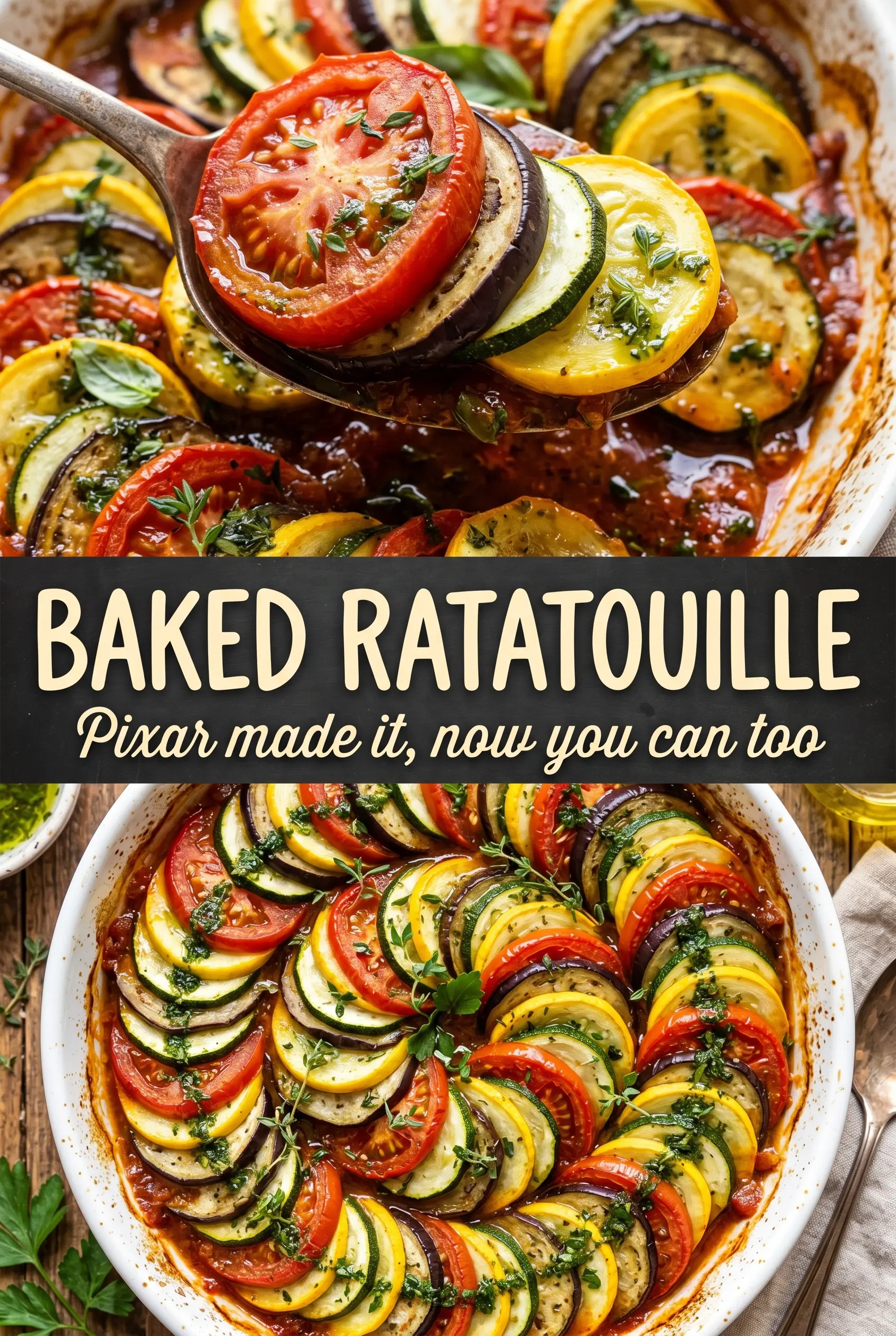
Lay the slices in tight overlapping rows over the sauce, alternating colors as you go. The tighter the pattern, the better the top holds together after baking. If you leave big gaps, the vegetables slump and the presentation disappears into the sauce. Work from the outside in and keep the slices standing at a slight angle so the edges catch heat and brown instead of steaming flat.
Baking Until Tender and Caramelized
Cover the dish with parchment for the first stretch of baking so the vegetables steam gently and soften through. When you uncover it, the surface should look relaxed and glossy, not wet; that second bake is what dries the top just enough for the edges to brown. If the vegetables still feel firm in the center, give the dish a little longer rather than cranking up the heat, which can scorch the sauce before the middle catches up.
Three Ways to Make This Baked Ratatouille Work for Your Table
Make it dairy-free and keep the same finish
Skip the parmesan on top and finish with extra olive oil and a few thyme leaves instead. The dish still bakes up richly because the vegetables and tomato sauce carry the flavor; the cheese adds salt and a little browning, but it isn’t required for a good result.
Use what your market has and keep the pattern loose
If you can’t find yellow squash, use all zucchini. If the tomatoes are small, layer them closer together rather than forcing the exact same spiral shape. The dish cares more about even slicing and a full pan than about strict color matching.
Turn it into a fuller main dish
Serve the ratatouille over creamy polenta, spoon it onto crusty bread, or add a layer of white beans under the sauce for more protein and substance. The vegetables stay the star, but the dish becomes hearty enough to stand in as dinner instead of a side.
Storage and Reheating
- Refrigerator: Store leftovers in an airtight container for up to 4 days. The vegetables soften a bit more as they sit, but the flavor gets even better the next day.
- Freezer: It freezes, but the texture turns softer after thawing, especially the zucchini and tomatoes. Freeze only if you don’t mind a more stew-like result.
- Reheating: Warm it uncovered in a 350°F oven until hot. The oven keeps the top from turning watery the way the microwave can, which is the fastest way to lose the caramelized edges.
Answers to the Questions Worth Asking
Baked Ratatouille
Ingredients
Equipment
Method
- Preheat the oven to 375°F.
- Sauté shallot and garlic in 3 tbsp olive oil for 3 minutes, stirring, until fragrant.
- Add crushed tomatoes, fresh thyme, and herbes de Provence, then simmer for 10 minutes.
- Season the sauce with salt and pepper to taste, then spread it on the bottom of a large oven-safe skillet or baking dish.
- Slice eggplant, zucchini, yellow squash, and tomato very thin (about 1/8 inch), using a mandoline if available.
- Arrange overlapping slices in tight concentric circles over the sauce, alternating colors.
- Drizzle generously with olive oil, then season with salt, pepper, and fresh thyme leaves (and parmesan if using).
- Cover with parchment and bake for 45 minutes, until the vegetables look softened and glossy at the edges.
- Uncover and bake for 15 more minutes at 375°F until tender and edges are caramelized.
- Serve hot with crusty bread or over polenta.