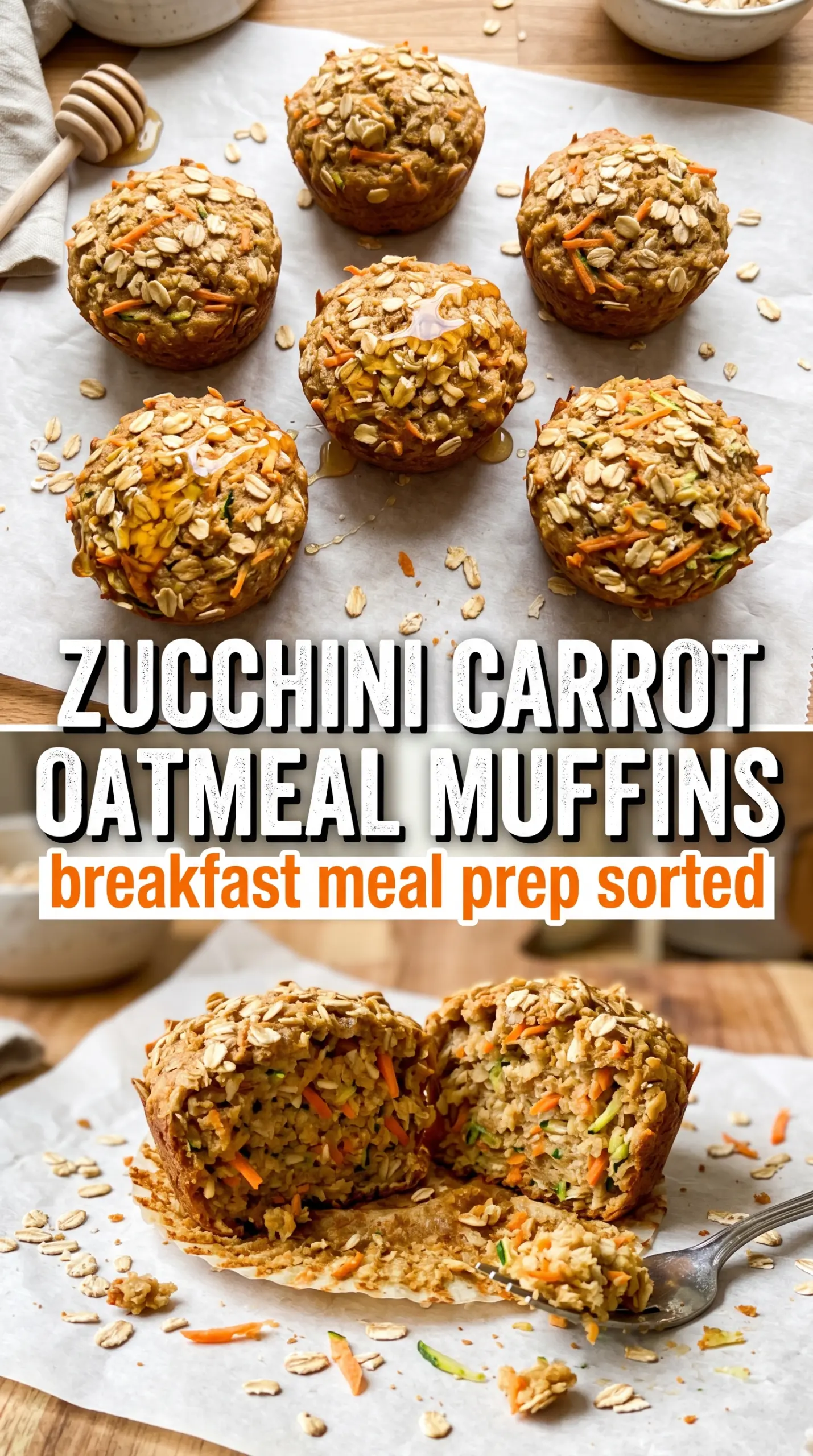
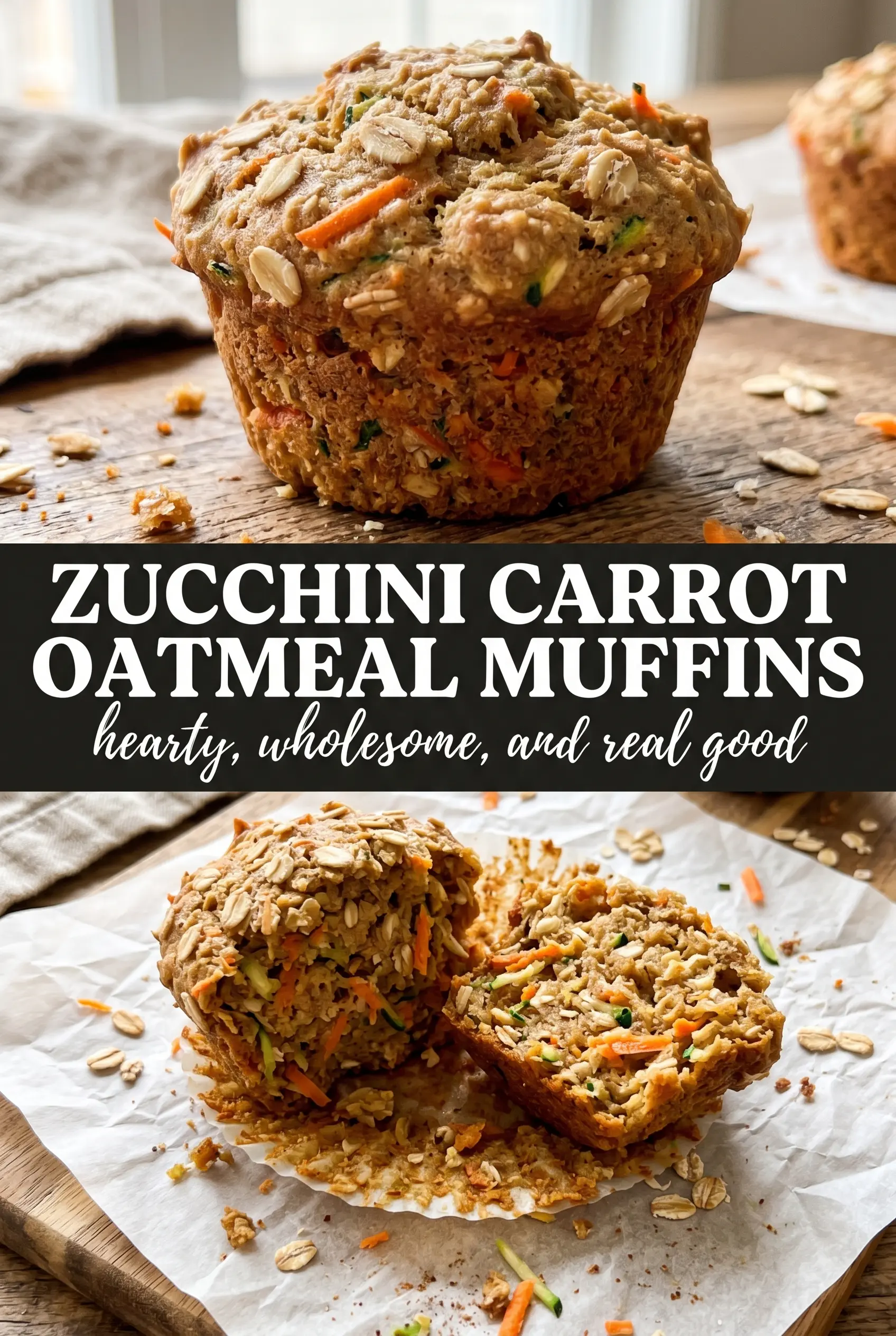
Zucchini carrot oatmeal muffins bake up with a tender, sturdy crumb, a domed golden top, and just enough sweetness to work for breakfast without tasting like dessert. The oats give them a hearty chew, the carrot brings natural sweetness, and the zucchini disappears into the batter in the best way, leaving moisture behind instead of visible vegetable flavor. These are the kind of muffins that hold up in lunchboxes, survive a grab-and-go morning, and still taste good after they cool.
The trick is getting the zucchini dry enough before it goes in. Grate it, then squeeze it well in a clean towel or with your hands until the shreds stop dripping. That step keeps the batter from turning damp and heavy. The yogurt also matters here because it gives the muffins lift and tenderness without making them greasy, and the oats add enough structure that the centers stay soft instead of collapsing.
Below, you’ll find the small details that make these muffins bake evenly, plus a few smart swaps if you want to use honey, add nuts, or keep them dairy-free.
The muffins came out tall and moist, and the oats on top turned golden instead of getting lost in the batter. I loved that the zucchini didn’t make them soggy at all.
Pin these zucchini carrot oatmeal muffins for a wholesome breakfast you can bake once and eat all week.
The Mistake That Makes Veggie Muffins Dense Instead of Tender
Most veggie muffins fail because the batter gets overloaded with moisture or overmixed after the wet and dry ingredients come together. Zucchini brings a lot of water, and carrot brings its own heft, so if you skip the squeeze or stir until the batter looks perfectly smooth, the muffins bake up tight and gummy instead of light and cake-like.
The other thing to watch is the oats. They need enough liquid to soften, but not so much that they turn the whole batter pasty. That is why these muffins use both yogurt and eggs: the yogurt keeps the crumb soft, the eggs set the structure, and the oats give the muffins that hearty breakfast texture without making them heavy.
- Squeezed zucchini — This is the difference between a muffin that rises and one that sinks in the middle. After grating, press it until it feels damp, not wet.
- Rolled oats — Old-fashioned oats hold their shape and give you a more substantial bite. Quick oats can work in a pinch, but they soften more and make the crumb less textured.
- Yogurt — Plain yogurt adds tenderness and a gentle tang that balances the maple syrup. Greek yogurt works too, but the batter will be a little thicker.
What Each Ingredient Is Actually Doing in These Muffins
- All-purpose flour — Gives the muffins enough structure to rise around the vegetables and oats. You can swap in a cup-for-cup whole wheat flour for a nuttier flavor, but the muffins will be a little denser.
- Rolled oats — These bring chew and make the muffins feel more filling. I wouldn’t use steel-cut oats here; they stay too firm.
- Baking soda and baking powder — The combo gives lift and helps the muffins dome instead of spread. If your baking powder is old, the muffins will bake flatter even if the batter looks right.
- Maple syrup or honey — Either one works, but maple syrup gives a cleaner, lighter sweetness while honey adds a deeper note and a slightly stickier crumb.
- Yogurt — This is the ingredient that keeps the crumb soft for days. Sour cream can replace it in the same amount if that’s what you have.
- Zucchini and carrots — Carrots bring sweetness and color; zucchini brings moisture without a strong flavor of its own. Grate both on the fine side of a box grater so they disappear into the batter instead of creating long wet strands.
- Raisins or walnuts — Optional, but useful. Raisins lean sweeter and softer; walnuts add crunch and make the muffins feel more like a classic bakery breakfast muffin.
How to Keep the Batter Light and the Muffins Domed
Mix the Dry Ingredients First
Whisk the flour, oats, baking soda, baking powder, cinnamon, nutmeg, and salt in a large bowl until the spices disappear evenly through the mix. This keeps you from biting into a pocket of baking soda later, and it also helps the oats distribute before the wet ingredients go in. If the dry mix looks streaky, keep whisking; uneven leavening is one of the easiest ways to get lopsided muffins.
Build the Wet Mixture Separately
Whisk the eggs, maple syrup, melted coconut oil, yogurt, and vanilla until the mixture looks smooth and glossy. The coconut oil should be melted, not hot, or it can seize when it hits the cooler yogurt. If you see little solid bits of oil, let the bowl sit for a minute and whisk again before combining.
Stop Stirring as Soon as the Flour Disappears
Pour the wet mixture into the dry and stir only until no dry flour is visible. A few lumps are fine; they disappear in the oven. Once you add the zucchini, carrots, and any raisins or walnuts, fold just enough to spread them through the batter. Overmixing tightens the crumb and knocks out the air that gives these muffins their lift.
Bake Until the Tops Set and Spring Back
Fill each muffin cup about three-quarters full so the batter has room to rise into domes. Bake at 375°F until the tops are golden and the center springs back when pressed lightly, usually 20 to 22 minutes. A toothpick should come out clean or with a few moist crumbs; if it comes out with wet batter, the centers still need a few more minutes.
How to Adapt These Muffins for Different Kitchens and Different Mornings
Dairy-Free Version with the Same Tender Crumb
Use a plain dairy-free yogurt with a thick texture, such as almond or coconut yogurt. The muffins will still stay soft, but the flavor will be a little less tangy, so vanilla matters here. If your yogurt is thin, the batter may need an extra tablespoon of flour to keep the muffins from spreading too much.
Use Honey Instead of Maple Syrup
Honey works in the same amount and gives the muffins a slightly warmer, deeper sweetness. It also browns a touch faster, so start checking for doneness near the 20-minute mark. The texture stays the same, though the flavor reads a little more old-fashioned.
Make Them Nut-Free for Lunchboxes
Skip the walnuts and add raisins, or leave both out completely. The muffins still hold together well because the oats and vegetables already add enough bulk. This is the easiest way to keep the recipe school-friendly without changing the base batter at all.
Storage and Reheating
- Refrigerator: Store in an airtight container for up to 5 days. The oats soften a little as they sit, but the muffins stay moist.
- Freezer: These freeze well. Wrap individually and freeze for up to 3 months, then thaw at room temperature or overnight in the fridge.
- Reheating: Warm in the microwave for 15 to 20 seconds or in a 300°F oven for about 8 minutes. Don’t overheat them, or the edges dry out before the center warms through.
Questions I Get Asked About These Muffins
Zucchini Carrot Oatmeal Muffins
Ingredients
Equipment
Method
- Preheat the oven to 375°F and line a 12-cup muffin tin with liners.
- Combine all-purpose flour, rolled oats, baking soda, baking powder, cinnamon, nutmeg, and salt in a large bowl until evenly distributed.
- Whisk eggs, maple syrup or honey, melted coconut oil, plain yogurt, and vanilla extract in a separate bowl until smooth.
- Stir the wet ingredients into the dry ingredients just until no dry streaks remain.
- Fold in grated zucchini, grated carrots, and raisins or chopped walnuts if using, mixing gently so the batter stays thick.
- Divide batter evenly among the muffin cups, filling each about ¾ full so they dome evenly.
- Bake for 20–22 minutes at 375°F until tops are golden and a toothpick comes out clean.
- Cool in the pan for 5 minutes, then transfer muffins to a wire rack to finish cooling.