Pan-fried cabbage and noodles hit that sweet spot between humble and unforgettable. The cabbage turns sweet and silky, the onions melt into the butter, and the noodles catch every bit of that browned, savory goodness. What you end up with is a skillet full of soft noodles with crisp-edged pockets, deep golden vegetables, and enough richness to make a simple dinner feel complete.
The part that makes this version work is patience in the pan. Cabbage needs time to lose its raw edge and pick up color, and onions need to soften before the noodles go in. If you rush either one, you get a pale, flat dish instead of the layered, buttery flavor this recipe is known for.
Below, I’ll walk through the small choices that matter here: how to get the cabbage properly caramelized, when to add the butter so the noodles coat instead of clump, and what to do if you want to lean more traditional with caraway or keep it extra simple.
The cabbage got beautifully sweet and the noodles picked up all the browned butter from the pan. I added the sour cream and dill on top, and it tasted like the kind of dinner that should take twice as long.
Love the deep golden cabbage and buttery noodles? Save this haluski for the nights when you want a fast skillet dinner with old-fashioned comfort.
The Difference Between Sweet Cabbage and Soggy Cabbage
The mistake most people make with cabbage and noodles is crowding the skillet and stopping too early. Cabbage gives off a lot of water as it cooks, and if the pan is too full or the heat is too low, it steams instead of browns. You still get a soft dish, but not the deep, savory sweetness that makes haluski worth making.
Use a wide skillet and give the cabbage time. Stir it occasionally, not constantly, so it can sit against the hot pan long enough to take on color. The finished cabbage should look wilted, deeply golden in places, and tender enough to fold easily into the noodles without breaking apart.
What Each Ingredient Is Actually Doing in the Skillet
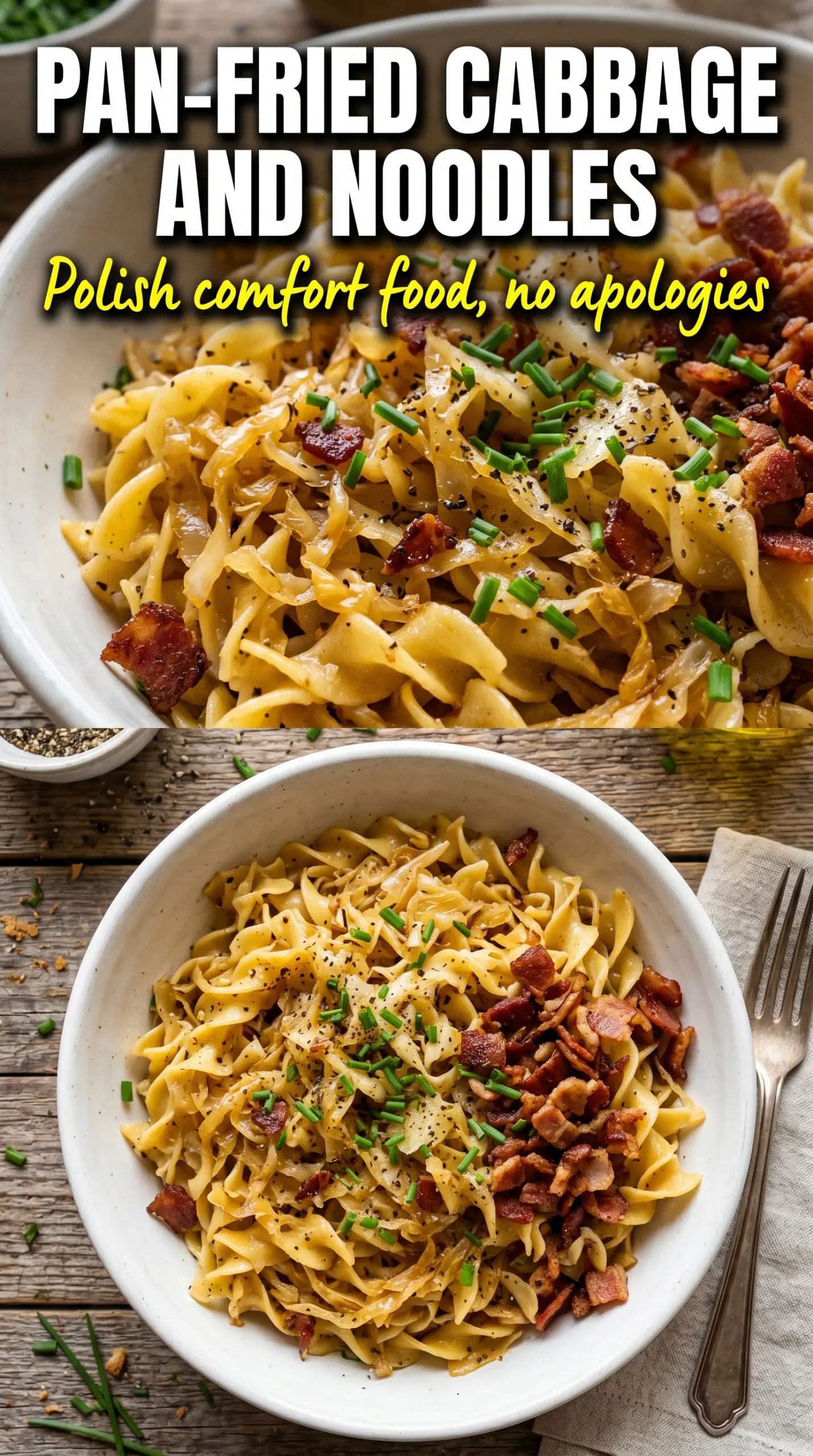
- Wide egg noodles — These hold onto the butter and cabbage better than thinner pasta. Cook them just to tender, then drain well so they don’t water down the skillet when they go in.
- Green cabbage — This is the backbone of the dish. Fresh, firm cabbage cooks down into silky sweetness; pre-shredded cabbage works in a pinch, but it usually browns less evenly because the pieces are so fine and dry out faster.
- Onion — The onion builds the base flavor and gives the cabbage something sweet to lean on. Slice it thin so it softens and blends into the dish instead of turning into separate chunks.
- Butter — This is where the flavor lives. Using all butter gives you that classic rich finish, and letting part of it brown slightly in the pan adds a nutty edge that makes the whole dish taste deeper.
- Caraway seeds — Optional, but they add that old-school rye-and-cabbage note that suits this dish beautifully. Crush them lightly between your fingers before adding if you want the flavor to come through more clearly.
- Sour cream and dill — These aren’t just garnish. The sour cream cools the richness and the dill adds a fresh, grassy lift that keeps the skillet from tasting heavy.
How to Build the Skillet Without Losing the Butter
Softening the Onion First
Start with the onion and a pinch of salt in melted butter. The salt pulls moisture out early, which helps the onion turn translucent and then lightly golden instead of frying harshly on the outside. Ten minutes is about right; if it still smells raw, it isn’t ready for the cabbage yet.
Letting the Cabbage Take the Heat
Add the cabbage after the onion has some color and give it room to breathe. It will look too large at first, then collapse as the water cooks off. That shrinking stage is where the flavor develops, so don’t rush to add the noodles before the cabbage has turned tender and deeply golden in spots.
Finishing With Noodles and Butter
When the cabbage is ready, add the garlic and caraway for just a minute, then the remaining butter and noodles. Toss everything over medium heat until the noodles are glossy and coated. If the pan looks dry, add another small knob of butter rather than splashing in water; water loosens the sauce, while butter carries the flavor.
Make It More Traditional With Caraway
Caraway gives the dish a sharper, more distinctly Eastern European edge. Use the full half teaspoon if you like that flavor, or keep it to a pinch if you’re only after a subtle nod in the background.
Dairy-Free Haluski
Swap the butter for a good olive oil or a plant-based butter that browns well. You’ll lose some of the classic richness, but the cabbage still caramelizes nicely and the onion base keeps the dish satisfying.
Gluten-Free Version
Use your favorite gluten-free wide noodle or short pasta, but cook it just shy of done so it can finish in the skillet without falling apart. Rice-based pastas can be more delicate, so toss them gently at the end and keep the heat moderate.
Storage and Reheating
- Refrigerator: Store leftovers in an airtight container for up to 4 days. The noodles will absorb more of the butter as they sit, so the dish turns a little softer by day two.
- Freezer: It freezes, but the cabbage texture softens after thawing. Freeze in portions for up to 2 months if you don’t mind a softer result.
- Reheating: Warm it in a skillet over medium-low heat with a small pat of butter or a splash of water. Microwaving works, but it can make the noodles unevenly hot and the cabbage soggy.
Questions I Get Asked About This Recipe
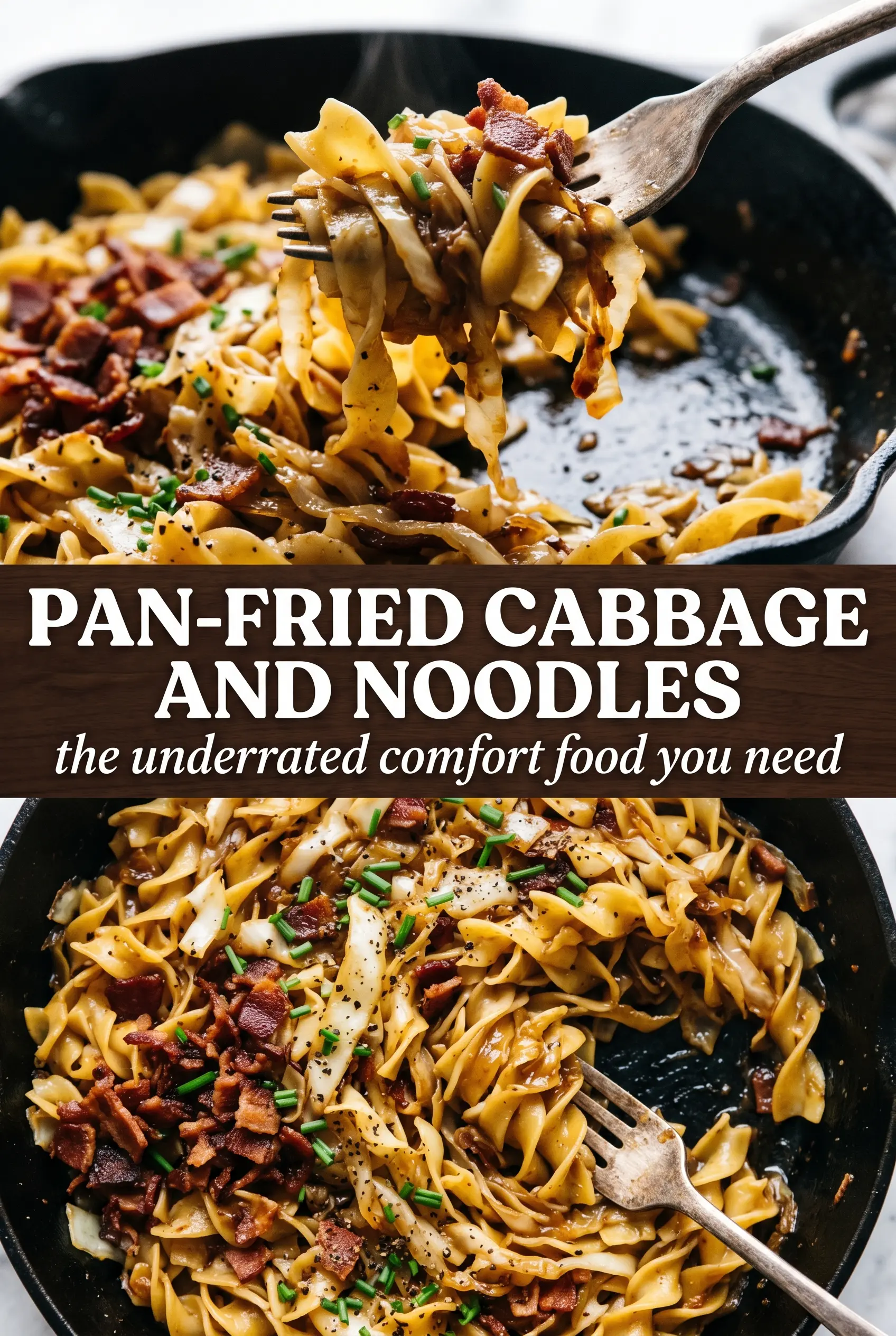
Pan-Fried Cabbage and Noodles (Haluski)
Ingredients
Equipment
Method
- Melt 4 tablespoons butter in a large skillet over medium heat, add onion and a pinch of salt, and cook for 10 minutes until starting to caramelize. Look for golden edges and a sweet aroma as the onions soften.
- Add sliced cabbage and cook for 10–12 minutes over medium heat, stirring occasionally, until cabbage is deeply golden and tender. Let some edges brown for that savory, deeply caramelized color.
- Add minced garlic and caraway seeds (if using) and cook for 1 minute, stirring, until fragrant. Keep it moving so garlic doesn’t brown too quickly.
- Add the remaining butter and the cooked egg noodles, then toss over medium heat until noodles are coated and heated through. Continue tossing until everything looks evenly glossy and golden.
- Season generously with salt and cracked black pepper. Taste and adjust until the flavor is bold enough to stand up to the browned butter.
- Serve immediately with a dollop of sour cream and fresh dill on top. The dill should look fresh and bright against the deeply golden noodles.