Sticky, glossy honey garlic ground turkey is the kind of skillet dinner that earns a permanent spot in the weeknight rotation. It hits that sweet-savory balance without tasting heavy, and the sauce clings to every crumble of turkey instead of pooling at the bottom of the pan. Served over rice, it turns into one of those meals that disappears fast and leaves almost no cleanup behind.
The trick is building the sauce in the same pan after the turkey has browned. Those browned bits add depth, and the cornstarch slurry thickens the glaze just enough to coat the meat without turning it pasty. Lean ground turkey works here because the honey, soy sauce, garlic, and ginger carry the flavor; you don’t need a fattier cut to make it satisfying.
Below you’ll find the small details that matter most: when to add the garlic so it stays fragrant instead of bitter, how to know the sauce has reached the right shine, and a few smart swaps if you need to stretch the dish or adjust the heat.
The sauce thickened up exactly how I hoped and coated every bit of turkey. I served it over jasmine rice and my husband went back for seconds before I even sat down.
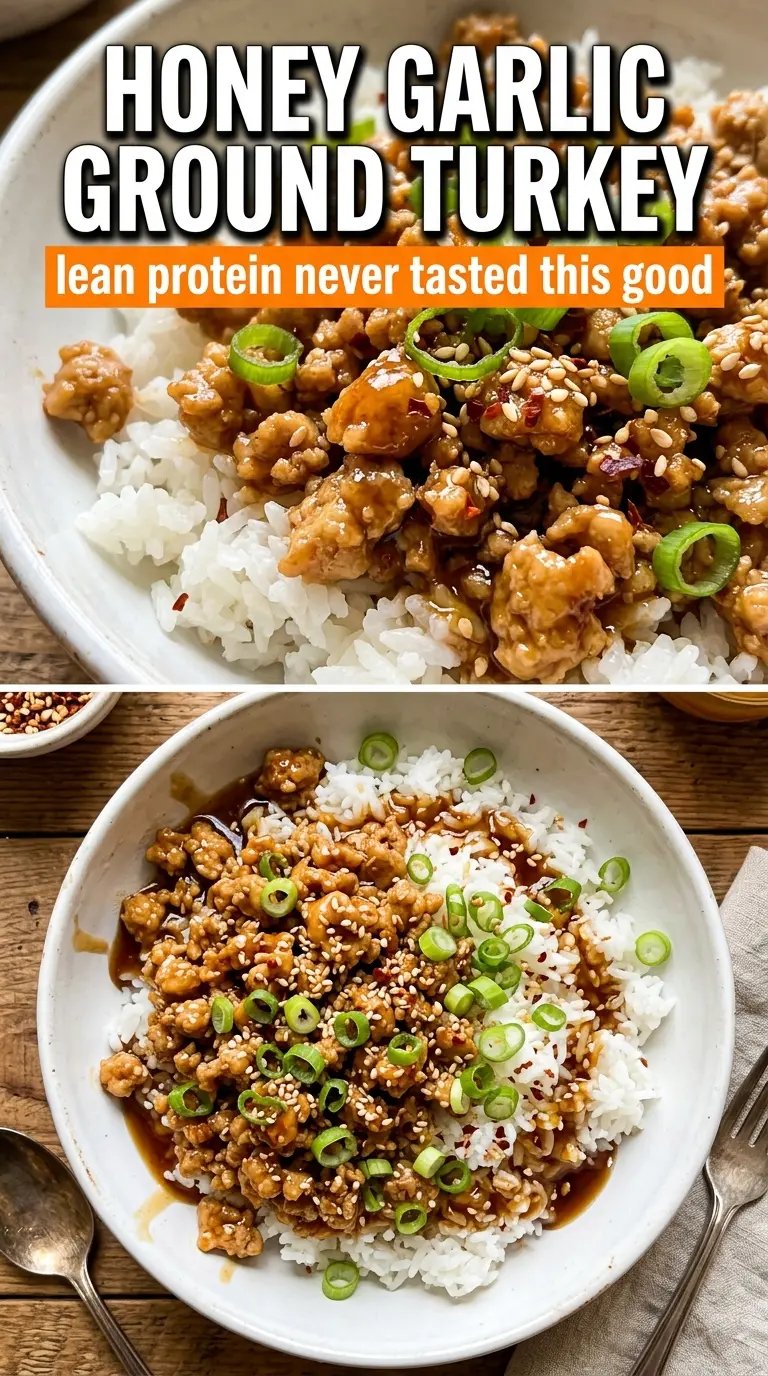
Pin this honey garlic ground turkey for a fast rice bowl dinner with a sticky soy glaze, fresh ginger, and sesame-seed crunch.
The Part Most People Rush: Getting the Turkey Brown, Not Wet
Ground turkey can go pale and steamy if it gets crowded or stirred too soon. You want it in a hot skillet with enough space for moisture to evaporate so the edges actually brown before the sauce goes in. That browning is where the deeper flavor comes from, and it also keeps the final dish from tasting flat.
If the pan starts filling with liquid, keep cooking and let it reduce before adding the garlic. Garlic added too early can scorch while the turkey is still releasing moisture, and burnt garlic turns the whole sauce sharp. Once the meat looks mostly cooked with some caramelized bits on the bottom of the pan, you’re in the right place to move on.
What Each Ingredient Is Doing in the Pan
- Lean ground turkey — This is the base and it needs the sauce to carry it. Lean turkey works well because the glaze adds moisture and flavor, but if you use a wetter turkey blend, give it a little extra time in the skillet so the liquid cooks off before saucing.
- Garlic and fresh ginger — These two give the dish its backbone. Fresh ginger brings brightness that dried ginger can’t fully match, and the garlic should cook just long enough to smell fragrant, not brown.
- Honey — This is what makes the sauce glossy and sticky. It’s worth using real honey here because it thickens with the cornstarch and helps the sauce cling to the turkey instead of sliding off.
- Soy sauce and rice vinegar — Soy sauce brings salt and umami; rice vinegar keeps the sweetness from feeling one-note. If you need a gluten-free version, use tamari in the same amount and keep everything else the same.
- Sesame oil and red pepper flakes — Sesame oil is strong, so the teaspoon goes a long way. The red pepper flakes stay modest here, just enough to keep the sweetness from taking over.
- Cornstarch slurry — This is what turns the pan juices into a proper glaze. Mix it with cold water before adding it, or you’ll get little lumps that never disappear.
How to Turn the Pan Juices Into a Glossy Glaze
Browning the Turkey
Heat the olive oil first, then add the ground turkey and break it into medium crumbles. Leave it alone for a minute or two before stirring so the bottom can actually color. You’re looking for cooked-through meat with a few browned spots, not a soft gray pile. If too much liquid collects, keep cooking until it evaporates before you add anything aromatic.
Waking Up the Garlic and Ginger
Add the garlic and ginger once the turkey is nearly finished. Stir constantly for about a minute, just until the kitchen smells full and warm. If the garlic starts turning deep golden, pull the pan off the heat for a moment; garlic goes bitter fast in a hot skillet, and that bitterness will show up in the finished sauce.
Finishing the Honey Garlic Sauce
Whisk the honey, soy sauce, rice vinegar, sesame oil, and red pepper flakes together, then pour them over the turkey. Stir in the cornstarch slurry and let the mixture bubble for 2 to 3 minutes until it shifts from thin and shiny to thick and lacquered. The sauce should coat the meat in a glossy layer and leave a clean trail when you drag a spoon through the pan.
Serving It the Way It Eats Best
Spoon the turkey over hot rice while the glaze is still loose enough to settle into the grains. Top with sesame seeds and sliced green onions for crunch and freshness. If you’re serving it later, keep the rice and turkey separate so the sauce doesn’t soak in and turn the bowl mushy.
Three Smart Ways to Adapt the Sauce and Keep the Balance
Gluten-Free Without Losing the Sticky Finish
Swap the soy sauce for tamari in the same amount. The flavor stays deep and salty, and the honey still gives you that lacquered finish. Check your rice vinegar and sesame oil labels too if you’re cooking for someone with celiac disease.
Dairy-Free and Naturally Weeknight-Friendly
This recipe already lands in dairy-free territory, which is part of why it’s such an easy dinner to keep around. If you want a little extra richness without dairy, add a drizzle of toasted sesame oil at the end rather than during the sauce stage so the flavor stays fresh.
Lower-Sugar Version That Still Glazes Well
Cut the honey back to 2 tablespoons and add 1 to 2 tablespoons of water to keep the sauce loose enough to coat the turkey before it thickens. The result is less sticky and a touch less sweet, but it still finishes glossy. Don’t reduce the cornstarch unless you want a thinner sauce that sits more like a pan sauce than a glaze.
Turning It Into Lettuce Wrap Filling
Cook the recipe exactly as written, then let the sauce reduce for an extra minute so it gets a little tighter and less drippy. Spoon it into crisp lettuce leaves with the green onions and sesame seeds on top. That stronger reduction keeps the filling from sliding out of the wraps.
Storage and Reheating
- Refrigerator: Store the turkey in an airtight container for up to 4 days. The sauce will thicken as it chills, which is normal.
- Freezer: It freezes well for up to 2 months. Cool it completely first, then pack it flat in a freezer-safe container so it thaws evenly.
- Reheating: Warm it gently in a skillet over medium-low heat with a splash of water to loosen the glaze. Microwaving works, but use short bursts and stir between them so the sauce doesn’t seize around the edges.
Answers to the Questions Worth Asking
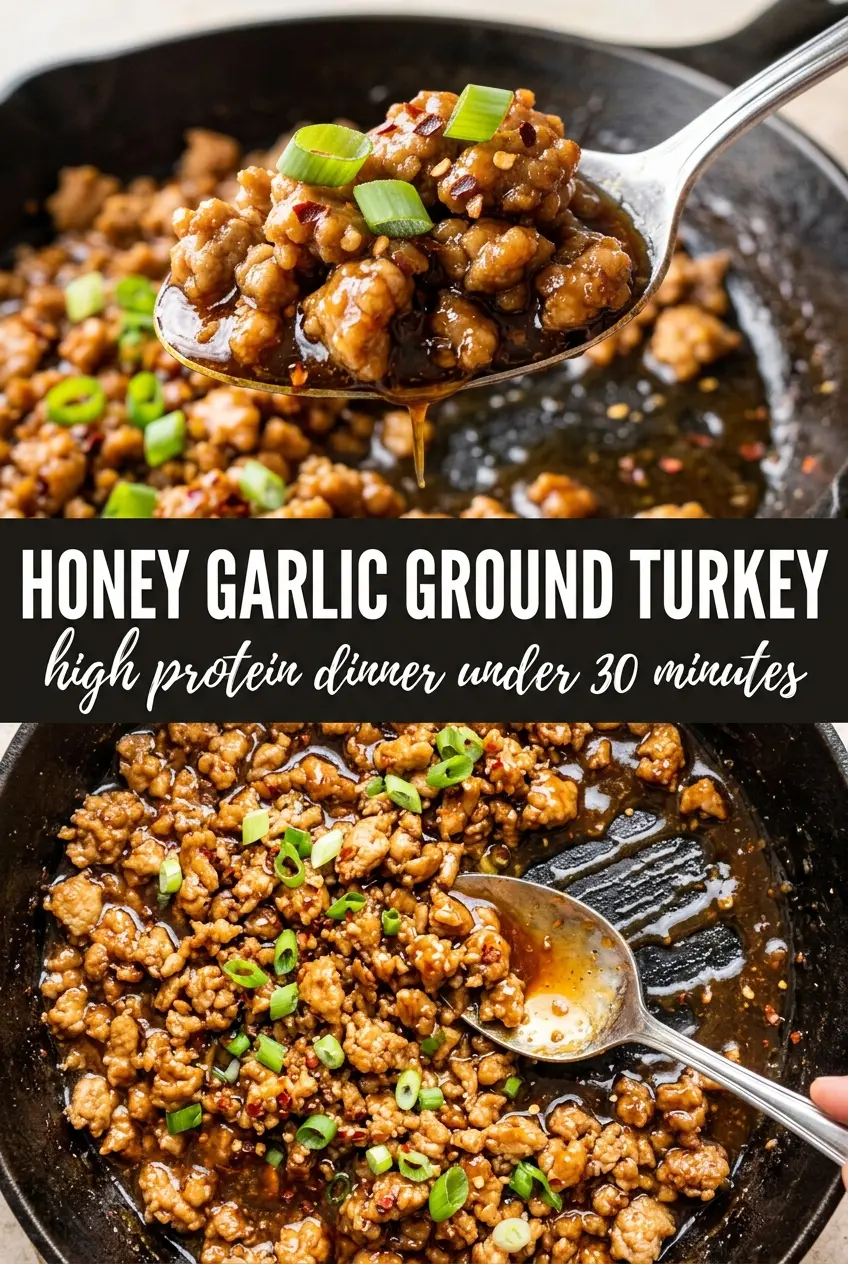
Honey Garlic Ground Turkey
Ingredients
Equipment
Method
- Heat 2 tablespoons olive oil in a large skillet over medium-high heat. Add 1.5 pounds lean ground turkey and cook until no longer pink, breaking into crumbles, about 8-10 minutes.
- Add minced garlic cloves and grated fresh ginger to the skillet. Cook for 1 minute until fragrant, stirring to coat the turkey.
- Whisk honey, soy sauce, rice vinegar, sesame oil, and red pepper flakes in a bowl, then pour over the turkey. Stir to combine so the turkey is coated.
- Stir cornstarch mixed with water (cornstarch slurry) into the skillet. Cook for 2–3 minutes until the sauce thickens and coats the turkey with a glossy finish.
- Divide cooked rice into bowls and spoon the honey garlic turkey over the top. Garnish with sesame seeds and sliced green onions.